
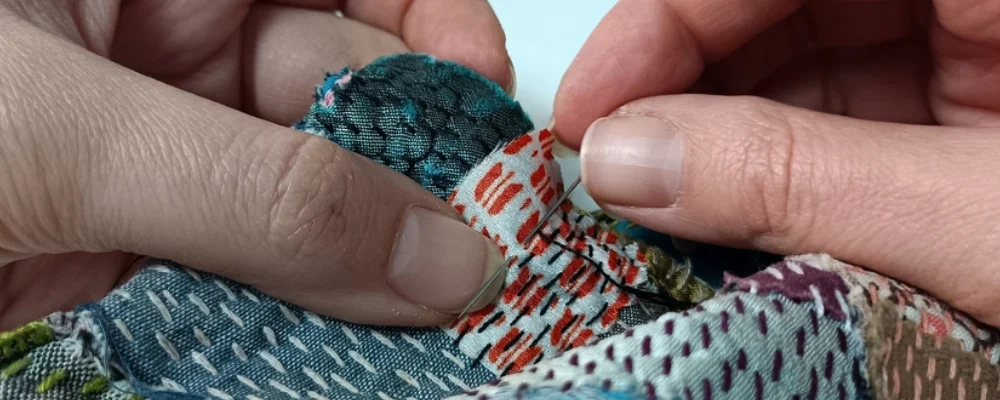
Boro is a traditional Japanese textile practice in which worn cotton, hemp or linen cloth is mended, patched and layered with scraps of old fabric rather than thrown away. The word comes from the onomatopoeic boroboro, meaning something tattered or repeatedly repaired.
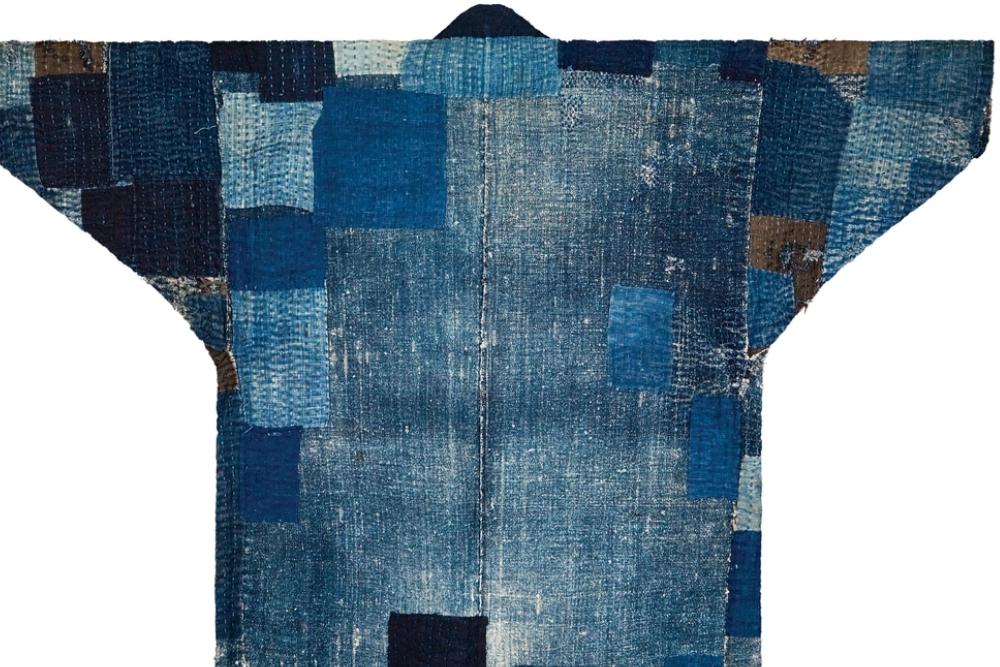
Historically, it was not a design choice but more of a survival need. Hand-woven cloth was precious and valued, so clothes were patched and re-patched to keep it usable, sometimes across several generations of the same family.
The spirit of making do
Boro developed in rural Japan, most distinctively in the Tsugaru and Nanbu districts of what is now Aomori Prefecture, at the cold northern tip of Honshu. The cold climate made growing cotton almost impossible, thus the reason clothing material was precious.
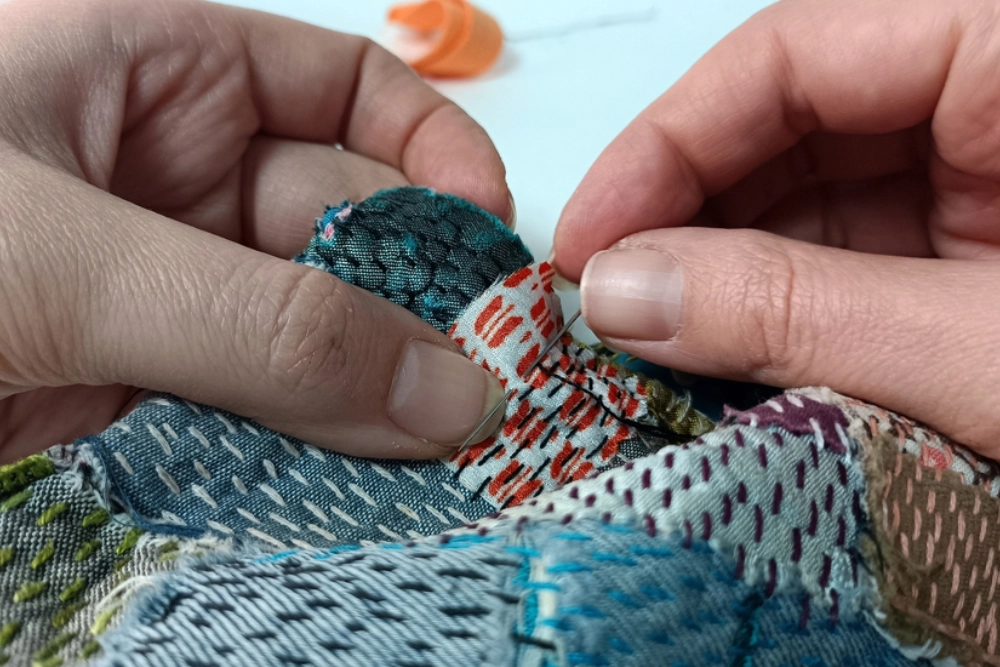
Peasant households made do instead with hemp and ramie, reinforced with sashiko running stitches and patched with whatever cotton scraps came their way. Even indigo became the dye of choice partly because a single dye bath could be reused many times over, keeping costs low (its compounds helped repel moths from cloth too!).
Entering the postwar decades, ready-made clothing became affordable, and boro fell out of everyday use.
Why boro matters for today’s textile waste problem
For some, it may be a reminder of poverty, but we’d like to think the values that boro represents are important for modern day manufacturing, in particular, circular fashion.
Unlike our linear consumption of mass production and mass waste of textile material, boro didn’t let go of a piece of cloth in the first place. It would be patched, restitched and handed down across generations before being retired (which is then composted, not discarded). Boro can be considered the poster child of mottainai, an averse sentiment for wastage. Furthermore, today’s economies are making the shift towards repair and reuse, and finds themselves realigning with exactly the circular values that Boro represents.
Glossary List
0~9
A
B
C
- Carbon Offset
- Circular Economy
- Circular Economy Commerce
- Circular Edonomy
- Closed-loop system
- Cradle to Cradle
D
E
F
- Fair trade
- J-Credit Scheme
- Food waste
- Forest bathing (Shinrin-yoku)
- FSC Certificate
- Furoshiki
- FutureCity initiative
G
H
I
J
K
L
M
O
P
R
S
- Sanpo Yoshi
- Satoumi
- Satoyama
- Satoyama Initiative
- SDGs (Sustainable Development Goals)
- SDG Compass
- SDG Future City
- SDG Global Indicators
- Sharing Economy
- Shimatsu no kokoro
- Shinto
- Shojin Ryori
- Shokunin
- Shokuyojo
- Society 5.0
- Sushi
- Sustainable Aviation Fuel