
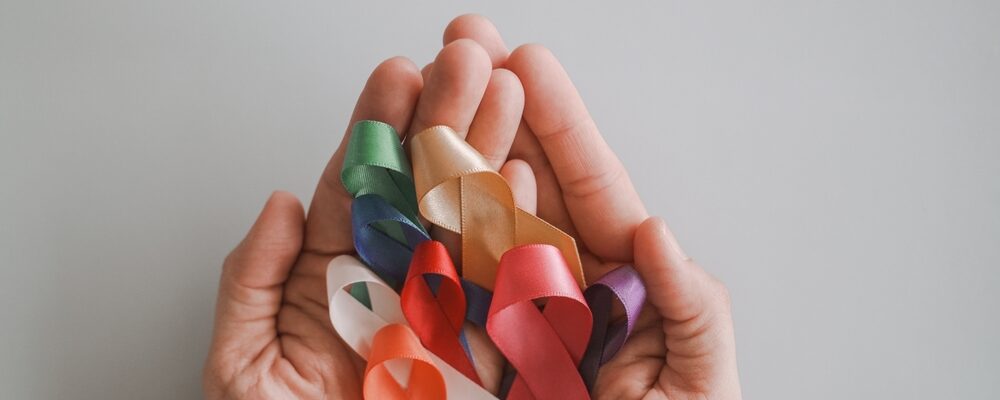
Awareness ribbons are a universal language of solidarity. They are small loops of fabric or pins, worn to show support for a cause.
We have seen variations of awareness ribbons throughout history, especially during the late 20th century, from the yellow ribbon for the Iran Hostage Crisis, the red ribbon for HIV/AIDS, and the pink ribbon for breast cancer awareness. Each colour became a silent, powerful voice for change. Japan has its own stories woven into the ribbon movements, too.
While many international ribbons resonate in Japan, sometimes the same ribbons take up a different meaning. For example, the orange ribbon is seen as a stand against child abuse, often seen every November during Child Abuse Prevention Month. The purple ribbon is part of the “Purple Light-up” campaign against domestic violence. The yellow ribbon, promoted by the Japan Disability Forum, champions inclusion and equality for people with disabilities.
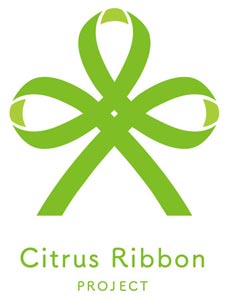
There are some ribbon movements that are homegrown in Japan. For example, the Citrus Ribbon was created in Ehime Prefecture during the COVID-19 pandemic, features three loops: symbolising community, home, and workplace/school. Its goal is to stop discrimination against infected individuals and healthcare workers.
The Uguisu (Bush Warbler) Ribbon is a light green loop that opposes excessive censorship. It stands for the protection of freedom of expression, particularly in subcultures like manga and anime.
Glossary List
0~9
A
B
C
- Carbon Offset
- Circular Economy
- Circular Economy Commerce
- Circular Edonomy
- Closed-loop system
- Cradle to Cradle
D
E
F
- Fair trade
- J-Credit Scheme
- Food waste
- Forest bathing (Shinrin-yoku)
- FSC Certificate
- Furoshiki
- FutureCity initiative
G
H
I
J
K
L
M
O
P
R
S
- Sanpo Yoshi
- Satoumi
- Satoyama
- Satoyama Initiative
- SDGs (Sustainable Development Goals)
- SDG Compass
- SDG Future City
- SDG Global Indicators
- Sharing Economy
- Shimatsu no kokoro
- Shinto
- Shojin Ryori
- Shokunin
- Shokuyojo
- Society 5.0
- Sushi
- Sustainable Aviation Fuel