
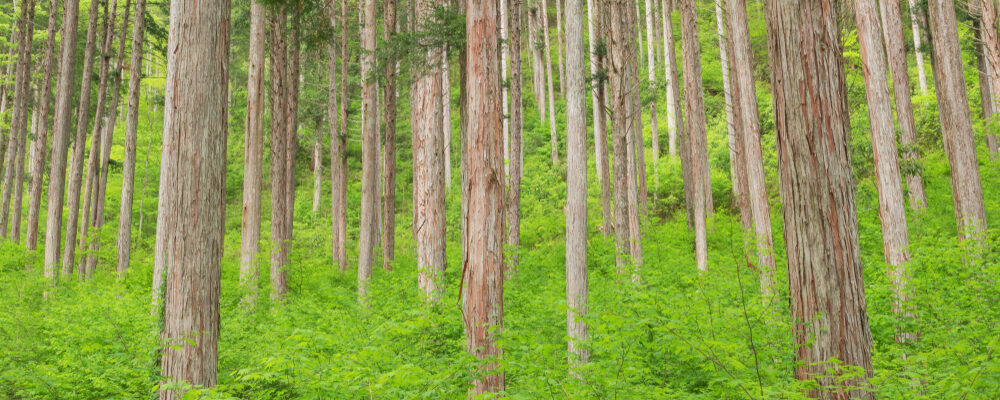
The FSC (Forest Stewardship Council) certificate is an international “seal of approval” for wood and paper products. It ensures that the materials used in a product come from forests that are managed in a way that is environmentally responsible and socially beneficial, while also economically viable.
The FSC is a global non-profit organisation that was established in 1993 following the Rio Earth Summit. It provides two main types of certification, Forest Management (certifies forest owners/managers who meet strict environmental and social standards) and Chain of Custody (tracks the material from the forest through every stage of production to ensure certified material).
Sustainable forest management has a number of issues, and the FSC was created to address them. The biggest crisis it wants to address is probably deforestation and illegal logging, and halting the trade of wood from illegal or high-risk sources. Other major issues include stopping loss of biodiversity and climate change, and prevention of greenwashing.
Discussions around utilisation of local wood aside, Japan is a major consumer and importer of wood and paper. This makes the FSC Certificate highly relevant for both domestic industry and international trade, and many large Japanese corporations use FSC to meet ESG goals. These companies include Mitsui & Co., Oji Holdings and Nippon Paper. Suntory was the first Japanese beverage maker to adopt FSC-certified cardboard for its products.
Japan has its own domestic certification system called SGEC (Sustainable Green Ecosystem Council). It is more widely adopted in Japan, as it tailors to Japan’s specific mountainous terrain and small-scale forestry.
Glossary List
0~9
A
B
C
- Carbon Offset
- Circular Economy
- Circular Economy Commerce
- Circular Edonomy
- Closed-loop system
- Cradle to Cradle
D
E
F
- Fair trade
- J-Credit Scheme
- Food waste
- Forest bathing (Shinrin-yoku)
- FSC Certificate
- Furoshiki
- FutureCity initiative
G
H
I
J
K
L
M
O
P
R
S
- Sanpo Yoshi
- Satoumi
- Satoyama
- Satoyama Initiative
- SDGs (Sustainable Development Goals)
- SDG Compass
- SDG Future City
- SDG Global Indicators
- Sharing Economy
- Shimatsu no kokoro
- Shinto
- Shojin Ryori
- Shokunin
- Shokuyojo
- Society 5.0
- Sushi
- Sustainable Aviation Fuel