
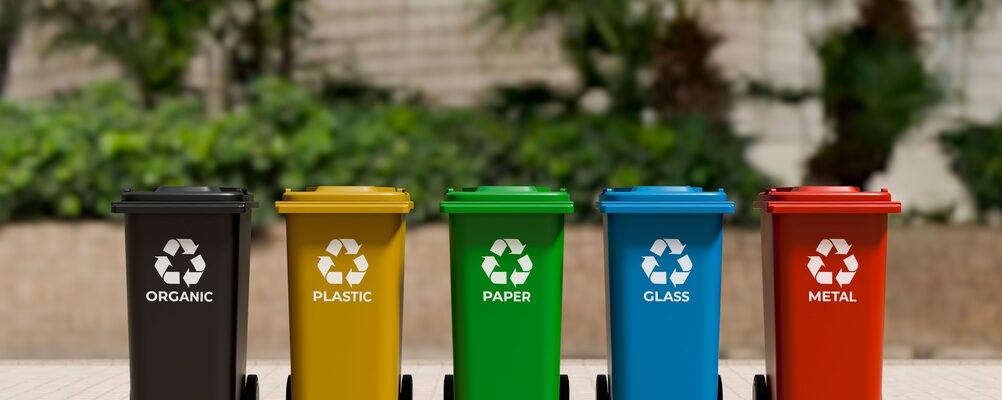
The 3Rs are a ranked set of waste priorities: Reduce, Reuse, and Recycle. Japan built its entire post-2000 waste system around them, and now it is evolving further. Since 2024, the government has recast resource circulation as industrial and economic security policy rather than environmental housekeeping, and the vocabulary has shifted with it: from 3Rs to circular economy.
3Rs actually have a priority order
The 3Rs actually have an order by priority to approach waste:
- Reduce: Avoid generating waste as much as possible in the first place. This can mean less packaging, longer-lasting products, or buying less. Zero waste? All the better!
- Reuse: Use the item or its parts again in its existing form. Second-hand, refills, repair, returnable containers.
- Recycle: Break the material down and remake it into something else. (last in order since recycling consumes energy and material quality is lost with each loop)
Japan’s legal framework cements the hierarchy, and even expands on it. The Basic Act on Establishing a Sound Material-Cycle Society, promulgated in June 2000, sets the priority order as waste reduction, reuse, recycling, thermal recovery and finally proper disposal.
How the 3R practice looks like in Japan
Sorting household waste
Waste separation in households is one of the reasons for Japan’s efficient waste management. While rules may vary from municipality to municipality, citizens separate accordingly. The most famous case study is zero-waste town Kamikatsu in Tokushima Prefecture, where town residents sort their waste into 45 different categories at a central Kamikatsu Zero Waste Center. The town has achieved a recycling rate of around 80%, roughly four times the national figure.
PET bottles
Japan recovers and recycles roughly 85% of designated PET bottles without a statutory deposit return scheme, the combined result of municipal kerbside collection, store and vending-machine collection boxes, and a consumer habit of removing caps and labels and rinsing bottles before disposal.
Plastic products
The Act on Promotion of Resource Circulation for Plastics took effect in April 2022, expanding the logic across the whole lifecycle of plastic items from design to disposal under the banner “3R + Renewable”. This new fourth R represents a switch to renewable and bio-based inputs.
From 3Rs to circular economy in Japan
A regulatory pivot was made from 3Rs to circular economy. METI’s Circular Economy Vision was first issued in 1999 and revised in 2020, setting a direction to move from 3Rs as an environmental activity to circular economy as an economic activity.
Some milestones since include:
- Fifth Fundamental Plan for Establishing a Sound Material-Cycle Society (2024): positions the transition to a circular economy as a national strategy tied to industrial competitiveness, economic security and regional revitalisation as well as environmental goals.
- Circular Economy Action Plan (2026): targets around ¥1 trillion in combined public and private investment by 2030 to strengthen the recycled-resource supply chain and build recycling hubs.
It doesn’t mean the 3Rs are obsolete. Rather than a framework, the 3Rs now describe what to do with material once it exists. On the other hand, the circular economy starts designing things from the macro, looking at how should the product, the business model and the supply chain should be designed so that material keeps its value indefinitely.
Glossary List
0~9
A
B
C
- Carbon Offset
- Circular Economy
- Circular Economy Commerce
- Circular Edonomy
- Closed-loop system
- Cradle to Cradle
D
E
F
- Fair trade
- J-Credit Scheme
- Food waste
- Forest bathing (Shinrin-yoku)
- FSC Certificate
- Furoshiki
- FutureCity initiative
G
H
I
J
K
L
M
O
P
R
S
- Sanpo Yoshi
- Satoumi
- Satoyama
- Satoyama Initiative
- SDGs (Sustainable Development Goals)
- SDG Compass
- SDG Future City
- SDG Global Indicators
- Sharing Economy
- Shimatsu no kokoro
- Shinto
- Shojin Ryori
- Shokunin
- Shokuyojo
- Society 5.0
- Sushi
- Sustainable Aviation Fuel