
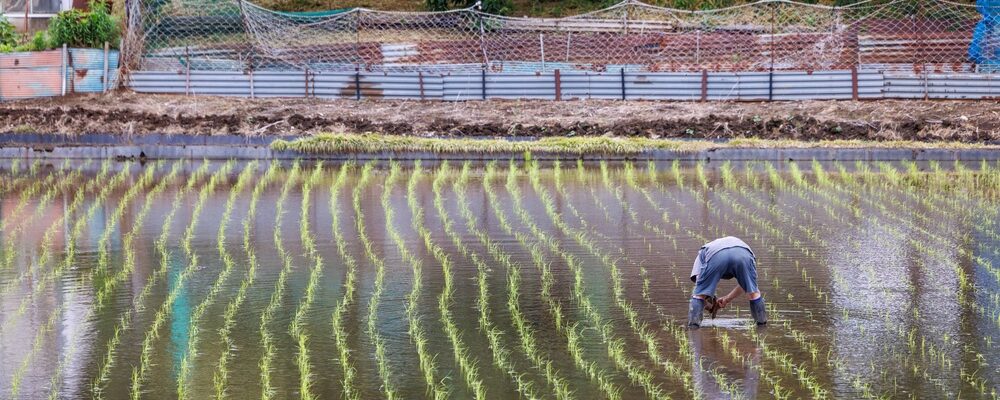
Chisan-chisho is the Japanese term describing a movement that encourages people to produce and consume food and other resources within the local area they are in, rather than shipping goods across long distances. It is basically local production, local consumption.
The term has a very positive connotation in Japan, and is even used often with pride. Those who have travelled in Japan may have seen the term, especially when partaking local food that utilises local ingredients.
Origins of the term and present day
The idea of chisan-chisho is not new, since eating what your local neighbours grow already existed around the world. However, it solidified as a concept in Japan during the 1990s, promoted by the Ministry of Agriculture, Forestry and Fisheries (MAFF). MAFF encouraging chisan-chisho as a way of raising Japan’s food self-sufficiency.
By the early 2000s, MAFF introduced related regulations, and prefectures were required to draw up their own chisan-chisho promotion plans. MAFF continues to formalise the concept today through the Discover Rural Treasures award progromme.
A MAFF survey counted roughly 2,982 chokubaijo (farmers’ direct-sale markets) nationwide in 2004. Five years later, that number had grown more than sixfold to 16,816. These markets are mostly run by producer groups and agricultural cooperatives, and stock mainly fresh vegetables and fruit.
Chisan-chisho also promotes sustainability
Chisan-chisho is also important for sustainability on a number of levels. With food, it is probably the most obvious how there would be lower transport emissions with food needing shorter distances to transport. Japan imports a large share of its food from distant markets, it records one of the highest per-capita food-mileage figures of any country. Shortening supply chains cuts the transport emissions embedded in every meal. That is what chisan-chisho does.
Promoting local production, local consumption also supports self-sufficiency, encouraging regions to support itself through domestic agriculture. This can lead to revivals of farmlands and even rural communities. Furthermore, it reduces exposure to global supply shocks.
While there are criticisms to remind that chisan-chisho can become a marketing or labelling tool, or how it doesn’t guarantee environmentally friendly farming, the concept itself is sound.
Glossary List
0~9
A
B
C
- Carbon Offset
- Circular Economy
- Circular Economy Commerce
- Circular Edonomy
- Closed-loop system
- Cradle to Cradle
D
E
F
- Fair trade
- J-Credit Scheme
- Food waste
- Forest bathing (Shinrin-yoku)
- FSC Certificate
- Furoshiki
- FutureCity initiative
G
H
I
J
K
L
M
O
P
R
S
- Sanpo Yoshi
- Satoumi
- Satoyama
- Satoyama Initiative
- SDGs (Sustainable Development Goals)
- SDG Compass
- SDG Future City
- SDG Global Indicators
- Sharing Economy
- Shimatsu no kokoro
- Shinto
- Shojin Ryori
- Shokunin
- Shokuyojo
- Society 5.0
- Sushi
- Sustainable Aviation Fuel