 Guest Writer
Fewer than 10 sudare workshops remain in Kyoto today. A sudare is a screen of reed or split bamboo, hung outside a window through the summer, where it catches the sun and lets the wind pass, leaving the room behind it three or four degrees cooler without a watt of electricity. This is the way Japan has kept itself cool for centuries.
Rarer still than the workshops themselves is the one in Kameoka City that has built its whole practice around circularity: Kyo Sudare Kawasaki. Otoji Kawasaki began his apprenticeship in 1962; the workshop moved to Kameoka in 1988; and now his two daughters work beside him.
Come this October to witness the craft at “MA (間) RESET: Wellness through Zen, space, and craft“, a one-day tour organised by COS KYOTO.
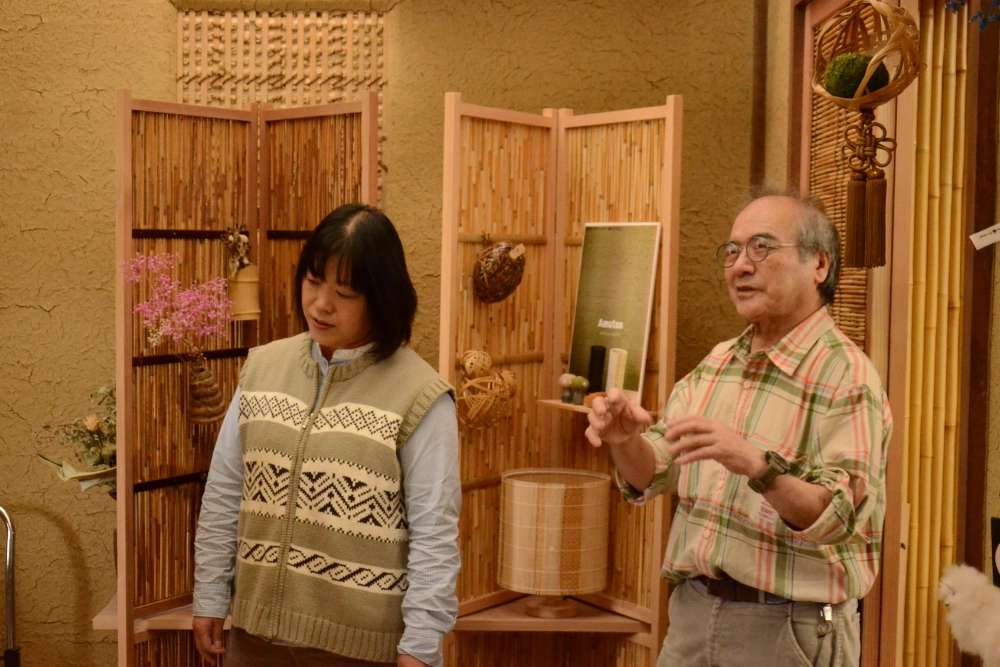
The reed remembers the water
Kyo Sudare Kawasaki weaves with yoshi reed grown around Lake Biwa. It could buy the cheap imported kind, as most of the trade now does, but it does not. The reason has less to do with the screen than with the water.
Reed beds purify the water they stand in, though only if someone cuts and tends them each year. If left alone, the reed coarsens, and the water declines with it. Harvesting becomes care rather than extraction. With development shrinking the reed beds and fewer hands left to cut them, reed has become a species that will not survive without continued tending.
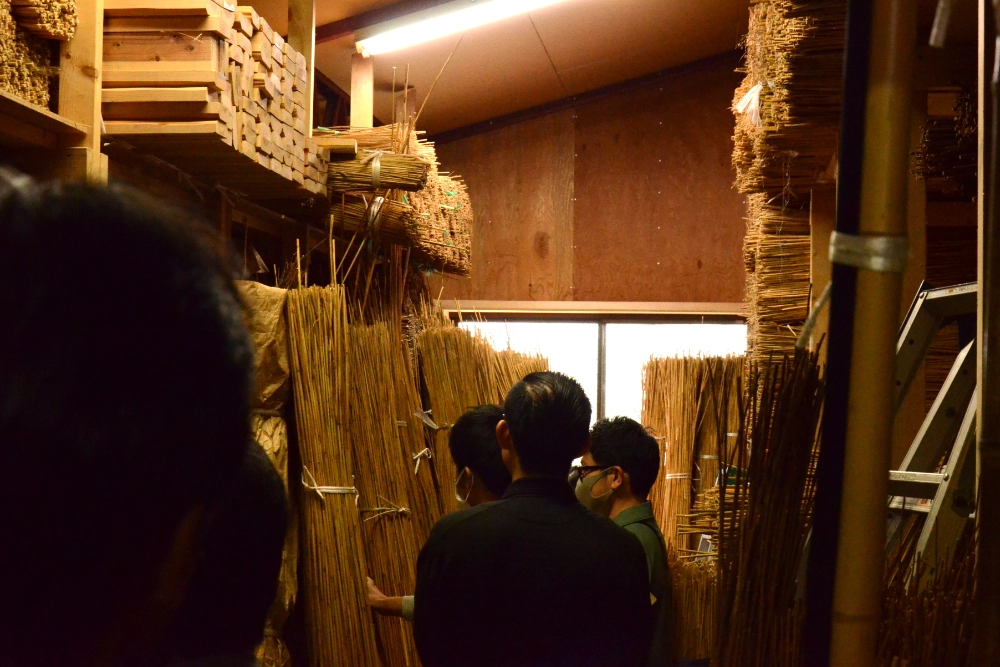
A promise kept to the reed growers
Those hands are getting older. Japan’s reed growers are ageing, the uses for reed are dwindling, and cheap imports have taken most of the demand that was left. When one grower stops, the bed stops being cut, and the material is gone for everyone.
So the workshop buys a fixed quantity every single year, whether or not that year’s orders need it. It is a promise made to people rather than a supply contract, and it cuts both ways: having bought the reed, they have to use it. Whatever cannot become a screen becomes placemats, coasters, ornaments, right down to the last stalk.
Made so that it can be repaired
Almost every sudare (also known as misu in more formal or ceremonial contexts) sold today is machine-stitched, which is to say it cannot be taken apart. Kyo Sudare Kawasaki is among the very few still stitching by hand, and a sewn screen can be opened up and mended: an edge re-bound at around 25 years extends its lifespan. Maintained that way, a sudare stays in use for more than a century, a lifespan longer than the workshop’s own history, and outlasting the people who made it.
There is a conviction buried in that. Culture is not something that just happens to survive the passing of time. The product is designed by somebody so that it could be repaired. The same thinking sits in the tools, where almost none of the weaving machines were bought new: they were rescued from workshops that had closed, and each has outlived the place it came from.
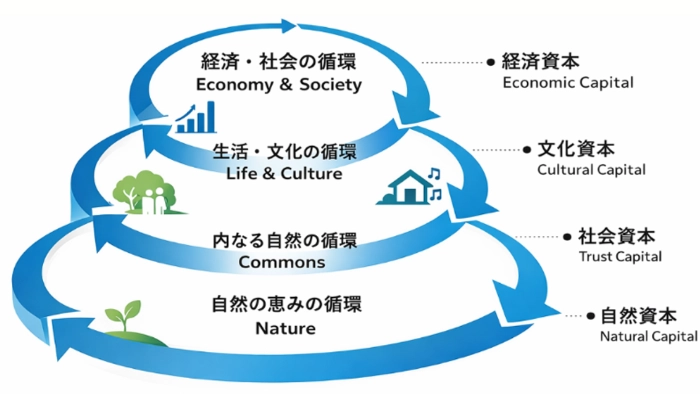
Four kinds of capital, flowing simultaneously
COS KYOTO, the cultural coordinator that has introduced this workshop to the world for years, presents Kyo Sudare Kawasaki as a genuinely circular company. Through its own framework, the Circular Ring, it explains that a business becomes circular only when four kinds of capital (natural, trust, cultural and economic) continuously flow into one another, and that profit alone will never close the loop. At Kyo Sudare Kawasaki all four are circulating simultaneously, which is why the orders hold steady at home and overseas, even at 20 times the price of an imported screen.
Come and see a loop that is already closed
On Sunday 11 October, Kyo Sudare Kawasaki is the centrepiece of “MA (間) RESET: Wellness through Zen, space, and craft”, a one-day tour organised by COS KYOTO for the Kyoto YouMe Triennale.
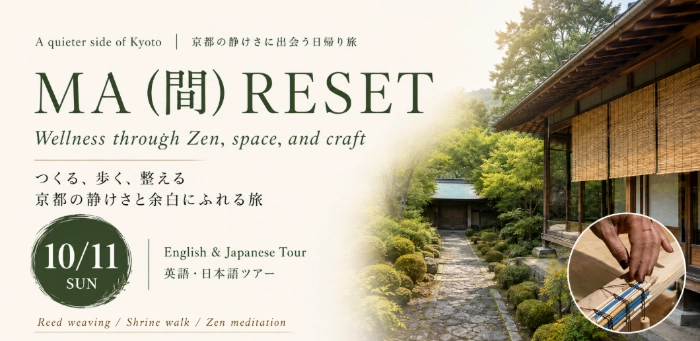
Ma (間) is the Japanese sense of the interval: the space, pause or breathing room between things, which shapes them as much as the things themselves. A sudare is ma made physical, a boundary that filters rather than blocks.
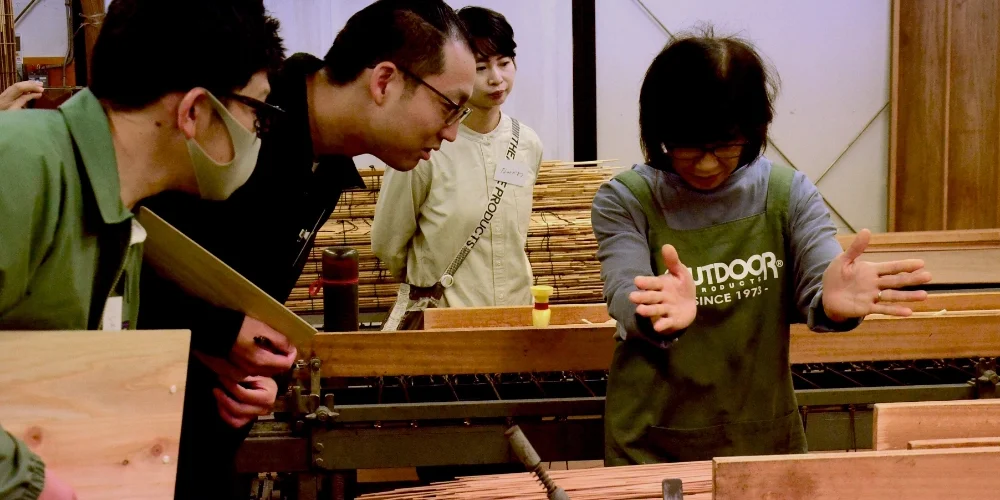
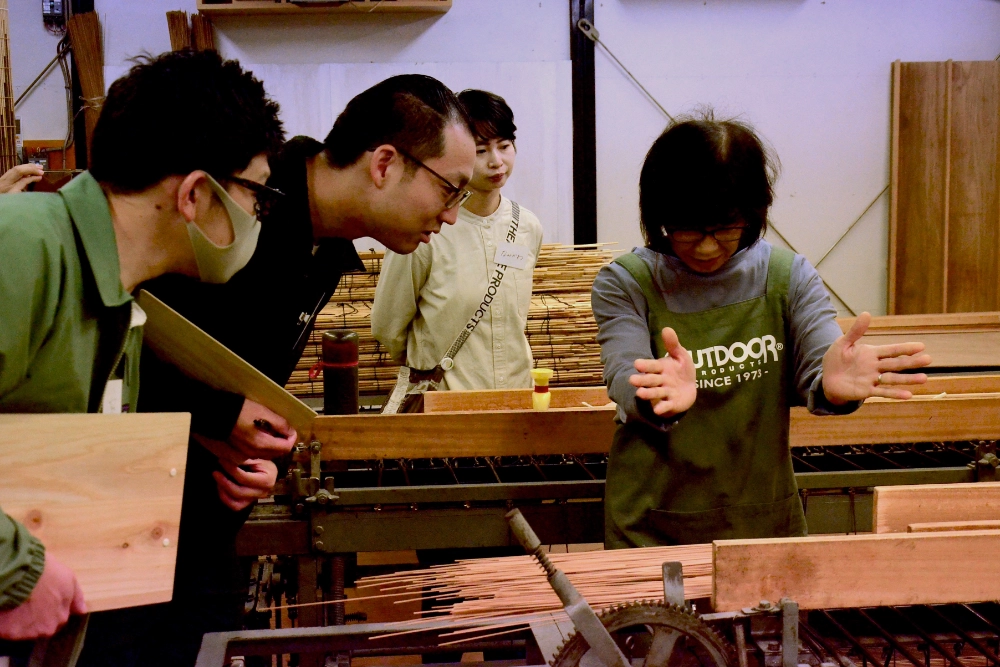
The wellness-themed day begins in the atelier, where you weave your own coaster beside the weavers and see more of the workshop’s delicate, sustainable practice than any article can reveal. It continues at a historic shrine, where space is divided without walls, and ends at a countryside temple with guided Zen meditation for beginners.
Highlights of the programme
- Weave your own coaster in a working craftsman’s atelier
- Guided Zen meditation at a countryside temple, no experience needed
- Stone-oven pizza made with organic vegetables grown in the same valley
- No Kyoto crowds, and time to reset through all five senses
Who the tour is recommended for
- Well-being and mindfulness groups
- Leadership retreats and team offsites
- Architecture, design and craft enthusiasts
- Repeat visitors to Kyoto looking for a calm, story-rich day with hands-on making
Details
- Tour date: Sunday, 11 October 2026
- Registration deadline: Thursday, 1 October 2026, 11:59pm (JST)
- Meeting spot: Kyoto Station, 8:15am / Depart: 8:30am
- Finish at: Kyoto Station, approx. 6:40pm
For more details on the tour and booking, please visit the Peatix site.
A sudare lasts only because somebody keeps using it and keeps mending it, and the same is true of the workshop, the growers and the reed beds at the lake’s edge. The circle stays closed because someone chooses, every year, to keep it going. In October, you can stand inside it for a day.
Dates don’t work? Contact COS KYOTO to run the programme for your team on your own schedule.
Originally written by COS KYOTO. Edited by Zenbird Media.
[Reference] Kawasaki Sudare Homepage[Reference] COS KYOTO