 Roger Ong
ー This is a sponsored article ー
Iida City is located in the southernmost part of Nagano Prefecture, nestled along the Ina Valley, sandwiched between the Southern Alps to the east and the Central Alps to the west. Beyond its wide sprawl of houses, which earned the moniker of Shinshu’s Little Kyoto, it offers diverse landscapes and biodiversity.The first impression one gets upon arrival is this comfortable sense of peace. You don’t have the busyness of a metropolis like Tokyo, but instead find Iida to have just the right amount of liveliness. And the city has much to offer, as I would discover with the introduction from my guides for this visit to Iida City.
Iida City as a travel destination, from food to international activities
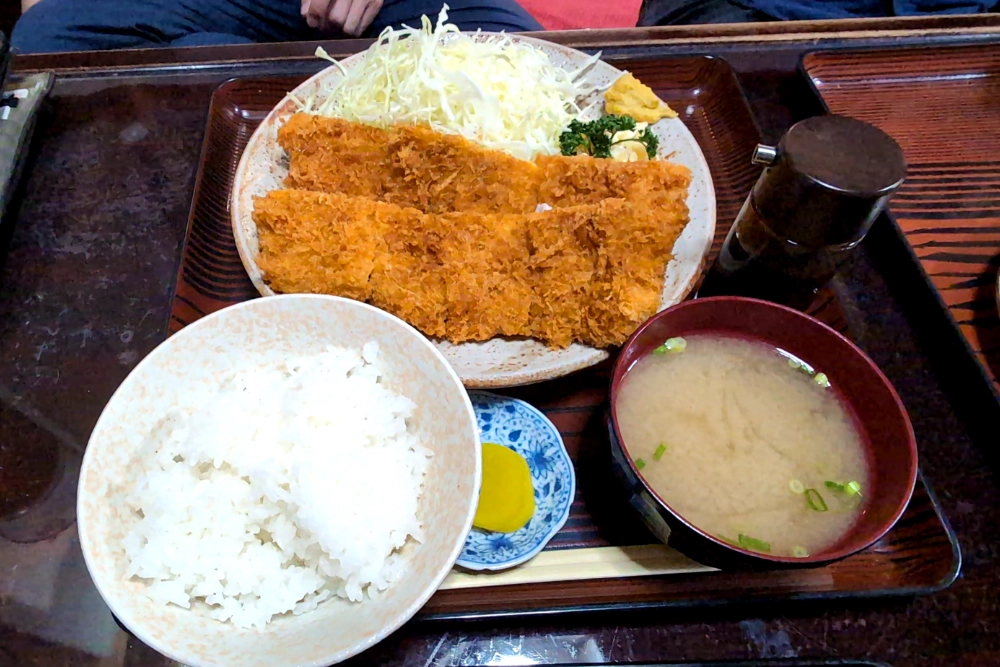
For example, one of the places we had lunch at was Matsuda Shokudo. It is a rustic and comfy restaurant founded in 1887, and is well-loved by the locals. Each meal is satisfying and authentic, truly deserving of its long history. The servings are huge, too, catering to a sumo wrestler’s delight.
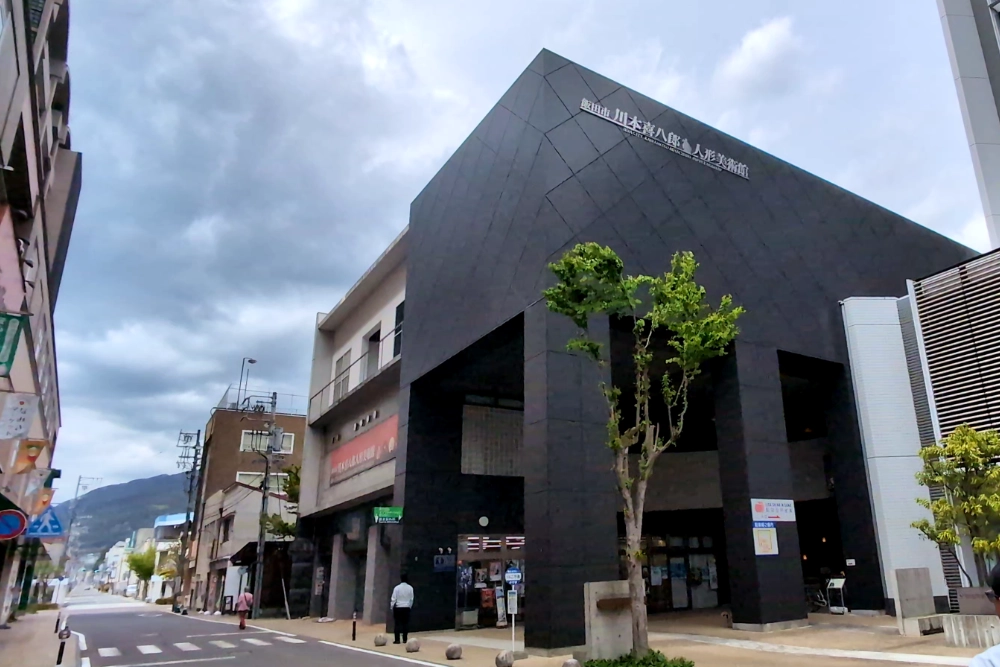
Near the restaurant is an eye-catching building of modern style. This is the Kawamoto Kihachiro Puppet Museum, dedicated to the works of Kawamoto Kihachiro, a renowned Japanese puppet artist and animation filmmaker. It displays over 100 puppets from Kawamoto’s works, including those from NHK puppet dramas.
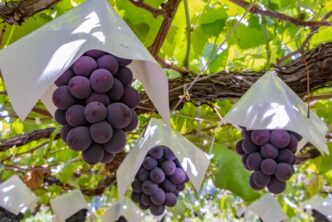
The Iida Ringon Festival is a vibrant summer festival held annually in early August. It is one of the city’s most beloved events, celebrating community spirit, dance, and local culture. The name “Ringon” is derived from the Japanese term “ringo” (apple), which is a symbol of Iida City, known for its apple orchards and scenic apple tree-lined avenues. (You can see the 2025’s video of Iida Ringon below. No need to watch the whole video, just to get a sense of its popularity among Iida citizens.)
Every traveller needs a place for rest, and Smile House was one of the upcoming accommodations I got to see. It is a Japanese home that is renovated to accommodate groups and families, and can accommodate up to ten people. A pleasant design of this accommodation was how spacious it was. I could imagine how active children would love running through the house.
The accommodation is perfect for cycling enthusiasts, especially those who are participating in the Tour of Japan. The Tour of Japan is an international cycling road race held annually in May. The race spans multiple prefectures, including Nagano Prefecture, so it’s definitely worth checking out for sports lovers.
View this post on Instagram
Sustainable tourism in Iida City
We, as Zenbird, are, of course, interested in dipping our toes into the sustainable experiences that Iida City has to offer. Instead, our guides gave us a deep dive to view the rest of that iceberg.
Magokoro, that inn nestled in the arms of nature
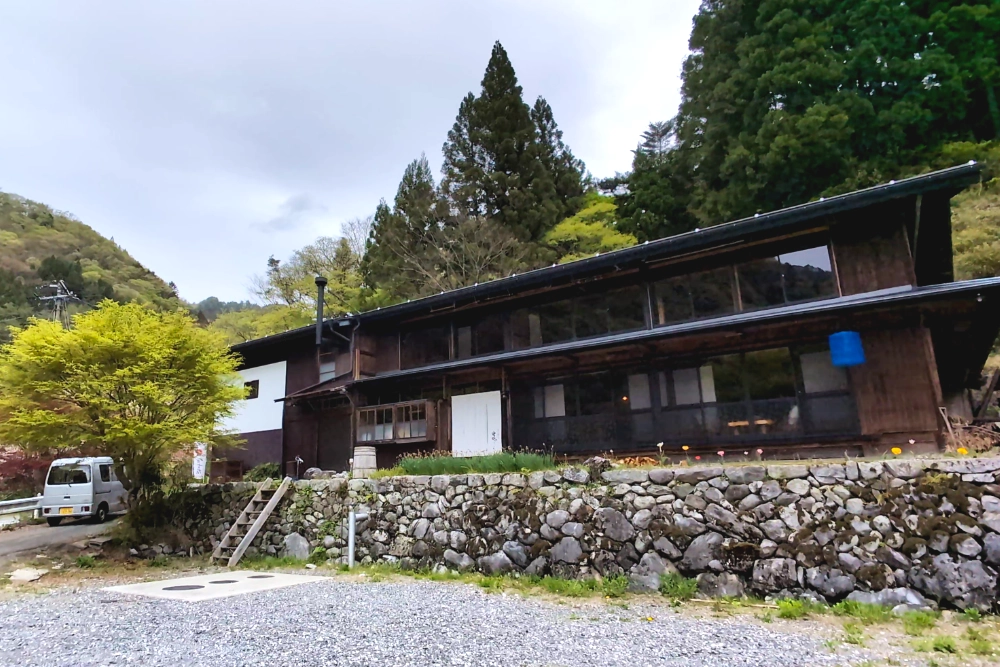
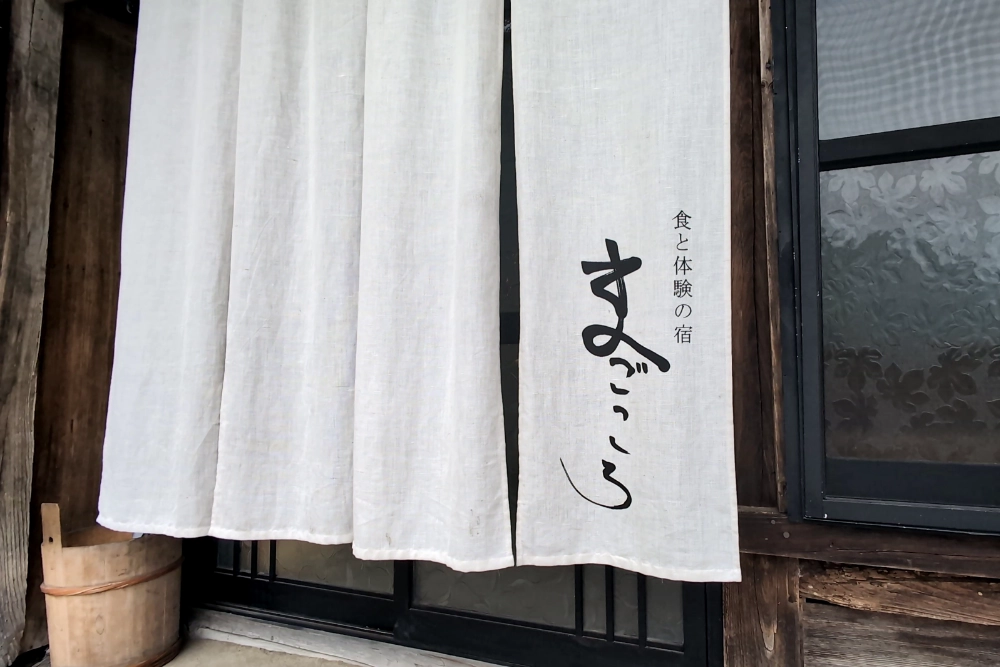
We visited the husband-and-wife team, Kiyoshi and Masami Koike, at magokoro, an inn renovated from a 150-year-old traditional Japanese house. We drove towards the mountains in the east, following a road that tunnelled past the river. After exiting, we arrived at the inn, snugly nestled at the valley’s base.
Plant-dyeing with the gifts of nature
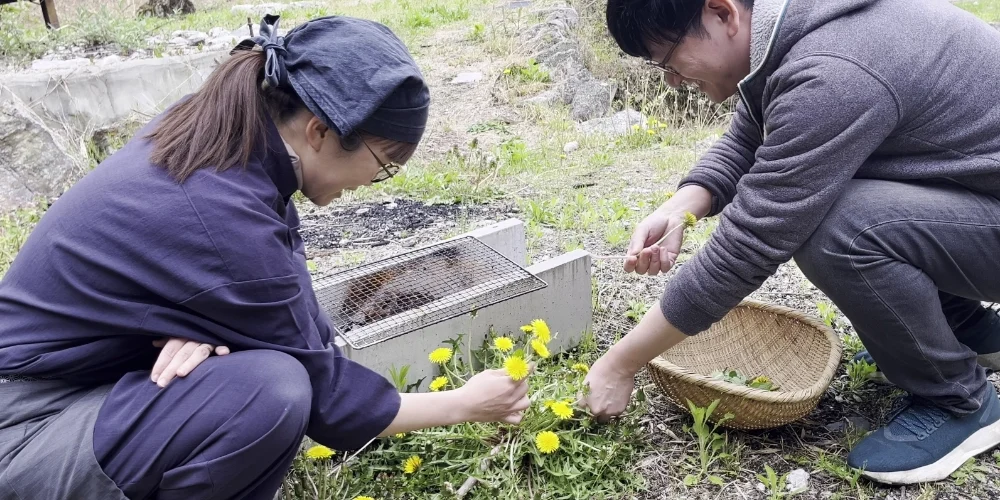
First on our schedule was Kusakisome plant dyeing, a traditional method for dyeing textiles using plant-based dyes. We were going through the whole process, starting from the very first step: collecting ingredients to create the dye solution.
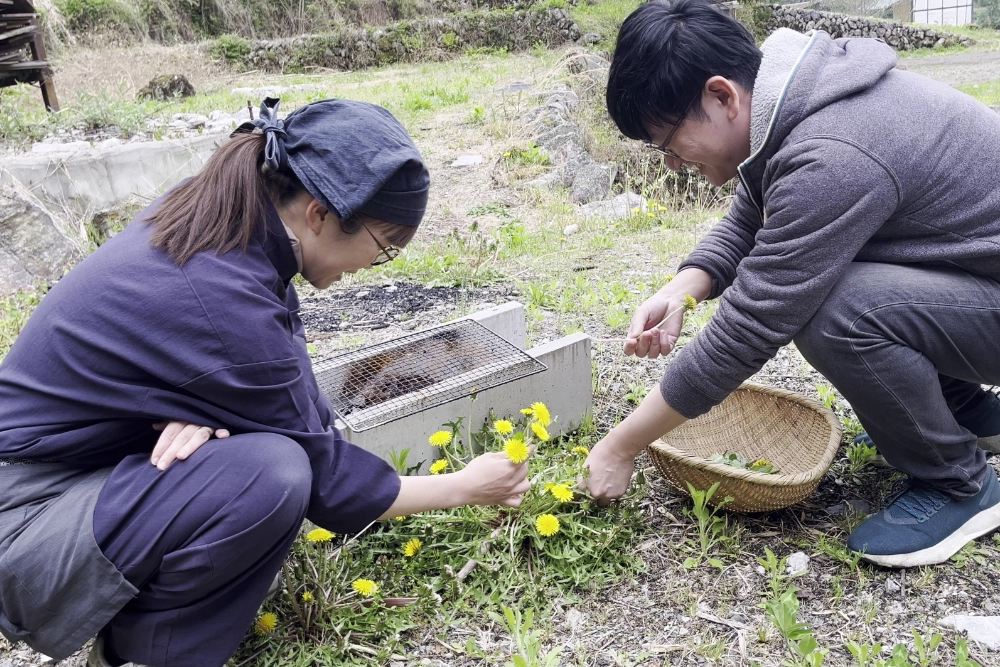
We took a basket and started sourcing suitable plants around the facility. Usually, weeds and grass go unnoticed, but today, they took centre stage. It was a reminder that these, too, are gifts from nature. We consulted with Masami for insights into what we were picking and the kind of pigments that would come from them.
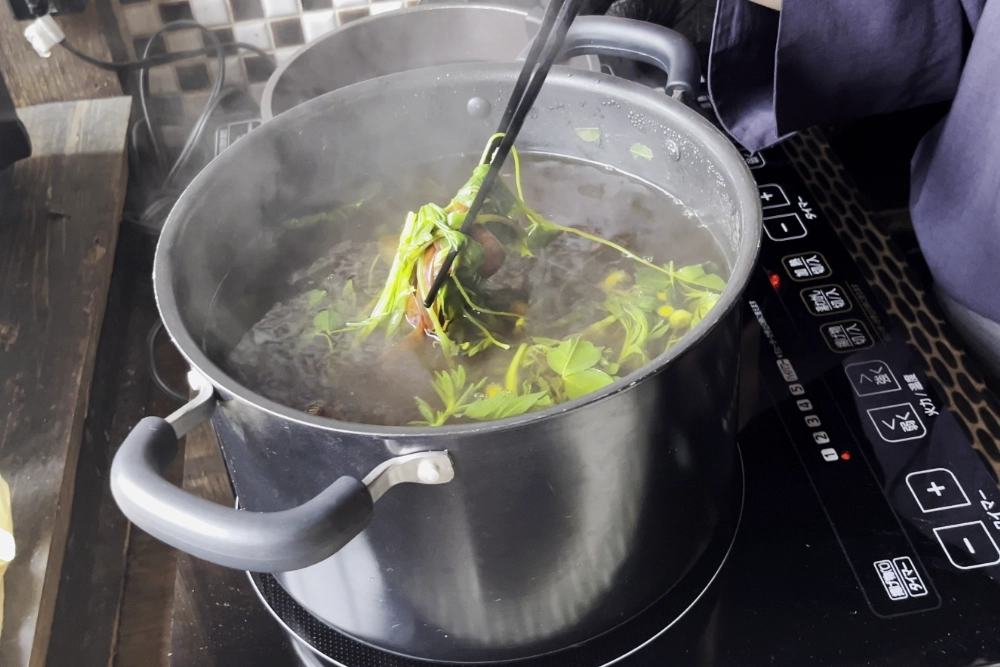
Instructions were available, but it was not just a follow-the-steps experience. Masami gave us meticulous explanations so we would understand why certain steps were taken and what would happen. From priming the ingredients to dyeing the textile itself, it was both fun and enlightening.
As it was my first attempt at plant dyeing, I had no idea how the colour would turn out. In aizome (indigo dyeing), the solution is darker than in plant-dyeing. Masami explained that the hue and contrast of the desired colour can be controlled through the process. It opened my eyes to the possibilities of plant dyeing, offering a glimpse of how rewarding it could be to explore its potential as an artisan.
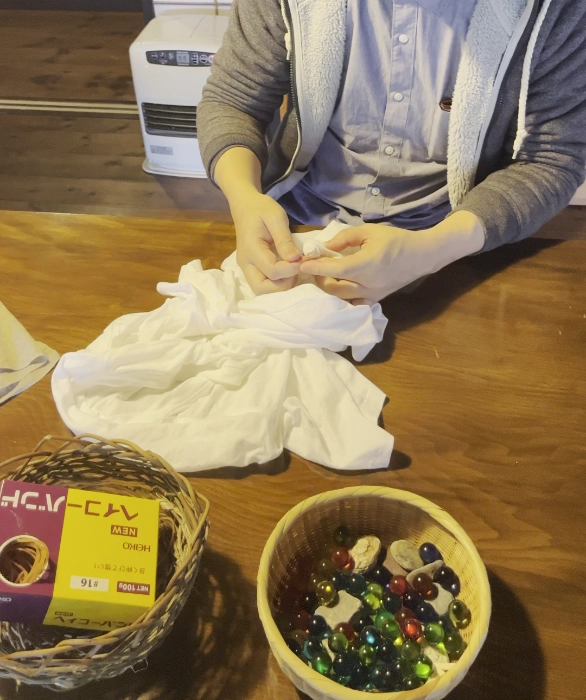
And just like aizome, the process had minimal impact on the environment. Removing weeds helps maintain the soil. The dyeing solution can be reused for future projects or discarded without environmental concerns, as it is organic. In all, it was a gentle and authentic introduction to plant dyeing.
Preparations for dinner
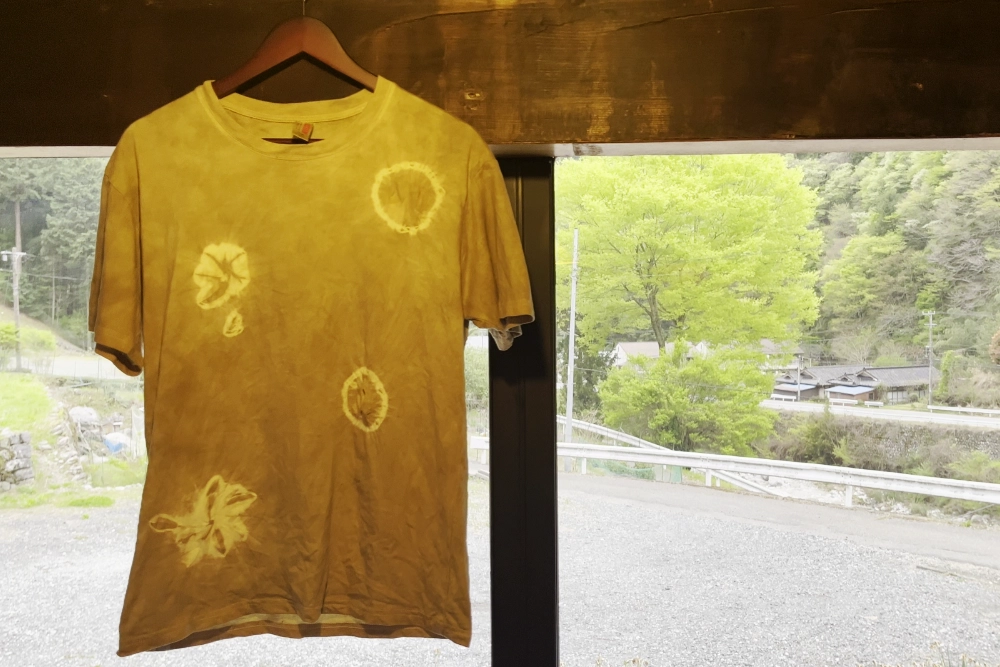
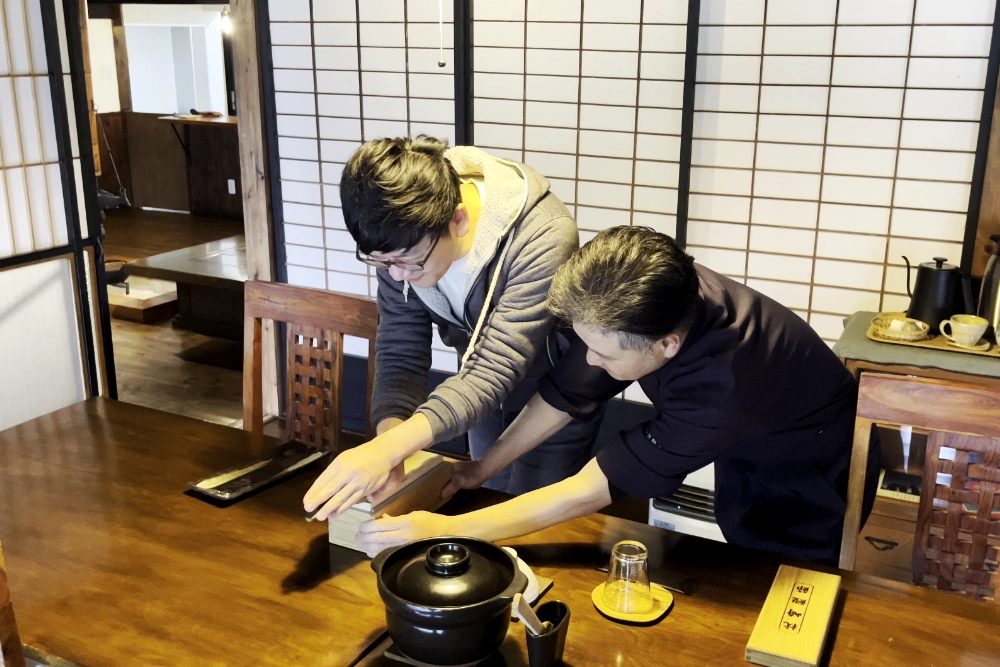
The dyed T-shirt needed time to dry, so we hung it aside. The timing was perfect for preparing dinner.From here, it’s an experience of the Atarajima Shokudo, a restaurant experience on the same premises. As Kiyoshi took charge of the kitchen as the chef, Masami took us behind the facility, this time to collect fuel to cook rice.
While we took in the sight of the small waterfall behind, Masami instructed us to look for cypress leaves. We needed a quick firestarter, and once again, nature provided. Magokoro’s cypress trees offered an abundance of natural fuel.
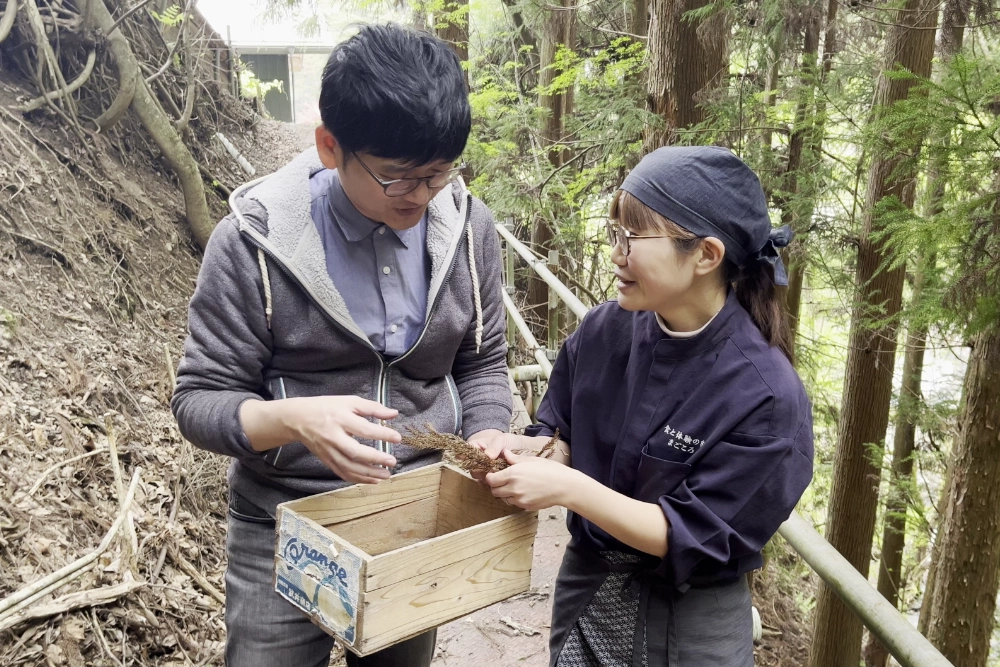
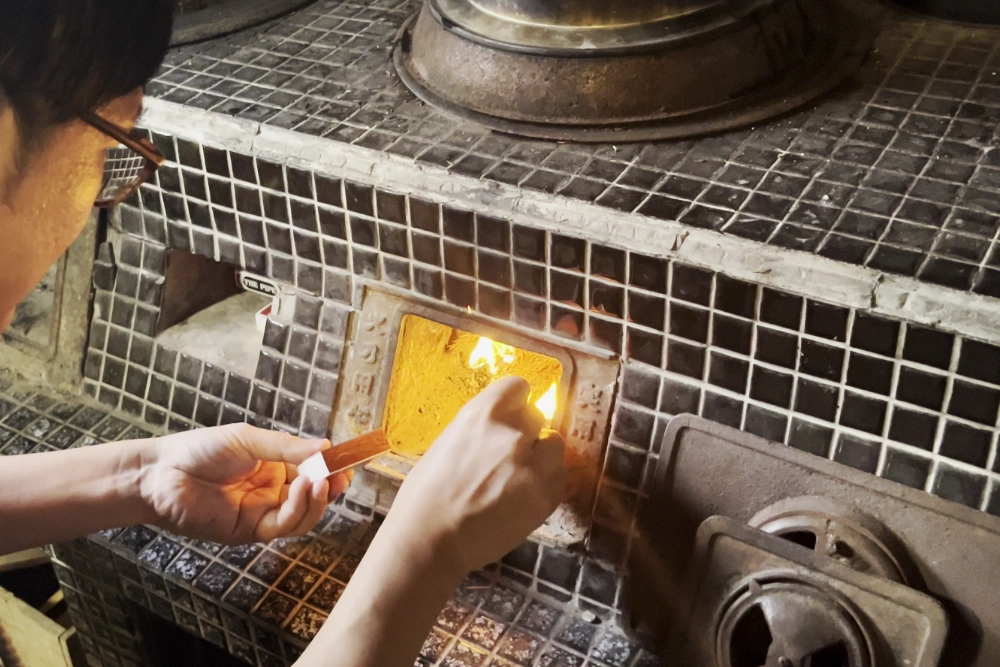
As a final preparation, we chopped disused cypress wood into smaller pieces. It was nostalgic to light a fire with a match, refreshing to use a traditional Japanese stove for the first time, and humbling to acknowledge nature providing the source of the fire.
Our journey of dependence on nature had not ended yet, as dinner proper began. It is one thing to read and learn about living in coexistence with nature. But to experience it is a different level that I can only describe as awe.
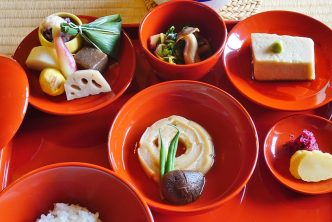
The first layer was the atmosphere. Yakishio fish was being cooked over the irori, a traditional Japanese fireplace once commonly used for cooking and dining. The course continued as each elegantly designed dish arrived, seamlessly maintaining the traditional mood.
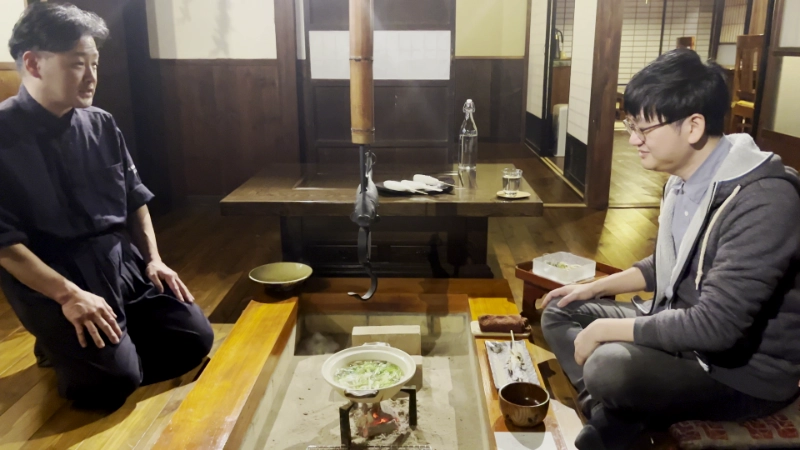
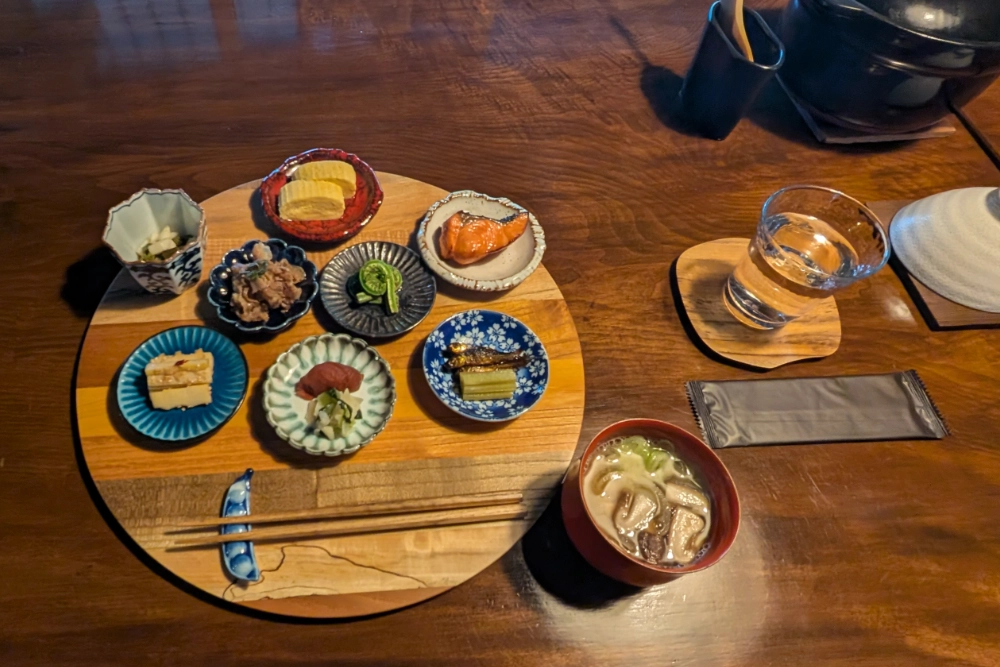
As I continued through the dinner course, I began to notice the recurring theme of spring. The chef explained how most of the ingredients came from local producers. And since the ingredients were seasonal, he designed the meals to highlight the joys of spring. There is a feeling of being blessed by the gifts of nature.
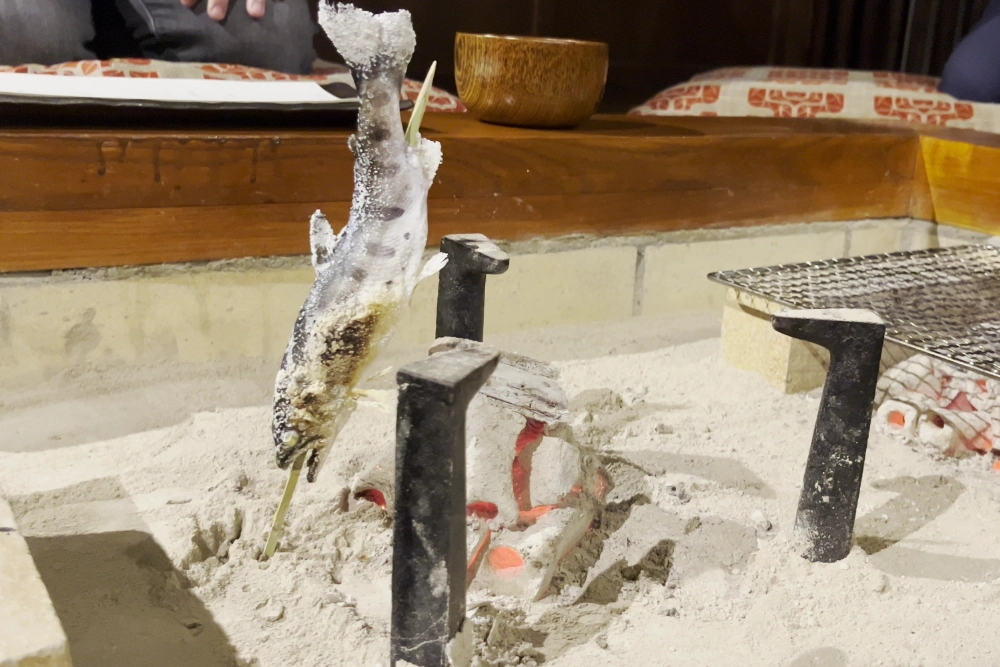
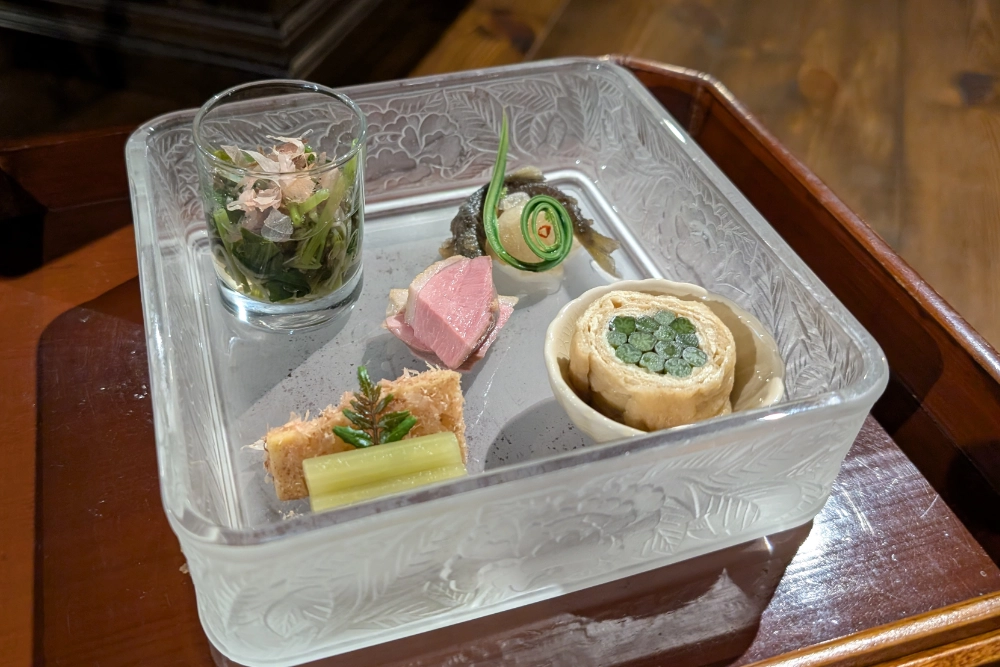
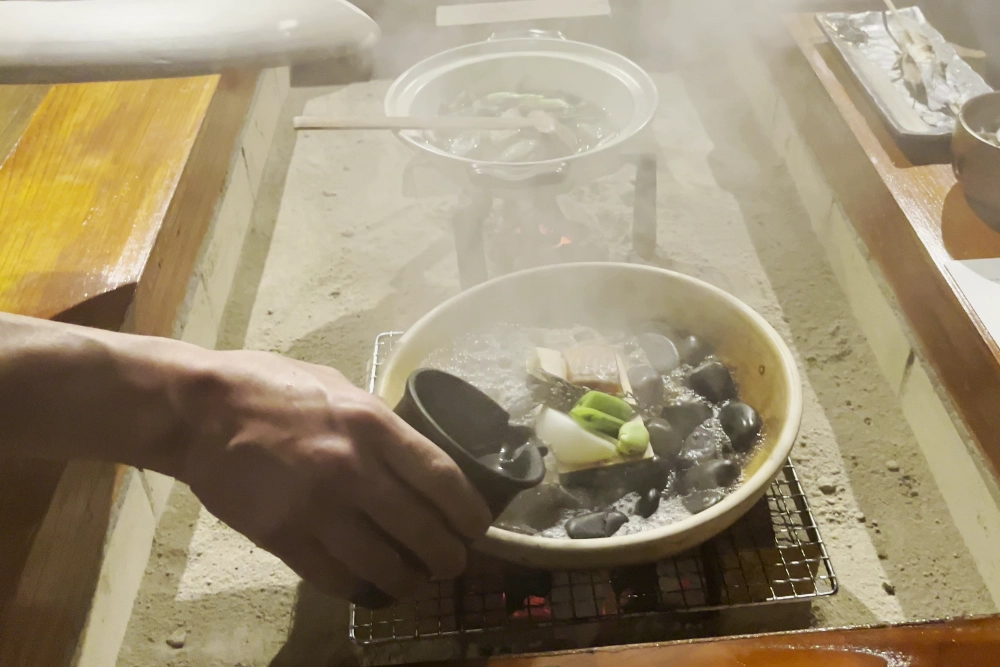
I am no connoisseur of fine dining, but even an amateur like me could appreciate the chef’s skill. That was the final layer of impression: the chef had maximised the inherent value of each ingredient. The dinner not only nourished the body but also satisfied the spirit, knowing that no waste was produced from the gifts we took from nature that night.
Accommodation
It was not until night, when I changed into the yukata provided, that I began to appreciate the interior design of Magokoro.
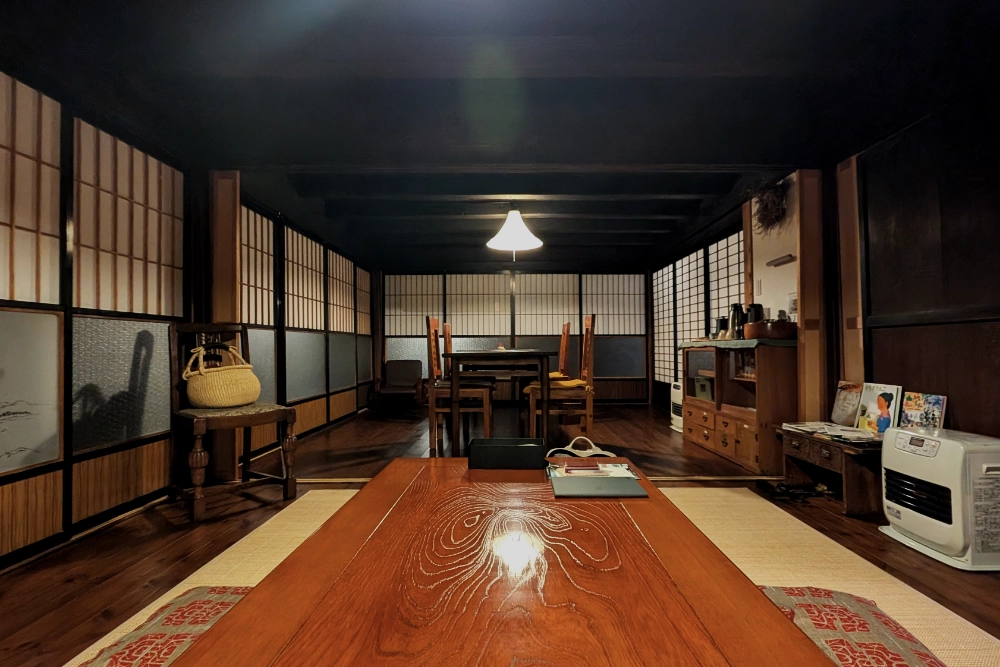
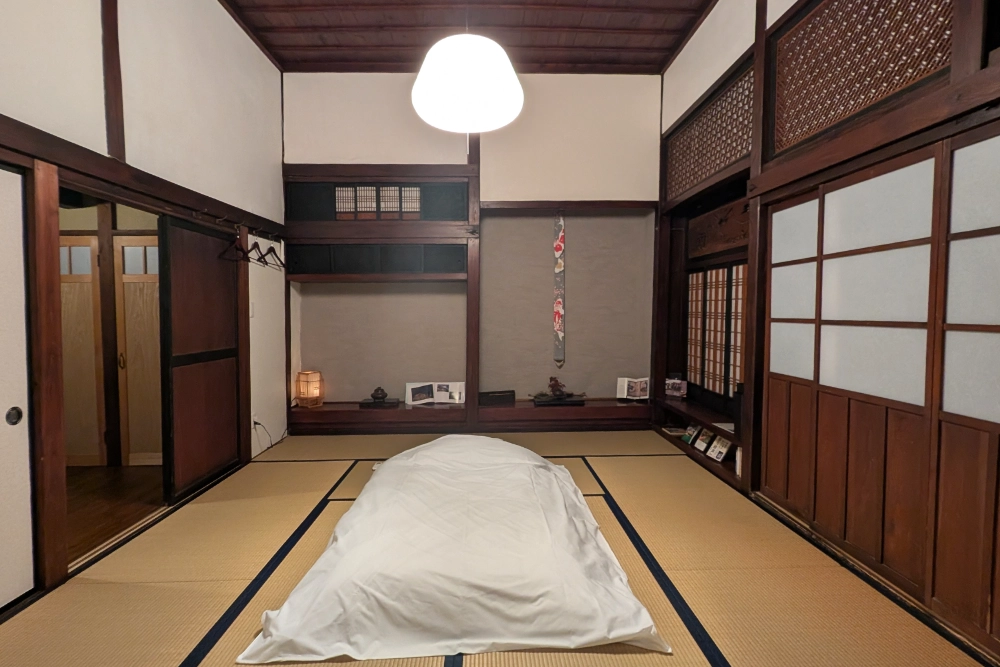
The inn was a perfect blend of modernity and tradition. While it retained the structure and atmosphere of a 150-year-old traditional Japanese home, complete with a spacious tatami bedroom with a high ceiling, an engawa corridor that provides a liminal space to enjoy the outdoor sights during the day, and a stone bathtub (definitely a highlight of the stay).

A peek out of the accommodation at night may throw urban dwellers off. There are no brightly lit streets. Yet the darkness beyond, as we looked out, was not unsettling. Instead, we once again found ourselves dependent on nature, relying on the grace of moonlight.
That said, the inn is not without comfort. It has an electric kettle for hot drinks, a heater for hot baths, two modern toilets, air conditioning for when the weather turns unaccommodating, and a washing machine with drying racks.
Hisakata Washi, the revival of Iida’s Japanese paper
One of the oldest traditions in Iida City is washi (Japanese paper), and to experience its making, we made our way to Hisakata Washi, which is housed in the Shimohisakata Community Centre.
Making our own Japanese paper
The washi culture in Iida City is not to be taken lightly, as it has over 1,000 years of history. It is said that washi was once so widespread in the city that every household was involved in its production in one way or another. Knowing that washi embodies circular concepts of reuse and repair, I could imagine how Iida City must have had a unique sustainable culture.
While one may have the impression that a traditional washi maker would find an abode in a traditional Japanese house or factory as a sacred space for their craft, Hisakata bears no such air of sacredness. The place is more akin to a well-maintained community centre, giving the facility a welcoming vibe, with a brightly lit workshop visible to all.
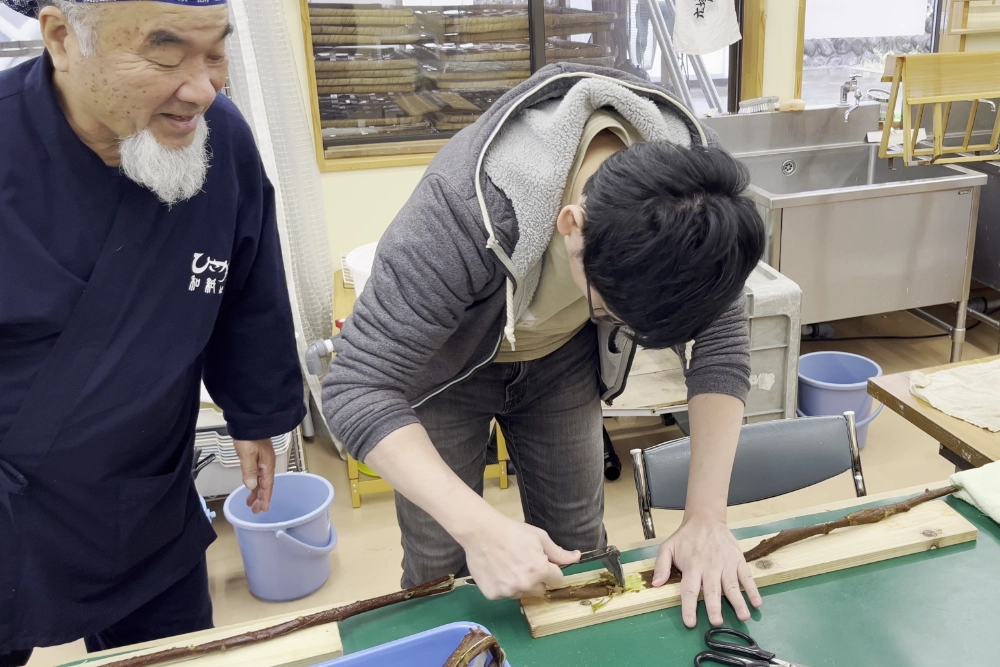
Laid out on the table were crafting materials, but the first order of business was to create our own washi. After exchanging greetings, we happily hopped onto the production floor. We were introduced to the tools of the trade, and most importantly, the kozo, or paper mulberry, the traditional tree used as material for washi. Part of the experience involved removing the bark from the kozo stems. It is tricky to apply the right amount of strength to remove the bark, especially for an amateur. The craftspeople made it look easy during the demonstration, revealing the seasoned hands behind their skill.
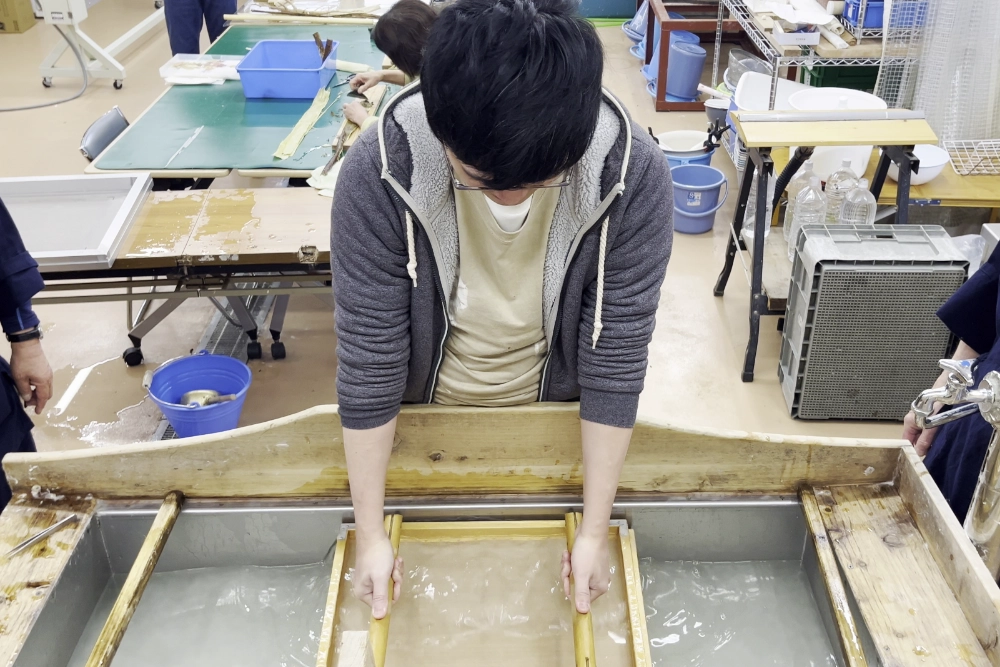
To save time when breaking down the fibres, they had prepared the fibre mixture in a nagashi-bune vat. While different washi producers have their own methods for layering the fibres, Hisakata alternates the movement direction perpendicularly to create smooth, durable paper. The staff were very patient, guiding and advising us on how to improve our technique.One advantage of the Japanese paper-making process is that there is no fear of making mistakes. The fibres can be broken down again and reused. In fact, when we made a mistake, we learned firsthand how the washi turned out differently, and were amazed at how the masters made perfection look so effortless.
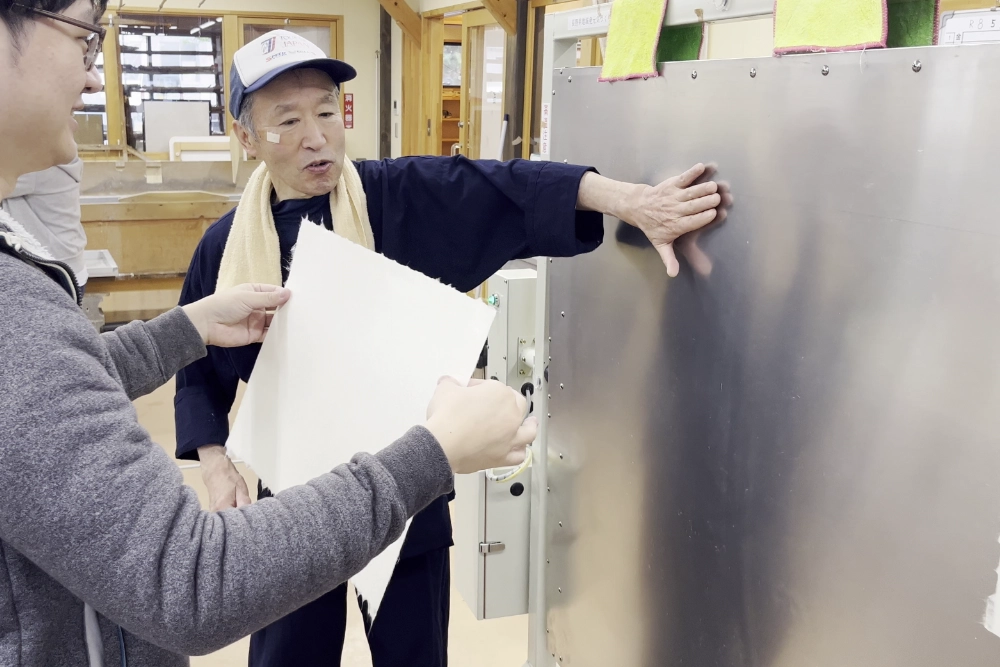
Throughout the experience, we discovered subtle details that we might otherwise have missed. From the angle of using the tools to the wave formation in the vat and the perfected technique of laying and removing paper from the equipment, we caught only a glimpse of the craftspeople’s skills, leaving us wondering what other wisdom remained unsaid. Though the whole process seemed mechanical, it surprisingly required vision, of an end goal that the craftsperson wants to create. Because we can tweak the process and, depending on the intended end-use, Hisakata’s skilled craftspeople were able to draw on their experience to achieve that vision.
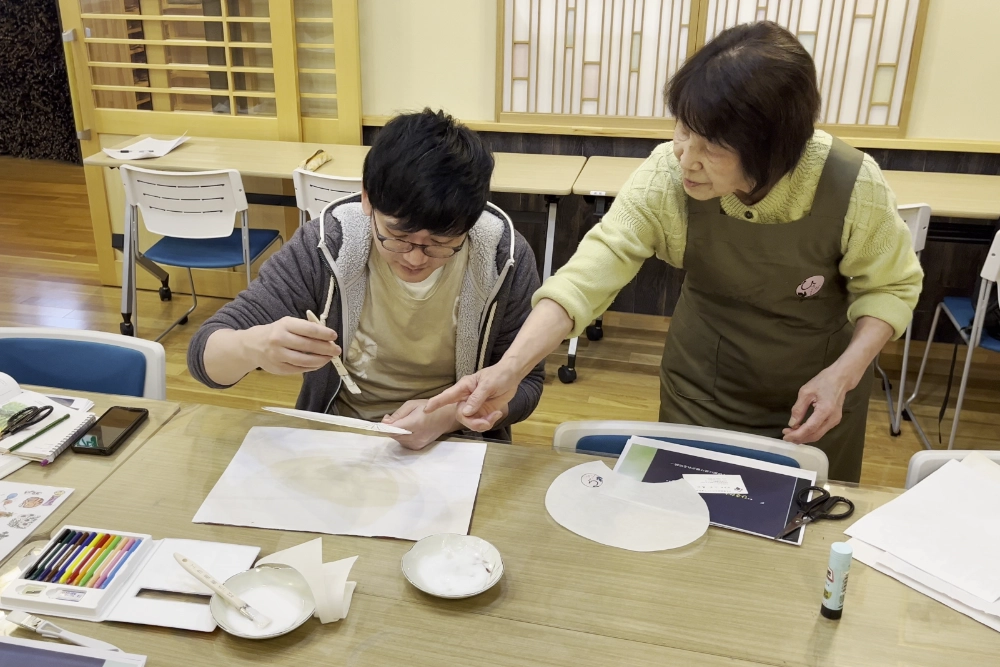
To restore the washi
Through their work, they produce paper that can last for a thousand years. The Iida City government recognises Hisakata washi as a cultural asset, using it for official awards and documents. The South Shinshū Tourism Agency promotes the craft as part of the region’s heritage, linking it to tourism and local pride.
However, the picture wasn’t always so rosy, because the washi industry actually went through a decline. The spread of Western paper and the 1959 Sanroku Disaster led to the closure of the last washi factory in the area in 2000.
One might usually feel a pang of hope when witnessing the determination of the Hisakata staff to revive and preserve Japanese washi culture. However, coming here and conversing with them melts that air of nobility away, leaving you with a sense that you are in the company of friends. Hisakata’s friendly and welcoming atmosphere makes us want to visit again, and we know the future of washi making is in good hands.
Afterword
As I made my way back from Iida City, I was reminded of how I had only discovered a small part of what the city offers. The depth of the experiences at Magokoro and Hisakata brought me closer to the values that define coexistence with nature and to how masters of their art can maximise the potential of the gifts we receive from nature.
Furthermore, sustainable tourism is not the only sustainable activity in Iida City, which is also active in promoting circularity and decarbonisation. That will be another pleasant discovery for next time.
A chance to visit Magokoro, Hisakata, and more on the SAMURAI TOUR this October
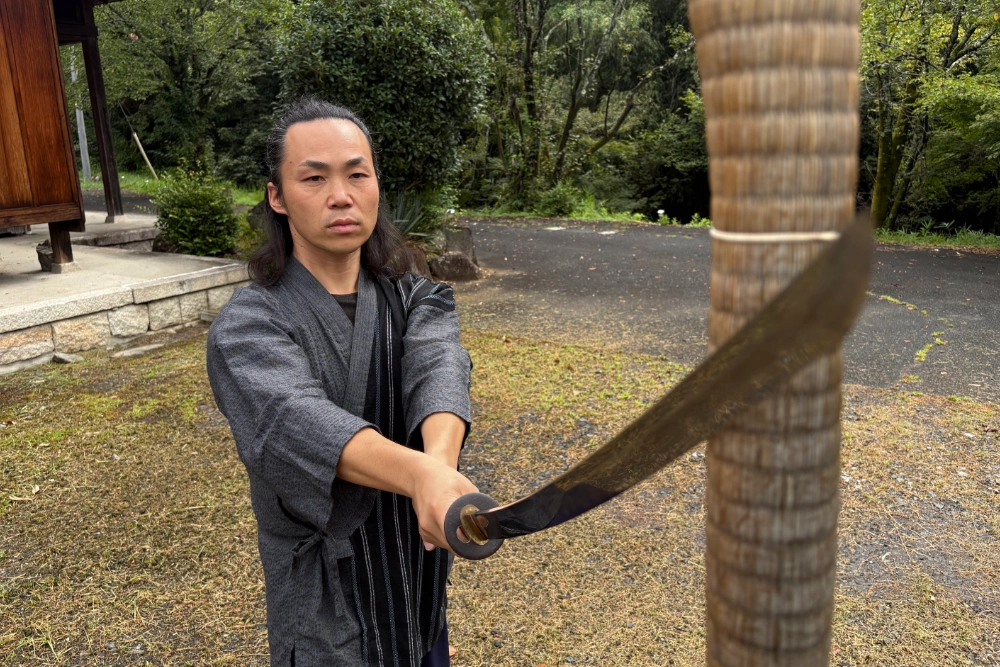
An upcoming tour this October is offering travelers a cultural programme not only to visit Magokoro and Hisakata, but is also including other experiences like Mizunami for a Japanese Sword experience, and a farm stay and Cider Barn & more. Through these, Iida City wants to help you discover its local culture and connecting with locals face-to-face!
Tour highlights
- Experience the culture of the Japanese Sword: Experience Japanese swords, learn about traditional Japanese culture.
- Experience local handicrafts: You’ll get to enjoy hands-on activities and plant-based dyeing.
- Interaction with local people and food: Enjoy a unique experience through yakiniku and meals with locals.
Details of SAMURAI TOUR (4D3N)
Dates: 20~23 October 2026 (Tues~Fri) (*)
Meeting time: Nagoya Station, 11:00am (Exact meeting time and location to be confirmed)
Tour ends: Nagoya Station, approx. 1:00pm
Guide: An English-speaking guide will join for all tours
*Other dates may also be available. Please contact the travel operator directly for details (contact below).
Tour inquiries
For more information about the tour, including pricing, availability, detailed itinerary and tour conditions, please contact the travel operator directly.
Travel inquiries:
Humor Travel
General Travel Business Manager, Shun Hanai
contact {@} humortravel.com