 IDEAS FOR GOOD
[Kyoto Circular Economy Special Feature]
This feature series is a collaborative project between IDEAS FOR GOOD and Kyoto City, exploring the present and future of the circular economy of Kyoto. How can the spirit of “Shimatsu no kokoro,” together with circular living and a centuries-old culture of craftsmanship in Japan’s ancient capital, be harnessed to drive innovation that will shape tomorrow’s Kyoto? And how can they give rise to circular businesses that will thrive for the next thousand years? Together with Kyoto City, local businesses, and policy advisor Akihiro Yasui, we explore Kyoto’s unique value and potential through the lens of the circular economy.
A vibrant array of vegetables, all uniform in size, shape, and colour, arranged neatly in the supermarket’s produce section. This is a familiar scene which we take for granted as we pick up our groceries. However, a harsh reality lies behind it: large volumes of vegetables are discarded before ever reaching the market.
Very often, just because a vegetable is slightly bent, too big or a little pale, it’s considered worthless. An item may be discarded as “off-spec” simply for being a few centimetres longer than the standard, or an entire crate might be rejected because of a single damaged piece. This isn’t just about food waste. It’s a societal issue that squanders producers’ hard work and cuts into their income.
In response to this situation, one Kyoto company has stepped up: Minato Co., Ltd., a business that has evolved from a wholesale food distributor founded in 1950 into a food platform. The company has redefined the traditional role of a wholesaler, which merely distributes goods, with the goal of becoming a “food platform.” We spoke with Hiroshi Minato, the company’s CEO, about what goes on behind the scenes.
Interviewee Profile: Hiroshi Minato
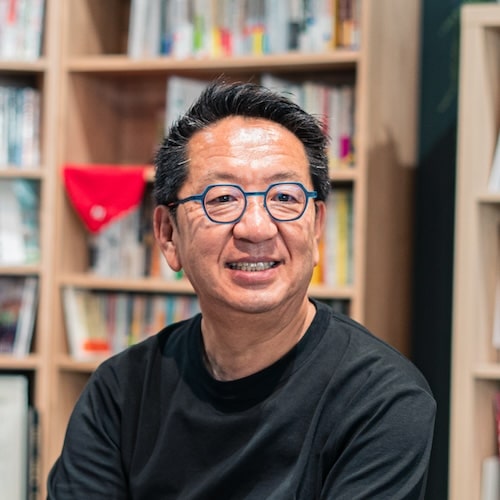 Born in Kyoto in 1963. After graduating from Ritsumeikan University, he joined Sanwa Bank (now MUFG Bank), where he spent 30 years in corporate sales, serving as a branch manager and director of the corporate sales division. In 2016, he committed to managing his family business, Minato, and worked to transform it. In April 2022, the company merged with a fresh produce business. He still visits farms to meet producers face-to-face.
Farmers are invisible in the marketplace
Purchasing products from manufacturers and markets and then selling them to restaurants and hotels is the conventional wholesale business model, which hedges the risk of sudden shortages due to bad weather.
In contrast, Minato Co., Ltd. directly collects ingredients from local producers and delivers them to hotels and restaurants across Kyoto. This approach reflects a deliberate shift away from a profit-first wholesale model that treats producers’ ingredients as commodities. Instead, the company pursues a wholesale model that values the flavour of the ingredients and the stories of the producers.
The company doesn’t primarily work with large-scale farms. It partners with small-scale producers of specialty ingredients, including Kyo-yasai (traditional Kyoto vegetables) and gibier (wild game). While working with them, the company has witnessed some unfair realities.
Minato: “For example, 20% to 30% of corn harvests, or even more in a bad year, were discarded as off-spec. That means out of 10,000 cobs harvested, 3,000 would be thrown away. In the case of Kamo eggplants, we were paying 20 yen per kilogram to incinerate them at a disposal centre. Yet the off-spec Kamo eggplants I eat every day are often tastier than regular ones, even though they’re just a little discoloured, misshapen, or damaged.”
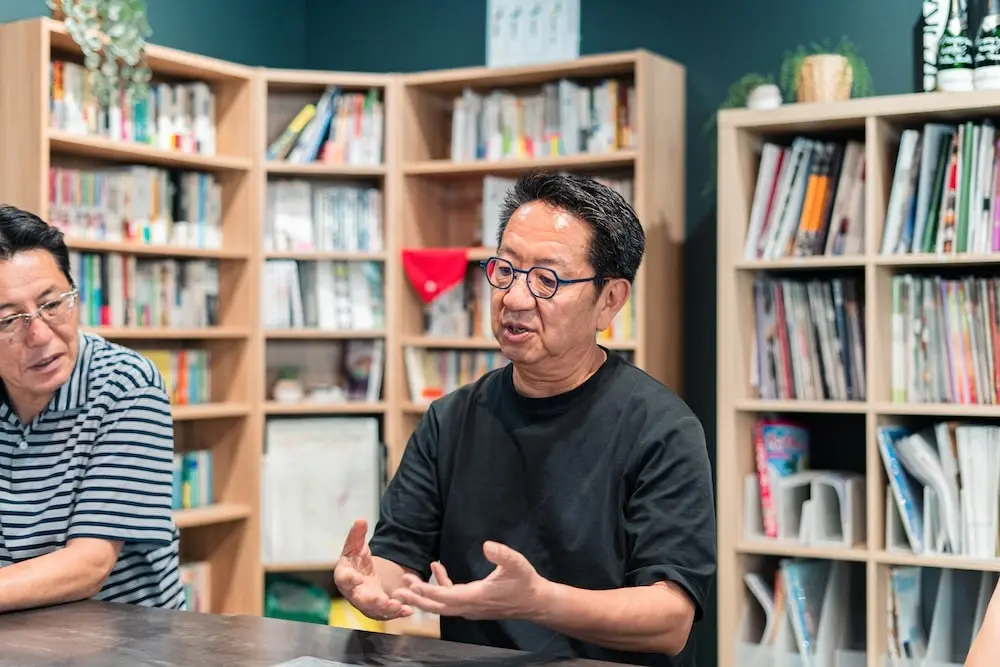
High-quality ingredients are being discarded because they are bound by the “rules” of the market. While some might think that producers can sell these delicious ingredients themselves, Minato noted that this is a challenge in reality.
Minato: “Baby corn thinned from fields to let full-size cobs develop are sold in supermarkets in packs of uniform length for around 200 yen. But independent farmers simply don’t have the time for such a labour-intensive sorting process.”
That is why the company purchases produce by the kilogram, regardless of its shape or size, and sells it to restaurants that value taste above all. Its business model is particularly helpful for small-scale producers.
Unpredictability is the key to solving the problem
The company’s 30 refrigerated/freezer trucks and its large warehouse are essential to solving the problem of off-spec vegetables. The warehouse can handle three main temperature zones—chilled, frozen, and ambient—and seven specific temperature settings for different items. This allows the company to take in off-spec vegetables, despite their unpredictable availability in terms of timing and quantity.
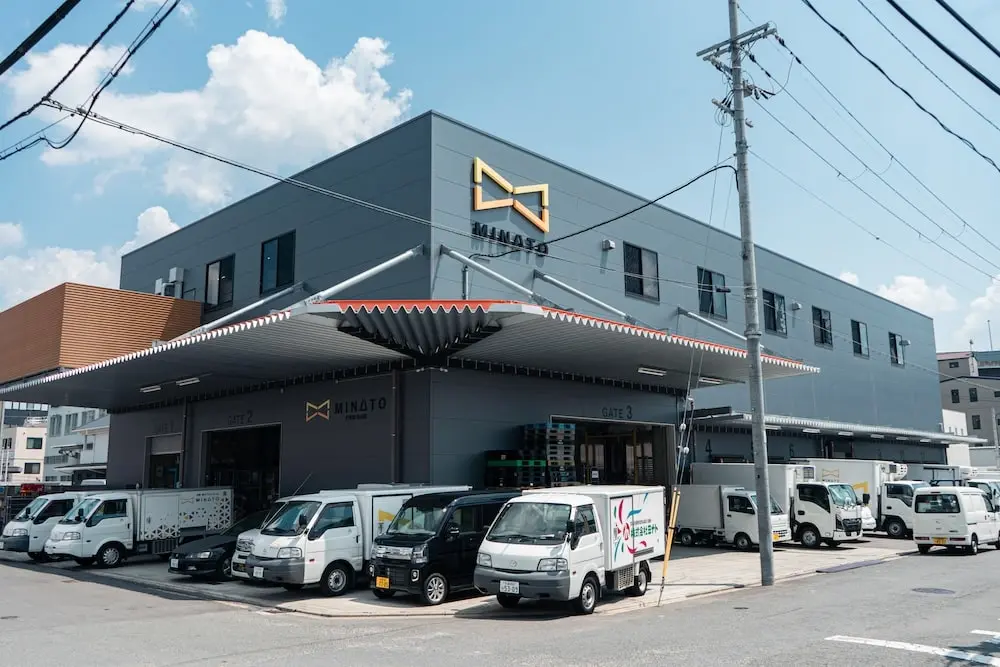
This refrigerated and frozen logistics system, combined with the warehouse, led to a collaborative project with Kyoto Prefecture. The project, named “MIRYO FOOD PROJECT,” transforms “unused” vegetables that would have been discarded into ingredients that “enchant” (miryo) people. It takes advantage of the fact that large quantities of processed product can be made more efficiently by freezing and storing farm produce collected from various producers until there is enough.
Minato: “To process products in a factory, you need to bring in a minimum amount. Bringing in 500 to 1,000 kilograms per batch allows us to process efficiently. For pearl corn, which is in its third year in 2025, we take in about six tonnes of off-spec produce annually. We have a partner factory in the City remove the kernels, which we store in our freezers. The kernels are then processed into purée at another Kyoto processing company, and we store it again in our freezers until sale.”
This system makes it easier to accept small quantities of produce from individual producers. It also allows the company to sell these items as value-added products.
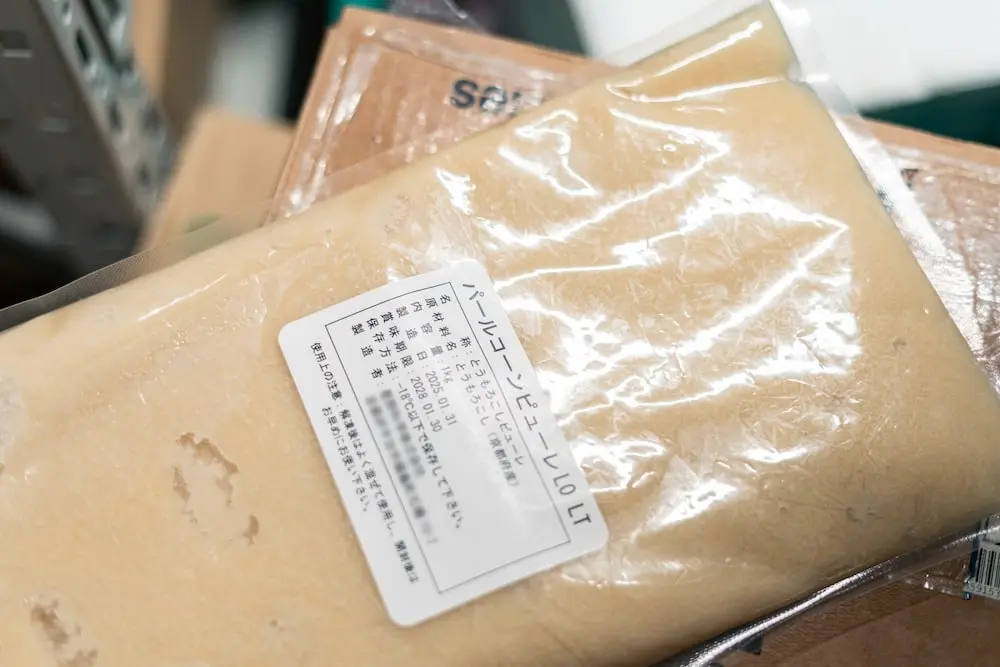
In addition, misshapen Kintoki carrots and the offcuts from Shogoin turnips used for pickles are transformed into rich purées that retain their flavours and then delivered to chefs. This project takes in about 15 tonnes of off-spec vegetables annually, helping to reduce food waste.
Acting as a platform to reconnect producers and chefs
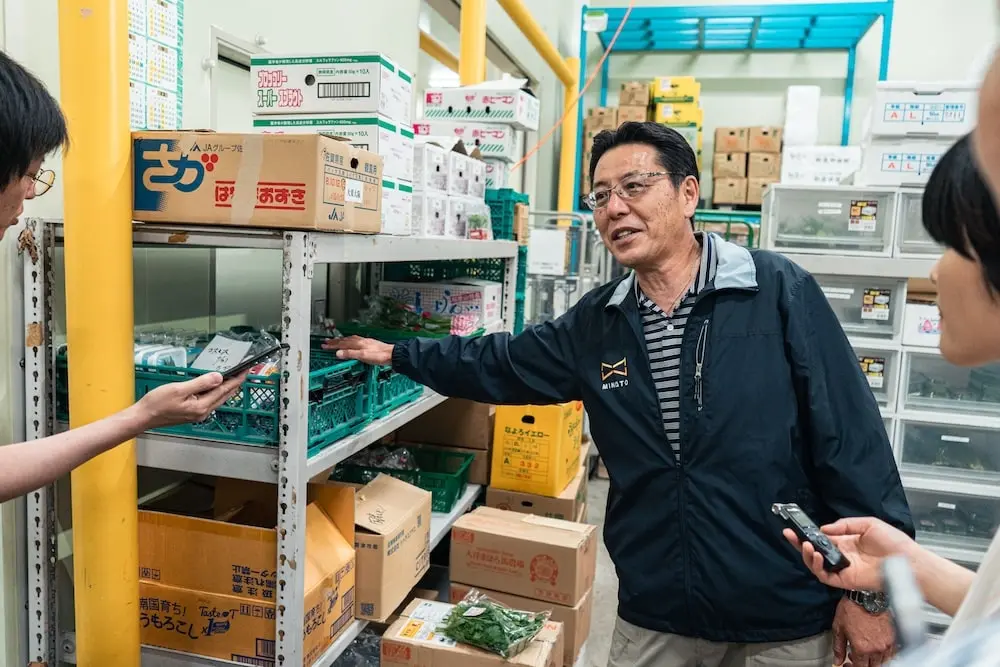
Minato’s efforts go beyond simply delivering local produce and using off-spec vegetables. The company also organises farm tours to take chefs to the farms, allowing them to personally taste the deliciousness of the ingredients, understand the producers’ dedication, and experience the “story” behind the food’s creation. While the MIRYO FOOD PROJECT is important, Minato believes the priority is to ensure that carefully grown ingredients reach chefs and consumers without being wasted.
Minato: “Our primary customers are hotels and restaurants because, through direct dialogue with producers, chefs at high-end kitchens understand the value of off-spec vegetables and can use them to create innovative dishes. Producers rarely have contact with chefs, but because we are directly connected to the producers, we can guide the chefs to the farms. We can have a direct dialogue with the chefs through these opportunities. This is also a key difference from other wholesalers and a reason we have been able to develop our unique sales channels.”
The company is also a partner member of the Sustainable Restaurant Association Japan (SRA-J), which promotes sustainability in the food industry. The association’s standards, such as “supporting farmers and fishermen” and “praising the source of the food,” are in direct alignment with the company’s business practices.
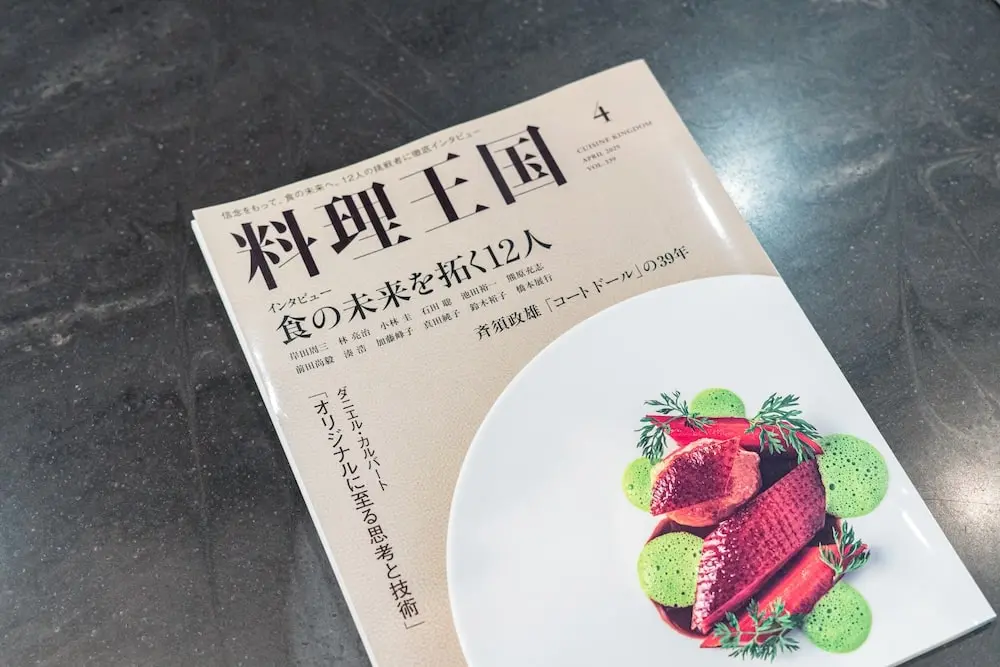
Minato commented that the farmers’ business itself isn’t very profitable. However, this seemingly “inefficient” approach is the source of the company’s competitiveness. The results are particularly evident in the company’s recruitment.
Minato: “When we raised the flag of ‘Achieving Delicious and Sustainable Food and Society,’ our recruitment saw a huge boost, attracting talented students from all over Japan. We were inundated with applications for just six new graduate positions and had to close the recruitment process in spring.”
By sharing the stories of producers instead of simply sourcing ingredients from the market, this “inefficient” initiative has enhanced the company’s brand value and created a foundation that attracts a new generation of talent. The company’s efforts embody an ideal corporate cycle where solving a social problem, in turn, creates economic value.
“Let’s change the 1%”
Minato’s challenge extends beyond the food supply chain, emphasising that, ultimately, consumer awareness also needs to change. The strict market standards are partly a result of consumers’ tendency to choose ingredients that look perfect.
For example, in supermarkets and at farmers’ markets in France, piles of vegetables of varying sizes and shapes are a normal sight. Uniform beauty isn’t the only definition of abundance.
Minato: “It is said that to create a significant change in society, it is crucial that ‘1 per cent of the population changes.’ For example, in Japan, if one million people start taking action, it will create a major social movement. On the other hand, change is unlikely to happen with a smaller number of people. In Kyoto, 1 per cent of the population is about 14,000 people. If mindsets change for these people, it will spread to those around them, and the entire city will change.”
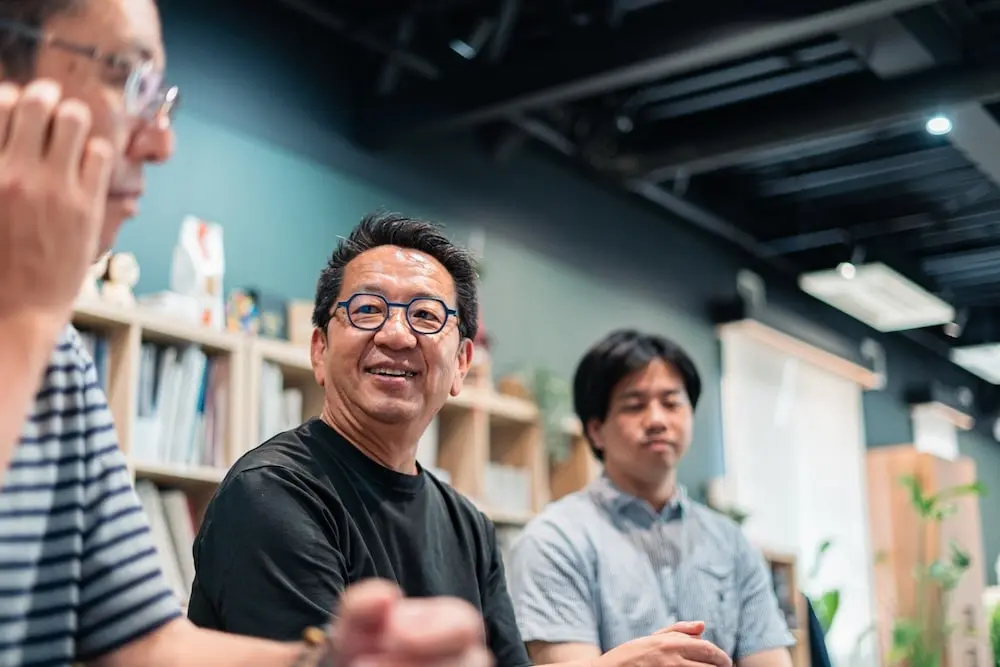
If 1% of Kyoto’s citizens choose off-spec vegetables, the market would be forced to change. Companies and the government would no longer be able to ignore this trend.
The company’s vision is to achieve a “4xWIN” scenario where all four parties benefit: producers, chefs, consumers and the company itself. Beyond this, it aims to make Kyoto a sustainable city. The power to create this future lies not only on farms and in kitchens but also in our own choices.
Editorial note
During the interview, I was most impressed by the fact that Minato Co., Ltd.’s initiatives go beyond simple local sourcing and food waste reduction. A strong desire to increase the income of producers has given rise to a “food platform” that rebuilds the relationships between key players who have often been disconnected—producers, chefs and consumers like us.
To eliminate food waste and create a better cycle, it is not enough for a single company to make an effort; collaboration with diverse players is essential. The company’s challenge provides a powerful hint that such efforts can, in turn, lead to economic benefits, such as increased corporate revenue and stronger recruitment.
[Reference] Minato Co., Ltd. Homepage (Japanese)[Launching October 2025] Circular Business Design School Kyoto
Kyoto is home to timeless assets nurtured over 1,200 years: the spirit of “Shimatsu no Kokoro”, circular ways of living, and a culture of craftsmanship. We are facing urgent global challenges such as climate change and biodiversity loss. To create a truly circular future requires drawing upon this wisdom, applying it to the present, and carrying it forward into the future. To this end, Harch Inc., which operates IDEAS FOR GOOD, will launch a new learning program in October 2025. By combining Kyoto’s deeply rooted circular wisdom with cutting-edge insights into the circular economy, the program seeks to envision and achieve the future we aspire to. “Decode Culture, Design Future”──a circular future rooted in tradition, from Kyoto.
Official website: https://cbdskyoto.jp/
Photo by Asuka Sasaki.
Original article edited by Natsuki, published on IDEAS FOR GOOD.
Translated by Zenbird Editorial Team.