 Zenbird Editorial Team
In a sushi restaurant in Kyoto, one column stands out with its rustic, crooked look, almost an artistic touch to the space. It is a length of old chestnut, weathered and irregular, originally a support post from a traditional rack used to air-dry harvested rice. The very same rice that became the sushi now being served. Nearly a century of rain and wind have worn the wood in ways no human hand could replicate, leaving a surface marked by wabi, the beauty of things shaped by time. Every other surface in the room was built to a uniform standard, and this starring column was chosen precisely because it wasn’t.
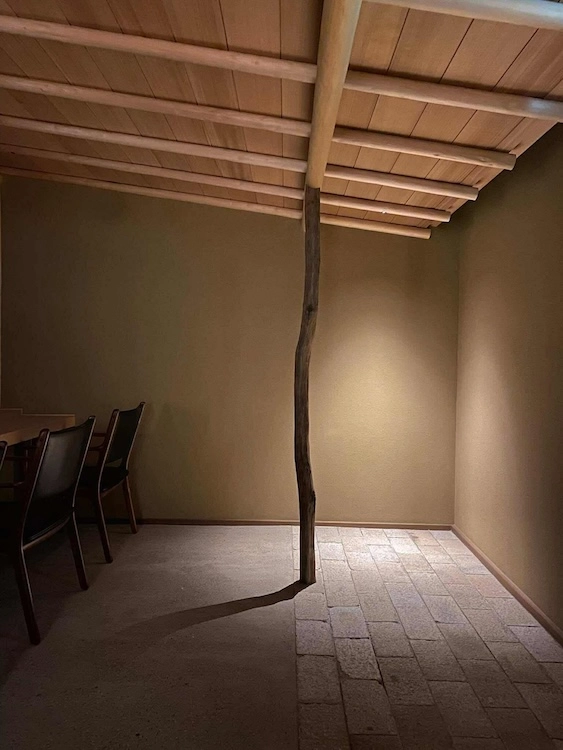
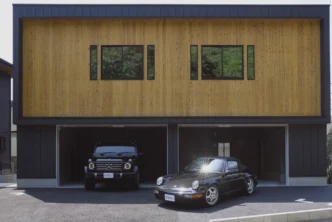
The carpenter behind the design is Kunimitsu Hata, who leads KYOKOTO CO., LTD., a Kyoto construction and carpentry studio built around sukiya-style architecture. Sukiya is a tea-ceremony-rooted tradition of building with natural, minimally processed timber.
If you are coming to Kyoto this October, you have a chance to visit Kyokoto in COS KYOTO’s tour programme “How Japan Sees Beauty.” COS KYOTO is a cultural coordinator and sustainability training firm that provides educational tours to meaningful places (nature, crafts workshop, shrines etc.), inspiring you and provoking thoughts on life and business. The tour programme is a part of the upcoming Kyoto YouMe Triennale event, and will let you immerse in Japan’s forest and beauty, including a space influenced by Kyokoto.
Kyokoto, the sukiya carpentry sustaining Kyoto’s cedar forest
Hata was born in Gifu, as the son of a dealer in premium construction timber. He entered the sukiya workshop of master carpenter Sotoji Nakamura in Kyoto in 1991, where he honed his skills over the next 24 years. He left in 2015, working independently, and Kyokoto was formally incorporated on 11 September 2019.

With Kyokoto, Hata works on tea rooms, restaurant interiors, temple renovations and private sukiya residences. His work includes interior work for the Chanomi Crane Garden and renovation work at Erinji Temple in Yamanashi Prefecture.
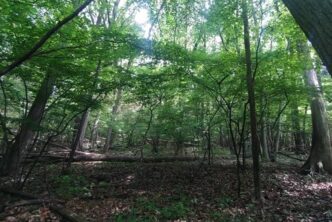
Kyokoto works while constantly watching over Kyoto’s mountains, drawing its very name from the “Kyo” of Kyoto and the “koto” of those mountains. Their studio is made from Kitayama cedar grown in the hills north of the city. It also happens to be the wood that sukiya architecture depends on: raw material read for the beauty, time, and history it carries, then shaped by hand into architecture that will carry the mountains into the next era.
Unfortunately, fewer Japanese homes now have tatami rooms, and tea-ceremony practice has declined. These have contributed to the decline in the need for Kitayama cedar, which stands at an estimated 95% decrease in demand between 1988 and 2018. Kyokoto’s construction service is one of the few remaining pillars upholding Kyoto’s declining forestry industry.
Hata hosted a fieldwork visit for Kyoto City’s Circular Business Design School programme through COS KYOTO’s guide, where participants travelled north to Nakagawa Hachiman Shrine. It is home to Kitayama cedar, and there participants laid eyes on a single cedar roughly 600 years old, considered to be the parent tree of all Kitayama cedar.
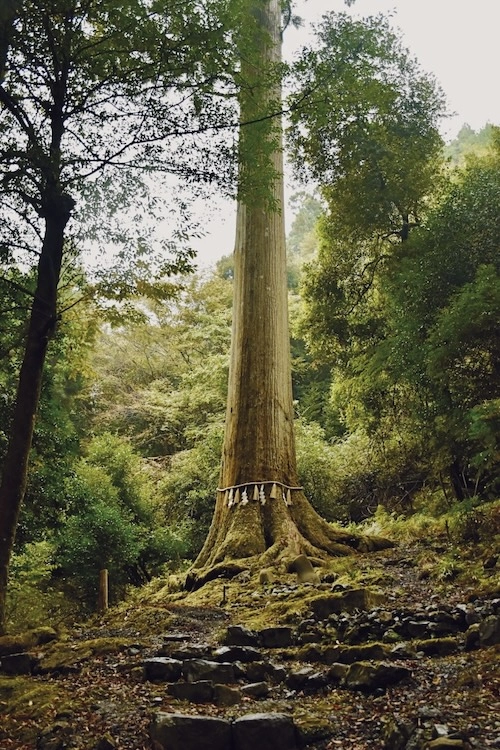
Every Kitayama cedar grown since is a relative of this tree. Cutting a branch and planting it directly in the ground reliably produces the same tree again, a propagation method believed to date from the Muromachi era, roughly the 14th to 16th centuries. Researchers have visited the place specifically to see what’s been described as humanity’s first cloning technique.
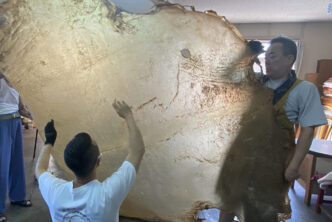
The technique wasn’t developed to produce identical trees for their own sake. It reliably yields two distinctive qualities, the first being a log with a lustrous sheen. The second is a separate texture called Shibori, a naturally rippled, bulging grain often used for the alcove posts in a tea room. The irregularity was purposely sought after.
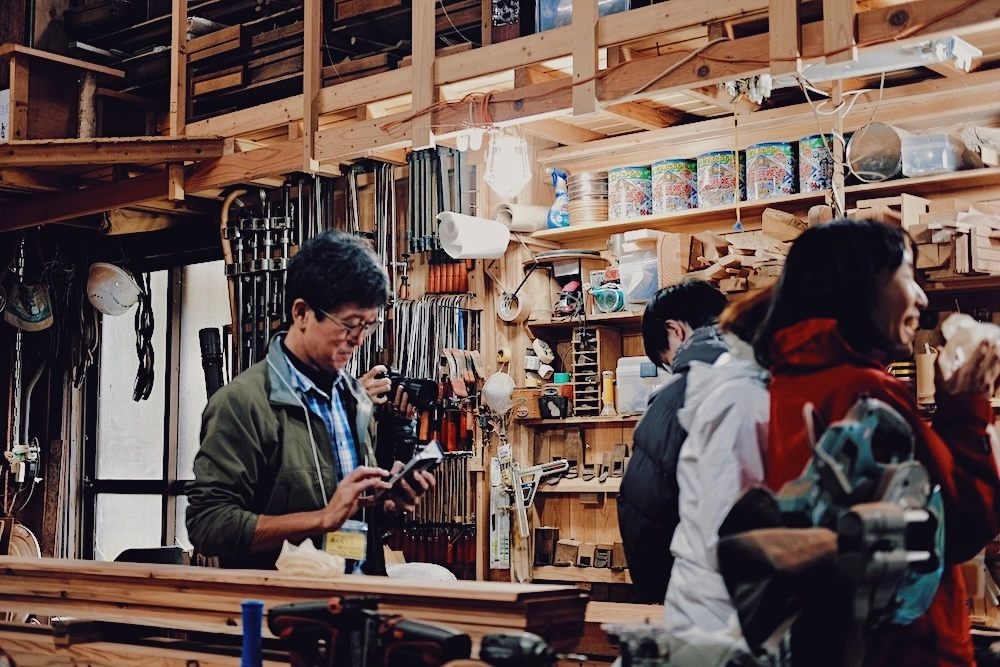
Reading and working with nature, rather than correcting or resisting it
That is the same concept that Hata taps into. For the irregular chestnut post in our opening, he called his use of such “wabi” (“imperfect, well-worn”) material his own version of “suki” (“like”, similar to sukiya), meaning something closer to personal, considered taste.
He describes his aim as “architecture that doesn’t overassert itself.”
Hata: “It is architecture that coexists with nature, preserving the sculptural beauty of natural materials so that you feel as though you’re in a forest or mountain, while still being filled with aesthetic sensibility. We work with a sense of achieving fusion with nature while protecting the main focal point of the space. A representative example of the wood used in this kind of architecture that doesn’t overassert itself is polished Kitayama cedar logs, found in sukiya-style buildings, tea rooms, and the like.”
This is material intelligence: an ability to read the individuality of a piece of wood and what a specific piece is suited for. This is the opposite of forcing every piece toward the same standard of uniformity.
Hata also applies the idea to test earthquake resistance. Using a replica structure, he demonstrated how pillars simply rested on stone bases rather than being fixed to them, and the structure was able to absorb an earthquake’s movement instead of resisting it outright.
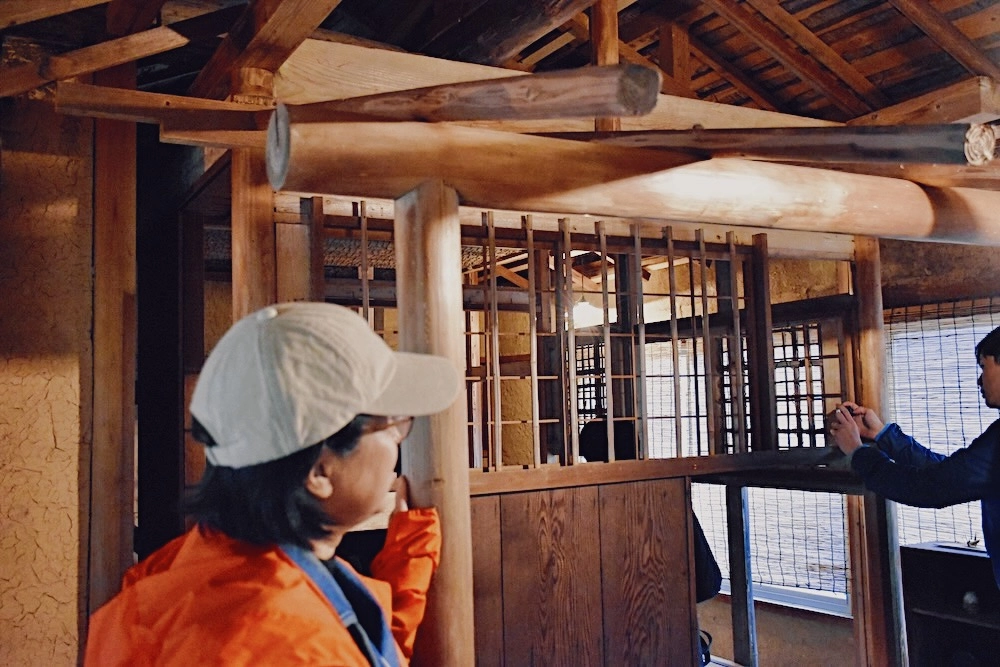
Kyokoto has no special strategy for sustainability. Using material intelligence, Kyokoto has been able to accept and understand what wood can do, and use it without resisting its natural state. In Hata’s philosophy, nothing needs to be discarded, making the philosophy a model of coexisting with nature rather than attempting to control it.
Tour programme to learn about material intelligence from Kyokoto and more
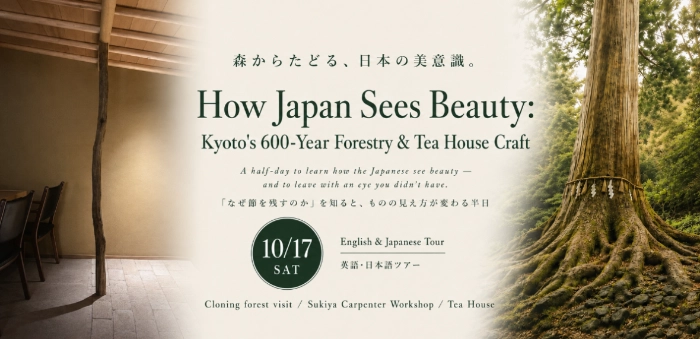
The Kyoto YouMe Triennale is offering an opportunity to visit Kyokoto in an upcoming tour programme, “How Japan Sees Beauty”. This tour gives you an opportunity to immerse yourself in Kyoto’s forest and beauty, including a space influenced by Kyokoto.
In COS KYOTO’s tour programme “How Japan Sees Beauty,” you will get to spend half a day in Kyoto’s cedar mountains, where timber has been harvested for 600 years without killing a single tree, then in a tea house carpenter’s workshop. There you’ll plane fragrant cedar and learn how to see the material’s characteristics. You will also discover how beauty has worked in Japan for centuries, not something that announces itself, but something you find. The Japanese have a word for this: “iki”, a refinement that is worn lightly, never displayed.
You will leave the tour with:
- A different viewpoint. Once you know how a carpenter sees things, you’ll start noticing choices in things you used to walk past.
- A wood shaving you cut yourself. You will take a traditional hand plane to fragrant cedar or other wood and pull a shaving thin enough to read through. Fragrant for weeks.
- An understanding of Japanese sense of beauty. Why the finest work hides its quality instead of displaying it, and how that idea shaped an entire tradition of architecture.
- An understanding of 600 years of sustainable forestry and building. Discover the most ancient form of cloning, and how Japanese architecture aims for long- lasting and simple beauty.
Highlights of the programme
- Visit to a 600-year-old “mother” cedar, source of a cloning technique developed by cutting propagation
- 90-minute session with a master sukiya carpenter, in his workshop
- Hands-on cedar planing with a traditional hand plane, and guests get to cut and keep their own cedar shaving
- Entry into an actual two-tatami-mat tea room, once the most prestigious room size in Japanese architecture
- A framing around Japanese aesthetics (iki, restraint, deliberately imperfect details like a visible knot or an invisible joint) and 600 years of sustainable, non-destructive forestry
Who the tour is recommended for
- Anyone curious about how things are made and who decided they should look that way
- Anyone drawn to Japanese beauty or wabi-sabi and wants the craft behind the concept, not just the word
- Anyone who would rather spend half a day with one master craftsman than a full day at overcrowded sites
Details
- Date: Friday, 17 October 2026
- Registration Deadline: Friday, 2 October 2026, 12:00pm JST
Meeting point: Nijo Station - Meet: 12:45pm / Depart at 1:00pm
Tour end: Approx. 5:00pm
For more details on the tour and booking, visit the Kyoto YouMe Triennale website.
If you cannot make it to this occasion, please contact COS KYOTO and they can offer you tours at your timing.
[Website] Kyokoto Homepage[Reference] IDEAS FOR GOOD (Japanese)