 Roger Ong
Japan’s Ministry of Economy, Trade and Industry (METI) in February set out revisions to shift the country from a linear to a circular economy, stressing that circularity must be designed across the whole product life cycle, not left to individual firms in the consumption chain. However, recovery of trace metals from highly dilute streams remains limited by cost and technical hurdles.
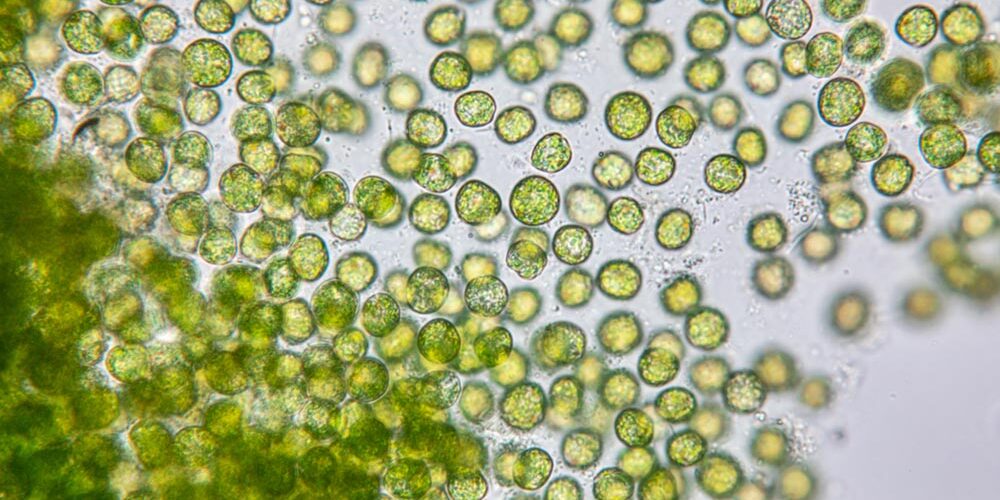
Galdieria, Co., Ltd., founded in 2015. is a Tokyo-based deep-tech company that cultures a red microalga, Galdieria sulphuraria, whose cells can adsorb tiny amounts of dissolved precious metals. It sells the biomass-derived adsorbent and recovery equipment to recyclers handling waste electronics, spent auto parts and metal-bearing effluents. The firm plans a new mass-cultivation plant in Shizuoka Prefecture this summer, lifting monthly output to about 4 tonnes, which is roughly 20 times current capacity.
Galdieria is an extremophile that thrives in acidic hot springs and grows to high cell densities, and these traits make stable mass production feasible. Researchers have highlighted its promise as a selective, plant-derived adsorbent for urban mining.
Galdieria’s system can play a part in existing recycling lines. Waste phones, appliances or auto parts are shredded and leached (often with aqua regia) to ionise metals. The solution passes through columns packed with the algal adsorbent, which traps gold, palladium and platinum. The spent adsorbent is then burned to recover the metals.
Urban mining has benefits, regardless the method. Many sources estimate that one tonne of discarded mobiles can yield around 150-300 grams of gold, orders of magnitude richer than primary ore, which often contains just 1–5 grams per tonne. Urban mining can also cut carbon emissions compared with digging new ore. Primary mining consumes land, water and energy, and concentrates geopolitical risk in a few producer countries.
However, commercial diffusion remains the hurdle. Technologies must scale and link “arterial” manufacturing with “venous” recycling to close loops. Galdieria is targeting sectors beyond autos, taking rare metals to use in the automative industry.
[Website] Galdieria Homepage[Reference] Press Release (Japanese)
More on circular economy in Japan
- 2026-10-13: Satoyama initiative closes loop, converting food waste into fertiliser
- 2026-10-06: Meiji and TOPPAN begin paper yogurt cup recycling trial in Yokohama
- 2026-10-04: Tokyo selects three community projects to boost resource recovery
- 2026-10-01: Japan METI's Cicrular Economy Action Week begins today
- 2026-10-01: Seven-Eleven Japan begins reusing power units via remanufacturing