 Zenbird Editorial Team
The Kyoto Satoyama SDGs Meguru Project is a resource circulation project which collects organic waste from city businesses and residents, and then converts it into biogas and liquid fertiliser. This nutrient-rich byproduct is then used to cultivate rice in the mountainous Keihoku region north of central Kyoto. In October 2026, the first batch of Koshihikari rice harvested under this project was delivered back to urban commercial establishments, completing a full regional loop.
The project approaches municipal waste challenges and agricultural sustainability by treating urban food waste as a nutrient resource. It operates through a biogasification plant managed by waste management firm Yasuda Sangyo Co., Ltd. Commercial food waste collected from participating establishments undergoes anaerobic digestion, yielding renewable biogas alongside a liquid digestate fertiliser. This fertiliser is distributed to agricultural operators in Keihoku, including Yamaguni Sakigake Center and the Kyoto Keihoku Furusato, substituting synthetic chemical inputs in local paddy fields.
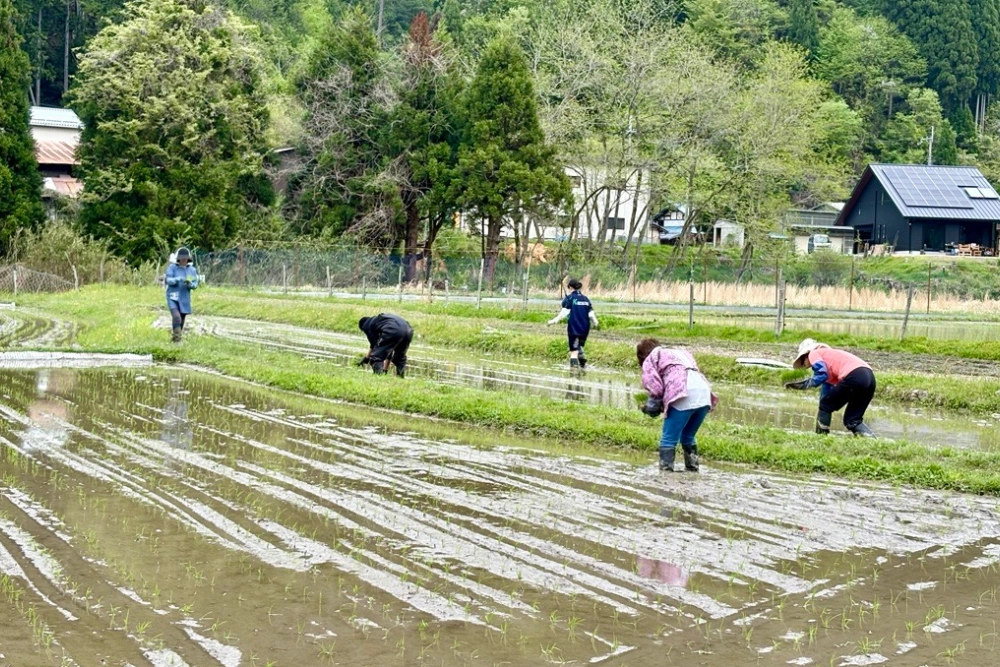
Following initial planting in May 2026, farmers harvested the crop in autumn 2026 under the trademarked brand “Miyako Meguru Rice from Keihoku”. The Koshihikari rice represents a physical return of nutrients to the urban economy. Participating food waste generators, such as Hilton Garden Inn Kyoto Shijo Karasuma in Shimogyo Ward, complete the cycle by procuring the harvested grain for their dining services. The hotel introduced the rice to its daily breakfast buffet at the Together&Co. restaurant from the beginning of this month.
The project is jointly managed by the Bikkuri Eco Research Institute, Kyoto City Government, and the Kyoto Advanced Technology Research Institute.
[Reference] Hilton Press Release (Japanese)