 Zenbird Editorial Team
Three Japanese companies have achieved an industry first by successfully demonstrating a technology to recycle aluminium fins from old air conditioners directly into new ones. Daikin Industries, Ltd., UACJ Corporation and Nippon Magnetic Dressing Co., Ltd. announced on last month that their joint project has established a closed-loop system for a material that was previously only downcycled.
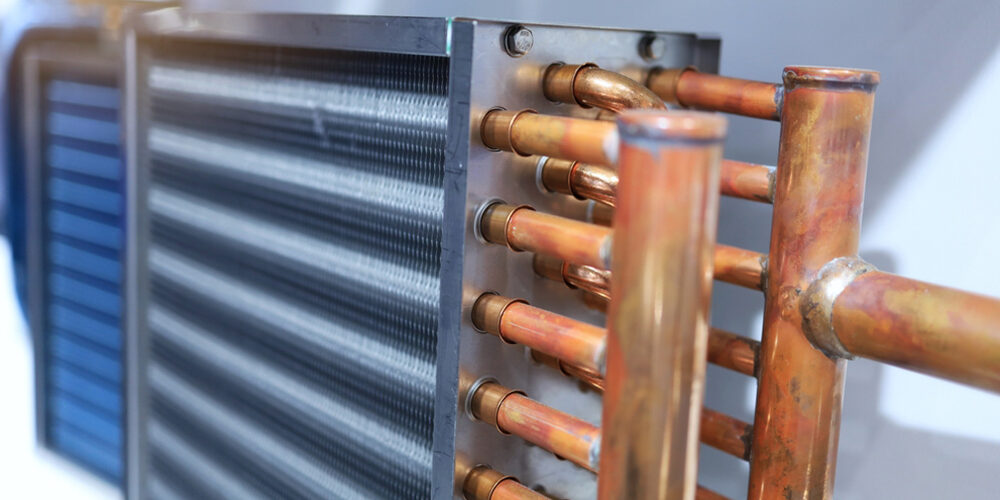
Heat exchangers are critical components in air conditioners, using high-purity aluminium fins to transfer heat. When these units reach the end of their life, the fins become contaminated with copper and other impurities during the shredding and recovery process. This contamination has historically prevented the material from being recycled back into high-grade fins, forcing it into lower-value applications such as automotive engine parts in a process known as downcycling.
The collaboration overcame this long-standing challenge through specialised expertise. Nippon Magnetic Dressing, a company that specialises in recycling, developed an advanced sorting technology capable of separating aluminium and copper with high precision, reducing the copper content from approximately 3% to below 0.1%.
Following this, materials manufacturer UACJ developed a new aluminium alloy with improved press formability, ensuring it could be successfully shaped into new fins despite the presence of residual impurities. Air conditioning manufacturer Daikin then used this recycled material to produce new heat exchangers on its standard production lines, proving the viability of the horizontal recycling process.
This breakthrough contributes significantly to reducing the carbon footprint of manufacturing. Producing aluminium from recycled material generates 97% fewer carbon dioxide (CO2) emissions than manufacturing it from virgin ore. The new technology will substantially lower the lifecycle emissions of heat exchangers. The innovation comes as global demand for air conditioning is projected to triple by 2050, making resource efficiency in the sector a critical issue.
With the technology now proven, Daikin plans to begin mass production of heat exchangers using recycled aluminium sourced from industrial waste generated at its own factories and through its after-sales service operations. The companies intend to gradually expand the collection and recycling scheme to include commercial air conditioning units and other equipment not covered by Japan’s Home Appliance Recycling Law.
[Reference] Daikin News Release (Japanese)More on circular economy in Japan
- 2026-10-13: Satoyama initiative closes loop, converting food waste into fertiliser
- 2026-10-06: Meiji and TOPPAN begin paper yogurt cup recycling trial in Yokohama
- 2026-10-04: Tokyo selects three community projects to boost resource recovery
- 2026-10-01: Japan METI's Cicrular Economy Action Week begins today
- 2026-10-01: Seven-Eleven Japan begins reusing power units via remanufacturing