 IDEAS FOR GOOD
[Kyoto Circular Economy Special Feature]
This feature series is a collaborative project between IDEAS FOR GOOD and Kyoto City, exploring the present and future of the circular economy of Kyoto. How can the spirit of “Shimatsu no kokoro,” together with circular living and a centuries-old culture of craftsmanship in Japan’s ancient capital, be harnessed to drive innovation that will shape tomorrow’s Kyoto? And how can they give rise to circular businesses that will thrive for the next thousand years? Together with Kyoto City, local businesses, and policy advisor Akihiro Yasui, we explore Kyoto’s unique value and potential through the lens of the circular economy.
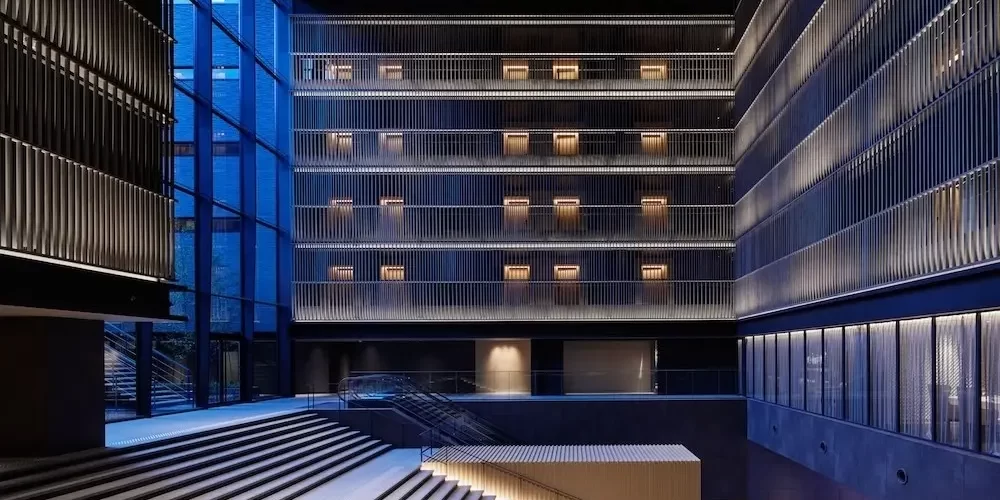
Just a 2-minute walk from Kyoto Station, there is a hotel that offers guests from all over the world a sustainable and special stay, based on the concept of “pursuing the comfort of the next 1,000 years.” This is THE THOUSAND KYOTO, operated by Keihan Hotels & Resorts Co., Ltd.
The hotel was the first in Japan to acquire the “Sakura Quality An ESG Practice” certification in 2022, a Japan-originated program that evaluates hotels for environmental, social, and governance sustainability. Its practices demonstrate a wide range of sustainable circular initiatives, from its physical structure to its services.
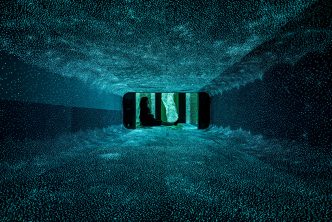
The building incorporates greenery inspired by Kyoto’s beautiful mountains, natural energy from solar power generation, and a well-water utilisation system that leverages Kyoto’s abundant underground water veins. At night, guests are greeted at the front desk by a digital art display powered by virtual renewable energy.
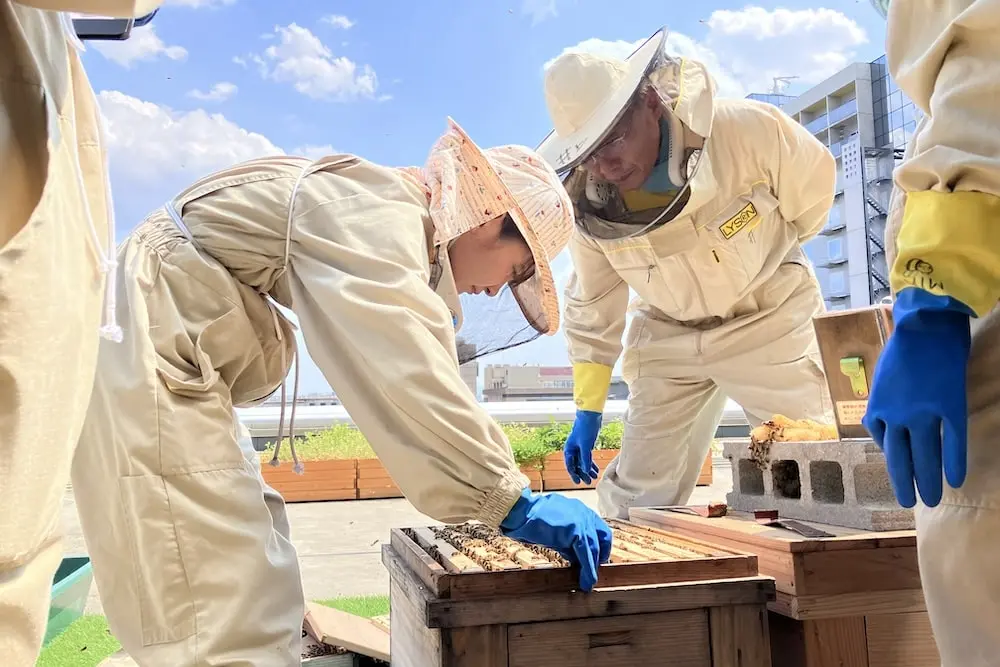
Urban beekeeping is also conducted on the rooftop, contributing to local biodiversity conservation. Menus featuring the harvested honey are offered in limited quantities. In the kitchen, the hotel’s dedication to food sustainability is evident in its use of off-spec vegetables and soy meat, its initiatives to reduce food waste, and the repurposing of discarded tableware through recolouring.
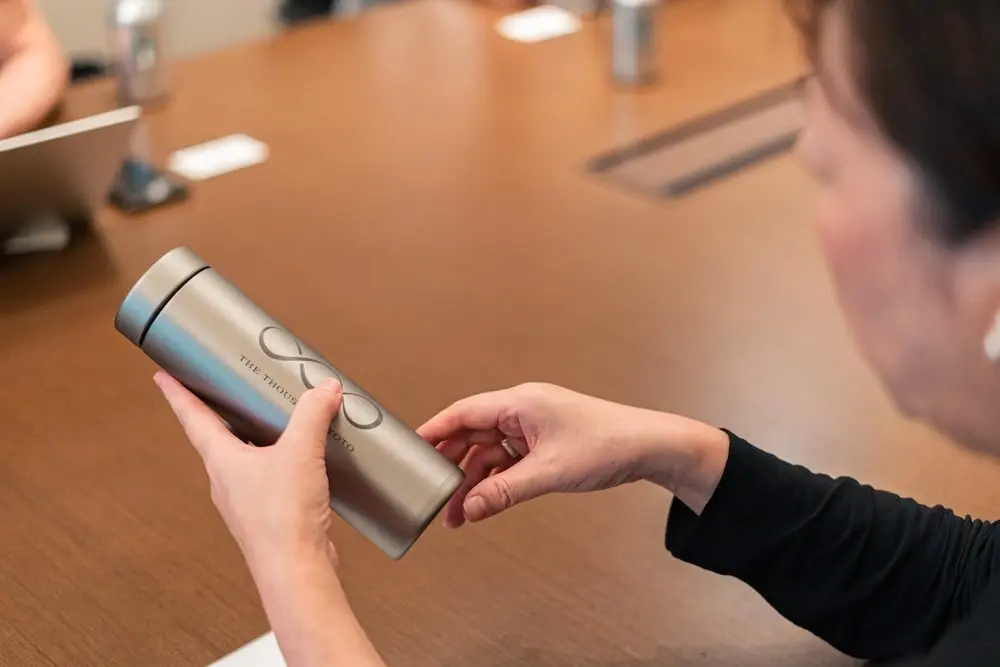
Furthermore, in a collaboration with Tiger Corporation, the hotel is participating as a collection point for recycling used stainless steel bottles, a first in Kyoto City. It also provides guests with its own original stainless steel bottles for rental. Other initiatives include a bicycle-rental service for emissions-free sightseeing and a review of in-room plastic amenities, all while pursuing guest satisfaction and a thorough commitment to efficient resource use and circulation.
Miwa Sakurai, the hotel’s General Manager, has been the driving force behind THE THOUSAND KYOTO’s sustainability efforts. We spoke with Sakurai about the hotel’s journey and future vision to understand how it has evolved from a conventional hotel into a sustainable, circular model by updating its core concept of “Comfort.”
Interviewee Profile: Miwa Sakurai
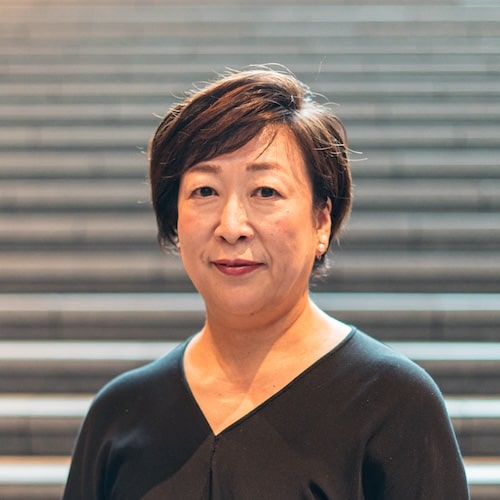 After joining Keihan Hotels & Resorts in 2014, she served as the head of weddings and accommodation at THE THOUSAND KYOTO. In 2019, she was appointed General Manager for the opening of GOOD NATURE HOTEL KYOTO. From 2021, she served as General Manager for both THE THOUSAND KYOTO and Kyoto Century Hotel, and in July 2024, she became a Managing Director.
From personal comfort to societal comfort
Having gained extensive experience in the hotel industry, Sakurai has been involved in the opening of THE THOUSAND KYOTO for about 10 years. During that time, she was also in charge of launching GOOD NATURE HOTEL KYOTO, which is now the flagship of the Keihan Group’s Bio-Style business and an iconic example of a sustainable hotel in Japan. She has long been dedicated to the pursuit of an authentic form of hospitality that looks toward the future, even before concepts like SDGs and sustainability became widespread.
In July 2022, THE THOUSAND KYOTO established the concept of “Sustainable Comfort,” marking a significant step forward. We asked what was behind this decision.
Sakurai: “The hotel’s original concept was ‘Personal Comfort,’ and we targeted digital natives in their 30s who appreciated sophistication. However, after the pandemic, we felt that our guests’ values had shifted from a ‘Me’ mindset, where it’s enough for the self to be comfortable, to a ‘We’ mindset, where they want everyone to be in a good state. So, we changed our target audience to conscious leaders who have a greater awareness of society and the environment.”
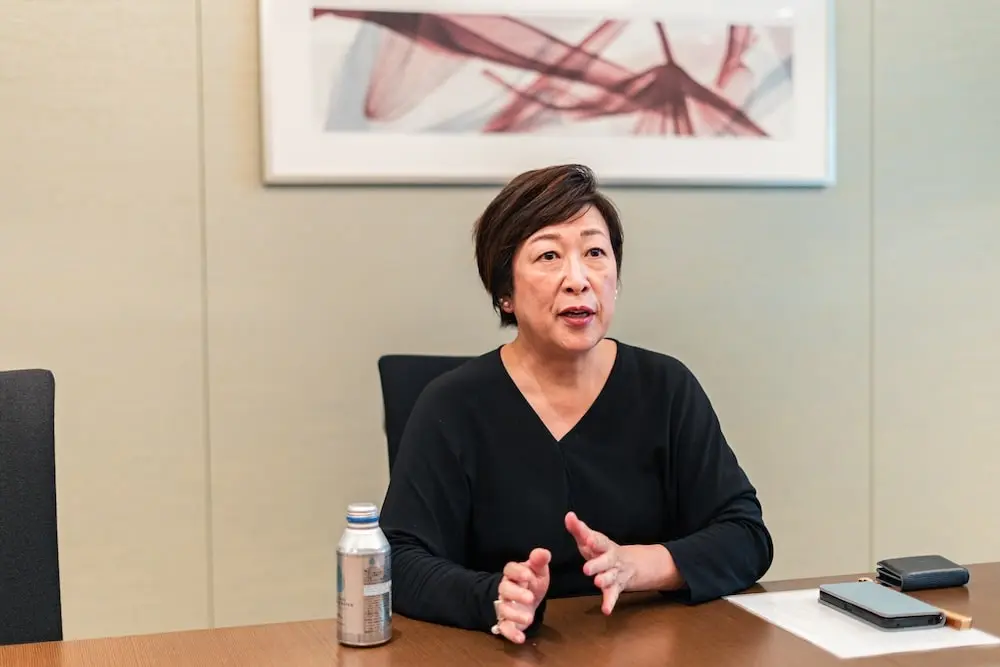
Sakurai: “THE THOUSAND KYOTO’s name means ‘the thousand-year hotel of Kyoto, the capital of a thousand years.’ Kyoto itself is a sustainable city, so we felt that to bear its name, we must also be fully committed to sustainability. That’s why we evolved our concept from ‘Personal Comfort’ to ‘Sustainable Comfort.'”
102 Actions that ignited the will of employee
However, simply changing a concept and target audience alone does not automatically lead to change. Sakurai took a bold step to turn this ambitious goal into concrete actions.
Sakurai: “Many of our employees didn’t know where to start, so we set a goal to ‘take 100 actions in one year.’ We established the action word ‘Think 1000 year comfort.’, and asked all employees for ideas that aligned with our guidelines, such as being beneficial to the local community. We received about 858 ideas.
“We began implementing the most feasible ideas and ultimately achieved 102 actions in one year. I believe the greatest success of this initiative was the change in environmental awareness among each and every employee.”
To support the implementation of the ideas, the hotel also visualised the progress of each department with graphs, encouraging teams to work together towards the goal. These efforts were a catalyst for each employee to see sustainability as a personal matter and think about what they could do in their work. Sustainability became a common language for all employees, not just for the few in charge.
A hotel where people and bees work together
Among the many initiatives mentioned, the “urban beekeeping” project has been particularly popular with guests. Beehives are kept on the hotel’s rooftop, and employees are responsible for their management. Some staff members have even obtained a “Honey Sommelier” certification.
Sakurai: “We have dozens of guests each year who want to observe the urban beekeeping. We’ve also held tours, and we’re now getting requests for visits from schools.”
The honey harvested here is named “THOUSAND HONEY.” In 2024, the hotel harvested about 130 kilograms, which is provided to guests in restaurant menus and limited-edition products.
Sakurai: “I have a feeling that since we started beekeeping, the plums on the grounds of Shosei-en Garden, a detached temple precinct of Higashi Hongan-ji Temple nearby, have borne more fruit. Our connection with the community is deepening, too, as we’ve used the harvested plums and honey to make a syrup for a drink.”
By welcoming not only people but also bees as partners, the hotel enriches not just the guest experience but also the local ecosystem. It’s a hotel that brings prosperity to multiple species, not just human beings.
The hotel as a hub for generating circulation
The hotel’s kitchen is also a source of various circular stories beyond its cuisine. The hotel uses bone china tableware from the Japanese tableware manufacturer NIKKO, which contains cow bones as an ingredient. Noticing that this bone china contains phosphorus, which is essential for plant growth, NIKKO developed a fertiliser called “BONEARTH” from tableware that was scheduled for disposal. This fertiliser is used in the fields of the “Sanyasou project,” a long-running initiative by NIKKO’s sister hotel, Biwako Hotel. This closes the loop as the vegetables grown there are served at the hotel’s restaurants.
Sakurai: “We haven’t established this as a business yet, but I’ve heard that the plant growth is noticeably different. I believe it is incredibly important that we can create this kind of circulation within our own business.”
The voices of the next generation reflect the future of hospitality
However, these advanced sustainability practices are not always welcomed by guests. The issue of amenities, in particular, has been a significant hurdle. The decision not to provide standard amenities like toothbrushes in guest rooms led to some harsh feedback from guests. This may have been a reflection of the deeply ingrained Japanese culture that views amenities as a symbol of hospitality.
The hotel persevered, patiently and politely explaining its new concept to each guest who complained. Then, came a symbolic moment.
Sakurai: “Children today have a high level of awareness because they learn about the SDGs in school. We once had a mother and grandmother complain about not having amenities, but their young child, who was with them, said, ‘Mum, didn’t you bring your own toothbrush? I brought mine!’ That single comment calmed the situation. I felt that it was truly a symbol of how the times are changing.”
As the climate crisis and biodiversity loss shift from being abstract future problems to tangible present-day issues, guests’ awareness is also changing. What was once seen as a cost is now becoming a condition for guests to choose a hotel.
Sakurai: “Sustainability initiatives do come at a cost. While some aspects, like a growing number of guests opting not to have their linens changed, can lead to cost reductions, plastic products are still cheap and reliable, and using local or domestic ingredients increases overall costs. However, we’ve entered an era where hotels won’t be chosen unless they prioritise sustainability. I believe that continuing to take on these essential initiatives is vital for enhancing our hotel’s value and ensuring guests continue to choose us for years to come.”

Editorial note
Sustainability is not about constant toleration. It is a creative endeavour that expands our imagination towards others, the environment, and future generations, allowing us to discover and circulate a new kind of “Comfort.” THE THOUSAND KYOTO is showing us through its various progressive practices what kind of comfort we should truly be striving for.
From a business perspective, there is much to learn from THE THOUSAND KYOTO: its business concept that envisions a thousand years into the future, its approach to involving every employee, its creation of circular products, services, and experiences through collaboration with various businesses, and its way of thinking about sustainability and cost.
We human beings are, in the end, just “guests” temporarily visiting the “hotel” that is our Earth. How can we ensure we leave this beautiful planet in good shape for the next generation? If you want to find a hint, we encourage you to visit THE THOUSAND KYOTO.
[Reference] THE THOUSAND KYOTO Homepage[Launching October 2025] Circular Business Design School Kyoto
Kyoto is home to timeless assets nurtured over 1,200 years: the spirit of “Shimatsu no Kokoro”, circular ways of living, and a culture of craftsmanship. We are facing urgent global challenges such as climate change and biodiversity loss. To create a truly circular future requires drawing upon this wisdom, applying it to the present, and carrying it forward into the future. To this end, Harch Inc., which operates IDEAS FOR GOOD, will launch a new learning program in October 2025. By combining Kyoto’s deeply rooted circular wisdom with cutting-edge insights into the circular economy, the program seeks to envision and achieve the future we aspire to. “Decode Culture, Design Future”──a circular future rooted in tradition, from Kyoto.
Official website: https://cbdskyoto.jp/
Cover photo courtesy of THE THOUSAND KYOTO. Other photos by Asuka Sasaki.
Original article edited by Natsuki, published on IDEAS FOR GOOD.
Translated by Zenbird Editorial Team.