 Zenbird Editorial Team
A Japanese collaboration is repurposing used rocket-fuel tanks into an omnidirectional loudspeaker called “DEBRIS.” These aerospace hardware, used in Hokkaido’s private rocket programme, rarely enjoy a second life once testing ends. But as materials they are still have worth as a resource, and are now shaped into a sound system.
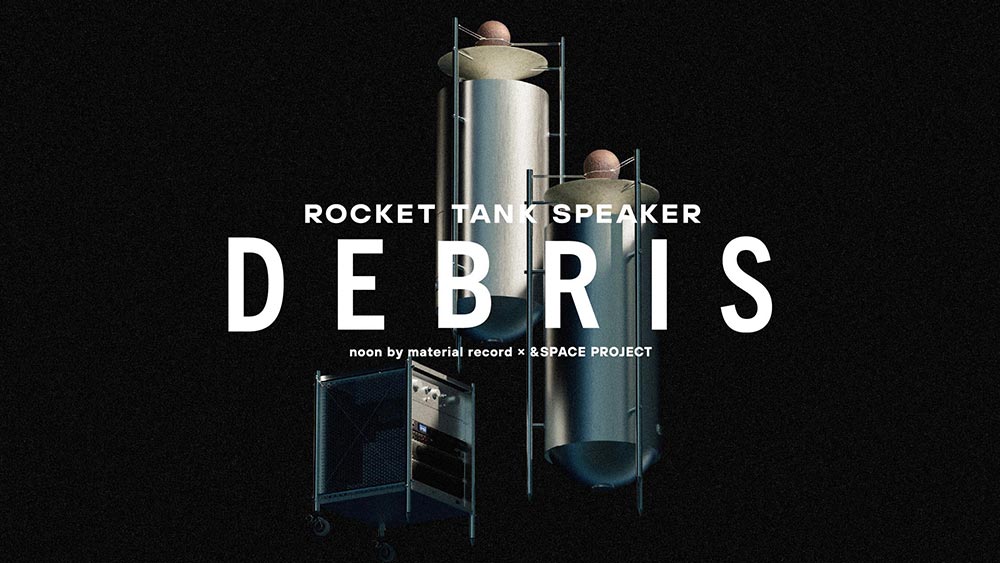
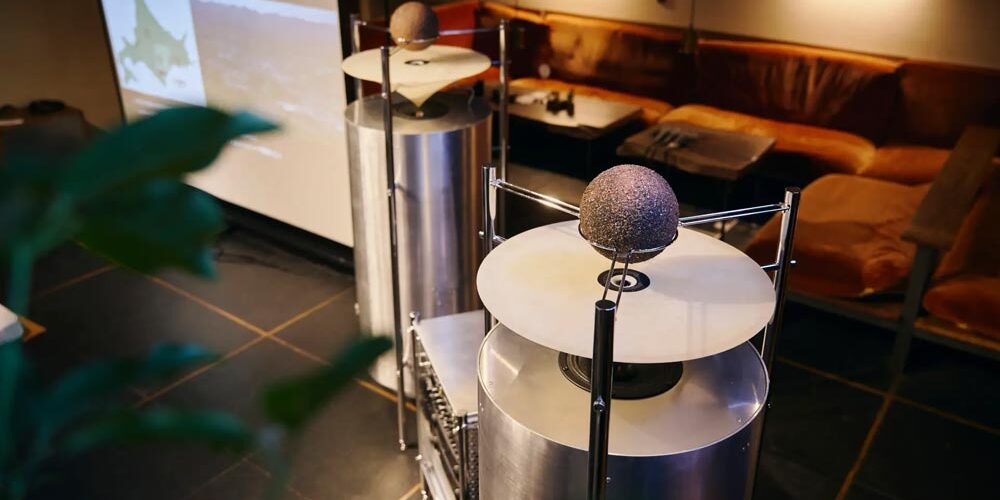
DEBRIS developed from “design lab noon by material record”, part of Nomura Co.’s R&D arm, and upcycling group &SPACE PROJECT, which has already made benches and shelving out of the same tanks. Engineers salvaged a test fuel vessel from Taiki Town’s Hokkaido Spaceport, trimmed it into a truncated cone, then added a resin aerial and a hand-forged brass-and-copper sphere that seems to hover above three slender legs. Inside, full-range drivers fire 360 degrees, echoing the way micro-gravity erases any notion of “front.”
Last year’s 261 orbital launch attempts marked a four-fold rise on the early 2000s average, and it is estimated that rockets burned 63,000 tonnes of propellant in 2024 alone, sending 12,000 tonnes of metal back through the stratosphere and releasing soot with a warming effect up to 500 times stronger than ground-level sources. Discarded test tanks embody still more carbon: every kilogram of aerospace-grade aluminium represents roughly 11 kWh of electricity, not to mention bauxite mining and precision machining. By re-using the tank intact, DEBRIS locks that embedded energy into a new life cycle and avoids the high-heat smelting that even conventional recycling demands.
Taiki’s Hokkaido Spaceport brands itself as Asia’s first open commercial launch site and plans multiple orbital pads by 2027. &SPACE PROJECT taps that infrastructure both for raw material and for storytelling, arguing that local residents should gain cultural dividends as well as jobs from spaceflight. Earlier this year the team installed a “space-tank bench” at Expo 2025 Osaka. Designer Hajime Oyamada says he wanted DEBRIS to “erase the idea of a speaker’s front,” encouraging listeners to drift inside a sound field that feels weightless, while reminding users that every element inside the speaker came from Earth before it dreamt of orbit.
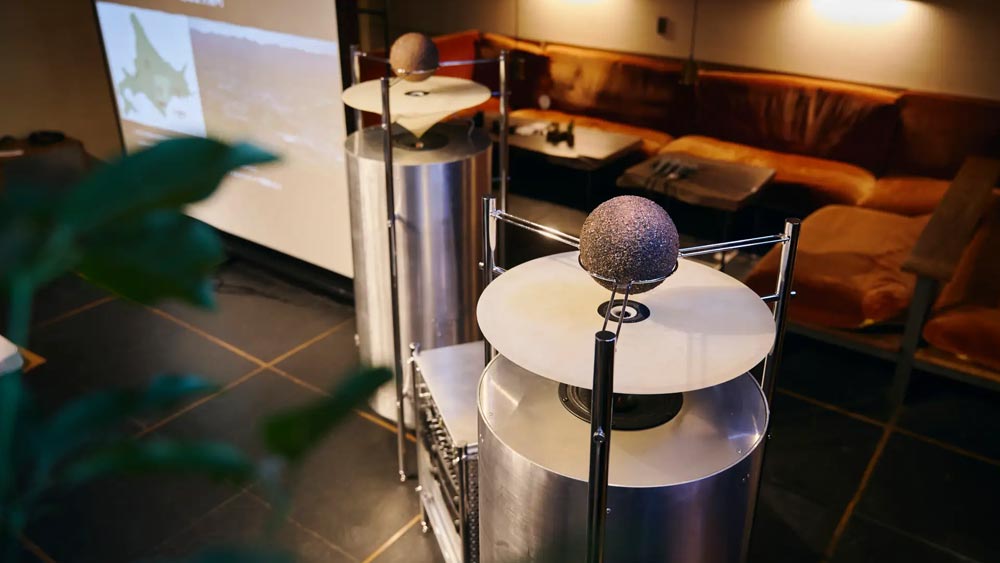
Nomura and &SPACE PROJECT have no plans for mass production. Instead, DEBRIS will tour sustainability fairs and educational programmes while the partners prototype smaller consumer pieces such as desk lamps fashioned from fuel-line segments or planar headphones cut from engine fairings.
[Website] DEBRIS Homepage (Japanese)More on upcycling in Japan
- 2026-10-17: Upcycling retired cycling helmets into urban furniture for public use
- 2026-10-16: Surplus curry from industrial vats finds new life in Yamagata craft beer
- 2026-09-24: Wholesaler Ohsawaya uses AI to upcycle food waste into eco-friendly feed
- 2026-09-15: New circular economy project turns Kobe City forest debris into clothing
- 2026-09-11: Aeon reduces food loss with new upcycled snacks this month