 IDEAS FOR GOOD
The crQlr Awards (“Circular” Awards) is a global award that recognises projects and ideas that design circular economies. Established in 2021 as Japan’s first award in the circular design field, it has since become a key platform for players aiming to create sustainable economies and societies.
A building that resembles a set from a science fiction film. Could this be our future landscape?
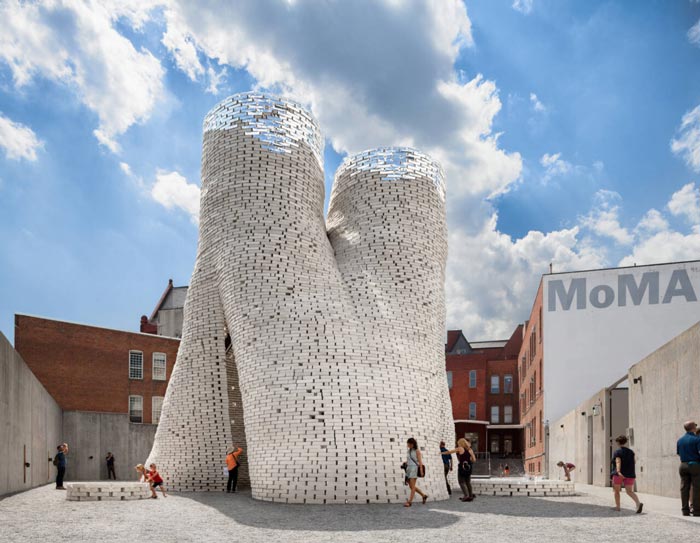
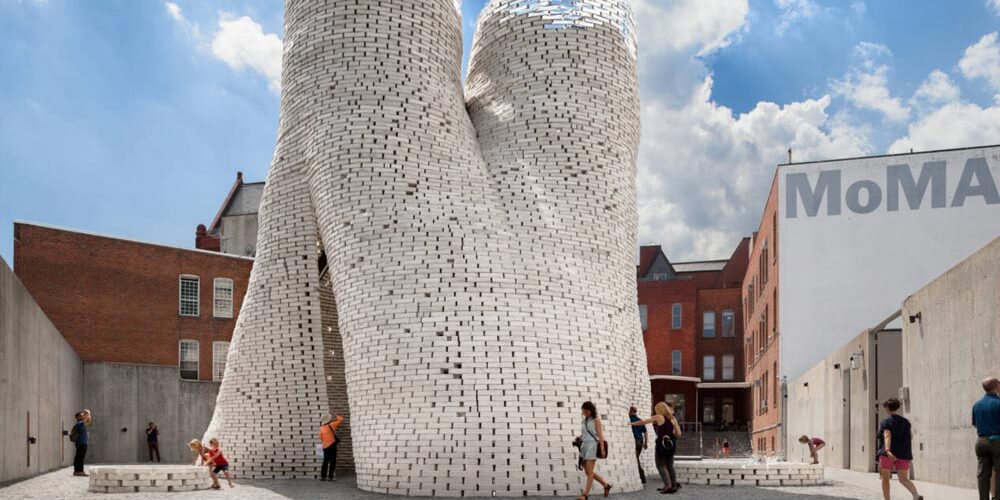
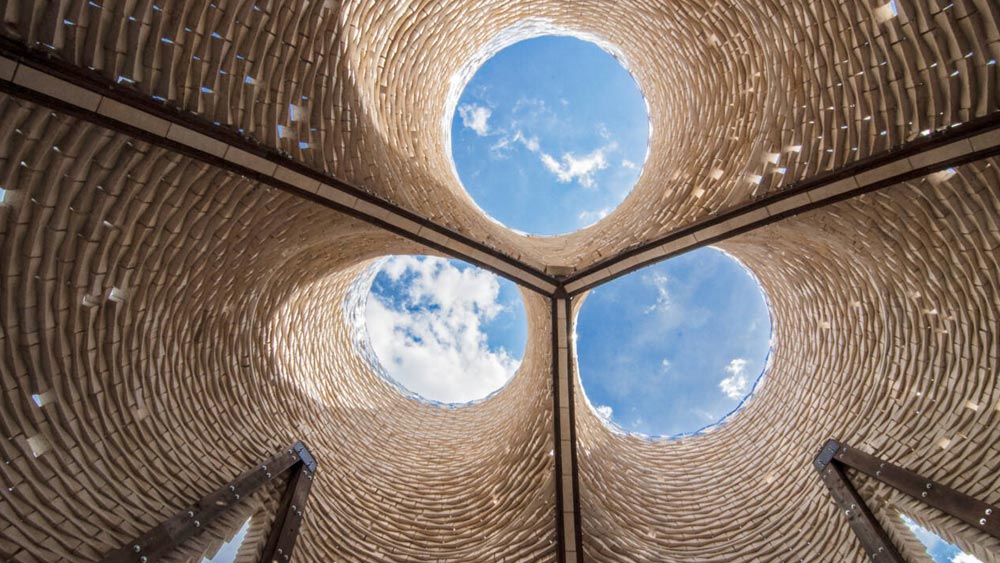
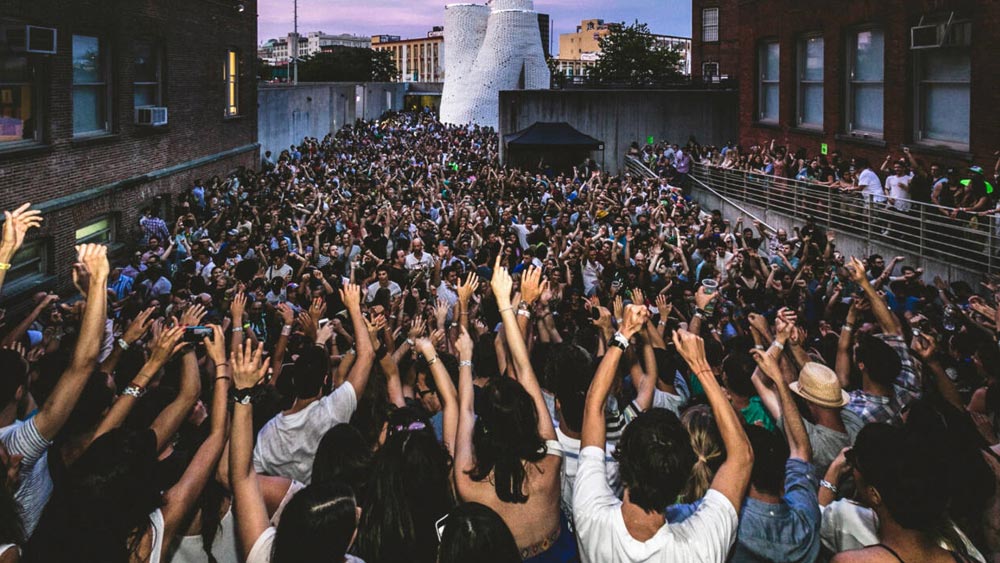
The project is called Hy-Fi. However, it’s not a glimpse of the future—it hails from the past. In 2014, the ‘Hy-Fi’ organic brick structure was an experimental pavilion built at MoMA PS1 in New York, blending nature and architecture.
“At the time, the reactions were mostly along the lines of, ‘It’s interesting, but honestly, it’s a bit strange,’” says the creator, David Benjamin, who is a the pioneer of architecture based on bio-materials and the founding principal of the architectural studio “The Living,” as well as the director of AEC research at Autodesk and associate professor of architecture at Columbia University.
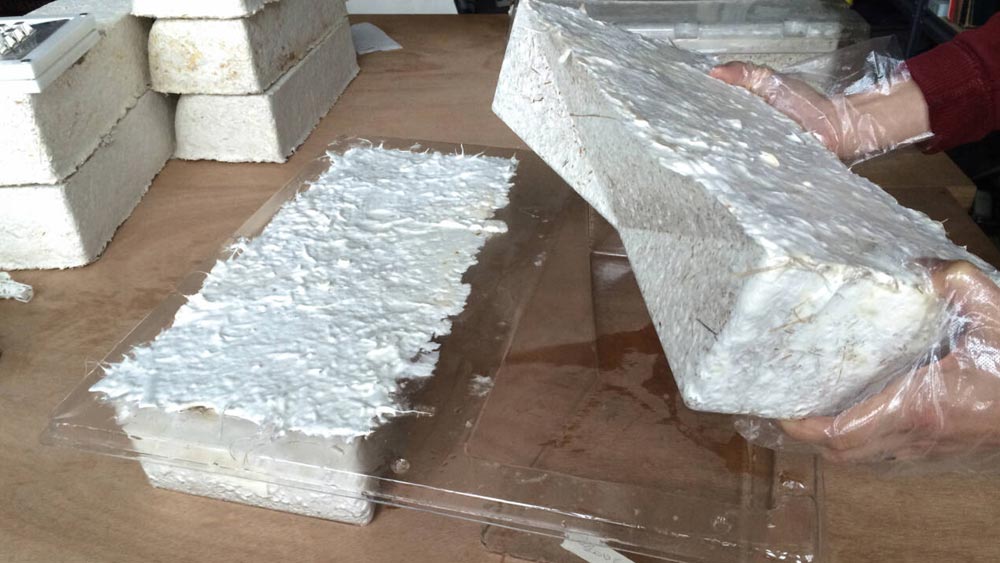
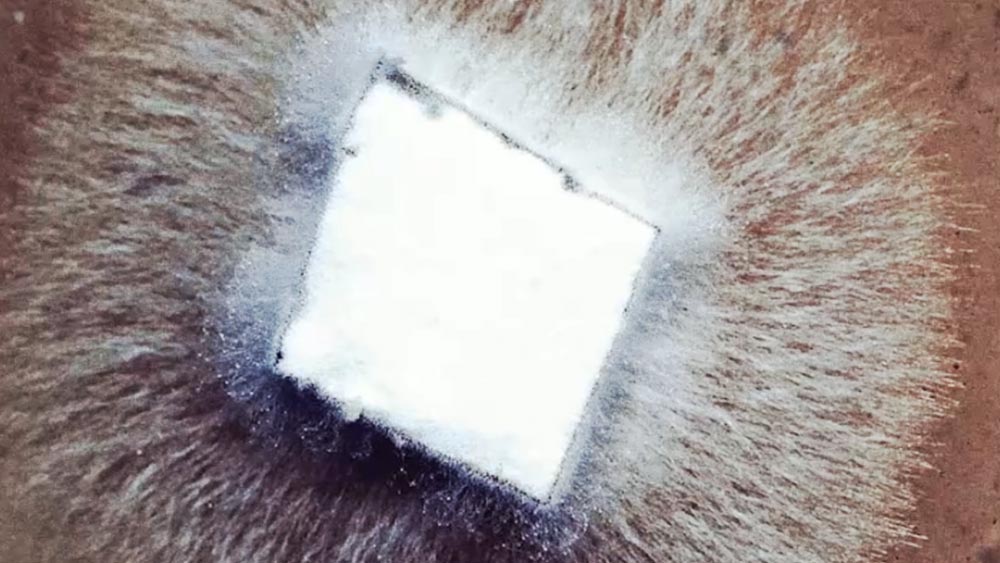
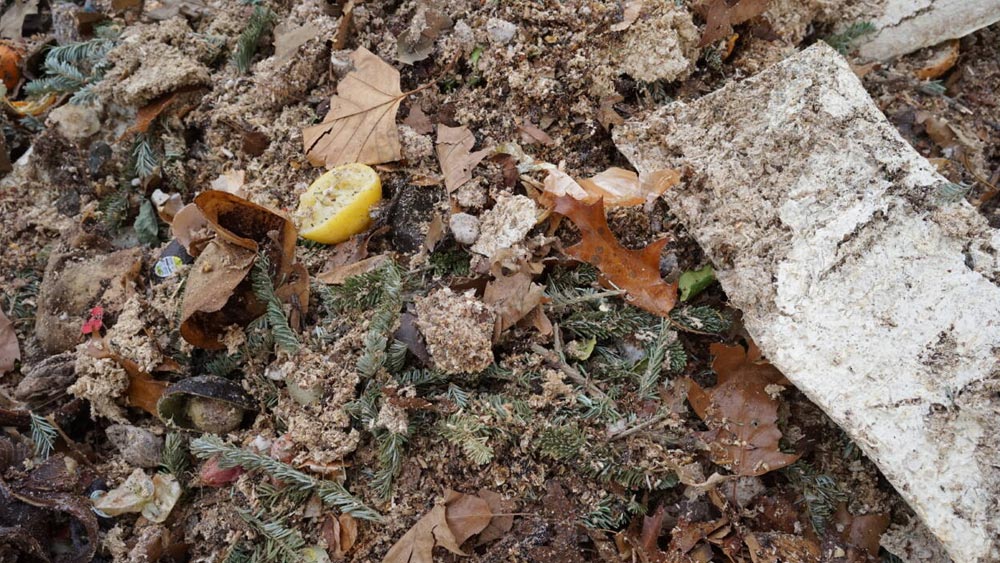
What David developed is a “growing brick”, composed of a mix of agricultural waste and mycelium (fungal threads). Following a three-month cultural programme, the tower was dismantled, with the bricks being composted, and remaining soil returned to a local community garden.
At the time, many people were curious: “It’s an interesting idea, but will there ever be a real building made from this?”
Now, 10 years later, David is trying to answer that question. How can bio-materials be scaled not as “future materials” but as technologies that can be used right now? Furthermore, and in a construction industry that accounts for 40% of global carbon emissions, how does his approach address the climate crisis?
Launched in 2021 as Japan’s first circular design award, the crQlr Awards has become a gateway for players aiming for a sustainable society. The 2024 special prize focuses on moving “Towards a Circular Bioeconomy.” In this fourth instalment of our series, we bring you an interview with David Benjamin, who also served as a judge for this year’s crQlr Awards.
Profile: David Benjamin
 Founder and Principal of The Living / Director of AEC Research at Autodesk / Associate Professor of Architecture at Columbia University Graduate School of Architecture, Planning, and Preservation. David’s work combines research and practice, with a focus on an expanded and actionable framework of environmental sustainability. Recent projects include the Airbus NIS Engine Factory (a low-carbon manufacturing facility), the Princeton University Embodied Computation Lab (a new building for architecture research), and Hy-Fi (a branching tower for the Museum of Modern Art made of a new type of carbon-negative brick). Benjamin received a Bachelor of Arts in Social Studies from Harvard and a Master of Architecture from Columbia. He also edited the book “Embodied Energy and Design: Making Architecture Between Metrics and Narratives.”
Architecture is not a “static object,” but a “dynamic system”
“Architecture is not a static object, but a dynamic system that changes over time and adapts to its environment.”
Buildings exist in the context of the origins of their materials, the construction process, and the relationships with the people who use them. The moment of completion is not the end. Instead, what is important is how it evolves over time and responds to its surroundings—this is what David believes.
Traditional architecture transforms valuable raw materials into building materials with enormous energy consumption and carbon emissions. When the building reaches the end of its life, it is demolished and discarded. This is a “linear” approach to architecture.
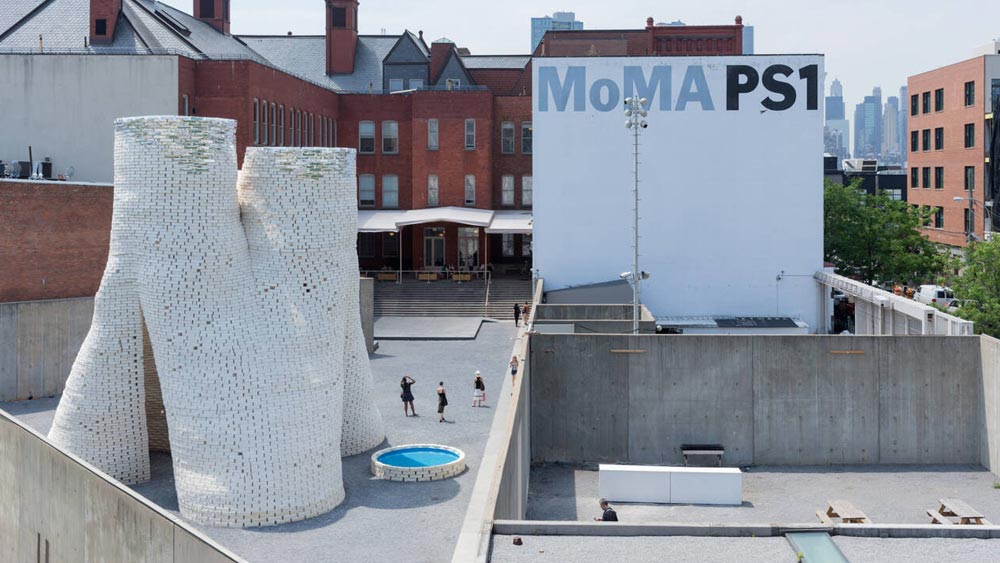
Challenging this status quo, David’s team created the project Hy-Fi. Without mining or other resource extraction, they used agricultural waste and mycelium to “grow” building materials with minimal energy, demonstrating new possibilities for architecture. After the building’s role was completed, the materials could be composted, returning carbon to nature.
“The materials we used in Hy-Fi are theoretically ‘carbon-negative,’ meaning they can absorb more carbon during production than what would have been emitted. If buildings were made with such materials, the building itself could act as a ‘carbon sink,’ storing carbon like a carbon absorption device. At the time, we saw this as an architectural design in line with the carbon cycle.”
Design is not a “eureka moment,” but something that grows in an ecosystem
“The complex problems we face are complicated and intricately connected.”
That’s why when thinking about architecture it is important not to only aim for “beautiful buildings,” but to consider them as part of a larger “ecosystem,” including the environment and all involved stakeholders, David explains.
Traditional architectural education often emphasises the model of “a genius architect generating ideas and translating them into built form.” However, David points out, “This is an outdated way of thinking.” To create excellent architecture, the process of collaborating with people from different fields and nurturing ideas through trial and error is essential.
“To improve the quality of architecture, we must actively incorporate diverse perspectives. Architecture is not something created in isolation; it is made in collaboration with the people who will use the building, local residents, the companies providing materials, forest managers, environmental scientists, artists, and many other stakeholders.”
The strength of this approach lies in generating new ideas and technologies not seen in traditional architecture. For example, involving forestry experts could reveal sustainable methods of resource management. Biologists could drive the development of new materials that consider ecosystems. And artists could expand the expression and experience of architecture.
David also questions the “closed knowledge sharing” in the architecture industry.
“If we can make our research results available to other architects and engineers, the possibility for new innovations increases. By receiving feedback, we can create even better results. It’s important not to hoard knowledge, but to open it up and evolve together.”
However, the question to consider is whether the knowledge and ideas we share should be limited to humans alone. Architecture is not just a human activity; it exists as part of nature. If architecture is to become part of a better ecosystem, should it be limited to “human knowledge” alone? This raises the question, “Where is the boundary between nature and humans?”
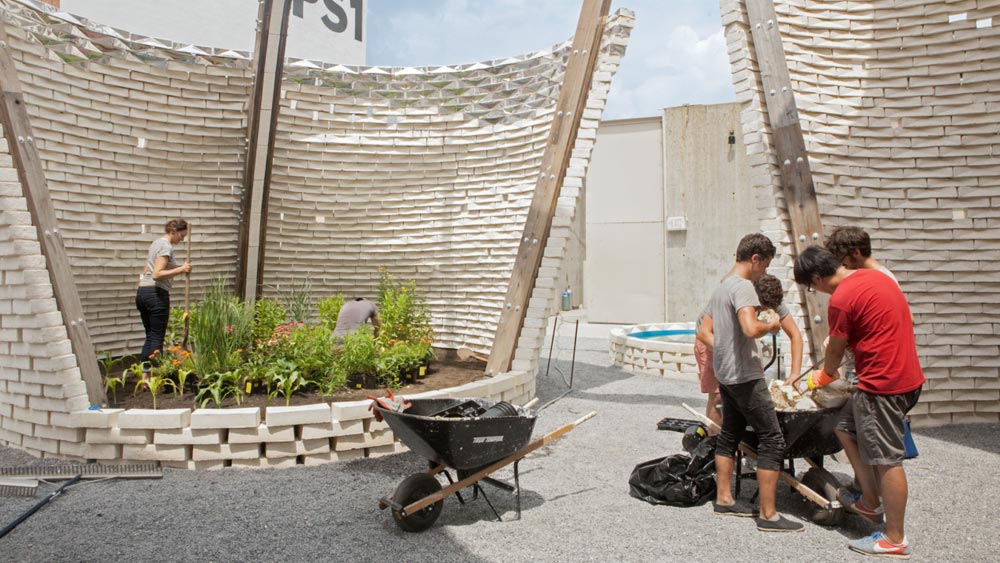
Where is the boundary between nature and humans? Exploring symbiotic design
While striving to live with nature, the impact humans have had on the environment is immeasurable. Are humans a being that has greatly deviated from nature, or are we a species that lives as part of nature? These questions are unavoidable when considering environmental issues, architecture, and urban planning.
David argues, “Humans are part of nature, and we should incorporate this relationship into our design.”
“Humans have unique capabilities and have changed the environment at an unprecedented speed. But we too live within the natural system.”
To embody this thinking, he brings up the concept of “biophilic design,” which is a design approach that integrates natural elements into spaces to improve human health and well-being. Human brains and bodies have evolved alongside other living creatures, deeply connecting us to natural environments. As a result, studies have shown that learning efficiency increases in classrooms constructed out of wood and that being in nature promotes relaxation.
“For example, a study found that just listening to birdsong for six minutes a day can reduce stress and improve health. Interestingly, even recorded bird sounds have the same effect. This suggests that humans are inherently connected to other species and we are most healthy when all species are thriving.”
However, while this perspective can be applied to design, David points out that humans, unlike other creatures, possess overwhelming influence and the power to cause destructive changes. Ignoring this reality is not an option.
“As the concept of the Anthropocene suggests, the climate crisis and ecosystem collapse are accelerating due to human activity. However, at the same time, humans have the ability to benefit from the natural system and recognise its value. What is required now is to guide this relationship in a better direction.”
So, how can “designing in harmony with nature” be concretely realised? According to David, it’s not only about developing building materials and architecture with less environmental impact, but also designing systems that make people “want” them.
“For example, even if mycelium bricks are an excellent material, if people find them ‘strange’ or ‘hard to understand,’ it will be difficult for them to spread. That’s why we need to design not only the buildings themselves, but also the mindset that people have towards specific materials and the way people interact with forests and nature, creating lifestyles that promote healthy ecosystems.”
What’s important here is how we redefine our relationship with nature. David suggests that the concept of biofabrication, which uses the power of living organisms to create useful materials and architecture, is helpful. This technology offers an opportunity to reconsider the boundary between symbiosis and exploitation.
“In manufacturing, whether we create an exploitative or fair working environment depends on how we operate. Similarly, when utilising the gifts of nature, it’s not just about whether or not we should use them, but about considering how we should engage and coexist. For example, when using mycelium, we should consider whether the mycelium itself is functioning healthily during the process of combining it with agricultural waste, rather than treating it merely as a material. In forestry, using a well-managed forest with a diverse ecosystem can reduce the environmental burden more effectively than large-scale plantations.”
This perspective highlights the importance of not only advancing technological innovation but also creating systems that make people want to blend with nature and try carbon-negative materials derived from living organisms.
“Because we no longer have time [to lose], we must use every available strategy.”
Symbiosis or Exploitation? The Future of Architecture Created with Living Beings
An important question here is whether utilising living beings is truly symbiotic. Bio-materials and bio-fabrication incorporate natural processes, but does this always mean “symbiosis”? Is there a risk that the idea of creating architecture with living organisms could fall into one-sided exploitation?
David’s interest in “multispecies architecture” addresses this question. When designing architecture, it’s essential to consider not only humans but also other living beings, adopting a perspective of coexistence. He compares this issue to debates around food ethics in the modern world. For instance, some people express their ethical lifestyle by eating shellfish while avoiding fish or beef, drawing the line based on the belief that animals with more advanced nervous systems are more likely to experience pain. If we apply the same reasoning to building materials, we may accept using plants but be more cautious about using organisms with nervous systems.
However, the issue is not so simple. Recent studies suggest that trees communicate through mycelium and may even respond to damage in a way that resembles “pain.” As such findings increase, the line between exploitation and symbiosis becomes increasingly blurred. Furthermore, with the rapid advancement of climate change and ecosystem changes, doing nothing may actually create new risks.
What is exploitation, and what is cooperation? David views this as a matter of “choosing the best path among multiple options” rather than a judgement of absolute good or bad. From a carbon emissions perspective, wood has a lower environmental impact than concrete or steel. The key is not to think in terms of either “fully protecting nature” or “thoroughly exploiting it,” but to identify better options that lie between the extremes.
“We can’t go back to the ideal nature of the past. However, we can still move in a better direction.”
How far can bio-materials expand? The key is how much carbon they can absorb and store
David emphasises that when evaluating bio-materials, the key is not just whether they are biologically derived, but how much carbon they can absorb and store. Mycelium can create a carbon-negative building material when it is combined with agricultural by-products that have removed carbon from the air.
David first saw the potential of mycelium materials 10 years ago. At that time, one of his collaborators, a start-up called Ecovative, was using mycelium as a packaging material. Large companies like 3M also became interested in this technology and began investing, thinking that mycelium could become a versatile material platform, like plastic.
“Plastic can be processed into diverse shapes, from thin and flexible to hard and durable. Similarly, by increasing mycelium’s versatility, it can be applied to everything from leather and foam alternatives to building materials.”
However, achieving this is not simple. A single idea like a brick is not a panacea. David’s thinking has evolved over the past decade. He once thought that composting used building materials was the best solution, but now he points out, “That’s not enough.”
“If building materials are simply composted, the carbon balance may come close to zero. However, what we need now is not zero but ‘negative.’ To fix carbon, it’s better not to compost at all. Keeping building materials for a century is far more effective, especially if these materials involve carbon that has been removed from the air.”
From “Future Technology” to “Now Usable Technology”: The idea of drop-in technology
There are two main approaches to scaling and commercialising bio-materials. The first is innovation that pursues unknown possibilities, such as different types of mycelium, growing conditions, and combinations with other materials, leaving plenty of room for new research.
The second direction David has been focusing on recently is drop-in technology—technologies that can be immediately used within existing architectural standards and supply chains.
“For example, we’ve developed a ‘hybrid’ bio-material by coating the surface of mycelium material with a very thin synthetic material to enhance durability and fire resistance. While not entirely biologically derived, this approach takes advantage of the carbon-negative properties of mycelium and balances it with the current regulatory framework.”
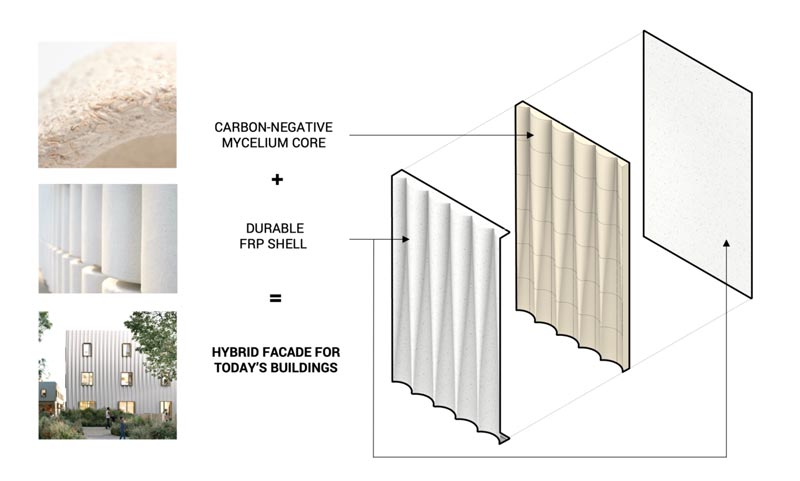
His team is currently manufacturing panels made from this new material in California, aiming to incorporate them into real architectural projects. If successful, other architects and manufacturers could adopt the same method, accelerating its market adoption.
“Ultimately, our goal is for bio-materials to become ‘everyday options,’ like cement boards, plaster, or metal cladding.”
However, bringing new materials to market involves more than just technological development. There are many hurdles to clear, including fire safety and durability tests, meeting architectural standards, and obtaining regulatory approvals.
Considering the speed of climate change, David warns that a technology that will only be usable in 15 or 25 years may not be fast enough to keep up with the current pace. Therefore, it is not enough to pursue future possibilities; it is crucial to adapt technologies so they can be used immediately in practical applications.
“These processes of certifying new carbon-negative materials are not the exciting experiments we had conducted when we created Hy-Fi 10 years ago, but a slow and painstaking process. Still, someone must drive this process forward, or bio-materials will never scale up. The problem is that there are still few people willing to take on this role. That’s why we are actively engaging in this process.”
Bio-materials are not just a future technology. They are already on the verge of transforming architecture and are ready for immediate integration into society.
Closing remarks
“When I first created this material 10 years ago, most people reacted with, ‘Making material out of mushrooms… What is that?’”
The surprise and doubt of those early days are now becoming commonplace in the fields of architecture and design. In fact, today, mycelium materials are being incorporated into educational institutions like Parsons School of Design, and research is also advancing in fields like healthcare and the automotive industry. This shift seems to signify the emergence of a new value system that reexamines the relationship between nature and humans, integrating the perspective of symbiosis.
With urbanisation and population growth, the built environment is predicted to double over the next 30 years, but at the same time we need to bring net carbon emissions down to zero. During our interview, David emphasised, “We are running out of time.” To ensure innovative ideas do not remain mere utopian visions, it is crucial to move forward with their practical implementation. This requires not only technological development but also a fundamental reconstruction of the values for symbiosis throughout society.
Originally published on IDEAS FOR GOOD.
More on circular economy in Japan
- 2026-10-13: Satoyama initiative closes loop, converting food waste into fertiliser
- 2026-10-06: Meiji and TOPPAN begin paper yogurt cup recycling trial in Yokohama
- 2026-10-04: Tokyo selects three community projects to boost resource recovery
- 2026-10-01: Japan METI's Cicrular Economy Action Week begins today
- 2026-10-01: Seven-Eleven Japan begins reusing power units via remanufacturing