 IDEAS FOR GOOD
[Kyoto Circular Economy Special Feature]
This feature series is a collaborative project between IDEAS FOR GOOD and Kyoto City, exploring the present and future of the circular economy of Kyoto. How can the spirit of “Shimatsu no kokoro,” together with circular living and a centuries-old culture of craftsmanship in Japan’s ancient capital, be harnessed to drive innovation that will shape tomorrow’s Kyoto? And how can they give rise to circular businesses that will thrive for the next thousand years? Together with Kyoto City, local businesses, and policy advisor Akihiro Yasui, we explore Kyoto’s unique value and potential through the lens of the circular economy.
We may think of cardboard boxes as just a simple box for packaging products in our daily lives. Yet, from the perspective of resource circulation, cardboard is a material with a high 95% recycling rate (according to the Japan Corrugated Case Association), low transport costs because its lightweight, and a relatively small environmental footprint.
Rakusai Shikou Co., Ltd., a Kyoto-based cardboard manufacturer celebrating its 65th anniversary, is using this highly recyclable material to its fullest potential, exploring new, unexpected applications. The company is even using cardboard as a means to cultivate a culture of long-term purchasing that isn’t solely focused on short-term profit.
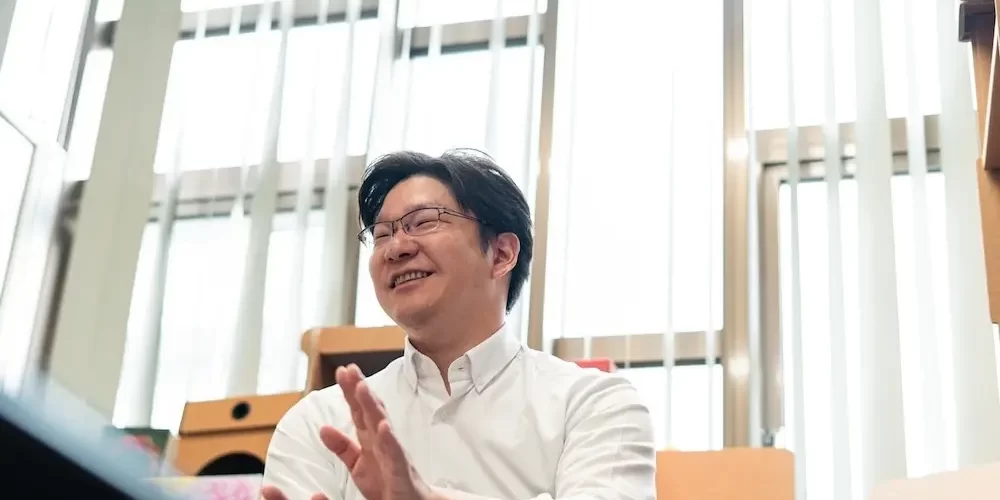
We spoke with Tomohide Oda, Director at Rakusai Shikou, to learn about his business and the role that cardboard can play in achieving a circular economy, a concept that is gaining recognition in government economic strategies.
Interviewee Profile: Tomohide Oda
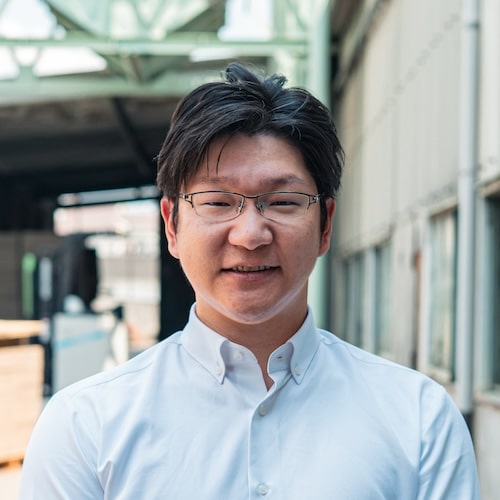 Born in Tochigi Prefecture in 1991. After graduating from Waseda University, he spent six years in sales at TOTO Ltd. before joining Rakusai Shikou Co., Ltd. in 2020. He is dedicated to creating new value with cardboard that goes beyond packaging materials, tackling community issues in education, disaster preparedness and the environment.
Cardboard as a means for creating social value
Since its founding in 1960, Rakusai Shikou’s core business has been the manufacturing of cardboard boxes to package, protect, and transport goods. But Oda’s vision extends beyond the boxes themselves to their connection with society.
Oda: “The appeal of cardboard is that it is a familiar material to many people. And while not widely known, in Japan, it’s a highly circular material with a recycling rate of over 95 per cent. It’s also easy to process and can be shaped into many things besides a box. I didn’t found this company; I inherited the family business, and I didn’t enter this industry with a passion for making cardboard. That’s precisely why I’m always thinking about what value our company can leave for society by using our strength in cardboard as a means, rather than just pursuing profit. When I think that way, it feels like a terrible waste to limit its use to just packaging materials.”
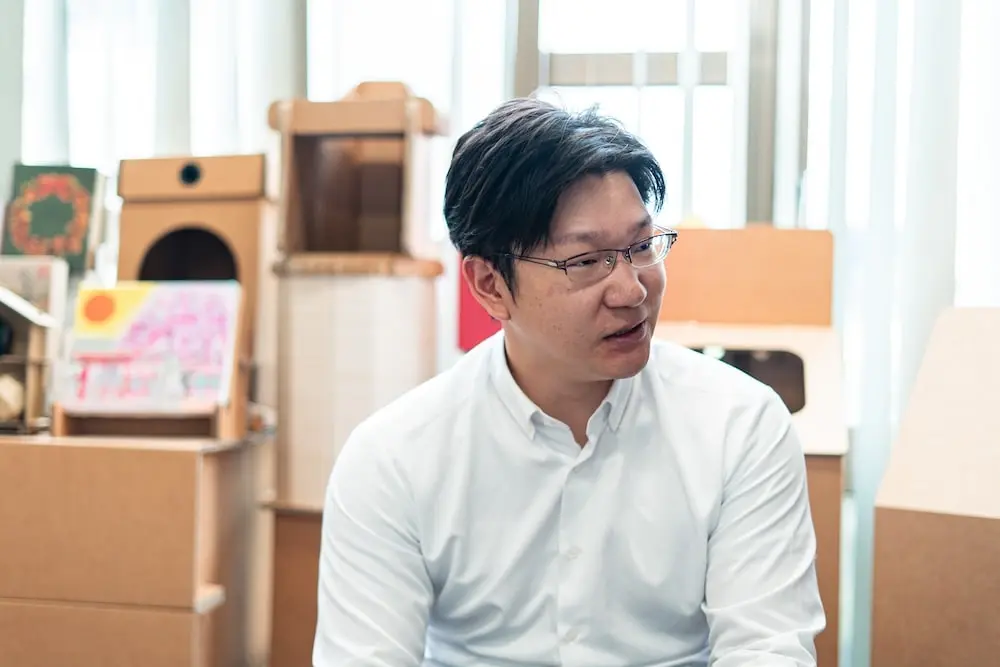
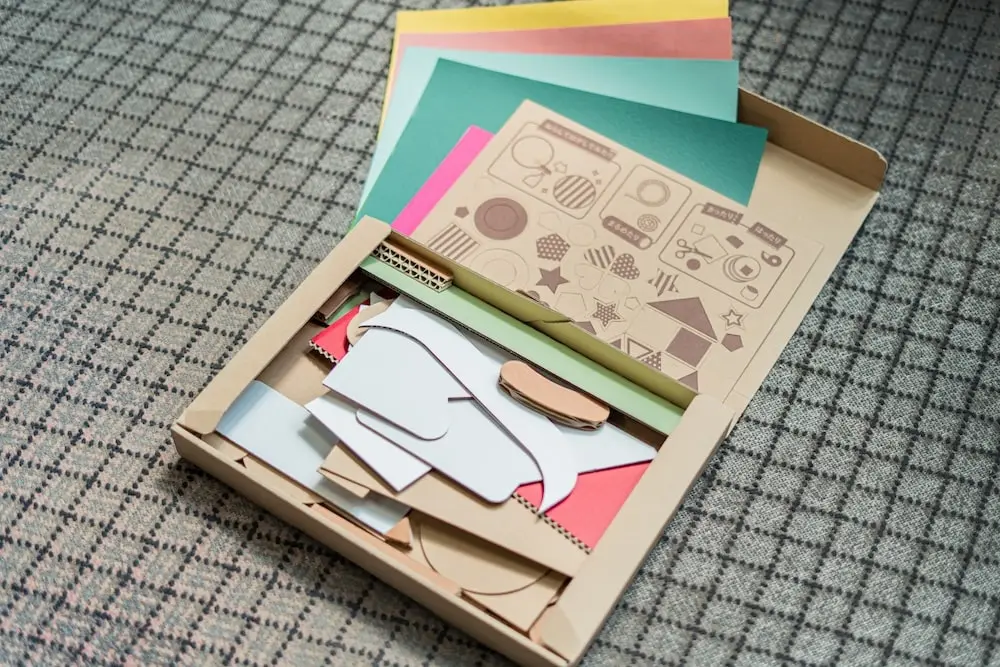
That philosophy has led to concrete actions. One example is the SDKids educational craft kit, made from random offcuts generated during manufacturing. This initiative was sparked by a partnership with Takagi Packaging Co., Ltd. based in Nara Prefecture. Later, the collaboration expanded to include students from Kyoto University of the Arts and local companies like Marushige Shiki, enriching the kit’s content and transforming it into a cross-industry project.
Because cardboard has a low environmental impact, the company is exploring new ways for it to be useful to society, in turn expanding its potential.
Shifting from price competition to value creation
However, this kind of social value is hard to measure with traditional business metrics. Moreover, the cardboard industry is highly competitive, where products with the lowest price, even by a single yen, are often chosen. In this environment, Rakusai Shikou has dared to champion a new value standard: social impact, challenging the public to rethink its purchasing habits.
Oda: “Let’s say there’s a bid for a project in city of Kyoto. Even if our product costs one yen more than a competitor’s, there’s an intangible value: our product supports educational activities that are helping to build a future for Kyoto’s children. Buying our products leads to an indirect social contribution. We want to build that kind of relationship with our customers.”
The decision is whether to prioritise short-term economic rationality or long-term social value. This is also a question of “which future you are going to ‘vote’ for.” Oda believes that this long-term perspective is already rooted in Kyoto’s culture, which, over its long history, has emphasised relationships and a company’s ethos.
Oda: “I’m not from Kyoto myself, but my grandparents live here, and some of our customers have been with us for over 50 years. While this might also be true in other regions, I feel that in Kyoto, decisions are made with sustainability in mind, not just economic rationality.”
The challenge of proving a “good thing”
Oda feels that alongside the company’s own development and communication, there is a growing public expectation for cardboard as a material.
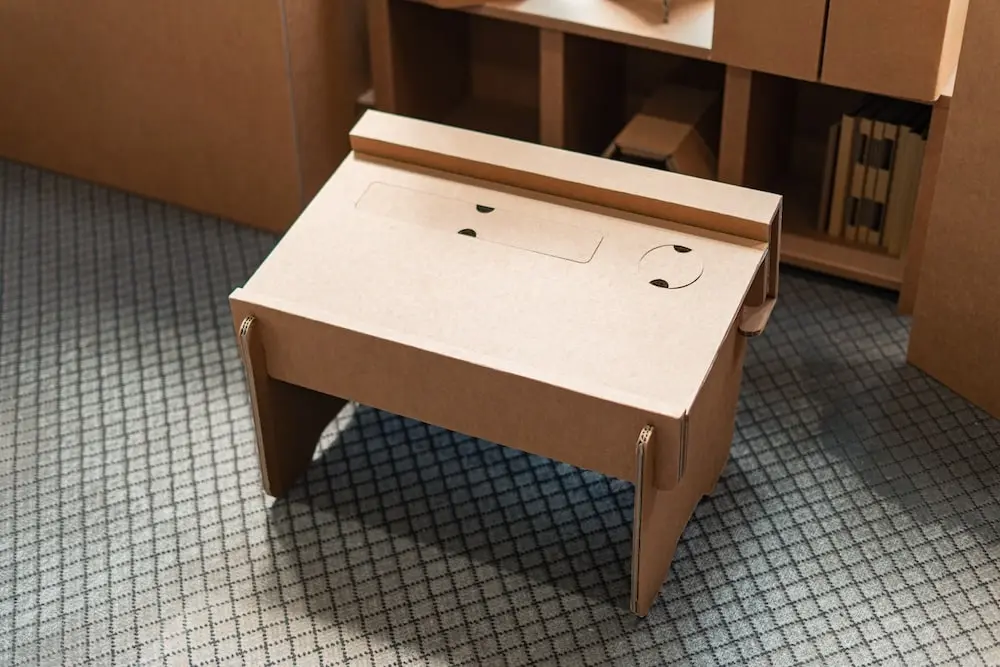
Oda: “Recently, we’ve been receiving a lot of inquiries. The users and applications are diverse; we often get requests to make fixtures for exhibitions or tables and chairs for events. For exhibition booths that are only used for a few days, making them out of wood is costly, and the waste generated after the event becomes a major problem. Cardboard, on the other hand, is lightweight, efficient to transport, and can be recycled after use. We’ve noticed that this type of demand is increasing, perhaps due to the growing interest in sustainability.”
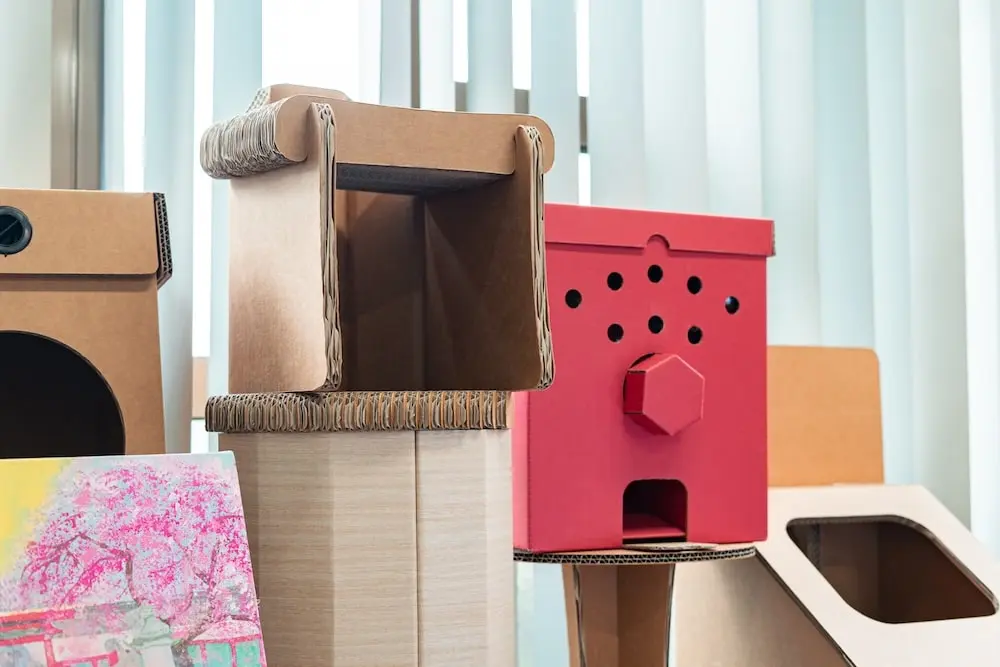
But this expansion of applications has also presented challenges.
Oda: “Our biggest challenge right now is that we haven’t been able to clearly communicate the reasons for choosing cardboard. For example, our competitors for cardboard fixtures are in other material industries like woodworking. We need to show that cardboard is not only a good choice for short-term benefits—lightweight, durable, and inexpensive—but also what impact it has across the entire supply chain, from sourcing materials to manufacturing, transport, and disposal. We want to quantify that value, but for an SME (Small and Medium Enterprise), it’s incredibly difficult to calculate the impact of each stage of the manufacturing process, so we are still only halfway there. The big challenge is then visualising the value while balancing the emotional value of ‘good for the environment’ with economic rationality.”
How every purchase casts a vote for the future
Our society is shaped by our daily purchasing decisions. Even if we know that “shopping is voting” and the environmental impact of our choices, it’s still difficult to factor in the financial and environmental costs of disposal in addition to the price tag.
Oda: “When people buy an inexpensive plastic product, few of them may think about the future cost of disposal or the environmental impact. That’s why I believe that as a company, we must work to convey the story behind our products, like what kind of cycle they create and whose future they support, and to make their cost and environmental impact visible.”
Instead of getting bogged down in the debate about whether manufacturers should change or consumers should choose differently, Rakusai Shikou has chosen to be the storyteller of a “tangible story of circularity.”
Oda: “A consumer might receive a cardboard box from an online order that is then transformed and returned to them as a product for their child. If people can feel this kind of domestic resource circulation story more tangibly, I believe that an awareness of choosing things with disposal in mind will naturally grow.”
Editorial note
As we delve into Rakusai Shikou’s challenges, a core theme of “shared learning” becomes apparent. This is evident in the educational kits made from offcuts, the company’s efforts to visualise and communicate its impact, and its collaborative projects with local high school students. The company has brought students’ cardboard product ideas to life, sharing the profits with the students, the school, and the company, creating opportunities for them to gain hands-on experience in product creation.
The company doesn’t view cardboard as a mere commodity but as a medium to consider who it can learn with and what kind of knowledge it can create. With this broad perspective, the company is taking steady, long-term, and community-rooted steps toward a circular economy. Kyoto’s cultural foundation, which goes beyond simple economic rationality, offers a hint for a new kind of richness in modern society.
[Reference] Rakusai Shikou Homepage (Japanese)[Launching October 2025] Circular Business Design School Kyoto
Kyoto is home to timeless assets nurtured over 1,200 years: the spirit of “Shimatsu no Kokoro”, circular ways of living, and a culture of craftsmanship. We are facing urgent global challenges such as climate change and biodiversity loss. To create a truly circular future requires drawing upon this wisdom, applying it to the present, and carrying it forward into the future. To this end, Harch Inc., which operates IDEAS FOR GOOD, will launch a new learning program in October 2025. By combining Kyoto’s deeply rooted circular wisdom with cutting-edge insights into the circular economy, the program seeks to envision and achieve the future we aspire to. “Decode Culture, Design Future”──a circular future rooted in tradition, from Kyoto.
Official website: https://cbdskyoto.jp/
Photo by Asuka Sasaki.
Originally written by Kaho Fukui, edited by Natsuki, and published on IDEAS FOR GOOD.
Translated by Zenbird Editorial Team.