 Zenbird Editorial Team
Izumiotsu City and Takaishi City in Osaka Prefecture have started collecting and recycling household used cooking oil, in a partnership to turn household waste into renewable energy.
In Japan, households typically dispose of used tempura or cooking oil by solidifying it with chemical coagulants or soaking it in paper before discarding it as combustible waste. This disposal method demands time and incurs financial costs for households purchasing coagulants. It also carries the risk of leaks and odours in the rubbish, while completely wasting a reusable material.
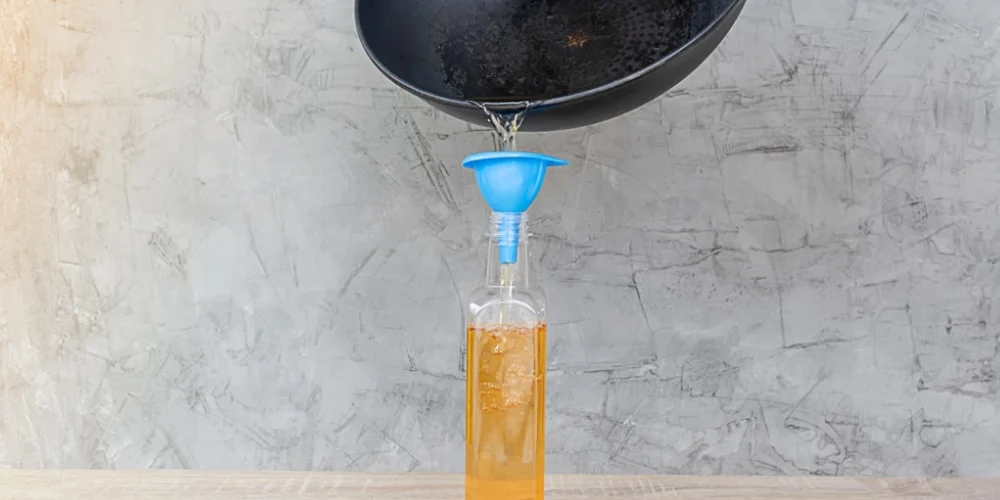
The new programme provides a more efficient alternative. Residents pour their cooled used oil into standard PET bottles and drop them off at designated collection points. Because Izumiotsu and Takaishi are compact and adjacent cities where citizens frequently cross municipal boundaries for shopping and commuting, the local governments designed the system to be borderless. Residents use drop-off locations in either city interchangeably, allowing them to recycle their oil during routine errands. This lowers the barrier to participation returning resources into the circular economy
Uedayushi Co., Ltd. handles the recycling process. The collected oil undergoes processing to become biodiesel fuel and serves as a raw material for Sustainable Aviation Fuel. Furthermore, the facility recycles the PET bottles used to transport the oil. This guarantees that the transport container does not become new rubbish, effectively circulating both the oil and the plastic. ENEOS Corporation collaborates on the scheme to promote the collection of this oil specifically for future aviation fuel production.
This infrastructure transforms a cumbersome household chore into an accessible civic action. By enabling citizens to drop off oil during their routine shopping trips, the initiative lowers the barrier to participation in the circular economy. This domestic resource circulation shifts reliance away from imported energy, proving that everyday household waste holds the power to fuel future transport networks.
[Reference] PR Times (Japanese)