 IDEAS FOR GOOD
[Kyoto Circular Economy Special Feature]
This feature series is a collaborative project between IDEAS FOR GOOD and Kyoto City, exploring the present and future of the circular economy of Kyoto. How can the spirit of “Shimatsu no kokoro,” together with circular living and a centuries-old culture of craftsmanship in Japan’s ancient capital, be harnessed to drive innovation that will shape tomorrow’s Kyoto? And how can they give rise to circular businesses that will thrive for the next thousand years? Together with Kyoto City, local businesses, and policy advisor Akihiro Yasui, we explore Kyoto’s unique value and potential through the lens of the circular economy.
Do you have a favourite shirt with a stain or a memorable blouse faded by the sun, tucked away in the back of your wardrobe? Have you given up on clothes that are still wearable, deciding they’re no longer suitable for public wear?
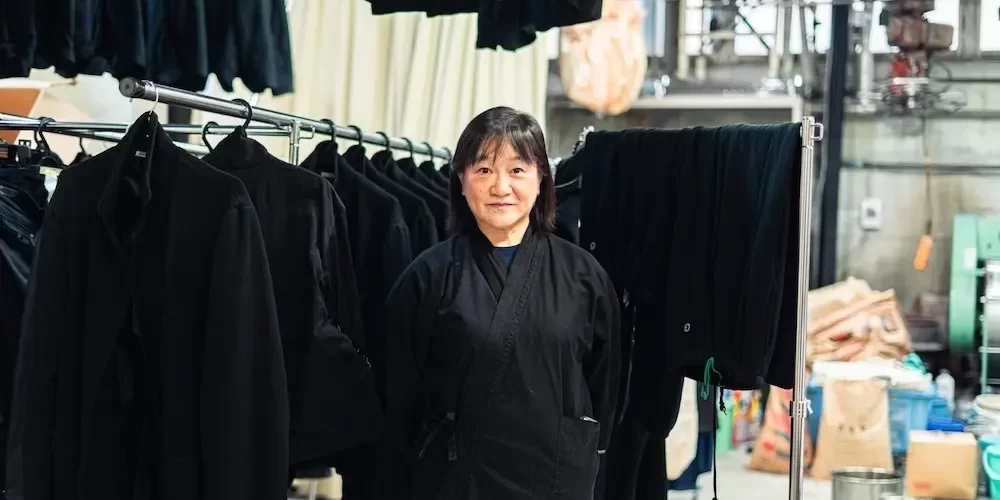
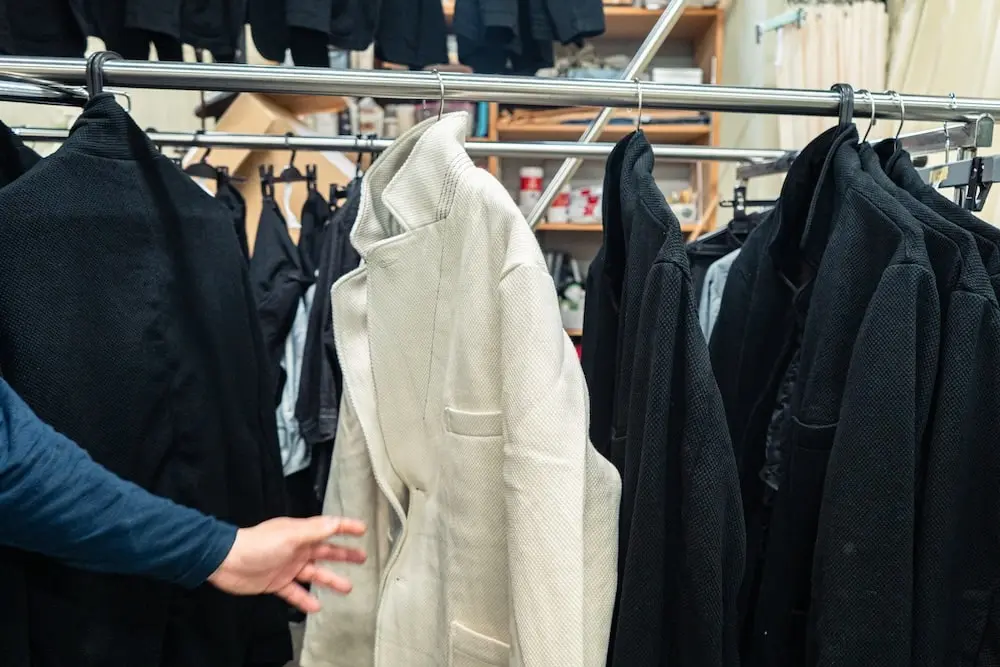
In Kyoto, there is a place where such garments are rescued from a fate of being thrown away and given a new lease of life. That place is BAMBA Textile Dyeing Co., Ltd., a long-established company with over 150 years of history in dyeing Kuro-montsuki (formal crested black kimonos).
Facing the crisis of a declining kimono culture, the company took a bold step by applying its black dyeing techniques for Kuro-montsuki to re-dyeing modern clothing. By regenerating textile this way, it is also regenerating the culture of cherishing and making things last long. We spoke with Maki Bamba, the fifth-generation head of the company, about her philosophy and her story of innovation to carry tradition into the future.
Interviewee Profile: Maki Bamba
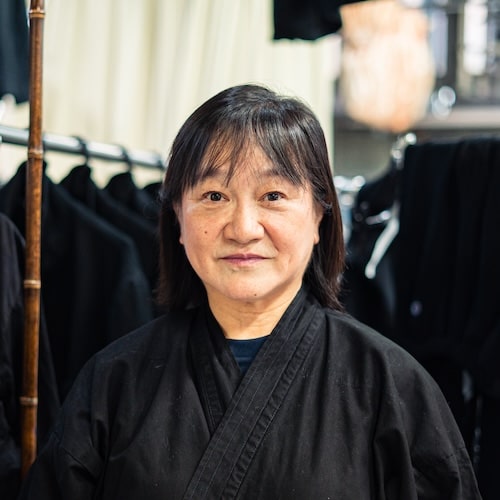 After graduating from Ueda Yasuko Fashion College, Bamba worked as a textile designer. Since 2008, she has assumed the fifth-generation name Hiiragiya Shinshichi. Utilising her dressmaking skills, she has transitioned from dyeing kimonos to focusing on dyeing clothes. She continues to pursue the depths of black dyeing alongside her son, the sixth-generation head.
“A black that is blacker than black”: the jet-black colour her father craved
The history of BAMBA Textile Dyeing began in 1870, amid the upheaval of hanseki hokan (the 1869 return of domains and registers to the emperor).
Bamba: “Our company was founded in 1870, and the first-generation head came to Kyoto from Gifu to set up a black dyeing workshop. At the time, we used natural dyes, and the mainstream ‘black’ dye actually resulted in a reddish-brown colour [also known as ‘chazome’]. In the second generation, navy dyeing became the focus, in part because the Japanese National Railways’ uniforms were navy. Then, during the third generation, chemical dyes were introduced, allowing us to produce a deeper, more beautiful black than ever before with only a small amount of dye, and black dyeing became the pillar of our business.”
A significant turning point came during her father’s time as the fourth-generation head. At a funeral, her father noticed the black dye on one of their Kuro-montsuki kimonos looked grey. He began a two-year journey, working hand-in-hand with a dye merchant to create a truly deep black. With the ideal colour of a raven’s wet wings in mind, he perfected his unique jet-black shade, known as Shumei-guro.
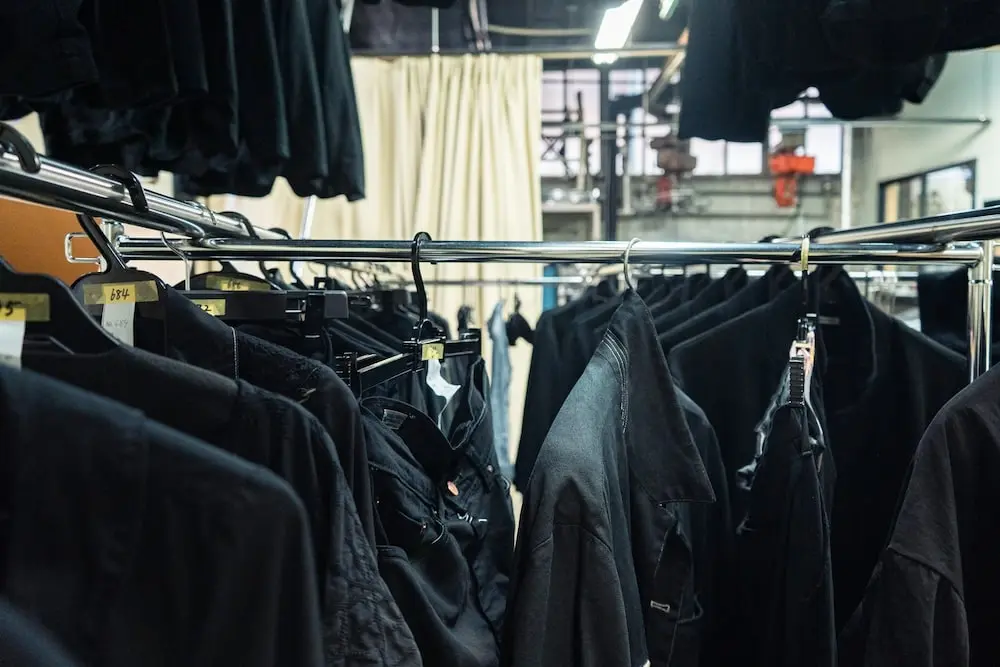
Bamba: “When it was finished, we received messages from all over Japan saying, ‘What an incredible black!’ I recall that we were inundated with requests, with as many as 30,000 items in a single month. I still wonder how we managed to get through it all. It was an incredibly busy time.”
The arrival of this stunning black, Shumei-guro, caused a huge stir in the industry. The name spread instantly among the 130 or so competitors in Kyoto at the time, solidifying the technique and reputation of BAMBA Textile Dyeing.
The black-dyed workshop, and the next chapter of history
However, the tide of the times was unforgiving. The culture of wearing Kuro-montsuki and other black kimonos declined, and the work in the workshop gradually dwindled.
Bamba: “I had no intention of inheriting the family business. I loved Western clothing and worked as a textile designer. Selling the small items I made in a corner of the workshop was more my style.”
It was at this time that her father, the visionary who had pursued the ultimate black, was given a two-year prognosis to live. The 150-year-old history of the family business seemed to be drawing to a close. One day, Bamba looked into the workshop and saw her father pouring the dye bath out of the dye vat, which had been replenished for generations, out of the cauldron.
“There’s no one to succeed me, so I’m giving it up.” he said.
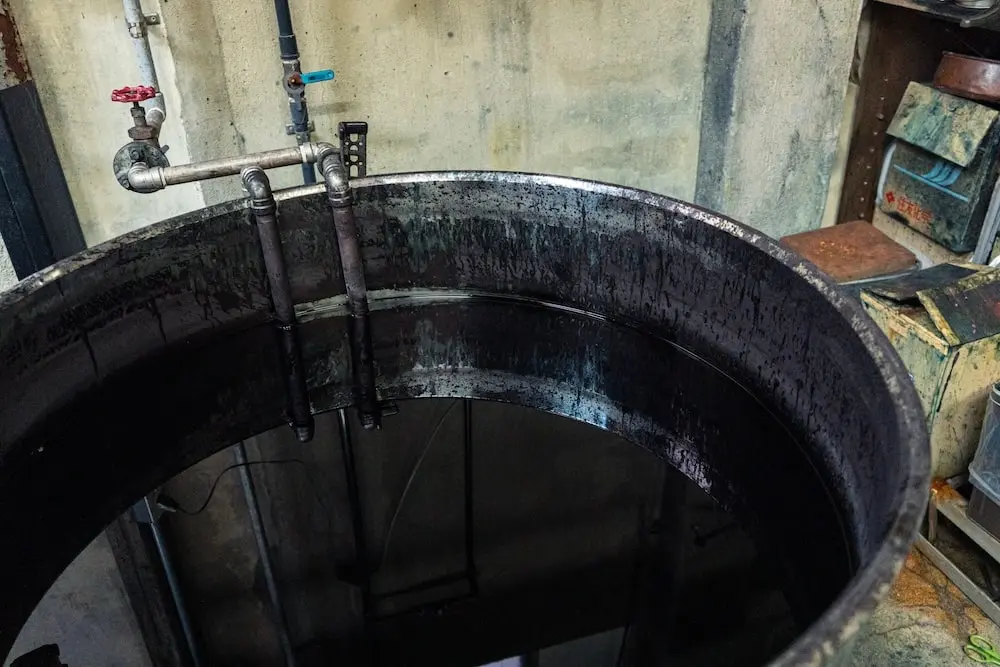
Seeing the factory floor turning black from the wasted dye, Bamba blurted out, “What a waste. I’ll do it.”
Bamba: “My father grumbled, ‘What a pointless thing to do,’ but he left me a little bit of the dye. I later discovered in his diary that he was actually happy I had decided to take over.”
The ink-stained vest sparked an idea
Although her father entrusted the workshop to her, dyeing kimonos was uncharted territory for Bamba, who was an expert in modern clothing.
Bamba: “I knew how to dye modern clothes, but I had no idea how to properly dye a kimono.”
She approached the artisans who had worked at the workshop in the past, humbly asking them, “Why do you do it this way?” and gradually learned the techniques one by one.
Bamba: “The person who gave me the idea for a new direction was my daughter, who was a middle school student at the time. She came home with an ink stain on her brand new white vest and asked me to dye it black. That’s when it clicked. I redyed it, and it looked just like new. My daughter was so happy.”
That event inspired her to create a simple website and start a black dyeing service for modern clothes. Even though the internet wasn’t as widespread then, orders gradually increased. That single step spurred BAMBA Textile Dyeing to adapt to the needs of the times and expand its focus beyond kimonos to modern clothing.
Complaints are opportunities
When Bamba first started the black dyeing service for modern clothes, there were many failures.
Bamba: “I once shrunk a wool jumper, and on another occasion, I returned a suit without pressing it and was scolded for sending it back so wrinkled. Still, I always see being scolded as an opportunity. If I improve on what I’ve been told, I won’t be scolded for the same thing again.”
The complaint about the wrinkled suit led her to add beautiful press finishing a standard service offering. Furthermore, by utilising her dressmaking skills, she has enabled the company to offer more than re-dyeing.
Bamba: “I can fix fraying and suggest repairs as needed. My dressmaking skills are my strength, so now I can handle not only the dyeing but also the beautiful finishing of the repairs. My greatest joy is seeing a customer’s delight when they see their clothes after being redyed and returned to them looking brand new.”
The company’s sincere approach to reviving clothes destined for disposal, returning them in a condition beyond what their owners imagined, has grown through word of mouth, steadily expanding its customer base.
A black that converses with time and paints the future
Today, BAMBA Textile Dyeing is in the process of passing the baton to the sixth-generation head, her son, Kengo. While Bamba pursued a “natural black” that suits modern clothes, requests have now begun to come from apparel manufacturers asking for “a black that is blacker than others.” In response to this demand, the company has adapted the Shumei-guro that her father (the fourth-generation head) developed for use on modern clothes, creating a technique that produces a stunning black finish.
Bamba: “If we had only continued with the old methods of dyeing kimonos, we would have been gone a long time ago. We’ve been able to continue this long because we’ve adapted to the times.
“In the future, I hope we can collaborate with apparel stores to redye unsold items, clothes that have faded from display or pieces that would otherwise be discarded due to a colour mistake, and sell them as a new collection. I also hope that hotels and ryokan (traditional inns), of which there are many in Kyoto, will redye their unused loungewear for guests and sell them as reused products.”
She also expressed her eagerness to use studio workshops to convey the message of shifting from a “throwaway society” to a “culture of cherishing and using things for a long time”. The potential for this is vast, especially in Kyoto, where diverse generations come together to learn about history and culture.
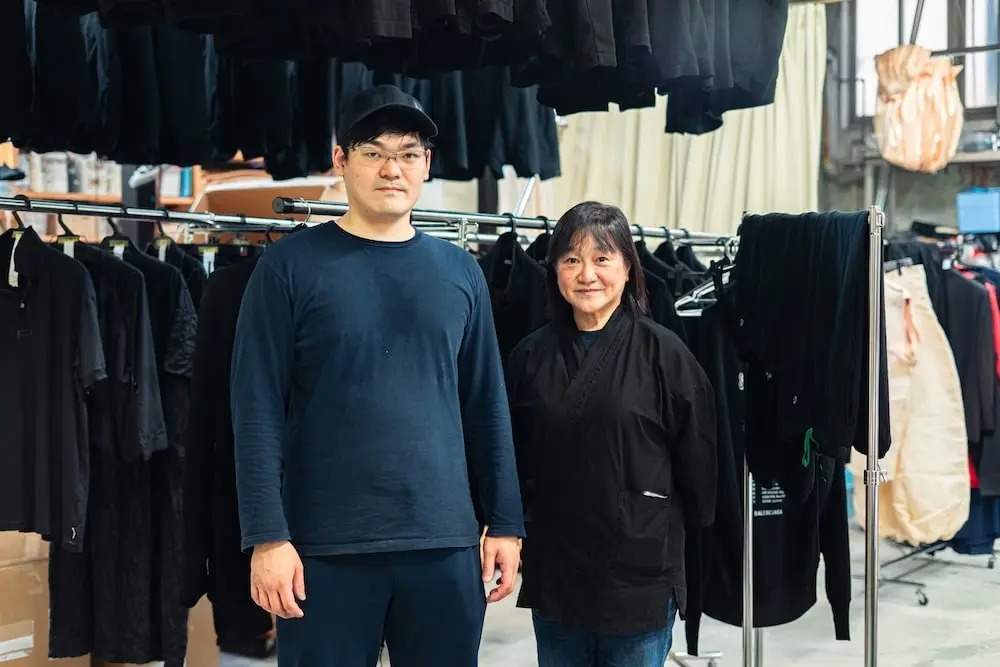
From reddish-brown to navy, then to black. From black for kimonos to black for modern clothing. And from a natural black to Shumei-guro once again, the company has responded to the voice of each era and has continued to evolve.
Bamba: “There are some things that we must not change, and some things that we must. We protect what we should protect, and we change what we should change.”
What began as an attempt to revive a single garment has now expanded into the much larger challenge of reviving an entire traditional industry. Just as BAMBA Textile Dyeing breathes a new, deep black into faded clothes, it is dressing the traditions of the ancient capital in a new colour, creating change for the sake of preservation.
Editorial note
We often hold a static, unchanging image of tradition. However, Bamba stated that “to protect tradition is to constantly change.” The journey of BAMBA Textile Dyeing teaches us that tradition is a dynamic endeavour, a voyage that navigates the torrent of the times with the essence of its craft as its rudder.
A garment asleep in your wardrobe is not just an object. It is also a medium that holds your memories and family stories. The act of “re-dyeing it black” is not only a way to encourage people to use resources longer but also a hopeful choice that allows you to cherish your memories while weaving a new story for the future.
[Reference] BAMBA Textile Dyeing Homepage (Japanese)[Launching October 2025] Circular Business Design School Kyoto
Kyoto is home to timeless assets nurtured over 1,200 years: the spirit of “Shimatsu no Kokoro”, circular ways of living, and a culture of craftsmanship. We are facing urgent global challenges such as climate change and biodiversity loss. To create a truly circular future requires drawing upon this wisdom, applying it to the present, and carrying it forward into the future. To this end, Harch Inc., which operates IDEAS FOR GOOD, will launch a new learning program in October 2025. By combining Kyoto’s deeply rooted circular wisdom with cutting-edge insights into the circular economy, the program seeks to envision and achieve the future we aspire to. “Decode Culture, Design Future”──a circular future rooted in tradition, from Kyoto.
Official website: https://cbdskyoto.jp/
Photo by Asuka Sasaki.
Originally written by Kaho Fukui, edited by Natsuki, and published on IDEAS FOR GOOD.
Translated by Zenbird Editorial Team.