 Roger Ong
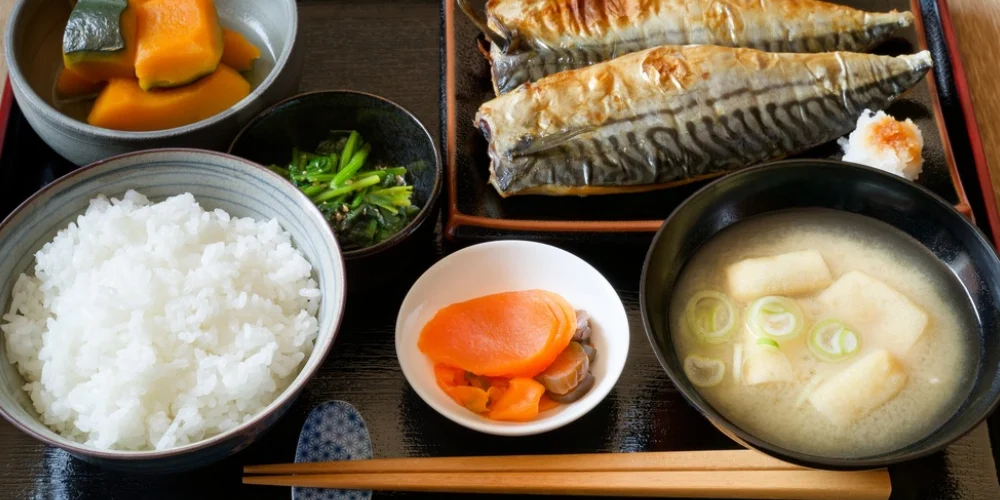
Ask what a healthy meal looks like, and many may picture a Japanese one: a bowl of rice, a small fish, a few vegetables, and a bowl of miso soup.
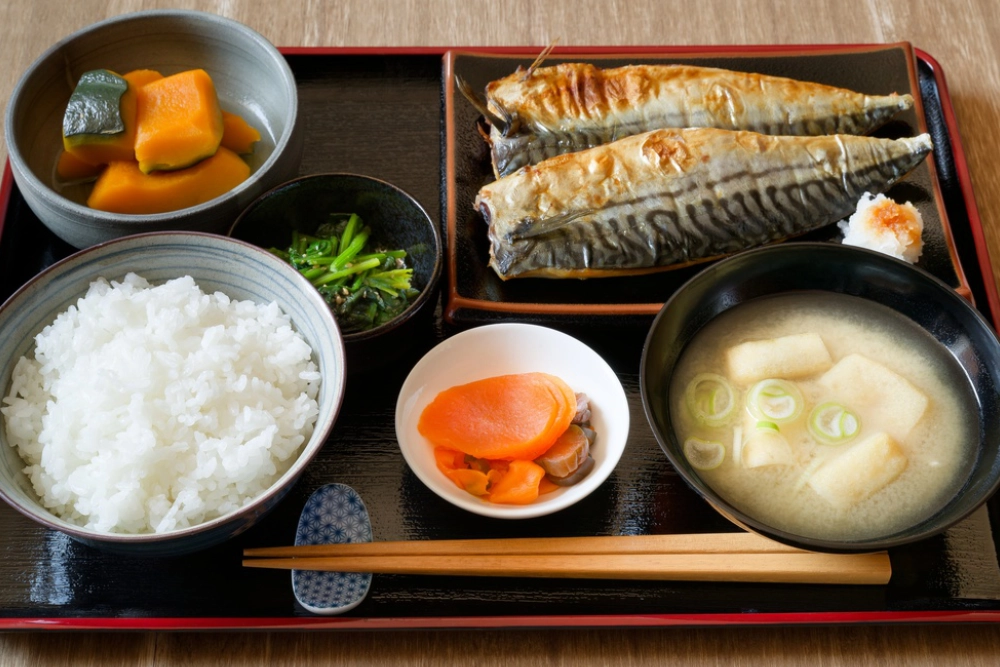
It’s true that this is a standard healthy meal. According to Japan’s Ministry of Health, Labour and Welfare in 2025, life expectancy at birth is 87.33 years for women and 81.35 for men. Women have ranked first in the world for 41 consecutive years, while men slipped from sixth to seventh despite a gain. Food alone doesn’t explain it, but it is certainly a major factor.
But how did this become the conjured image in our minds? Turns out, it’s not just the ingredients itself, but the mindsets behind them that explain why Japanese meals are healthy.
Modest meals maximised for value within constraints
For much of Japan’s past, an ordinary meal was modest by design. It would have rice, often mixed with barley. Miso soup, pickles, natto (fermented soybeans) and boiled vegetables were key side dishes. Fish was a small treat, rather than the star of the meal. The same seasonal menus came round again and again through the year.
This is the pattern for washoku, or traditional Japanese cuisine, which was added to UNESCO’s Intangible Cultural Heritage list in 2013: grains, soup and several small sides like vegetables and modest amounts of protein. The pattern itself is not unique to Japan (Mediterranean meals are similar). Rather, what is unique is the deliberate day-to-day ritual.
Limited food resources shaped this pattern of eating, which was often constrained by what the land and the household could afford. But these modest meals reveal a few sustainable mindsets.
Knowledge and appreciation of living in rhythm with nature
The phrase “seasonal ingredients” is often used as a marketing term today, but for Japan it holds a deeper nuance. In old Japan, people carried a mental map and calendar of what could be gathered in their environment. While what people could forage differed from Yamagata in the north to Kagoshima in the west, the residents knew where, and when, to find food. These could be mountain vegetables or mushrooms or fish from the river or sea. Many households also grew their own vegetables, beans and rice, and kept chickens for eggs. Food was something you raised or foraged, not something you simply bought.
This also meant that ingredients were not consistent. Just because they could find mushrooms one day did not mean there would be a supply the next week. From this grew a sense of appreciation for nature, and gratitude for being able to partake of a seasonal, limited-stock addition to their normal meals. This is why, without exaggeration, you can often see the food industry using the terms “gifts from nature” or “gifts from sea”. Furthermore, the Japanese devised the tastiest ways to prepare each ingredient, and practised zero food waste to the best of their abilities.
Food preservation as a habit
Japanese households also had the habit of preserving food. Abundant harvests had to last through lean months, so households spent time and effort on preservation, including salting, drying in the cold air and fermenting. Miso, pickles and dried fish were the winter’s reliable staples. With enough preserved food at home, a poor harvest or a disaster was less frightening. Preservation was also an act of mottainai (the feeling of regret when something useful is thrown away), so nothing was wasted.
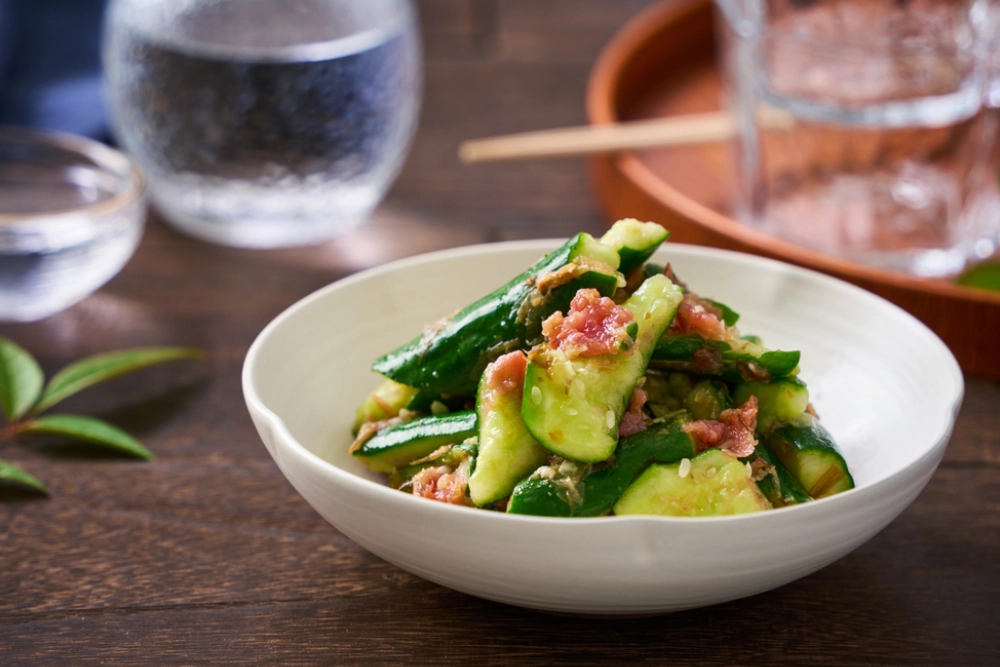
Today, fermented foods are widely valued for their flavour and their place in a varied diet.
Knowing when for extravagance and when “just enough” will do
Taru wo shiru is a mindset of knowing enough, which the Japanese applied to their daily lives, including food. Portions were controlled, served on individual trays.
Celebrations then did the opposite, on purpose. New Year, year-end gatherings and local festivals meant red rice, simmered dishes and mochi in generous quantities. Because everyday meals were plain, the feast felt like a feast.
Becoming the Japanese healthy meal
Constraints of what the season gave and what the household could gather or store inspired appreciation for nature and living in its rhythm. This gave us the recipe for modest, satisfying and healthy meals made from local ingredients, and the habit of food preservation and knowing just enough.
But many of these constraints do not exist today. Along with the convenience and (wasteful) abundance, we have lost that sense of connection and dependence on nature, the knowledge of food preservation against unforeseen circumstances and a form of hedonism. Perhaps, in tracing where the Japanese healthy meal comes from, we might spend a little more time thinking about rediscovering these cultural values for our modern lives.