 Zenbird Editorial Team
In 2025, Japan’s Ministry of Economy, Trade and Industry (METI) published a guide titled “Guide for Promoting CE Commerce Businesses”, outlining strategies to promote CE (Circular Economy) Commerce among businesses. It reinforces Japan’s Circular Economy Vision goal, establishing CE Commerce as a major pillar of the nation’s economy and a strategic advantage for global competitiveness.
Now, the Kanto Bureau of Economy, Trade and Industry has followed up with a new guidebook called “CE (Circular Economy) Commerce Guidebook: Supporting the Solution of Regional Issues”. Published March 2026, this guidebook is designed as a manual to implement CE Commerce to address regional issues.
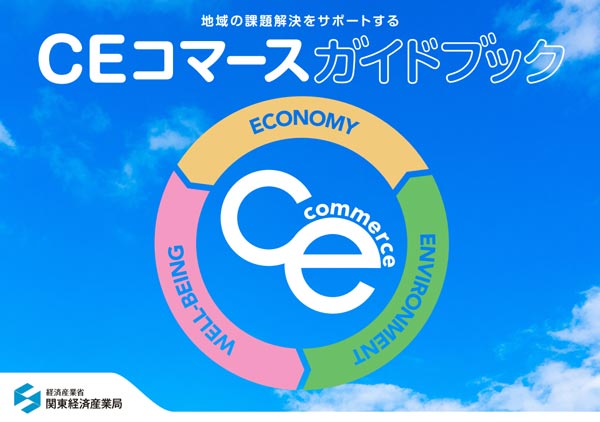
CE Commerce refers to business models within the circular economy that prioritise “Reduce” and “Reuse” to maximise the value of products already in circulation. The guidebook highlights five specific business models that benefit the environment, social well-being, and outlines seven collaboration methods to foster partnerships between cities and businesses.
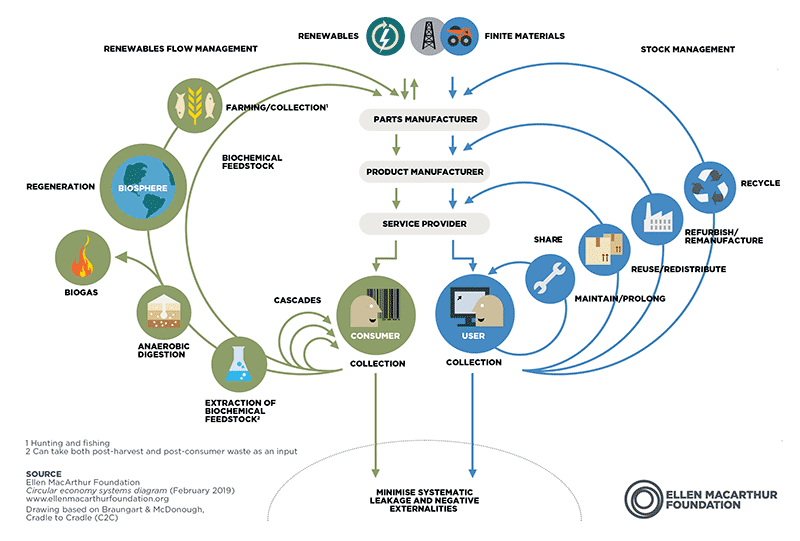
The CE Commerce Guidebook is designed for local government officials, including city hall employees, waste management departments, and regional planners. It reminds businesses of Japan’s shift away from the traditional “take-make-waste” linear economy towards a circular model. The guide also goes on to position CE Commerce (which includes models like sharing, reusing, and repairing) as superior to recycling, as it consumes less energy and extends product lifespans.
Furthermore, the guide emphasises that regional solutions must be tailored to local circumstances, like how urban areas may be ideal for sharing models, while rural regions are better suited to repair-based solutions. The guidebook also advocates public-private partnerships for success.
The CE Commerce Guidebook includes Japanese case studies, reinforcing its practical value beyond just theory. The examples include Kamakura City’s introduction of Megloo, a regional sharing service for reusable takeaway containers that reduces plastic waste, and Matsudo City’s Reuse Kobo Kurunkuru, where the city selects usable furniture from bulky waste, repairs it, and resells it.
Japan’s cultural history has long championed circularity. Circularity thrived during Japan’s Edo period, with repair and sharing businesses operating sustainably and profitably. The mottainai mindset seeks to maximise resources in satoyama and satoumi. It also highlights the benefits of Japan’s circular values for well-being and the environment. With commitment and determination, Japan’s cultural foundation is primed to drive CE Commerce nationwide.
[Reference] Kanto Bureau of Economy, Trade and Industry Feature Page (Japanese)