 IDEAS FOR GOOD
When you hear “aizome” or “indigo dyeing”, you might picture it simply as traditional Japanese craftsmanship. In fact, indigo has been part of Japan’s cultural fabric for centuries, valued for both its beauty and its practicality. Lesser known outside of Japan is that this deep, vivid blue is also used to dye the uniforms worn in kendo, the Japanese martial art of swordsmanship.
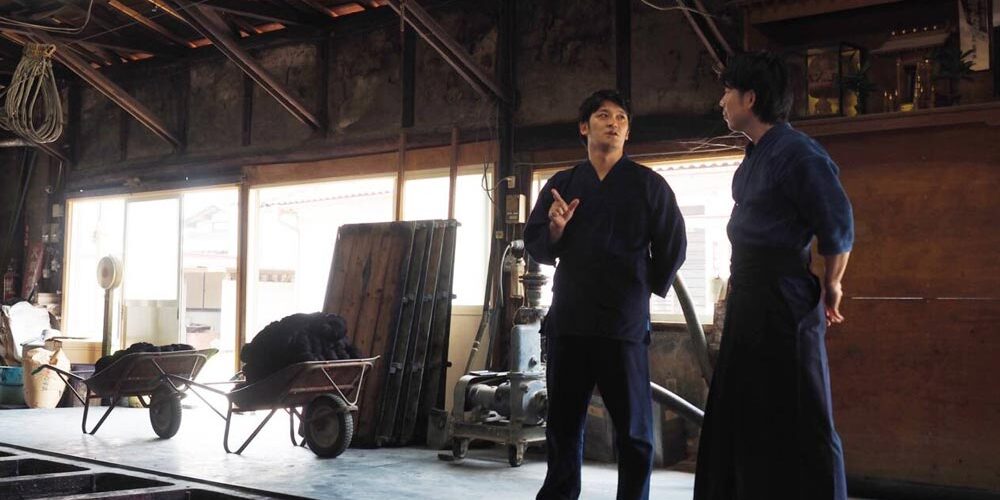
I learned this firsthand when I visited an indigo dyeing workshop in Saitama Prefecture. Stepping inside felt like stepping into another world where the air was thick with the earthy scent of natural dye vats, and the craftspeople tended to the dye as if it were a living being. They fed it, stirred it, nurtured it.
“Indigo is alive.”
Yuki Nogawa, the fifth-generation head of Nogawa Senshoku Kougyou, a family business that has been crafting indigo textiles for over 110 years, shared this wisdom with us.
In the past, Bushi—leaders within Japan’s warrior class—wore indigo-dyed cotton beneath their armor. Indigo’s natural antibacterial properties helped prevent wounds from becoming infected or worsening during battle. Over time, indigo evolved beyond just a functional fabric into a symbol of resilience, discipline, and harmony, thus earning it the title of “Japan Blue.”
Even today, the way we care for an indigo-dyed kendogi (kendo uniform) carries deep cultural meaning. In Japan, the simple acts of folding neatly, aligning edges, and tying securely reflect the deeper mindset of bringing order to daily life. It’s a quiet form of mindfulness, an unspoken belief that the way we handle everyday objects shapes our inner state.
Speaking with Yuki Nogawa and Mizuki Amagai—a seventh-dan kendo master, educator, and long-time user of indigo-dyed uniforms—I came to see that this simple idea of “tending to the order of life” connects to something larger. It’s about nurturing our ikiru chikara, or our “strength to live.” In Japanese, “ikiru” means more than “being alive”. It’s about living with intention, awareness, and connection. And perhaps, in today’s fast-paced world, that is something we are in danger of losing.
Fading beauty, unmatched comfort. Exploring indigo’s charm
In recent years, more and more people have been opting for modern synthetic uniforms made from jersey fabric, even among dedicated kendo practitioners. They are affordable, lightweight, easy to wash, and quick to dry. It’s now common to see many competitors wearing these practical jerseys instead of the traditional indigo-dyed cotton at tournaments or grading examinations.
On a different occasion, I had the opportunity to guide a kendo practitioner visiting from abroad to a youth kendo dojo in Ibaraki Prefecture. (Having practiced kendo while living in the Netherlands, I now often help connect foreign practitioners with the Japanese kendo community.) The head instructor of the dojo, Mizuki Amagai, shared a remark that left a lasting impression on me.
Amagai: “I only wear indigo-dyed cotton kendogi and hakama made in the Bushu region, especially those from a maker called Bushu Ichi.”
At the time, I myself wore a jersey uniform for its convenience. Half-curious and half-skeptical, I asked what makes them so different. Amagai-sensei handed me a photograph.
Amagai: “In this picture, I’m the only one wearing an indigo-dyed cotton uniform. The way the colour fades, and the way it feels to wear it—they’re completely different.”
I was intrigued. Yet upon visiting a kendo store, the staff recommended against buying cotton. “Jersey is better,” they said. “It’s cheaper and easier to wash.”
Of course, jerseys have their own merits, and I like them too. But I couldn’t shake the feeling that I was missing out on something deeper, something beyond mere practicality. It was around the same time when a friend informed me that Nogawa Senshoku Kougyou, a long-established indigo dyeing workshop, had opened a direct store. I decided to visit.
Indigo is alive: a surprising discovery at the dye workshop
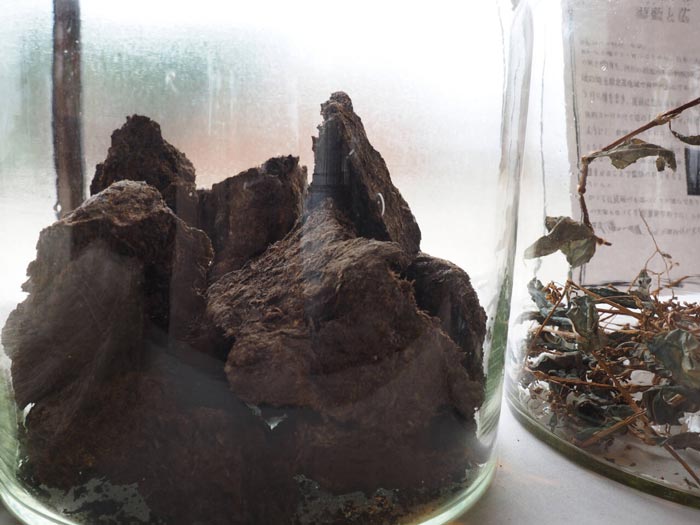
Indigo dye doesn’t simply come from a plant. The process begins with harvesting the leaves of the indigo plant and drying them. The dried leaves are then fermented for about three months before being shaped and dried again, forming what are called aidama (“indigo balls”). Inside each of these indigo balls, microorganisms lie dormant.
To create dye, the artisans “wake” these microorganisms from their slumber. This begins another stage of fermentation, transforming the dormant indigo balls into a living dye bath. The process feels almost like gently coaxing a living creature back to life.
There are a total of 13 dyeing vats in the workshop, with several containing prepared indigo dye. When dyeing, the threads are immersed starting with the older, well-matured vats in sequence.
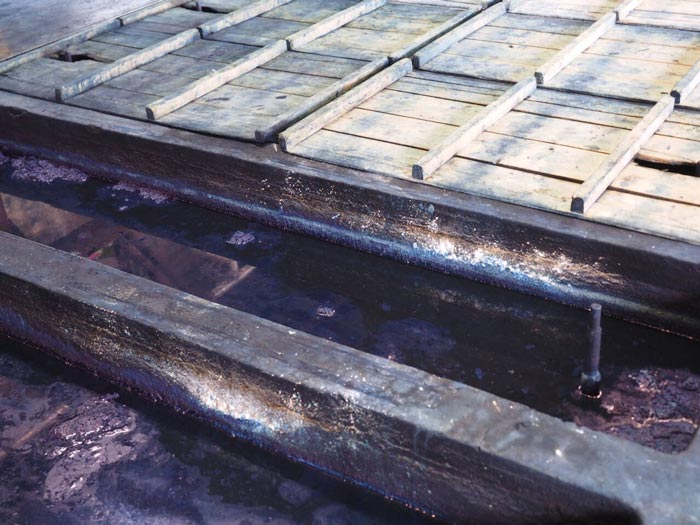
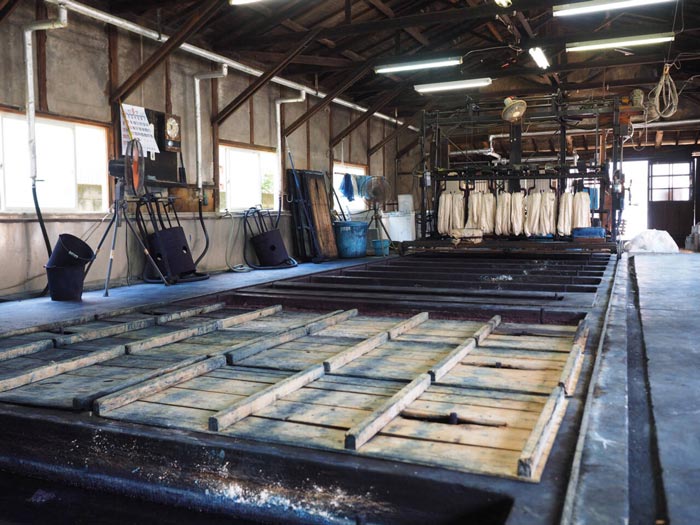
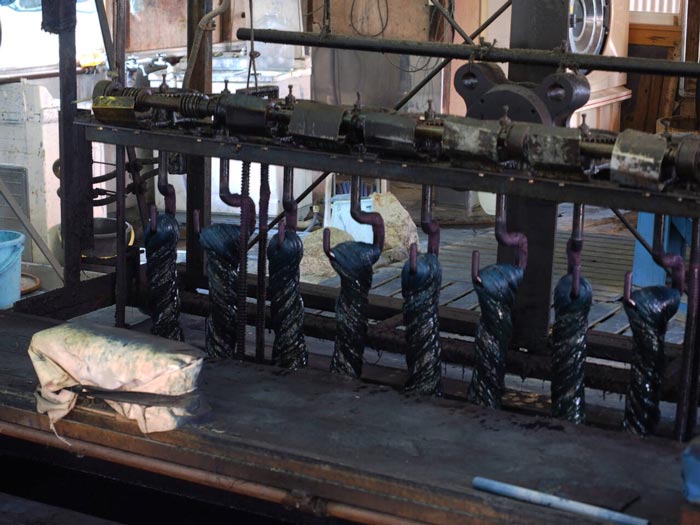
When exposed to air, indigo changes colour before your eyes. Even after the dye bath is complete, the microorganisms within it remain alive.
I had always imagined factories as cold, mechanical spaces, but here, the work felt closer to tending a living creature. And that impression stayed with me long after my kendogi and hakama arrived at my home. For the first time in my life, I found myself thinking: This piece of clothing is alive.
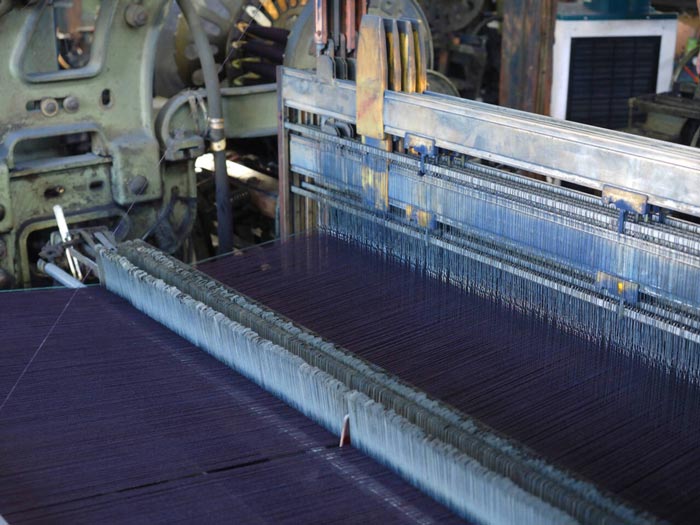
At Nogawa Senshoku Kougyou, the dyed threads are woven into fabric on-site, then skillfully crafted into uniforms by experienced artisans. Knowing that my uniform was made with such care, almost as if raising and nurturing a living being, changed the way I related to it. When folding my hakama, I would sometimes picture the faces of the people who made it.
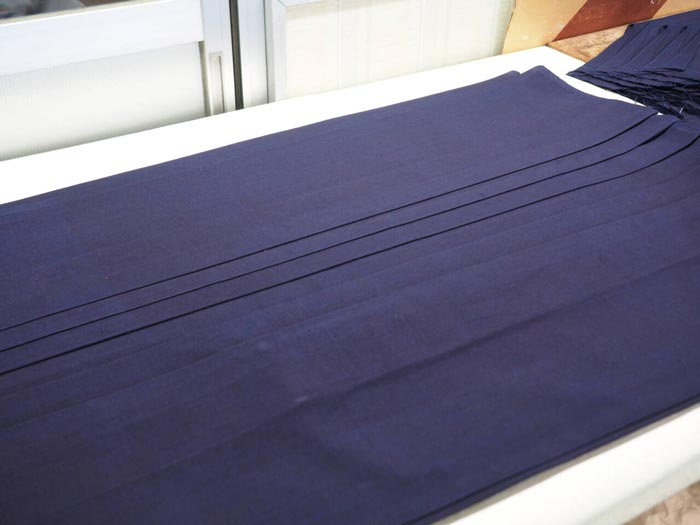
In kendo, there is a saying: orime tadashiku, meaning “with proper folds.” Both the hakama and kendogi should be neatly arranged, a reflection of discipline and respect. But folding them properly takes time and practice, and it would be easy to dismiss it as unnecessary in today’s world of convenience.
Yet I have come to believe that within this so-called “inconvenience” lies something precious: a moment to reconnect with the object in front of you, and with the people behind it. It is in this quiet, deliberate act that the bond between maker and wearer is renewed.
Everyday rituals that build inner strength
In today’s world, technology has made it possible to find the “right” answer in seconds. Open your smartphone, type a question, and the solution is there, often tailored to you by AI. Yet some educators warn that this convenience has also created a tendency to give up quickly when results don’t come instantly.
Amagai, who is also a kindergarten teacher, explained.
Amagai: “When a child learns to tie a knot by themselves, even that tiny milestone can change them. I believe these small acts are an essential part of education. Tying the knot carefully and firmly, it can inspire them: ‘Alright, I’m ready to do my best today.’”
For the Japanese, the acts of musubu (“to tie”) or totonoeru (“to arrange neatly”) might feel so natural that they barely notice them. They have a way of switching the mind into focus, influencing one’s posture, even one’s facial expression.
Nogawa: “This ‘culture of tying’ isn’t unique to kendo, but it’s one of the fascinating aspects you encounter when practicing martial arts. Whether it’s tying, folding, or arranging, it’s about how much spirit and resolve you put into these small daily rituals. That process itself weaves inner strength into a person.”
Interestingly, some foreign-made kendo uniforms now use velcro fasteners instead of ties. They’re undeniably convenient. However, I can’t help but wonder: when convenience replaces these small acts, are we also losing something important without realising it?
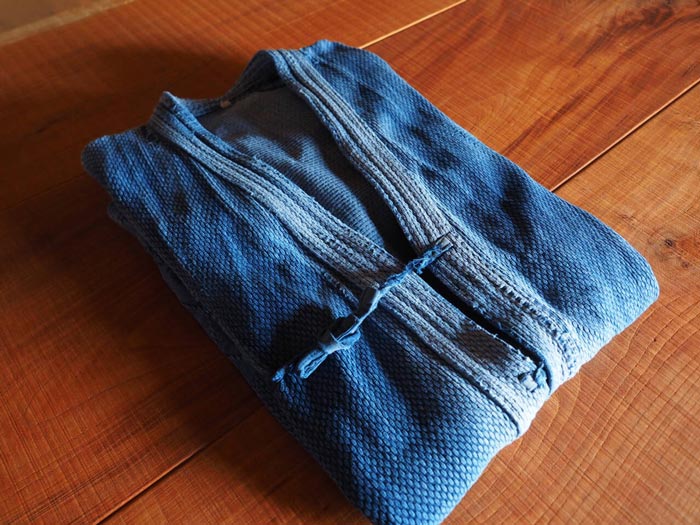
The hidden value in inconvenience and inefficiency
Amagai shared a piece of advice he sometimes gives to parents of his young kendo students.
Amagai: “Even if it’s just the kendogi and hakama, please let your child wash them themselves. When I was younger, I used to wash my indigo-dyed Bushu-ichi hakama in the bathtub, stepping on it to clean it. The indigo would bleed into the water and stain the whole bath blue. My parents would scold me, we’ll be cleaning up together afterwards… I think those moments were a form of important education too.”
Cotton kendo uniforms are not quick to dry. Sometimes, depending on the weather or the time available, they won’t be ready in time for practice. They may even carry a faint smell. But to Amagai, even these small inconveniences and imperfections are part of what makes kendo what it is.
In an age where everything is becoming faster and more convenient, perhaps there is meaning in intentionally leaving a little inconvenience in our lives. Convenience is not inherently bad, but when everything is smoothed out and optimised for us, we may lose the emotional ups and downs, the moments that move our hearts.
Amagai: “In life, things rarely go smoothly. Often, there’s no instant answer. You have to feel the situation, think it through, and accept it for yourself. That kind of daily experience builds the strength to keep yourself grounded.
“I don’t believe in forcing a child to ‘just wear it wet and train anyway.’ But if the child starts to wonder, ‘What happens if I don’t dry this?’ or ‘It feels unpleasant when it’s wet,’ and then begins thinking about what to do. That’s the process that matters. It’s through those experiences that patience and one’s own way of problem-solving begin to grow.”
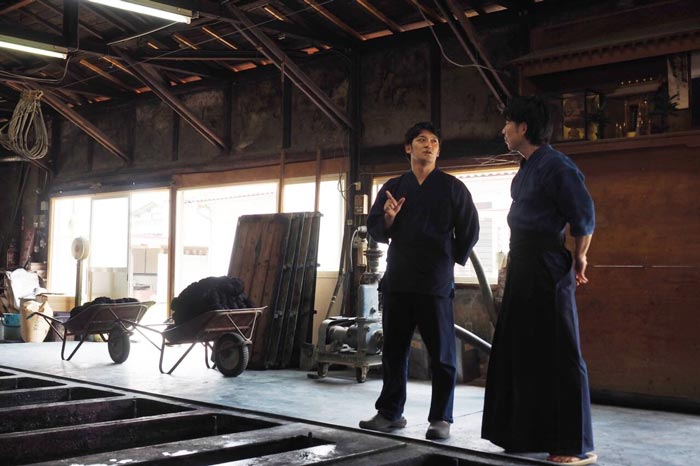
The dignity and beauty in the changing hues of indigo
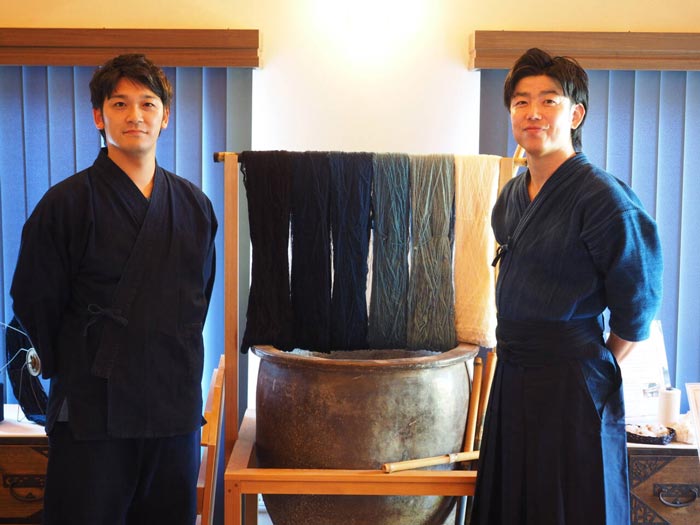
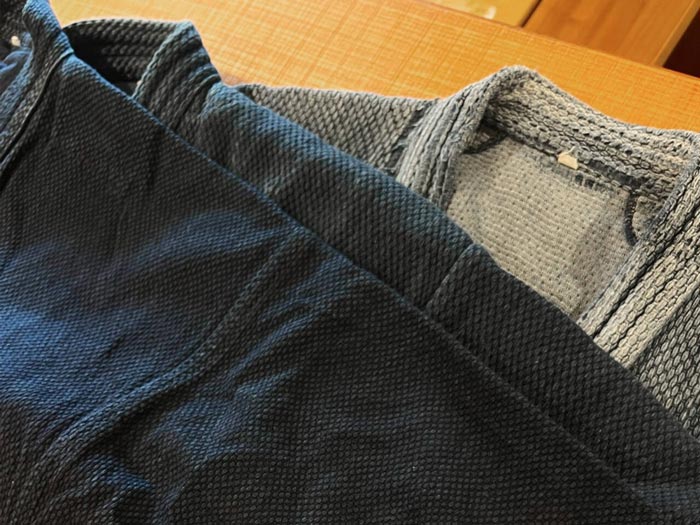
Traditional aizome (Japanese indigo dyeing) follows a unique process in which the fabric is repeatedly dipped into the dye. Each round deepens the colour, adding layers of richness and depth. Japanese indigo is not just one shade of blue, but encompasses an entire spectrum of hues, from kachiiro (a deep, almost black indigo) to nōkon (dark navy) to asagi (pale blue-green). In fact, it’s said there are as many as 48 distinct shades.
Because of this, garments dyed with indigo are meant to change over time. The longer you wear them, the more the colour shifts, developing a patina of character and history. This idea of cherishing the beauty of age and imperfection echoes the Japanese aesthetic of wabi-sabi, an appreciation for impermanence and the quiet elegance found in things that change.
Amagai: “An indigo-dyed kendogi reflects the very journey of your training, The subtle variations in colour, the evolving texture of the fabric… these are things you can feel every time you put it on.”
When I practiced kendo abroad, I sometimes saw uniforms that had faded into purplish or brownish tones. I’m not sure how they were made, but they lacked the layered beauty of a true Japanese indigo fade. Authentic aizome develops its dignity in the gradual shift of its blues, moving from deep to soft, rich to gentle.
It’s a beauty that reveals itself only with time, and perhaps it’s something we Japanese should be more aware of, and share with the rest of the world.
Indigo and a new form of strength
It is often said that no other country has elevated a weapon of war, such as the Japanese sword, into an art form with such refinement. In much the same way, the aizome kendogi, once a warrior’s battle uniform, continues to ask us what it truly means to live with strength, even across centuries.
Amagai: “An indigo-dyed kendogi holds the spirit of the craftspeople who made it. Wearing it allows you to cultivate what I call ikiru chikara, ‘the strength to live,’ embracing both the good and the bad that life brings.
“As an educator, I feel that this strength is becoming more essential than ever. There are still countries in the world where war continues. Japan, of all nations, should understand the true horror of war. True strength is not the ability to harm others, but the ability to be kind. Truly strong people carry themselves with quiet dignity and extend kindness to others.
“I feel that this is something we are in danger of forgetting. Through traditions like indigo dyeing, perhaps we can remind ourselves of it once more.”
Nogawa: “Everyone has their own reasons for being drawn to budo (Japanese martial arts), whether it’s the meaning of etiquette and form, or the deeper nature of a martial art that was born from life-and-death combat.
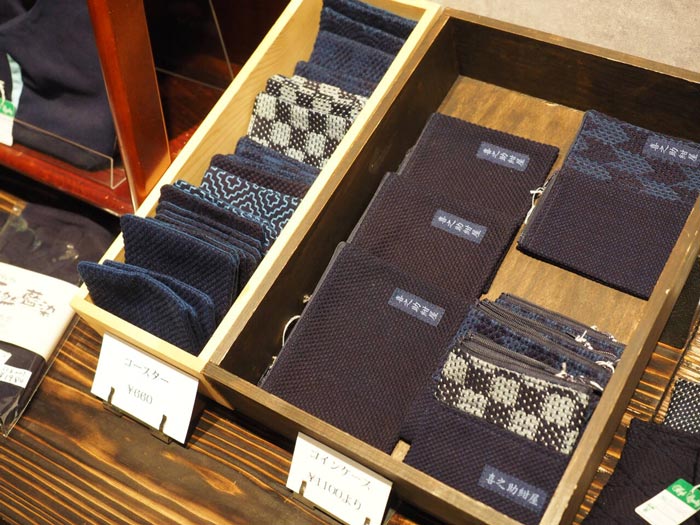
“For us, making indigo-dyed kendogi is about passing on that history and meaning to the next generation. What we want to preserve in Bushu Ichi is not only the garments themselves, but also the skills and the spirit of the artisans. Once you stop making them, it’s not easy to start again. That’s why continuing matters. Even if, in the future, what we create is no longer kendogi but something else like coasters, clothing, or other items, the spirit remains.
“Still, because kendogi has always been at the heart of what we do, we want to keep it alive. That means trying new approaches and continuing to challenge ourselves.”
In the end, aizome is not simply a dyeing technique, nor is the kendogi just sportswear. They carry within them a quiet philosophy: that strength is inseparable from dignity, kindness, and the will to preserve what matters. And that philosophy is worth passing on.
Kamenozoki: Peeking into the world of indigo
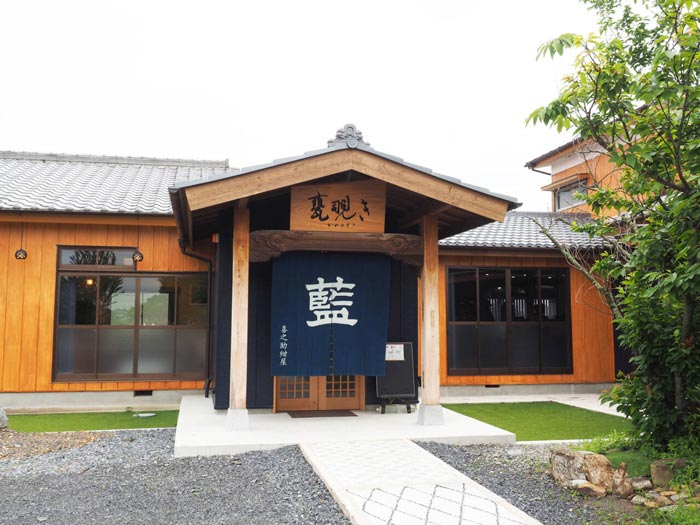
Nogawa Senshoku Kougyou’s directly managed store is called “Kamenozoki”, named after one of the 48 traditional indigo shades, known for its pale tone. The name carries a wish: “We hope you will take even the smallest peek into the world of indigo.”
I purchased indigo-dyed T-shirts and coasters when I visited, and later sent them to friends overseas, along with the story you’ve just read. They were delighted, and more than that, they felt a deep connection.
It reminded me that thoughts and meaning can cross borders and resonate in people’s hearts, regardless of language or culture. That is why I believe we must continue to cherish these traditions and the words that carry them, ensuring they are preserved and shared for generations to come.
Details of Kamenozoki
Days open: Fridays, Saturdays, and Sundays only
Opening hours: 10:30 a.m. to 6 p.m.
Address: 471-4 Sukage, Hanyu, Saitama, Japan (Google Map)
Article originally published on IDEAS FOR GOOD.
All photos and article are by Mariko Sato.
[Instagram] Kamenozoki Instagram Account
[Facebook] Nogawa Senshoku Kougyou Facebook Account