 Zenbird Editorial Team
Air Closet Corporation has joined forces with the Ministry of Environment to spearhead an initiative that is set to challenge conventional notions about sustainability in the fashion industry. This development is part of the “FY2023 Demonstration Project on Decarbonized Resource Circulation Business using Digital Technology.”
In the fast-paced world of fashion, rental services have been the subject of intense debate over their sustainability. The delivery systems, intrinsic to these services, cast a long shadow on their green credentials. However, the Ministry’s demonstration project has unveiled a refreshing truth – fashion rental services are indeed a sustainable business model.
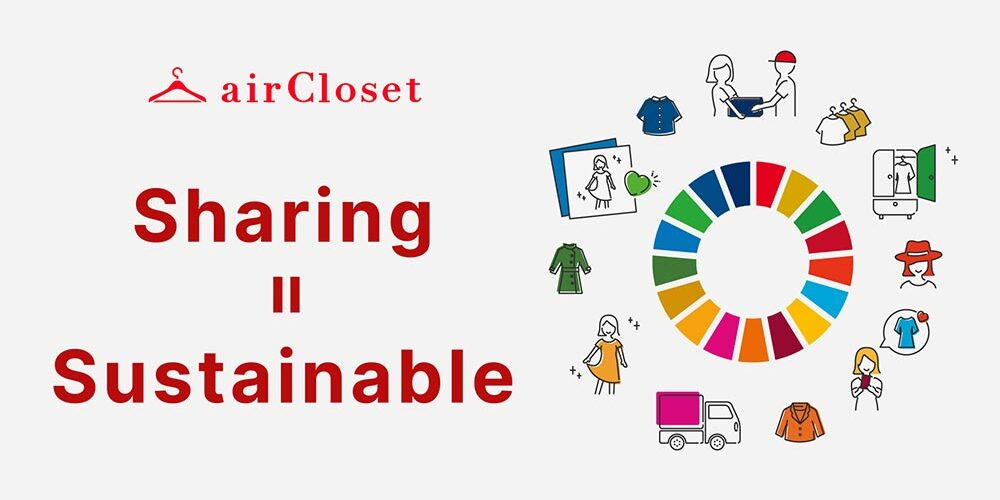
Air Closet, known for their subscription-based fashion rental service, operates on the revolutionary idea of sharing clothes, thereby disrupting the traditional narrative of clothing consumption. This transformative approach has led them to build a circular system for clothing that goes beyond being merely a business strategy – it represents a commitment to sustainable action.
The project conducted an enlightening comparison, pitting the traditional sales model – characterized by a cycle of ownership and subsequent discarding of clothes – against the novel fashion rental model that thrives on the principle of sharing through Air Closet’s platform.
The results were eye-opening. Even after considering the environmental costs of delivery, the fashion rental model demonstrated impressive environmental gains – a staggering 19% reduction in CO2 emissions and a 27% cut in waste generation. These figures underscore the considerable potential of the fashion rental model in contributing to environmental sustainability.
The world of fashion has long been characterized by a troubling dichotomy of mass production and mass disposal, a formula that is far from sustainable. But with initiatives like Air Closet, it’s clear that a greener future is on the horizon. The company’s vision for a “circular fashion” ecosystem, which emphasizes the reduction of apparel waste, the optimization of production, and the promotion of proper reuse and recycling, offers a glimpse of a future where sustainability is at the heart of the fashion industry.
Read more on circular economy in Japan
- 2026-11-09: Connecting cities to scale the circular economy in Asia-Pacific: Where Bangkok, Makassar, and Cebu stand today [APCC 2026 Report]
- 2026-11-05: Asia-Pacific takes on plastic pollution: The future of a global treaty and practical lessons from cities and local governments [APCC 2026 Report]
- 2026-11-04: Renet Japan trials appliance takeback across 7 Yahoo! Shopping stores
- 2026-10-26: Circular economy starts in cities: Asia-Pacific takes its first step from declaration to action [APCC 2026 Report]
- 2026-10-13: Satoyama initiative closes loop, converting food waste into fertiliser