 Zenbird Editorial Team
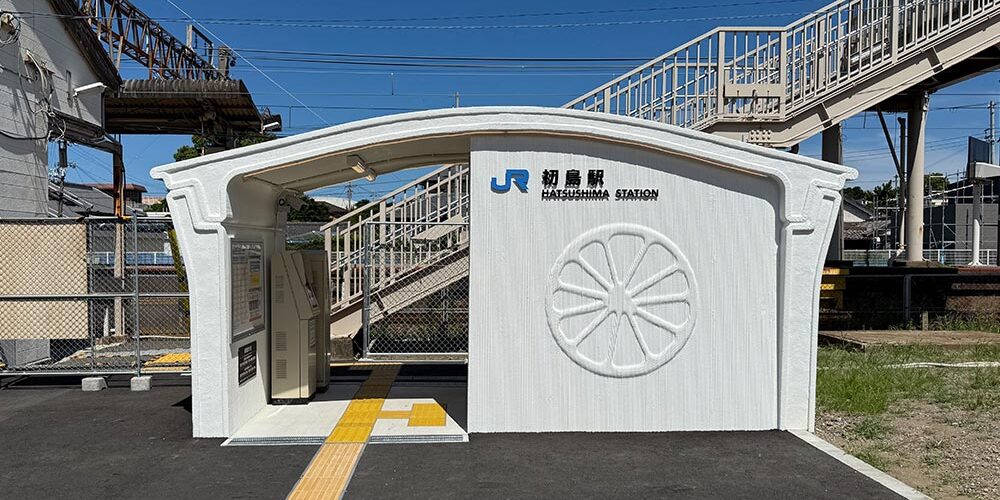
The world’s first 3D-printed train station building has officially opened at Hatsushima Station in Wakayama Prefecture. The construction is a collaboration result between 3D-printing construction firm Serendix Inc. and the JR West Group, and demonstrates a method that dramatically reduces on-site construction time and costs for railway infrastructure.
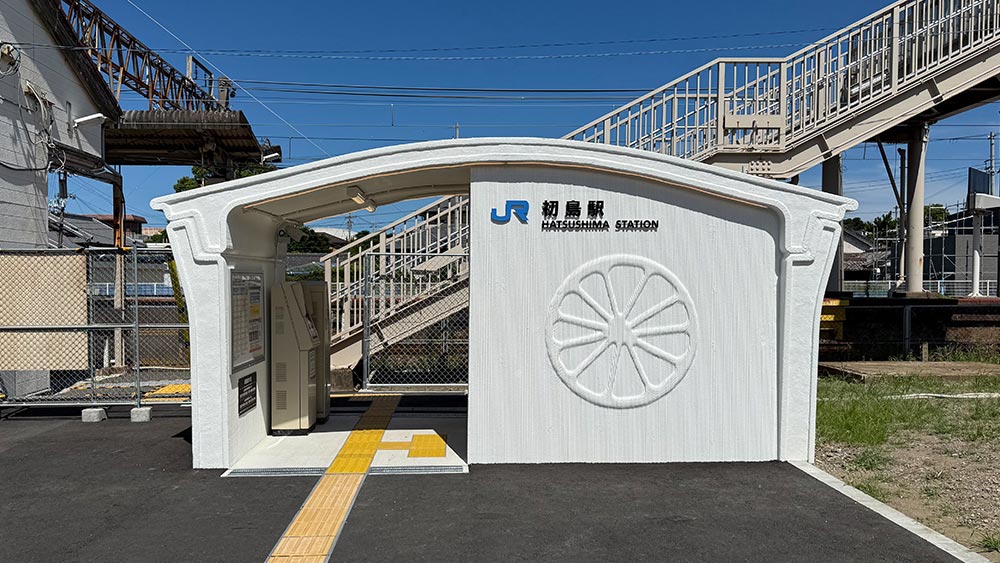
The new station building began service on earlier last week, replacing a wooden structure that had been in use since 1948. The ageing building presented rising maintenance costs, kicking off the search for a more efficient replacement method.
Construction adjacent to active railway lines is typically restricted to the few hours overnight when trains are not running. For a conventional reinforced concrete building, this limitation means the construction of the main structure can take one to two months.
Using technology developed for 3D-printed housing, the station’s components were manufactured off-site at a facility in Kumamoto Prefecture. Over seven days, a construction 3D printer extruded a specialised mortar to create four large, hollow parts. These were then reinforced with steel bars and concrete to ensure structural integrity.
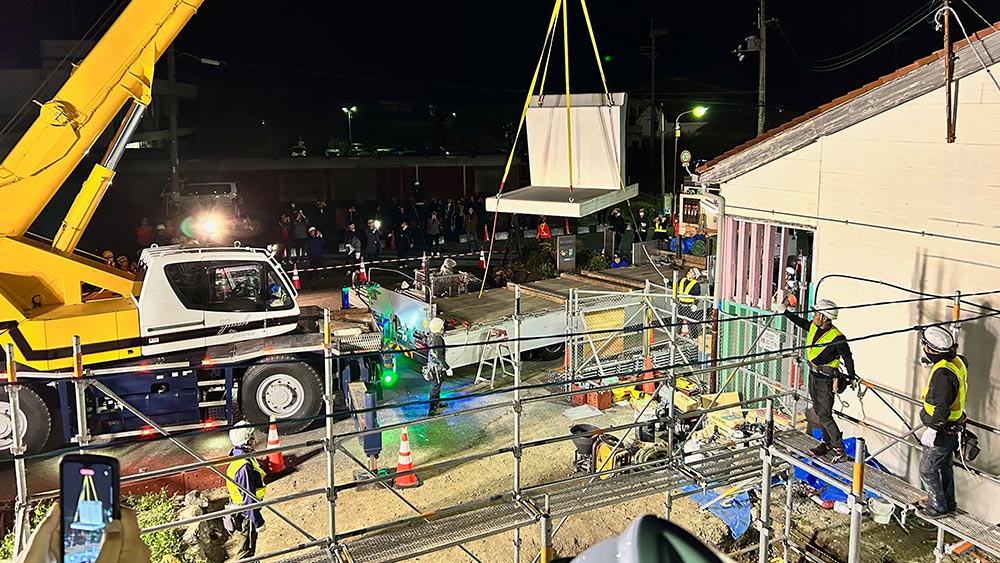
The four completed sections were transported to Hatsushima Station for installation. In an operation conducted overnight, after the last train had departed, a crane lifted each section from a truck and placed it directly onto the foundation. The entire assembly of the main structure was completed in approximately two hours.
The resulting 9.9-square-metre building is a single-storey, reinforced concrete structure equipped with a two-person bench, a ticket machine, and a simple IC card reader. The distinctive layered texture left by the 3D-printing process was used to create decorative motifs of Arida’s famous mikan oranges and cutlassfish on the walls.
This project serves as a powerful proof-of-concept for the future of infrastructure development, with 3D-printing technology offers a viable solution for updating Japan’s ageing public facilities, especially in rural areas.
[Reference] Note Page (Japanese)