 Zenbird Editorial Team
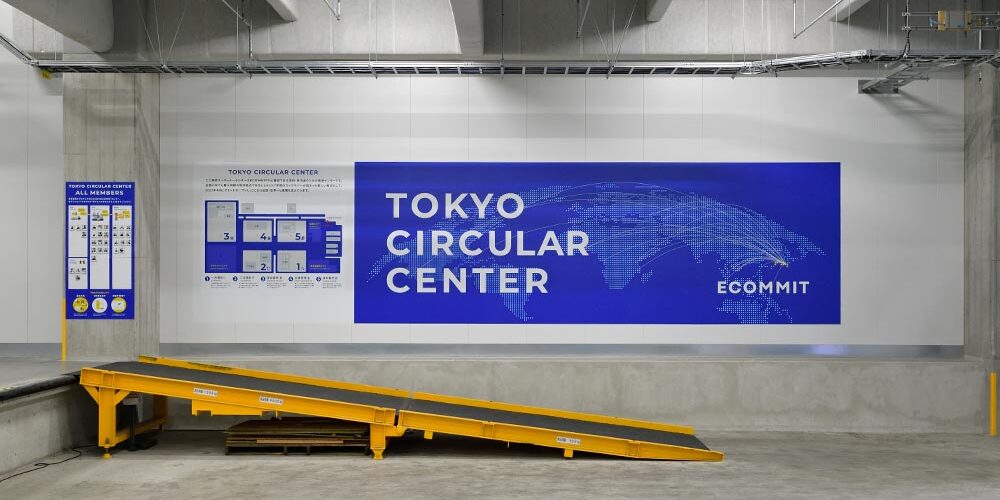
The Tokyo Circular Center, launched last week on 14 April by ECOMMIT Co., Ltd., marks a major step towards establishing urban infrastructure for a circular economy. As the company’s flagship facility in the heart of the Kanto region (east region of Japan), it is designed to handle the largest volume of clothing and miscellaneous goods in ECOMMIT’s network, setting a precedent for scalable reuse and recycling systems in metropolitan areas.

The centre integrates digital transformation and automation technologies to advance the company’s goal of changing the very nature of manufacturing. By collecting and analysing large volumes of circular data, the facility aims to enable production processes that are inherently designed for reuse.
ECOMMIT, known for its mission to create a society that doesn’t discard, has built a robust infrastructure for the collection, sorting and redistribution of unwanted items. Its PASSTO service, an initiative that encourages people to pass on items instead of discarding them, operates in tandem with partnerships involving apparel brands to facilitate the collection and resale of garments.
ECOMMIT has a network of around 4,000 collection points across Japan and an annual intake of roughly 13,000 tonnes of goods. It is seeing significant growth in the Kanto region and the Tokyo Circular Center is important in accommodating this increase. It enables data-driven productivity management and is expected to become the central hub for automating the sorting process. Moreover, the data generated is fed back to manufacturers, encouraging an additional channel for circularity.
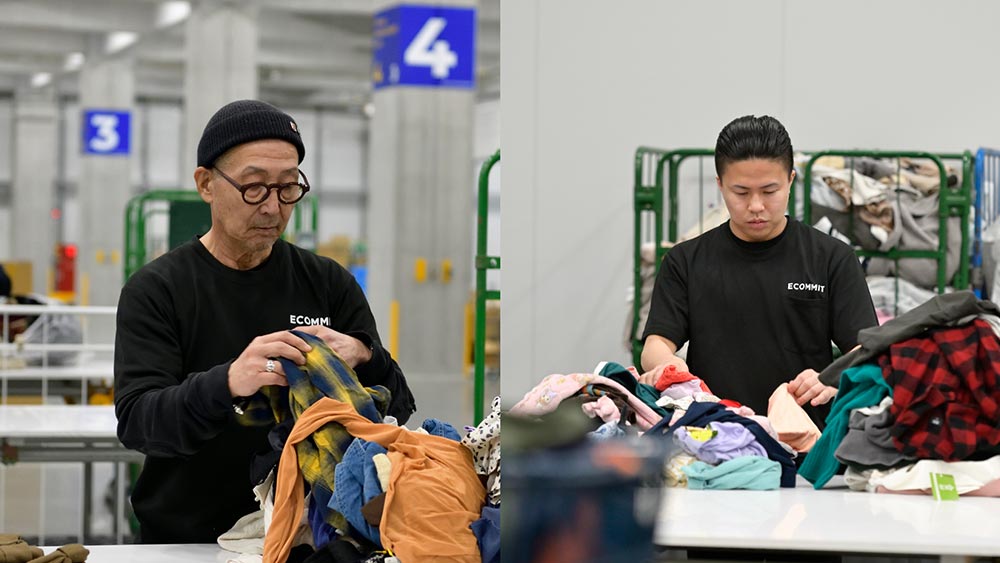
One of the centre’s distinguishing features is the systematisation of knowledge accumulated over 17 years by professional pickers. At the primary sorting stage, this expertise is being standardised and digitised. The secondary stage focuses on trend-sensitive sorting and tailored product development that cannot be fully automated, such as responding to evolving fashion preferences and individual consumer demands, and then matching products with consumer needs.
ECOMMIT also plans to open its first centre in the Chubu region this year. The new site will further localise the circular economy by enabling region-specific collection, processing and redistribution. It would reduce transport emissions while strengthening community-based sustainability.
ECOMMIT continues to develop proprietary systems that track the flow of materials and calculate the environmental impact of circulating resources. Now with the new Tokyo Circular Center, it is cementing its role in a circular infrastructure in one of the world’s most densely populated urban centres.
[Reference] ECOMMIT Co., Ltd. NewsMore on circular economy in Japan
- 2026-03-05: Sangetsu and TEIJIN FRONTIER launch horizontal recycling system for curtains
- 2026-03-03: Takenaka Corporation releases Circular Design Build Concept Book
- 2026-03-03: Sustainable craft gin supporting Hakuba Village forest preservation
- 2026-02-28: FamilyMart stores soon to become reuse hubs for Bookoff services
- 2026-02-19: Japanese craftsman launches Repair Glass upcycling broken wine glasses