Zenbird Editorial Team
The “Regenerative Futures Game: Exploring New Business Models”, a corporate training programme that uses the wisdom of sustainable sea bass fishing to teach regenerative business principles, has won the 2025 Good Design Award. It was developed by the non-profit organisation Earth Company in collaboration with marine sustainability consultancy UMITO Partners Inc. and fishery operator Kaiko Bussan.

It is a rare example of a fishery-related initiative receiving a Good Design Award, and the award recognises the game’s innovative approach to shifting corporate thinking away from mass production and consumption. For UMITO Partners, this is the second consecutive Good Design Award, following a 2024 win for its Hokkaido Sardine Fishery Improvement Project.
Japan’s rich ecosystems are under threat. The problem is multifaceted, driven by the climate crisis, environmental degradation and outdated laws. Greater public awareness and stronger policy solutions are needed, and the game helps as a catalyst to progress solutions.
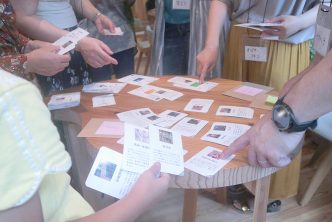
The Regenerative Futures Game is an immersive role-playing workshop where participants learn to design businesses from a “five-way good” perspective, considering benefits for the seller, buyer, society, nature, and future generations. The award’s jury praised its unique design, which requires players to incorporate non-human stakeholders, such as the sea and fish, into their decision-making processes.
The programme was recognised for allowing participants to learn about regenerative business through immersive role-play. The jury noted, “The mechanism, which goes beyond conventional thinking that tends to be biased towards short-term profits and efficiency and turns its attention to a time axis that transcends generations and a pluralistic view of capital, is original and draws out deep learning and empathy.”
The game’s concept originates from the real-world practices of Kaiko Bussan, a fishery in Tokyo Bay that has implemented a “no overfishing” approach since 2016. In partnership with UMITO Partners, the company launched a sustainable fishery project for Japanese sea bass (suzuki) and dotted gizzard shad (konoshiro). Their methods include conducting resource surveys, collecting fishery data for official use by Chiba Prefecture, voluntarily releasing undersized fish, and establishing no-fishing periods to allow the marine environment to recover. Kaiko Bussan holds Marine Eco-Label Japan (MEL) certifications for its Tokyo Bay Japanese sea bass fishery (since 2022) and for processing (since 2021), recognised as a sustainable practice meeting international standards.
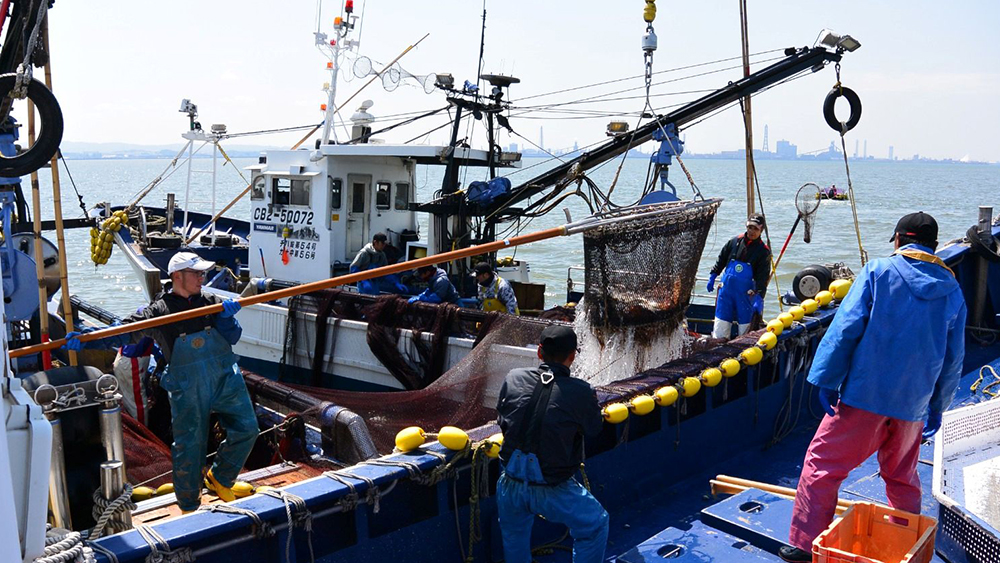
This practical knowledge from the fishing industry provided the foundation for the training game. UMITO Partners and Kaiko Bussan shared their experience of how “not taking too much” can enhance brand value and enrich both the marine environment and the community.
“We are very pleased that the sustainable fishery project we have been working on with Kaiko Bussan for many years has become an opportunity to bring new awareness and interest to people outside the fisheries industry,” commented UMITO Partners. “We will continue to work alongside fishing and aquaculture sites to extend locally-rooted sustainable practices into learning for society as a whole, and to design a positive relationship between the sea and people.”
Opportunities to experience the game are scheduled for later this year, including a n event on 29 October 2025 at RegenerAction JAPAN 2025 and at the Yamaha Motor Regenerative Lab on 27 November. Additionally, the sustainably caught Tokyo Bay sea bass that inspired the game will be featured on the menu at the d47 Shokudo restaurant in Shibuya Hikarie from November.
[Reference] PR Times (Japanese)[Website] Regenerative Futures Game: Exploring New Business Models Feature Page (Japanese)
[Website] UMITO Partners Inc. Homepage