 Zenbird Editorial Team
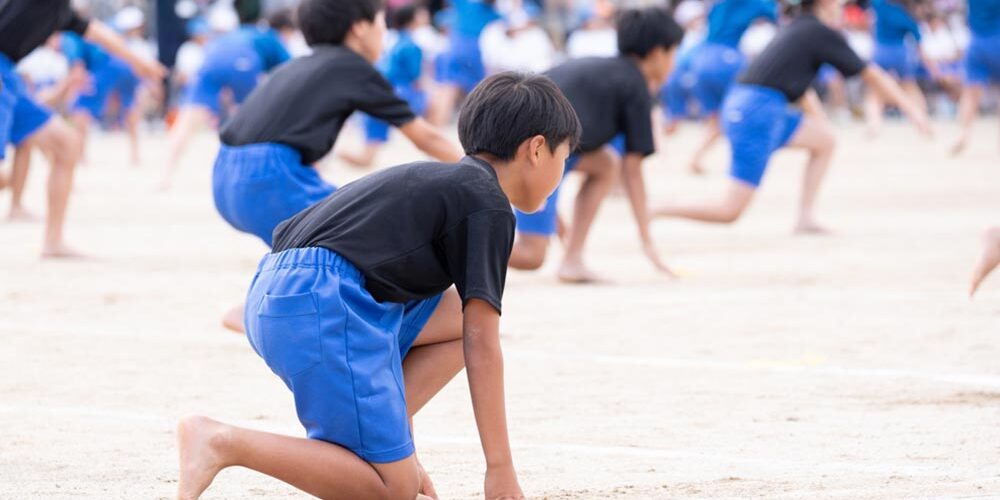
Japan’s undokai, or Sports Day, are getting reschduled with several months difference. Children are struggling to run relays in the afternoons without risking heatstroke, a circumstance brought about by the dire climate crisis.
Tokyo is logging an increasing number of days above 35 C every year. During three weeks in July 2024 alone, 24,300 people nationwide were taken to hospital with heat‑related illness, many of them students. Annual heat‑stroke deaths have averaged 1,250 since 2018. Under Environment Ministry rules outdoor exercise stops when temperature goes above 31C, a threshold that July and August now breach with regularity.
Asahi Shimbun reports a sharp rise in spring sports days and half‑day programmes. An education publisher survey lists fear of heatstroke as the main trigger, echoed by Trip.com travel guides that are now pushing spring activities instead.
Some schools are turning to technology for warning signs. Mitaka Municipal No. 7 Junior High has installed monitors that suspend practice automatically and is trialling cooling vests and smart watches that alert staff when core temperatures rise. In trial runs, 80 per cent of students were “approaching heat-stroke” during normal activities. April 2024 government guidance instructs every board of education to budget for shade, hydration points and indoor fall‑backs.
Research by the National Institute for Environmental Studies and Waseda University suggests that under a high‑emissions path, most Japanese prefectures will be unsafe for outdoor school sport between 3 p.m. and 6 p.m. by the 2060s. Even a 7 a.m. start could be risky in August outside Hokkaidō.
Some schools copy Koshien baseball by splitting the programme into morning and late afternoon sessions. Building cool zones with shade, like low‑cost bamboo or hemp‑canvas canopies serves as shelters from the heat. Sportswear brands are prototyping ultra‑light uniforms woven from recycled polyester that draw heat from the skin.
Japan’s Sports Days function as community festivals. A reschedule, or even risking the loss, could result in the disabling of a key function for neighbourhood bonding and chidlren’s rite in growing up. Many schools are already drawing up strategies to deal with the heat. But only policymakers can deliver the emissions cuts, rather than asking children to choose between childhood and temperature.
More on climate crisis in Japan
- 2025-11-18: Fossil of the Day again: Criticism at COP30 for Japan’s fossil fuel push
- 2025-11-08: CAN Japan criticises weakening climate commitments and leadership
- 2025-10-21: Kyoto to rally support for Japan's Youth Climate Lawsuit
- 2025-10-20: Tohoku University climate activist story premieres in "Michinoku Denki"
- 2025-07-31: 350.org Japan demands stronger climate action after Japan election