 Roger Ong
Making things last is an increasingly popular circular economy concept that many economies in the world are pursuing, and Japan’s craftspeople and artisans offer rich lessons in circularity, a philosophy rooted in their cultural history. They reveal hints of reuse and repair, two of the most important strategies for maximising material lifespan, especially during the Edo period.
Kintsugi is a prime example of circularity in action. Kintsugi is the art of mending broken pottery using lacquer mixed with powdered metal. It is centuries-old, a process we also find in restoring Buddhist statues. However, kintsugi doesn’t only remind us that repairing is an act of respect for objects, along with a sense of mottainai (sense of regret over waste, tied to Shinto beliefs about the sacredness of objects.). Our image of kintsugi is often the mending of pottery with gold powder, the poster child of wabi-sabi, an appreciation of beauty in the imperfect.
Yet, speaking to Sho Takeshita, kintsugi artisan and co-founder of kintsugi brand ANYTSUGI, we realised that the wisdom in kintsugi goes deeper than the concepts of mottainai or wabi-sabi. Repairing, it seems, is not limited to physical objects like statues or pottery. What if it extends to the mending of oneself, relationships, our connection with the world, or even our sense of time?
Interviewee Profile: Sho Takeshita
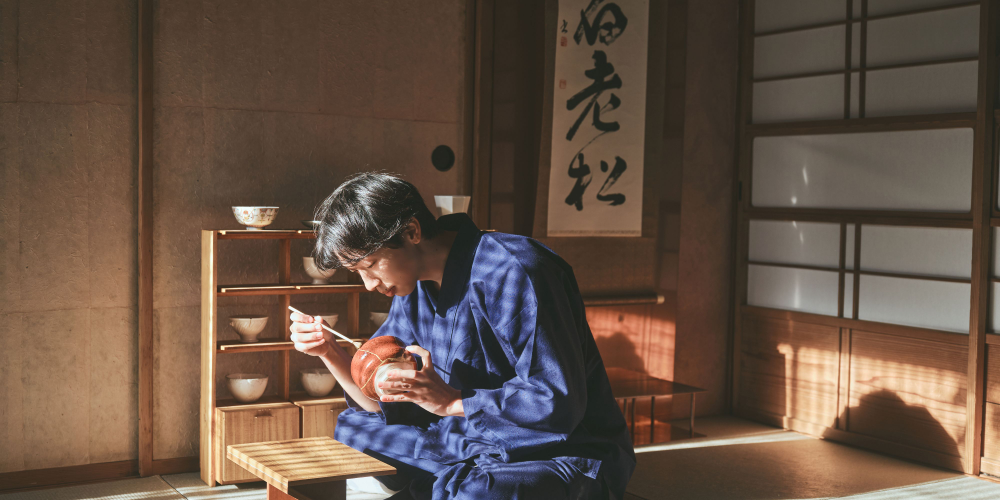
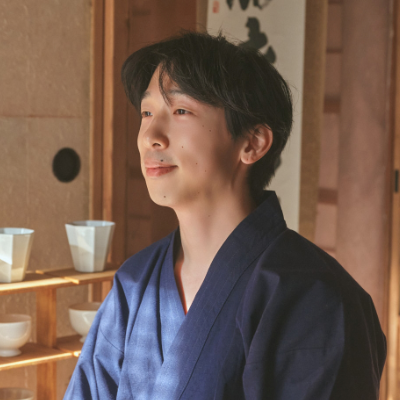 Born in Tokyo. Graduated from Rikkyo University. Takeshita’s journey into kintsugi began when a tea bowl inherited from his grandmother broke. Inspired by the philosophy of transforming broken things into new beauty, he learned the craft in Kichijoji. Today, he creates works that blend traditional Japanese aesthetics with a contemporary sensibility, with kintsugi at the core. (Instagram)
First step into kintsugi
Takeshita’s first step into the world of kintsugi began with a bowl from his grandmother. That bowl may not be any more important than any other like it, but is of great importance to Takeshita.

Takeshita: “When I was little, I used to visit my grandmother every year. I love her dearly, and she’ll be ninety-nine next year. The journey from Tokyo was difficult, so I wondered: could I ask her for an object to keep our connection alive?
“My grandmother wasn’t one to fixate on objects. I remember getting a few things from her back then: a chawan (a rice bowl), a cup, just everyday items, probably bought cheaply somewhere. But to me, they were priceless. Precious vessels that carried memories of my grandmother.
“One day, though, I accidentally broke one of those bowls at home. Even though it was just an ordinary bowl, it was irreplaceable to me. I wondered if there was a way to fix it, and that’s how I discovered kintsugi.
“I think my grandmother would be happy to know that something she gave me is helping me connect with and carry on Japan’s culture and traditions in this way.”
Life satisfaction from self-growth and gratitude
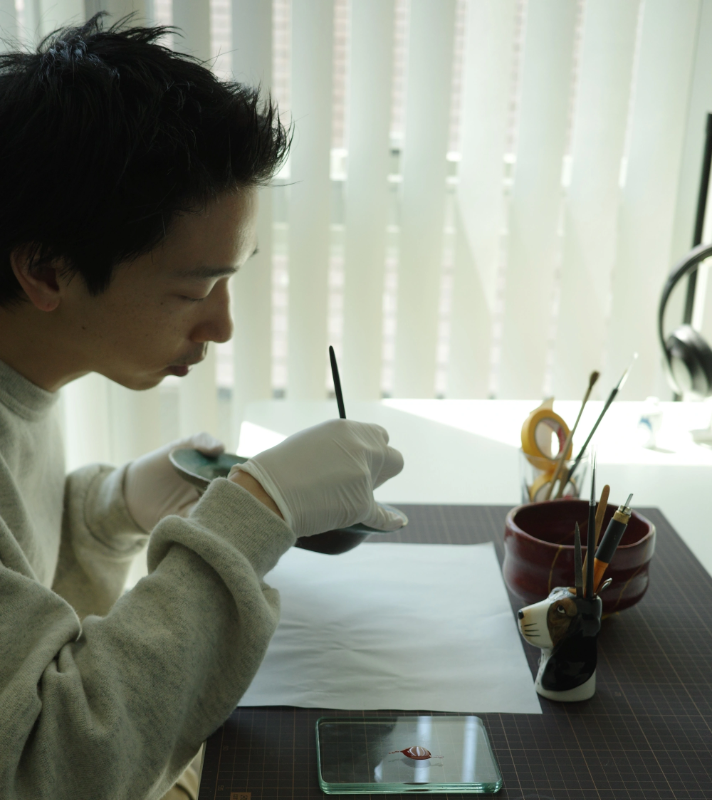
Takeshita started out as a regular office worker like many of us, where challenges disappear the more we become proficient at routine tasks. But upon discovering kintsugi, he found it to be surprisingly meditative, aligning with how mastery in craftsmanship is a lifelong journey of patience and presence. As he describes it, it’s a craft where you start noticing details, asking yourself: “Can I draw finer lines?” or “Can I repair more complex cracks or fragments?” It’s rewarding because you feel yourself improving with each attempt, and there’s no limit to how far you can go.
Of course, the rewards do not stop there. Takeshita was met with appreciation from others during his journey as a kintsugi practitioner.
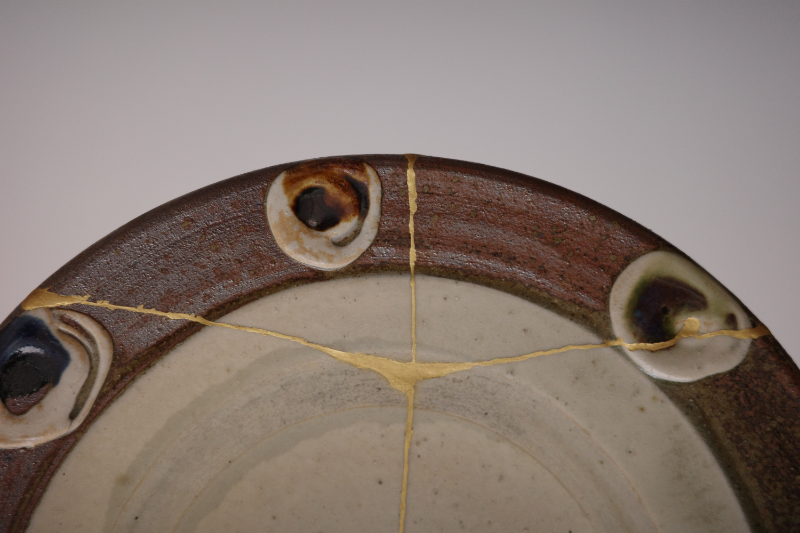
Takeshita: “I recently repaired a bowl in Okinawa that belonged to a woman whose mother had broken it. The owner was so moved by the restoration. The bowl, now full of character and charm, looked even better than before. Both the owner and her mother were incredibly grateful. The owner even runs an apple orchard, and after the repair, she sent me delicious apples and apple juice as a thank-you. Moments like these make me happy, knowing I’ve worked on something so meaningful to someone else.”

There is joy from non-kintsugi sources, too, like when Instagram users notice Takeshita’s use of Nujabes’ music, a music producer known for his works of blending lo-fi hip-hop.
Takeshita: “Being a long-time fan of Nujabes’ music isn’t the only reason I use his tracks. I use it intentionally because his music has a looping quality, with melodies repeating in a cycle. That reminded me of kintsugi: the bowl is created, used, broken, repaired, and reborn. It’s a cycle, and the music’s repetitive, cyclical nature felt like a perfect match.
“Many might expect calm piano melodies to accompany kintsugi, but I find the combination of Japanese lo-fi hip-hop and traditional craftsmanship uniquely compelling. It’s been fascinating and impressive to see viewers pick up on that connection.”
Not just repair, Recreation
We can see how at its core, kintsugi is an act of repair. But Takeshita believes something deeper happens when we set aside our phone and confront what is important to us. He calls this process “Recreation”.
Takeshita: “When I first tried kintsugi on my grandmother’s bowl, it gave me time to reconnect with memories of my grandmother. I vividly recalled life in her rural home: early baths before dinner, getting scolded for being late after playing in the river, and the old stories she’d share while I massaged her shoulders.

“These seemingly trivial memories weren’t tied to the bowl itself, but to the act of rediscovering them through the process. In this way, kintsugi isn’t just about fixing or repairing, but also about passing down those memories. It’s about creating a new, more meaningful version of those memories through the bowl itself. That, to me, is Recreation.”
Wabi-sabi teaches that it is the journey, not the destination
Wabi-sabi, a concept often linked to kintsugi, is commonly understood as an appreciation of the imperfect or a celebration of the transient. Moon phases also embody this idea.
Takeshita: “While a full moon represents perfection, people have different preferences. Some prefer half moons, others prefer crescents, and still others prefer the full moon. Yet a crescent moon still exudes beauty. This is the essence of wabi-sabi: finding beauty in imperfection and incompleteness.”
Of course, translations often fail to capture these nuances, as Japanese words carry layered, overlapping meanings.
Takeshita: “Wabi-sabi combines the two words wabi and sabi. Originally, wabi referred to the feeling of things not going as planned, but over time it evolved to mean accepting and embracing that state. Sabi, on the other hand, evokes a rustic, aged beauty, to find beauty in things that have changed or are in the process of changing. Together, they represent a beauty that is not perfect or complete but is valued in its evolving, imperfect form.
“So, wabi-sabi is about cherishing the journey rather than the destination. Understanding the nuances of the Japanese language and culture can help convey the richness of the concept.”
Imperfection is completeness
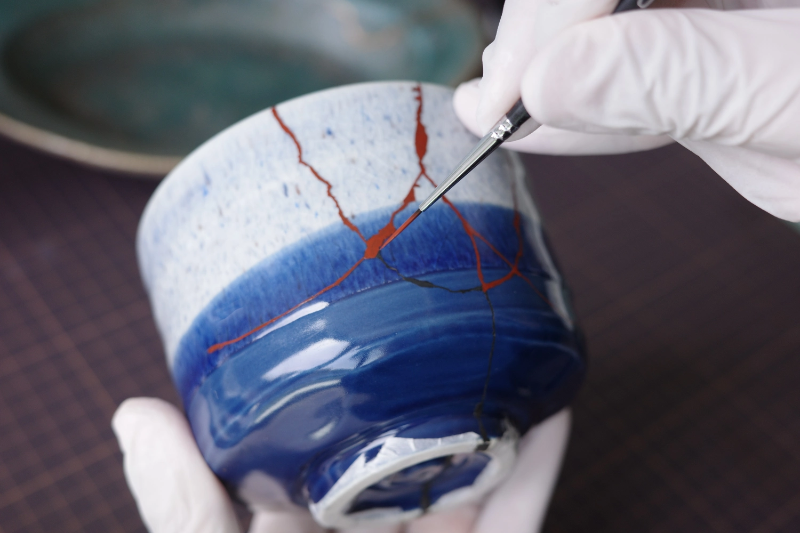
So practising kintsugi is less about finishing and more about the mindset you bring to the process. This mindset is also applicable to our daily lives.
For example, today, social media thrives on portraying perfection. Platforms are filled with polished displays and eye-catching photos that people love to share and admire. The pressure to share a perfect self can be suffocating, not to mention the constant comparisons with others.
Takeshita offers a different approach through kintsugi’s philosophy.
Takeshita: “In kintsugi, its beauty lies in the cracks. Repairing a bowl forces you to confront the damage head-on, again and again. I believe people heal the same way: slowly, step by step, turning pain into something new.”
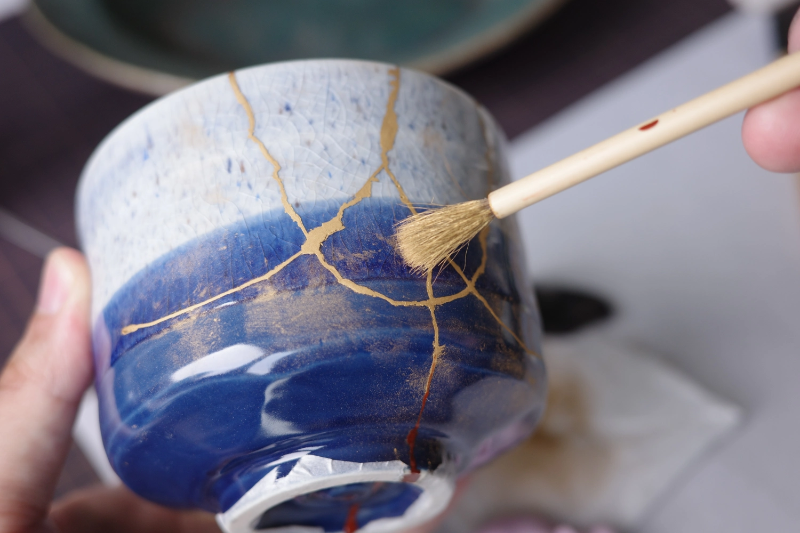
Takeshita is talking about self-growth. We don’t grow by hiding our wounds or erasing them. He believes we should accept those scars and say, “This happened to me, and it made me who I am today.”
Takeshita: “Imperfection is not just a flaw but a form of completeness. Kintsugi doesn’t hide the damage. It highlights it and makes it beautiful. That is exactly what we should do with our own lives: embrace our scars and let them shine.
“And it applies to relationships too. Imagine two friends who’ve had a falling out, someone they don’t even want to talk to. What if they could sit together, repair a bowl in silence, and slowly rebuild their connection through the process? No forced conversation, no pressure. Just shared effort and the memories that come with it.”
ANYTSUGI Kintsugi Kit to experience kintsugi at home
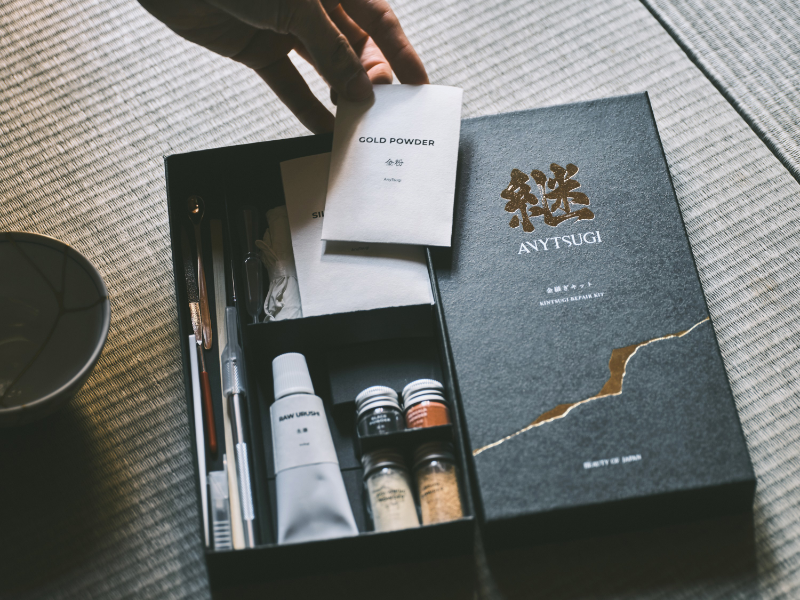
To bring us the experience and wisdom of kintsugi, Takeshita co-founded ANYTSUGI. He hopes kintsugi can serve as a catalyst for people to reconnect with what’s important to them, whether by repairing something or simply taking time to reflect and rediscover themselves. He also hopes that global awareness of kintsugi will inspire greater pride among Japanese people, particularly the younger generations.
The vision behind ANYTSUGI is to enrich everyday life through traditional Japanese culture and craftsmanship. Japan is frequently affected by natural disasters, and has long cultivated a way of thinking that places great importance on the value of daily life. Japanese culture has always cherished the present moment, from the changing of the four seasons to the spirit of ichi-go ichi-e, the idea that each encounter is unique and will never come again. With the world becoming increasingly fragile by conflict and uncertainty, ANYTSUGI wants to bring these cultural practices, traditional techniques, and the objects that embody these values to people around the world.
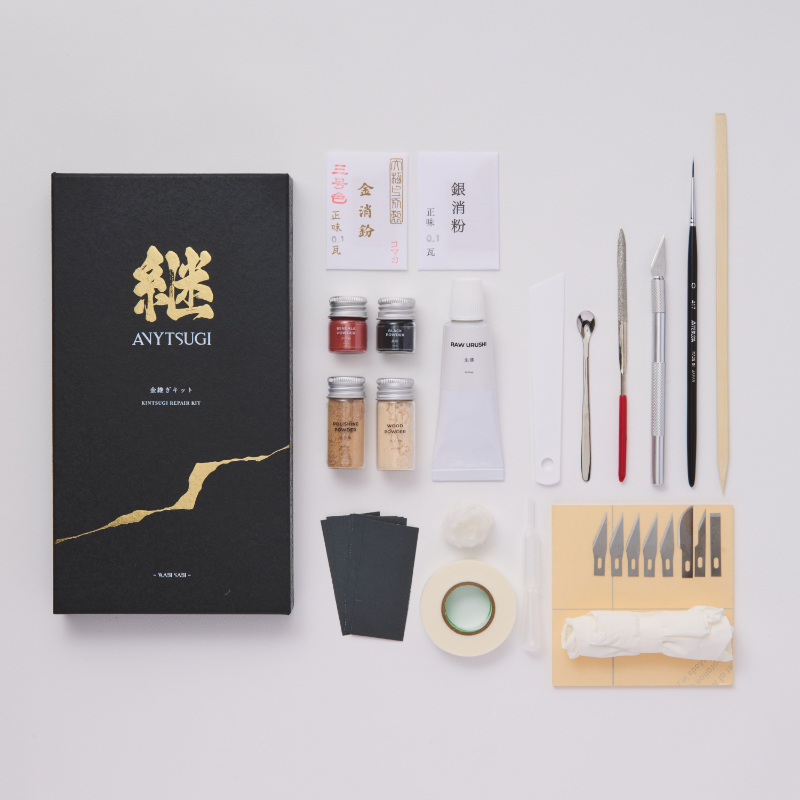
Takeshita also dedicated considerable effort to creating the ANYTSUGI kintsugi set. Every item and material is handpicked with the utmost attention to authenticity and quality.
Takeshita: “For example, organising the contents is important for usability. Boxes without proper compartments make it hard to find tools quickly. For the exterior, I focused on textures that evoke a sense of Japan, such as washi (Japanese paper). I repeatedly visit specialty paper shops to ensure the paper’s quality and thickness align with the box’s design. Sometimes I start over if the chosen paper doesn’t fit the box’s structure. Crafting the box itself takes a month and a half, and I put just as much care into its design.
“Inside the kit, I prioritised natural materials. The gold powder, lacquer, and other components are sourced from Kyoto shops that have perfected their techniques over centuries.”
Kintsugi teaches us to slow down, and value real experiences
Takeshita: “If kintsugi teaches us anything, I think it’s about valuing real experiences. It’s about taking the time to engage deeply with something and letting meaningful connections form slowly. That’s what I hope to preserve.”
In the era of AI and social media, many aspects of life are accelerating, and Takeshita sees our lives becoming increasingly dominated by digital devices. Why bother visiting in person when you can simply scroll through images on social media? With AI, you can instantly get a summary or quick analysis. So why take the time to read a book, understand an artist’s background, their mentors, or the historical context? All those layers of connection and depth are fading away.
Takeshita: “I worry that we’re losing the ability to deeply reflect on or experience things firsthand. It’s hard to imagine enjoying a conversation with someone who hasn’t had those meaningful, even difficult, experiences themselves. This is where kintsugi comes in.
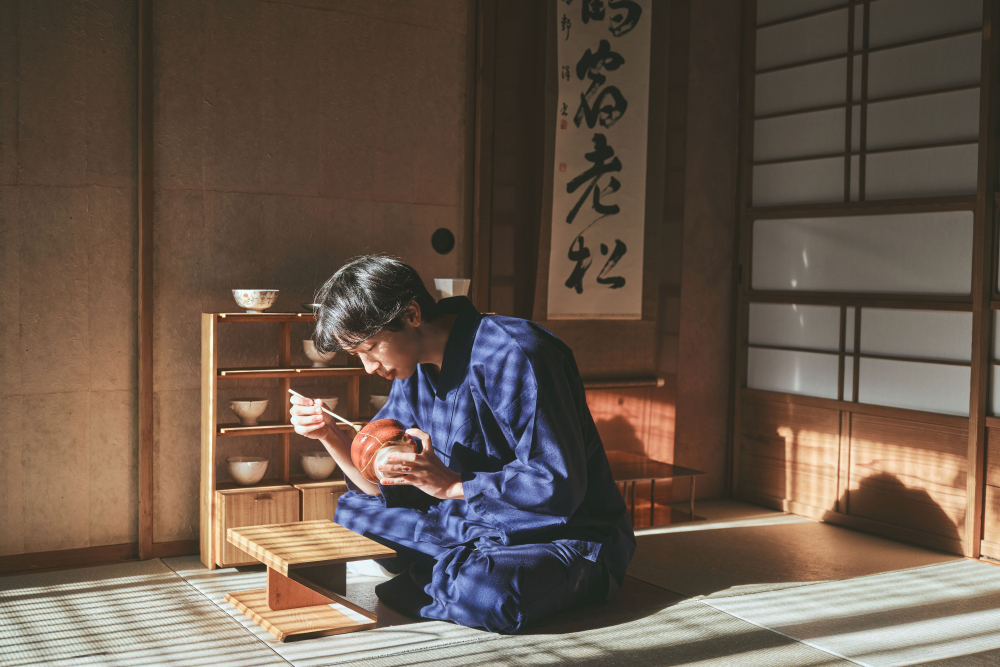
“It’s a hands-on process that demands patience. Fixing a single bowl can take a month or even three. You have to sit with it, making small improvements over time and letting the process unfold. In a world obsessed with speed and instant access to information, kintsugi offers the opposite: a practice of slowing down, noticing subtle changes, and letting insights sink in.
“I want to help people rediscover the joy of savouring these small, intentional moments. That’s the kind of experience I’d love to share with the world.”
[Threads] ANYTSUGI Threads
[YouTube] ANYTSUGI YouTube
[TikTok] ANYTSUGI Homepage