 Zenbird Editorial Team
Japan’s Circular Cities Conference & Festival (CCCF) series was launched to bring people together to explore the intersection of urban growth and circularity. It is expected that 70% of the world’s population will live in urban areas by 2050, making sustainable urban expansion essential. The event series aims to foster collaboration and showcase existing circular city ideas.
This year, City and Circularity 2026 featured 20 conferences on themes such as architecture, food and circularity, and education, alongside an exhibition with around 80 companies presenting their ideas. Art and music also took centre stage in the event.
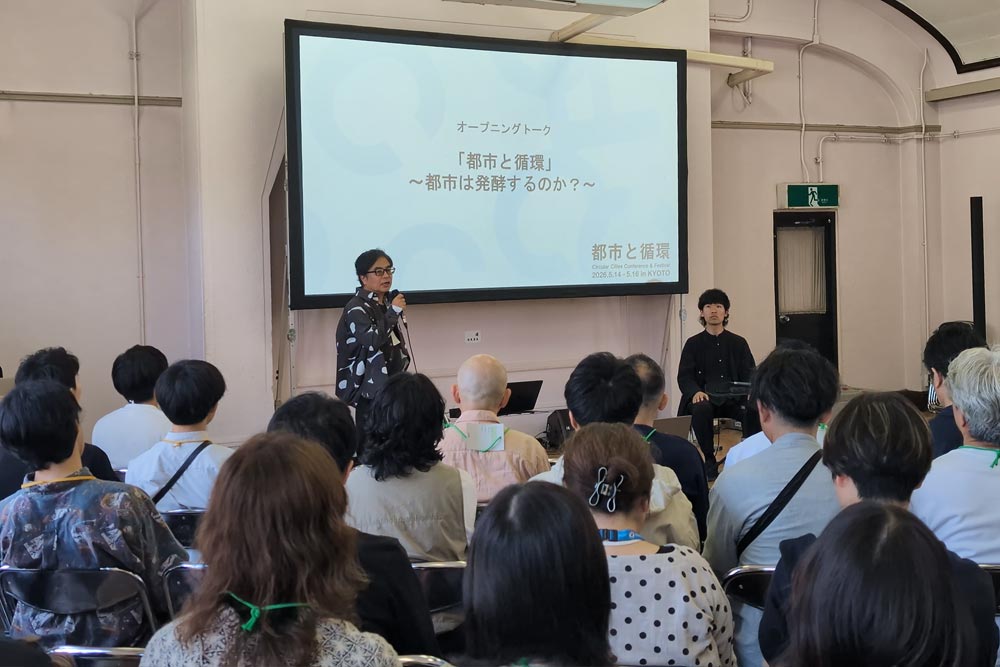
Its exhibition is themed Future Kominka, posing an intriguing question of what buildings would look like in 100 years. Unlike today’s kominka (meaning “traditional Japanese house”), the question challenges us to imagine their form in a century’s time. More importantly, however, is what values would make them worth sustaining for so long. The sub-theme, “Do Cities Ferment?”, further hints us to view cities as living systems: the key role of “microorganisms” in building a circular city, including people, businesses, and cultural spaces.
Hints of a future kominka
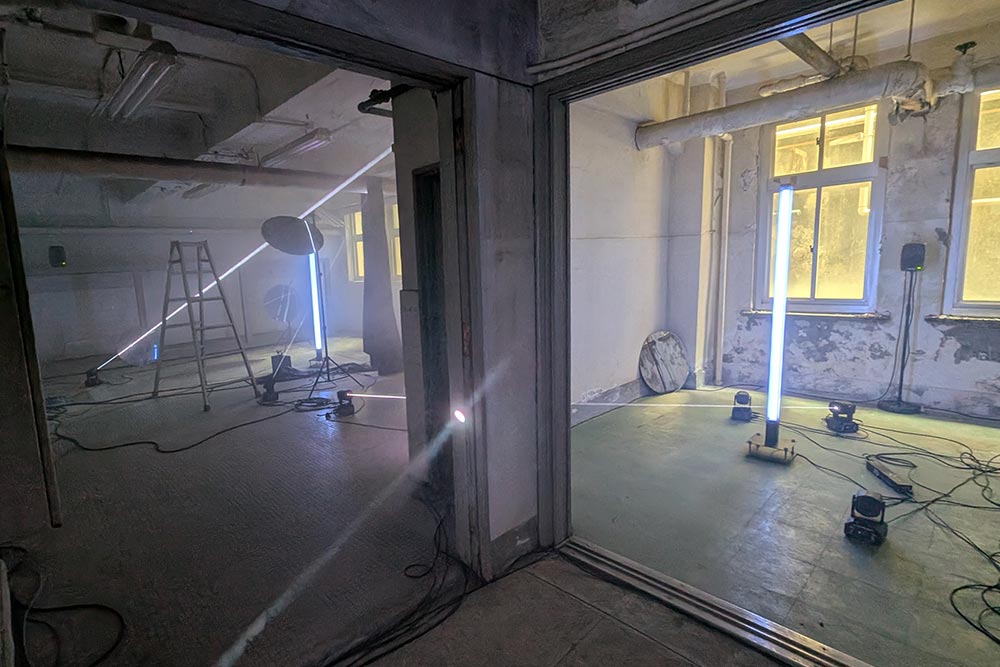
For City and Circularity 2026, the exhibition was themed “Traditional Houses of the Future”. Visitors experienced a rustic atmosphere while exploring the former Kyoto City Child Welfare Center, a venue three times larger than the previous one. Exhibitors are assigned rooms and locations around the facility. Each step into a new room brought the excitement of discovering, “What will I learn next?”
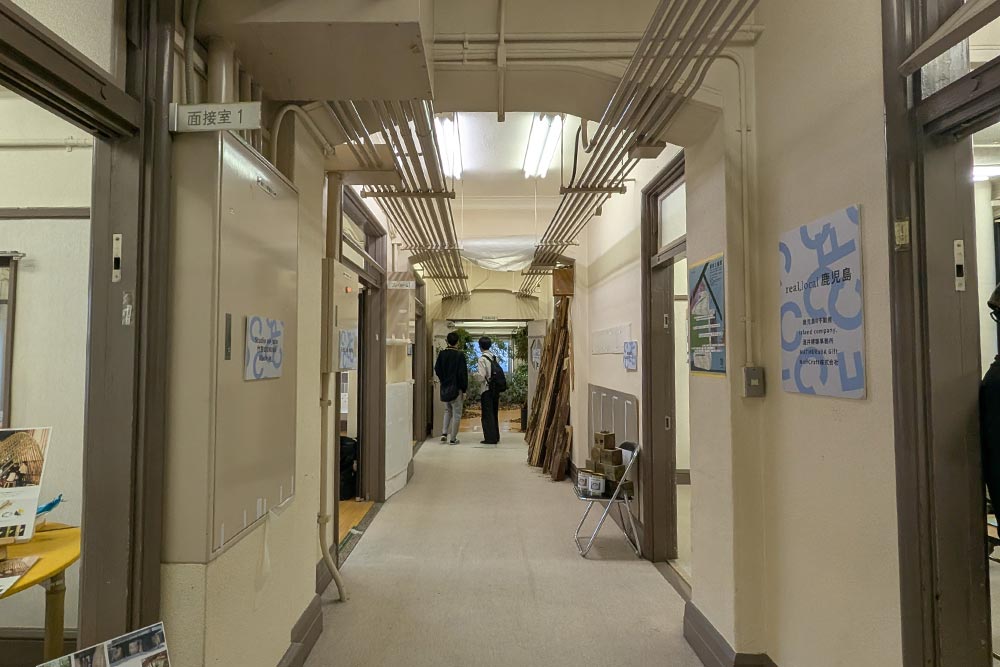
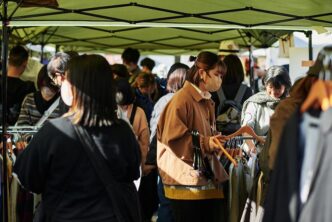
We encountered exhibitors showcasing the potential of waste through alternative and upcycled materials.
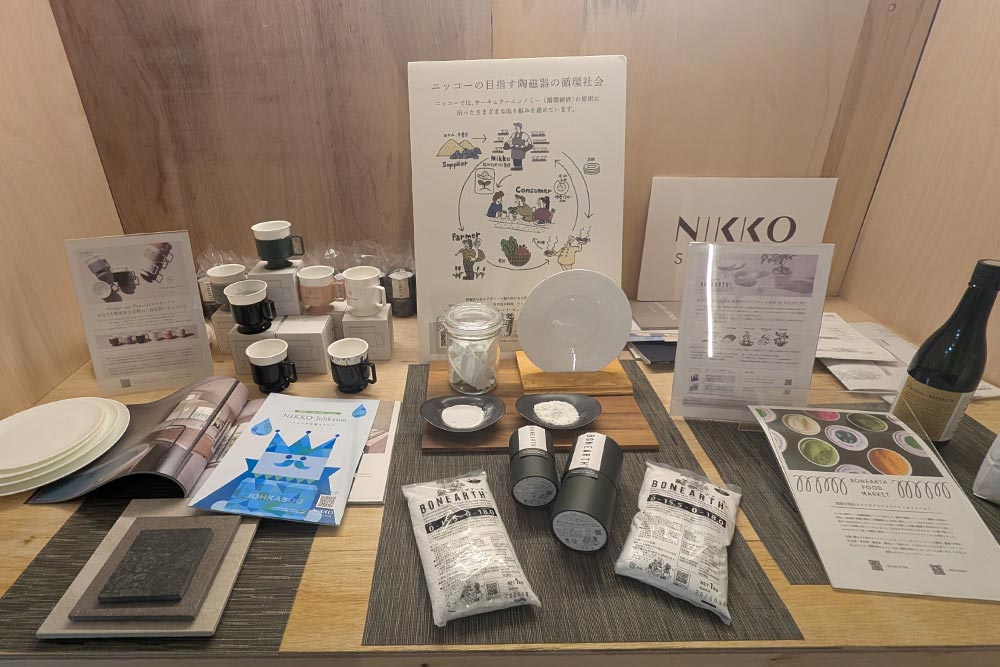
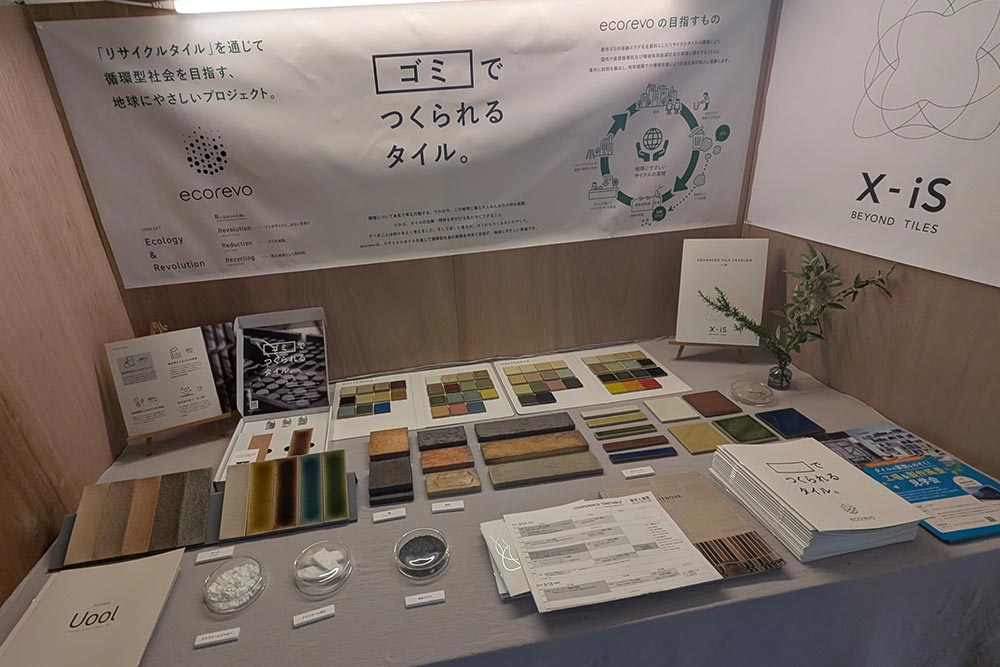
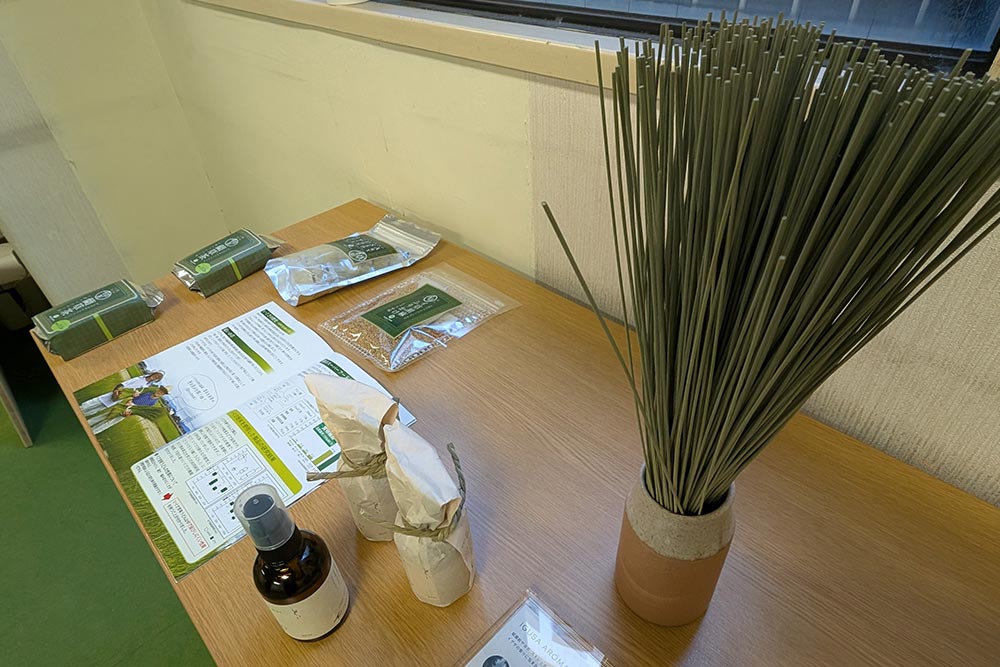
We also witnessed practical efforts that have been brought to life.
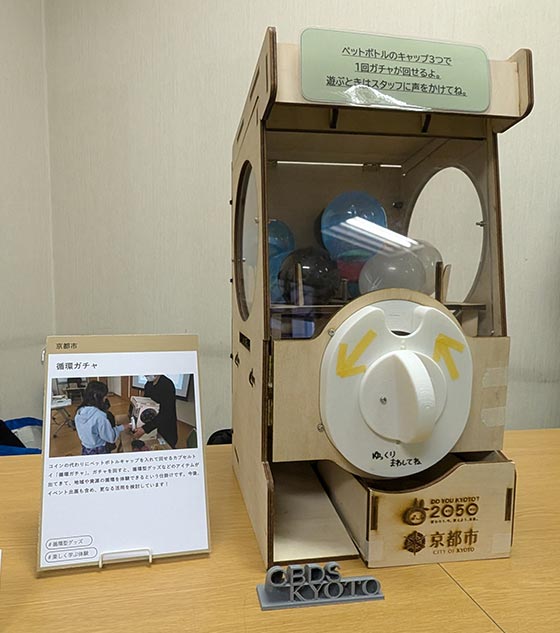
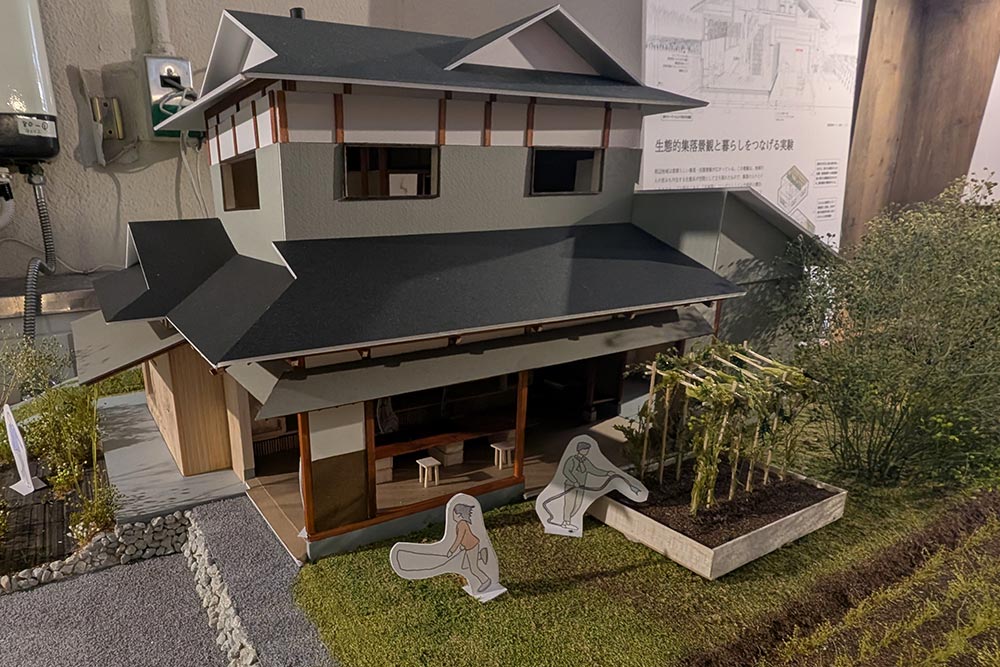
Some of the exhibitors were also inspiring with their applications of concepts.
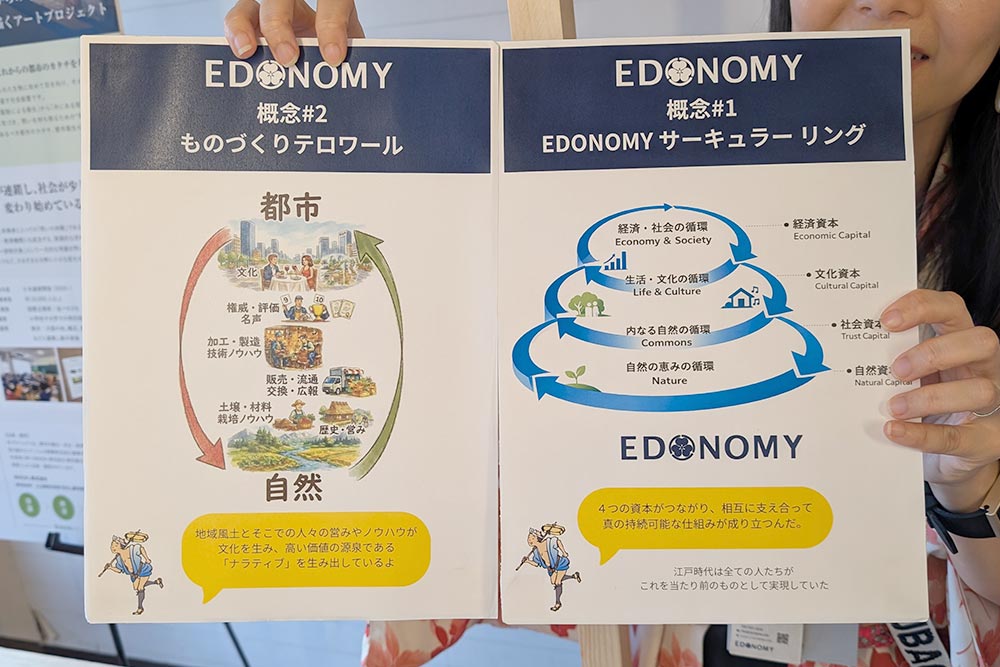
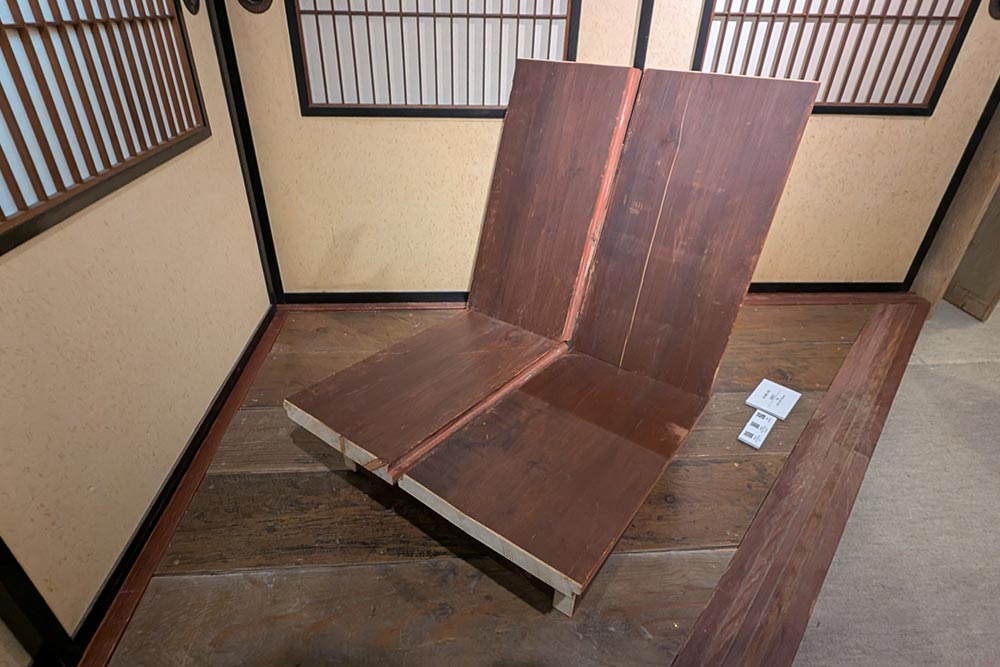
Art also played a key role at CCCF 2026.
Post-City: what a traditional house of the future looks like
The exhibition was fantastic in broadening our minds to what is possible with new ideas. However, CCCF 2026 encouraged us to reflect deeper, especially on how modern methods can incorporate sustainable mindsets.
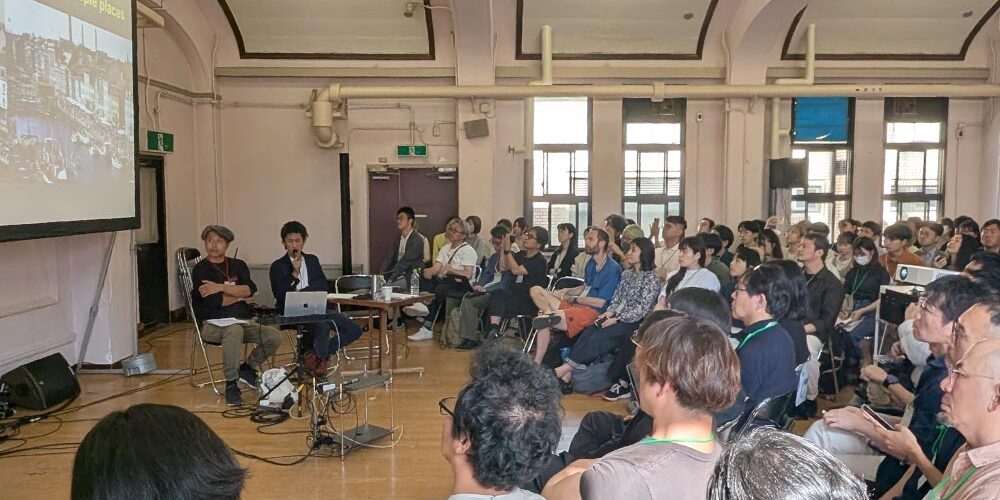
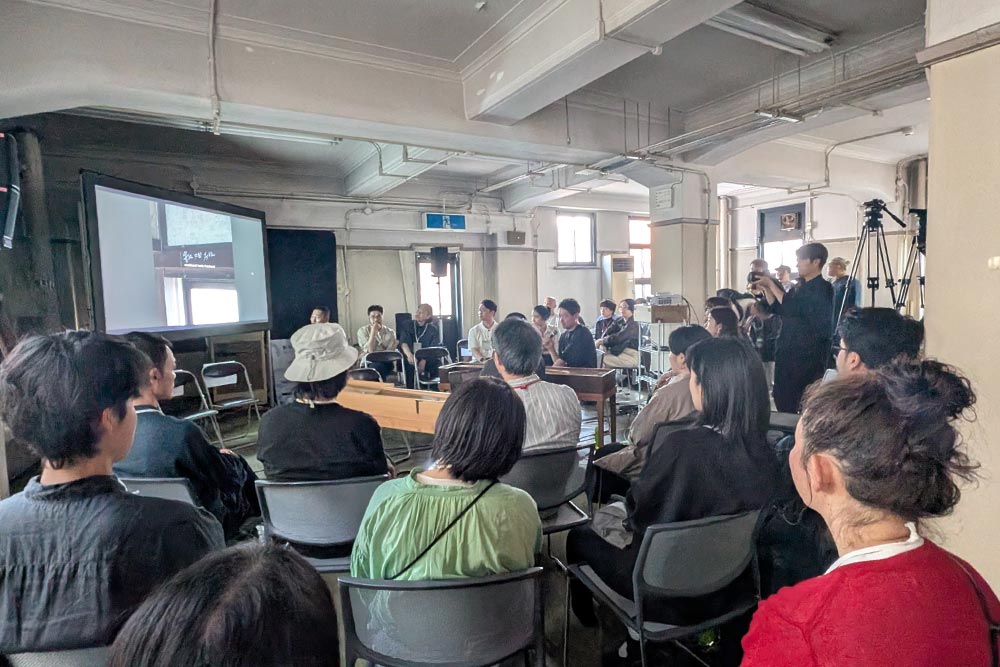
One such talk was the “The Traditional House of the Future – Post-City” session. It challenged participants to think about the era that comes after urbanisation. It explored the idea of a “Post-City”, a settlement area that can exist independently, but not necessarily in isolation.
Such a place would benefit from a decrease in dependency on large-scale grids (not quite off-grid, but focus on avoiding full reliance). Small circular economies that redefine how resources flow and are reused are one aspect of creating such a Post-City.
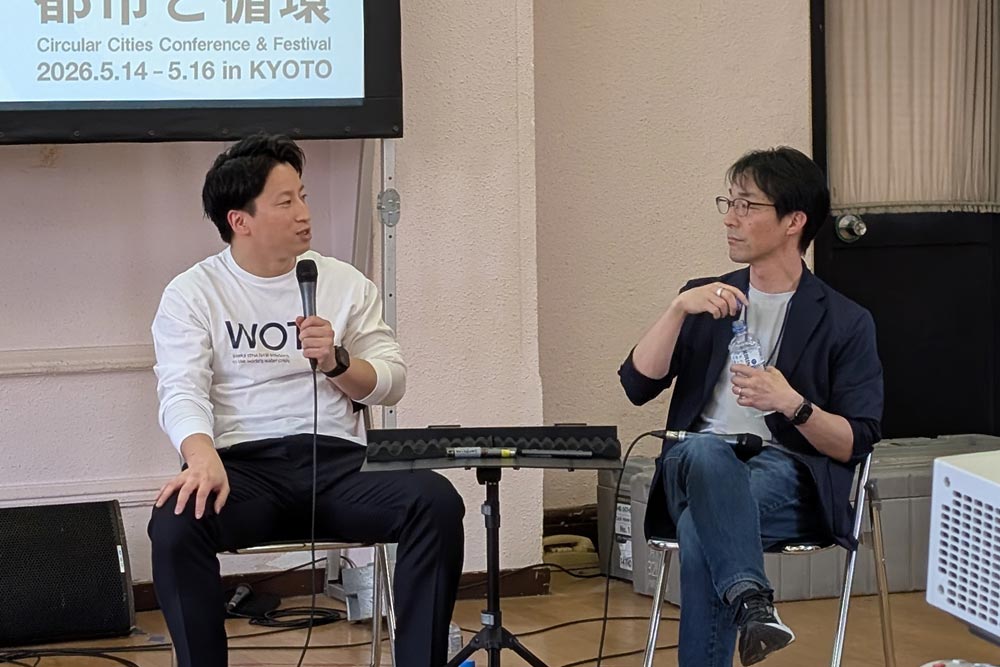
Water is a good example. Yosuke Maeda from WOTA CORP. believes that a Post-City is a community that redefines the relationship between people, water, and nature, prioritising local resilience, circularity, and adaptability. His company, WOTA, achieves this by providing decentralised, portable, and automated water infrastructure as a model for self-sufficiency, especially in disaster-prone or resource-scarce areas.
WOTA replaces or supplements the traditional water grids with compact, factory-built, and automated water treatment/reuse systems. It also includes rainwater harvesting and wastewater recycling. Water is not the only loop they close. Maeda has found potential of turning sludge into fertiliser, and integrating local resources into something valuable that returns to the soil.
Maeda: “When thinking about scale, it’s not about complete self-sufficiency. Independence is context-dependent, some scales (households, regions) may need partial reliance on grids or external support.
“I also believe that traditional infrastructure has served as the interface between humans and nature. From my perspective, nature is the ultimate ‘other,’ as discussed in philosophical theories of otherness. If we consider the ultimate other to be nature, the question is how we can achieve symbiosis and cohabitation with it.”
Our second speaker, Kentaro Suga from ARUP, agrees that the buildings in a Post-City are self-sufficient, context-aware, and user-driven. He believes that such a sustainable city can redefine comfort, people density, and community alignment.
Suga emphasises the importance of energy self-sufficiency. Buildings should aim for net-zero energy (ZEH/ZEB), but urban density presents the greatest challenge. He argues that to enable buildings to generate sufficient energy, cities should reduce density and revise floor-area ratio regulations.
“Not all spaces need to be controlled” is one of Suga’s design philosophies, where he shared an example of prioritising efficiency in some areas while embracing natural systems in others within a building design. Kyoto can become an example for cities to be self-sufficient energy-wise, with urban density addressed.
Suga: “Not all spaces use energy evenly. We can limit areas [that uses energy], and make the other areas more connected to nature, more enjoyable. This could become Kyoto’s new way of exchange, aligning with the city’s context and lifestyle. A city that embraces this could be called ‘Small Port’, blending high-tech efficiency with low-tech, nature-integrated living. It would be great if Kyoto, as an ancient capital, could evolve into such a place in 100 years.”
Craft and circulation: kougei as the pathfinder for a circular future
There is much we can learn from craftspeople and artisans about circularity, so it was a pleasant surprise to have a session discussing the role of kougei (traditional Japanese crafts) in a circular city.
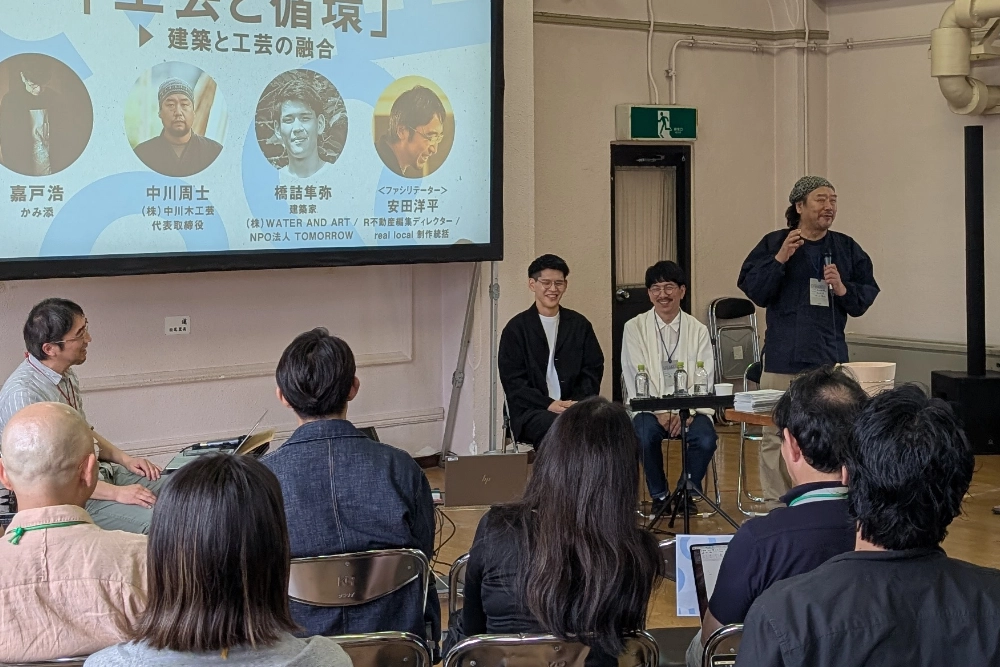
In the “Craft and Circulation” session, Shuji Nakagawa, CEO of Nakagawa Mokkougei, shared how he believes that traditions remain a living manual for circularity, packed with principles that modern systems have forgotten or abandoned.
For example, material intelligence, having almost spiritual knowledge of materials, and respecting their inherent structure. This enables non-destructive transformations in modern design that amplify natural strengths.
Traditional craft is also anti-disposable by design. Objects are made to last, and when they break, the response isn’t replacement but creative resurrection. Repair and adaptation are most evident in traditional crafts such as kintsugi and sashiko. Nakagawa also makes a compelling case for “thinking while making” over “thinking before making”.
Nakagawa: “It’s a huge distinction. When you’re designing something large-scale, you must plan everything out in advance. But with something like a single-storey machiya (traditional townhouse), you can build it without a rigid plan, adjusting as you go. It’s like what Levi-Strauss called bricolage, using whatever materials and resources are available on-site… working with what you have, adapting and problem-solving in the moment.
“Maybe we can rediscover the ability to innovate with what is at hand. This is something that’s easier to do in rural areas than in cities. Cities have their own methods, and rural areas have theirs. The key is figuring out how to apply the right approach in the right context.”
Koh Kado of Kamisoe shared how karakami (traditional Japanese handmade paper) teaches that tradition lies not just in technique, but also in mindset. In his work, he uses white materials such as mica (a mineral) and gofun (crushed seashells) on white paper.
Kado: “For me, white on white is the most fundamental finish for karakami. I move forward or backward, exploring new ideas or revisiting old techniques.
“Normally, karakami involves adding colour, like red on white, green on white. But I’ve always been drawn to the beauty of the raw materials. People often tell me, ‘I had no idea karakami could be this beautiful—white on white, with such depth!’ But for me, this is the foundation. Whether I’m looking to the past or the future, it all circles back: it’s all part of the same cycle, the same circulation. So, in a way, my work is about reconnecting with the classics while still feeling modern.
Furthermore, karakami relies on natural, recycled, or upcycled materials. Mica is chosen for its shimmer, and gofun for its opacity. This reflects modern circularity, using non-toxic processes and treating waste as a resource. Kado considers this a conversation with the land, one that begins with respecting the origins of materials.
Last but not least, architect Shunya Hashizume shared the Asu no Hatake (translated “Tomorrow’s Field”) project, in which he collaborates with various artists and craftspeople. It is located in Taiza, a nature-rich area in Kyotango, the northernmost region of Kyoto.
The goal is to create spaces where people gather through food and art, bringing together artists, artisans, architects, and chefs to collaborate on projects. Experimentation is a core value, open to new ideas, techniques, and new approaches are tested. Different disciplines, practices, and ideas converge, creating a collaborative space iteration and reiteration are necessary for progress.
Hashizume: “Taiza is part of a larger vision to revitalise empty machiya by involving artisans, architects, and other craftspeople. Public infrastructure in cities is aging, and we’re seeing more and more road collapses. In the past, communities had to consolidate to build infrastructure, but with today’s technology, maybe individual homes can be self-sufficient.
“Right now, we’re working on Taiza Base, a facility where its infrastructure doesn’t rely on public utilities. That’s the concept behind Taiza Base. I think it’s important to pass the torch to the next generation. Asu no Hatake is all about cultivating today for the sake of tomorrow.”
Keynote speech by Jan Gehl: In Search of Human Scale
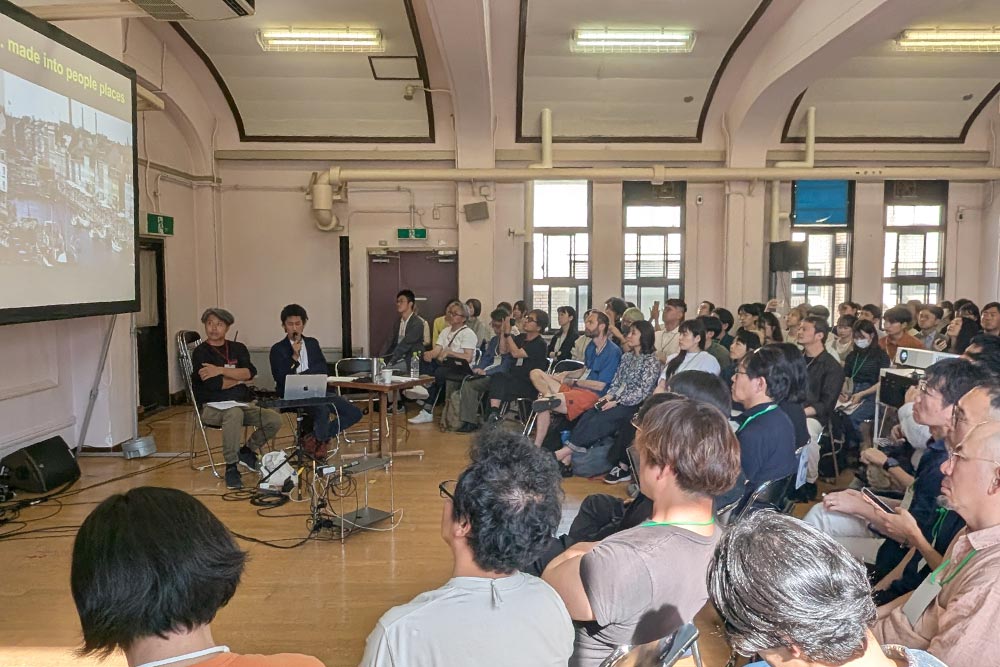
Architect and urban designer Jan Gehl’s online speech also drew quite a lot of attention. A global inspiration for designing human-centred urban spaces, he gave participants deep insights into creating a human-scale city.
We were given a history of urban planning’s evolution, which was critical to understanding the gaps in today’s cities and our ideal circular city. We learned of the shift away from public spaces and toward buildings as standalone objects. Streets and squares were subsequently repurposed for vehicles rather than people.
Gehl believes that to reclaim human-scale cities, planners must reverse this trend by integrating mixed-use zoning, prioritising public spaces, and designing for walkability and cyclability. (Consider Paris’s adoption of the 15-minute city model.)
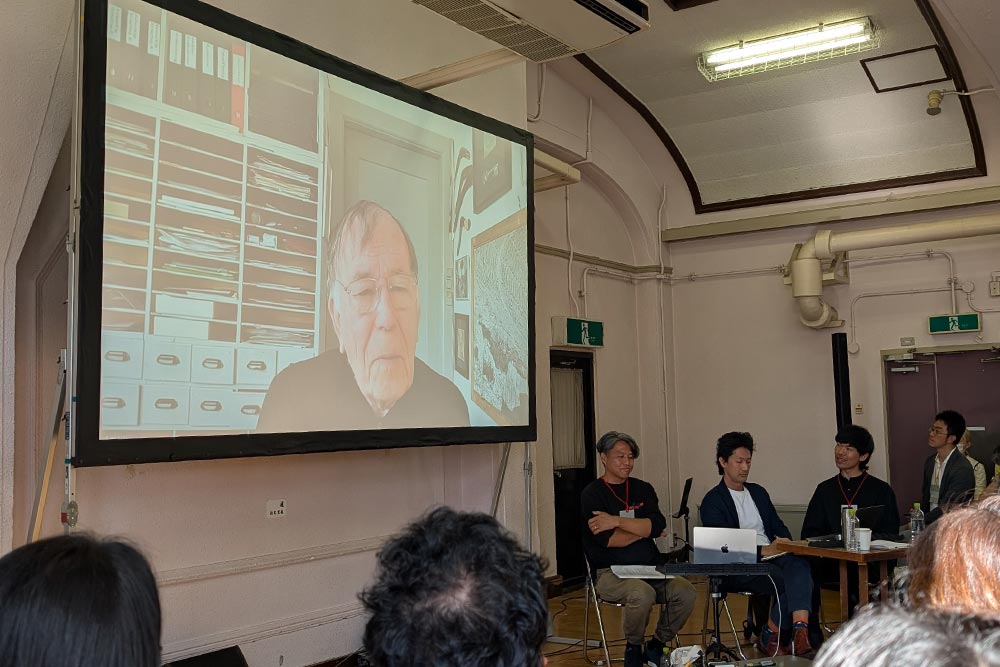
Gehl: “If you make more streets and more lanes for cars, what you get is more traffic. But if you create good conditions for walking and biking in the city, you will have more pedestrians and cyclists.
“Copenhagen has been a people-first city for over 60 years. These changes began in 1962, when cars were removed from the main street, the first ‘humanisation’ of the city. Over the years, a tremendous amount of work has been done for the city’s residents, with streets and squares dedicated to people and communities rather than automobiles.
“Copenhagen has developed a complete citywide network of bicycle lanes and we can see a cycling culture gradually emerge. Now, 45% of the people who use the city centre arrive by bicycle. The streets are much more beautiful and much safer.” We were even teased about the city’s “good problem” of overcrowded bicycle lanes.
Gehl also encourages designing cities for well-being and health, particularly in light of modern demographic shifts. For example, to tackle the modern crisis of the “sitting syndrome” (a term describing the health impact of prolonged, uninterrupted sitting), we need infrastructure that encourages walking, cycling, and the use of public transport, to get 7,000–10,000 steps per day for optimal health, as recommended by the World Health Organization. Gehl also highlights the challenge posed by ageing populations, an issue many communities are already addressing.
Gehl: “If you want lively, livable, sustainable, healthy cities, and good cities for old ages, it’s very good policy to look carefully after the people in the city. If you look after the people, you will efficiently address all these issues. More and more cities around the world are doing just this.”
Afterword
While we have only been able to participate in a small part of the event, we found the Circular Cities Conference & Festival event series offered a high amount of inspiration and positivity you can get from it. The event provides us the opportunity to interact with innovators and movers, to speak with them about their unique solutions, obstacles yet to overcome, and motivation to break through difficulties for their vision of circularity. Diverse viewpoints from experts gave us new perspectives, and most certainly has spurred on many who have come here around the country with new ideas and networks.
[Website] Circular Cities Conference & Festival