 Roger Ong
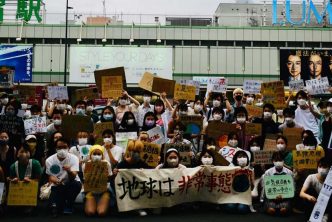
The turnout for the May 22 hearing at the Nagoya District Court for the “Youth Climate Case Japan For Future” was uplifting. More than 150 individuals of all ages gathered outside the courthouse before, the queue that formed an hour before the hearing. Because the courtroom only had 100 seats available, a lottery was held to decide who would be entering. Those who weren’t selected stayed outside to show solidarity for the plaintiffs and the legal team.
This youth-led lawsuit is one of the lawsuits in Japan demanding more robust climate action, turning to the courts and arguing that current governmental and corporate policies are insufficient and infringe upon their fundamental rights to a safe and healthy life.
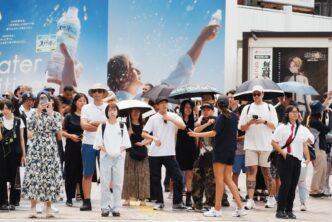
In this Nagoya hearing, two plaintiffs shared personal yet relatable testimonies. Raika Horinouchi, a university student, expressed a growing dread of summer. “Since returning to Japan, the summers have been breaking highest temperature records almost every year,” she stated, recounting how the heat in Kyoto has become unbearable, and her fear that abnormal heat is becoming the new, dangerous normal.
She had harrowing experiences with wildfires during her time in California, describing skies choked with smoke and a “hellish” scene of burning trees. She noted the increasing frequency of wildfires in Japan, adding, “The statement that we have entered an ‘era of global boiling’ is not an exaggeration.” She emphasised that climate change is a “man-made disaster” and called for coal- and gas-fired power-plant operators to reduce emissions, stressing the responsibility current generations have to those in the future.
Kensaku Nakachi, an employee at an outdoor goods manufacturer, spoke of how climate change is threatening his passions for surfing and snowboarding. He described an increase in precipitation causing severe flooding, including in the Noto Peninsula, and more intense typhoons. “For us who enjoy surfing, typhoons passing offshore were a welcome phenomenon that brought waves, but I learned the horror of typhoons when a large one made landfall in 2018,” he said, referring to the storm that damaged Kansai Airport. Reduced snowfall has also shortened the snowboarding season.
“I worry that opportunities and places for outdoor activities will decrease and eventually disappear,” Nakachi said, adding that the defendants’ dismissal of their concerns as “abstract possibilities” ignores the very real anxiety these possibilities create.
This lawsuit is one of several climate-related legal actions in the country. It argues that the government’s greenhouse gas reduction targets are inadequate to ensure a safe future, thereby violating constitutional human rights, including the “right to life” and “right to pursue happiness.” The legal team submits that high emissions from the ten defendant utilities directly endanger young people’s health, livelihoods and equality of opportunity, seeing the 2021 Milieudefensie climate case against Royal Dutch Shell as an inspiration.
The third hearing of the Nagoya lawsuit follows earlier efforts, such as a lawsuit against Kobe Steel’s new coal-fired power plants. On April 24, the Osaka High Court upheld a lower court’s decision to dismiss residents’ claims seeking to halt the plants’ operations or mandate a 50% CO2 emission reduction by 2030.
The plaintiffs in the Kobe Steel case argued that the emissions violated their “right to live in health and happiness.” While the court acknowledged the link between achieving the 1.5°C global warming target and human rights, it deemed the asserted right too “abstract” and found no current legal basis to mandate CO2 reductions based on a carbon budget.
The Kobe Steel plaintiffs expressed disappointment, calling the ruling “extremely unjust” and a reflection of an “unchanging Japan” lacking urgency. However, they also noted that their lawsuit paved the way for subsequent actions like the youth climate lawsuit.
At the end of the hearing, attendees left the courtroom hopeful, despite the defendants only participating through an online screen. The judge noted how there was an overwhelming turnout. This is visually showing how there is public backing, and that there is a demand for climate positive action. Public scrutiny, widespread concern, and individual participation – even that of just showing up at the hearing – are nudges for a better future. The sight of the crowd that gathered in the debriefing after the hearing is invigorating for the movement.
The next hearing for this case is scheduled for Sept. 17. Find the latest information on the Youth Climate Case Japan Homepage or their Instagram Account.
[Reference] Youth Climate Case Japan News (Japanese)[Website] Youth Climate Case Japan Homepage
More on climate crisis in Japan
- 2025-11-18: Fossil of the Day again: Criticism at COP30 for Japan’s fossil fuel push
- 2025-11-08: CAN Japan criticises weakening climate commitments and leadership
- 2025-10-21: Kyoto to rally support for Japan's Youth Climate Lawsuit
- 2025-10-20: Tohoku University climate activist story premieres in "Michinoku Denki"
- 2025-07-31: 350.org Japan demands stronger climate action after Japan election