 Zenbird Editorial Team
LIFULL ArchiTech and ELDNACS have launched a partnership to establish a new model for community support that connects everyday life with disaster relief. The agreement focuses on the rapidly deployable “Instant House” to create a framework for both regional revitalisation and emergency response.
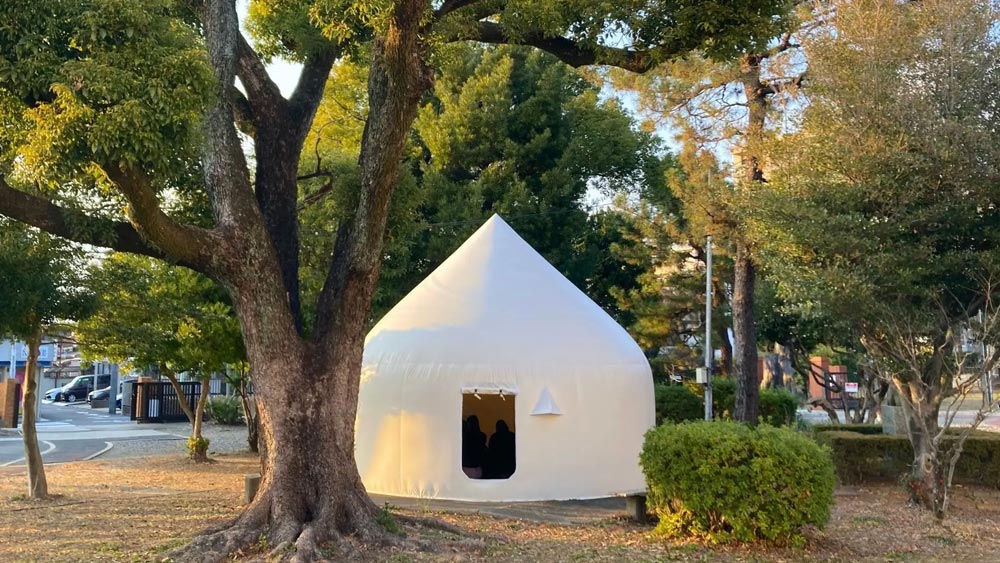
The collaboration combines LIFULL ArchiTech’s innovative housing technology with the extensive on-the-ground disaster support experience of ELDNACS. The core is a “phase-free” approach, which integrates disaster preparedness into daily life. By using Instant Houses for community events, tourism and other everyday purposes, the structures are already in place to be repurposed as shelters or medical stations immediately following a disaster. This model addresses the logistical challenges of post-disaster deployment and fosters long-term community resilience.
LIFULL ArchiTech has previously deployed its Instant House technology in response to earthquakes in Turkey, Syria, Myanmar, and Japan’s Noto Peninsula. These experiences showed the need for a system where preparedness is not a special action but a constant state.
Tsukasa Yamanaka, COO of LIFULL ArchiTech, explained: “We envision a society where preparedness is not a special act, but something that blends naturally into daily life,” he said. “These flexible spaces can be used in various ways according to community needs. This collaboration is the first step in co-creating a new system that brings support closer to daily life.”
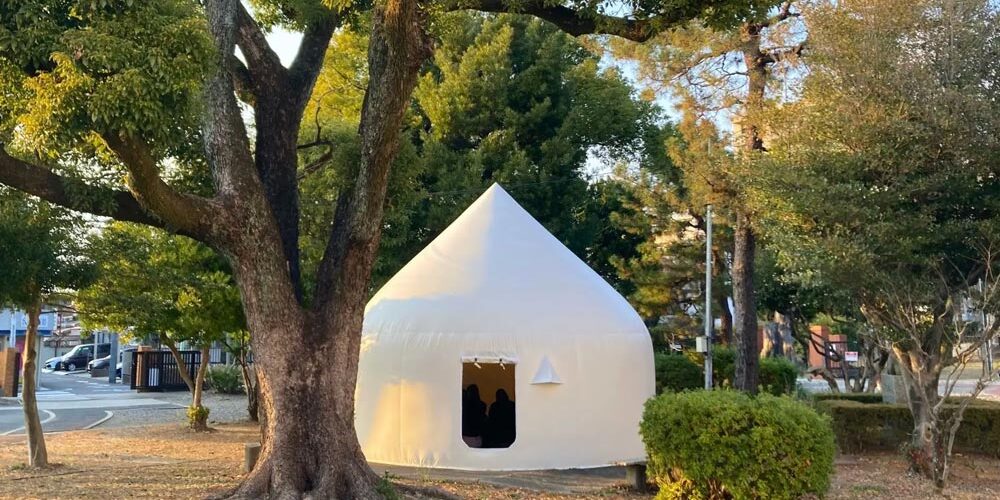
The partnership’s first project was a demonstration at the “PYRAMID GARDEN -Beyond the Festival-” area, part of the Fuji Rock Festival, on 19-20 July. An Instant House was set up as a cooling station for festival-goers, utilising its high insulation properties. The space also served as an exhibition, showcasing past examples of the house’s use in disaster zones.
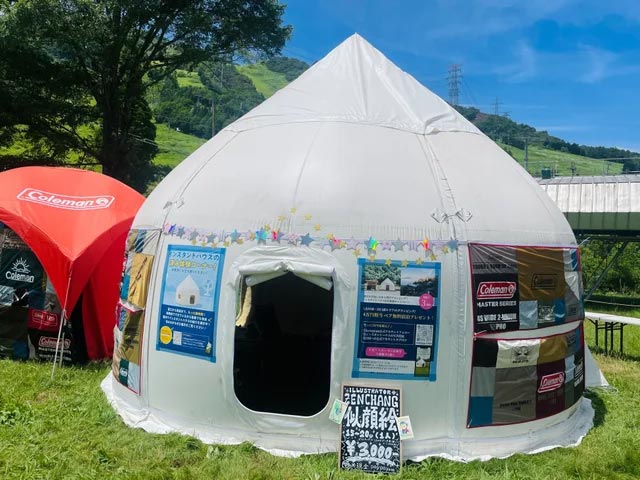
The Instant House was developed through an industry-academia collaboration between LIFULL and Nagoya Institute of Technology. The structure is created by inflating a tent-like sheet and spraying its interior with rigid urethane foam for insulation. This process allows a house to be erected in a few hours. As it is not a fixed building, it can be installed in various locations, serving as workspaces, accommodation, or community hubs.
[Reference] LIFULL News (Japanese)[Reference] LIFULL News 2 (Japanese)