 Zenbird Editorial Team
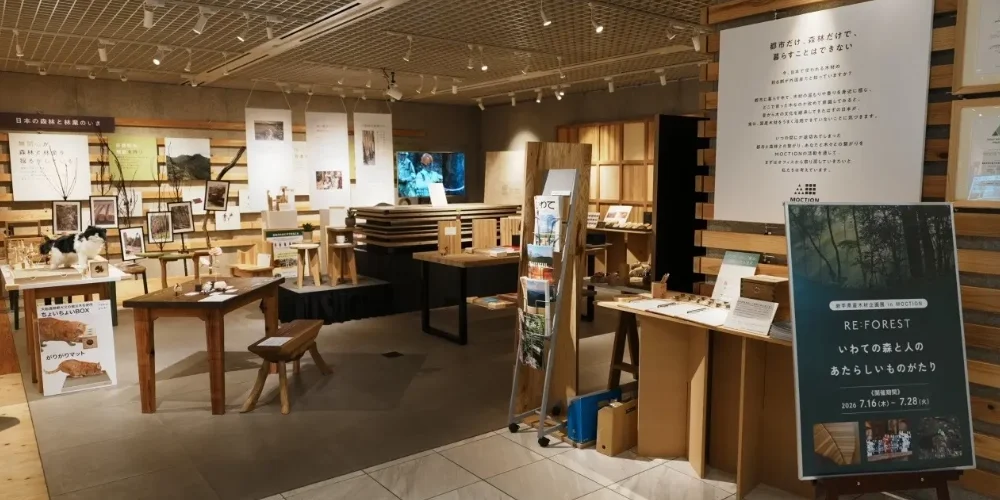
The Forestry Promotion Division of Iwate Prefecture exhibited in Shinjuku, Tokyo, last week, presenting upcycled furniture, plywood and crafts manufactured from timber recovered from wildfire-affected areas in Iwate Prefecture. The exhibition titled “RE:FOREST: A New Story of Iwate’s Forests and People” hinted new economic value for disaster-damaged wood while encouraging local resource circulation.
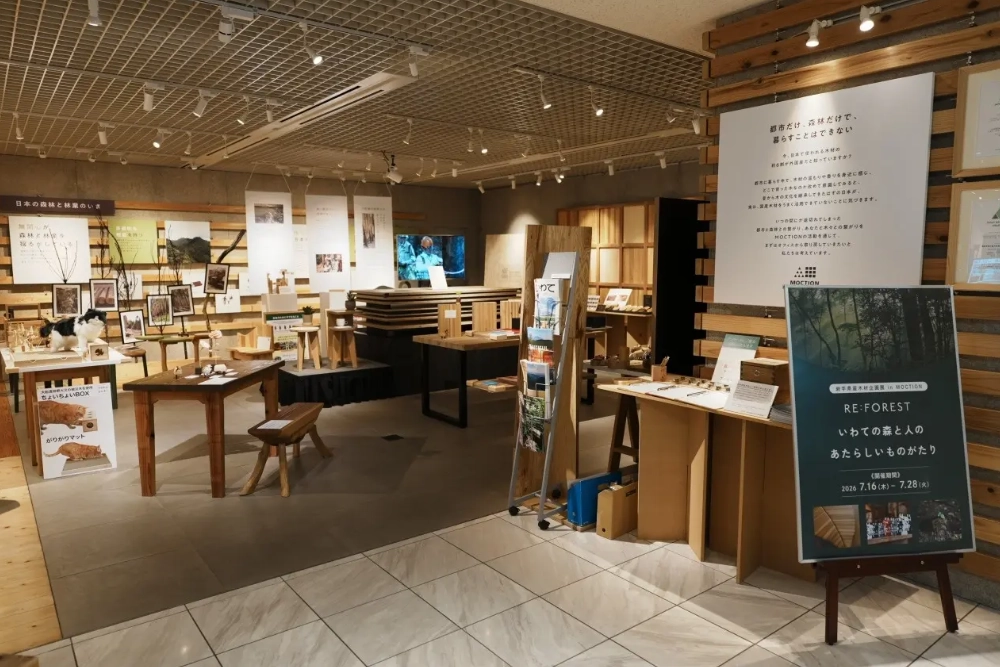
Forest fires often char the outer bark of standing trees while leaving the inner wood structurally intact. In the aftermath of forest fires in Ofunato City, private enterprises and partner organisations established TEAM Forest Regeneration Ofunato to process fire-affected cedar logs into functional building materials and commercial goods. The exhibition features several pieces crafted from this reclaimed timber, including plywood stools, the Uzukuri Table, the Naminami Bench and the Hikobae Table. These items demonstrate that wood previously treated as waste can still serve as material for commercial and residential applications.
In addition to upcycled cedar, the event highlights Iwate Prefecture’s forestry assets, including its broadleaf tree species and Joboji lacquer, one of Japan’s primary sources of natural urushi. Interactive exhibits allowed visitors to touch and compare the weight, grain and physical characteristics of different native woods. The organisers alsi offered the first 200 visitors who complete a survey a souvenir magnet made from locally sourced cherry, oak or Japanese dogwood.
The exhibition included targeted business matching sessions titled “Wood, You Can Take It Home.” These ssessions provided registered business representatives, product designers and procurement managers with physical timber samples of fire-affected cedar, Japanese red pine and broadleaf species such as chestnut, Japanese walnut and oak. This encourages corporate buyers to integrate Iwate timber into future product lines and architectural designs.
Disaster recovery initiatives in the forestry sector rarely address the long-term circular potential of damaged natural resources. What Iwate Prefecture is doing is transforming charred logs into structural materials and furniture, and can be a practical model for post-disaster resource recovery.
[Reference] PR Times (Japanese)