 IDEAS FOR GOOD
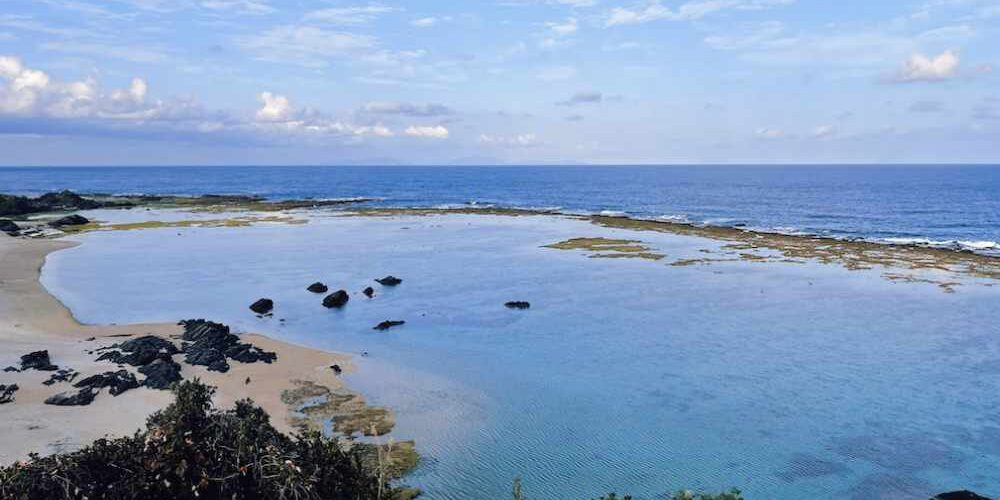
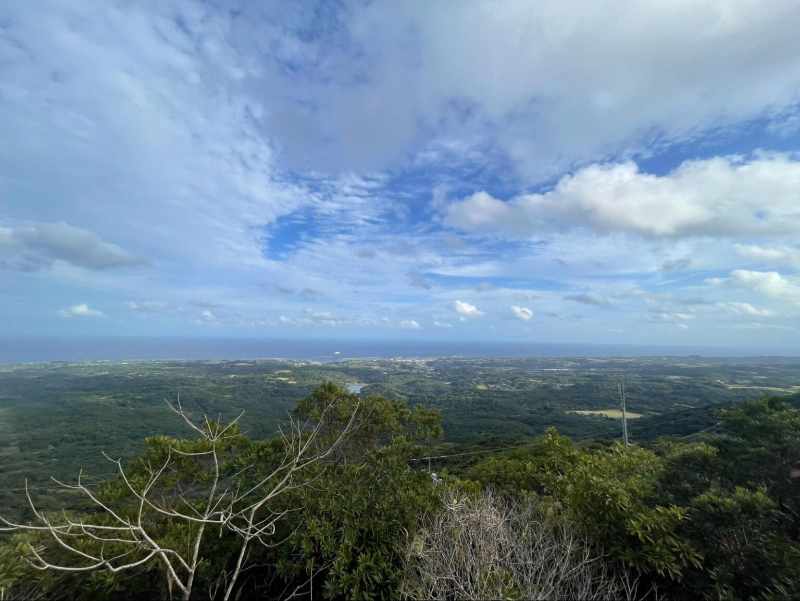
From Kagoshima Airport, a propeller plane rattles for about an hour before the deep blue of the East China Sea gives way to the unmistakable presence of the island, Tokunoshima.
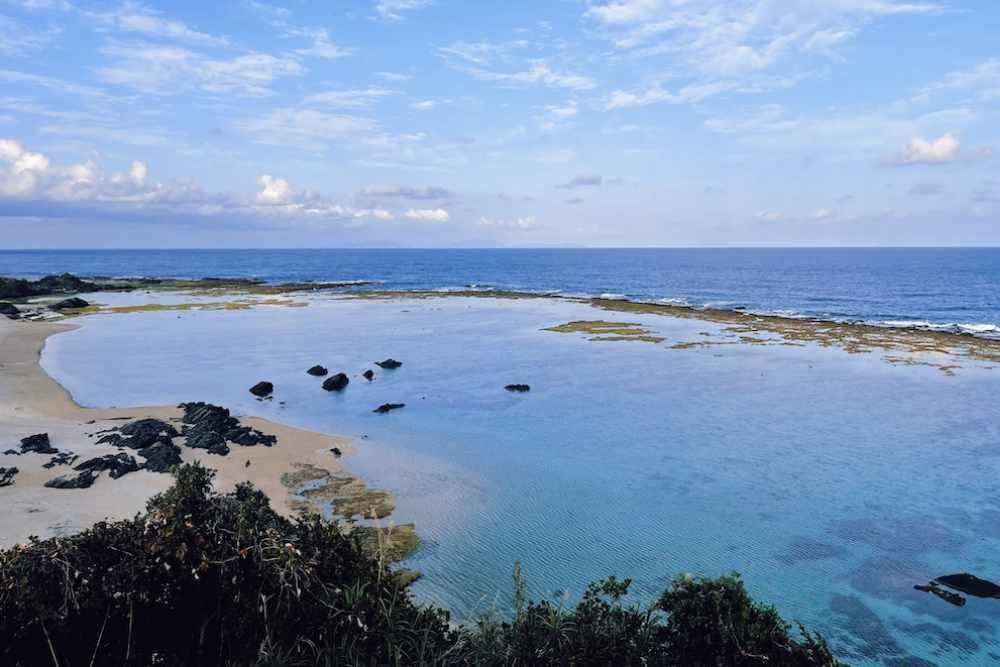
Located in Kagoshima Prefecture, Tokunoshima was once celebrated as Japan’s leader in total fertility rate, a symbol of fertility and longevity. In 2021, it was inscribed as a UNESCO World Heritage site for its natural wonders. Yet beneath this growing recognition, the island faces pressing challenges: a dwindling youth population, a decline from over 50,000 residents to less than half, and the erosion of the very traditions that sustained its people. Today, Tokunoshima confronts this reality head-on.
As travel gradually returns to normal after the pandemic, how should we engage with local communities? Simply capturing beautiful landscapes on a smartphone screen and taking fleeting memories home feels insufficient. Passing through places without deeply connecting to their way of life leaves a hollow sense for both visitors and hosts alike.
Takayuki Uchiyama, CEO of Nansei Travel Development, offers Shimamori, a new approach to travel that challenges such dilemmas in modern tourism.
Shimamori is a project that invites visitors to actively participate in preserving the island’s nature and culture. Activities like beach clean-ups, trail maintenance, and restoring coral reefs and seagrass beds are not just “experiential menus” but are woven into the fabric of local life and culture. Crucially, these efforts are designed to support the island’s existing way of life, and also to foster ongoing relationships through community engagement and shared storytelling, even after the tour ends.
For me, Tokunoshima holds personal significance: it is my mother’s birthplace. During a three-day monitoring tour, as I listened to conversations with Yoshiki Hayashi, director of the Tokunoshima Tourism Federation, and Uchiyama, as well as the islanders themselves, I came to see that travel could be a catalyst for rekindling the lost art of “musubi”, the bonds that tie communities together.
Planting the future blue: uncovering life from rabbit holes
For over a century, until the early Taisho era, Tokunoshima thrived on the cultivation of Ryukyu indigo, which is a natural dye used to colour fabrics. In many households, mothers would grow indigo, dye clothes for the family, and pass down these traditions. A cycle existed: people grew plants, extracted dye, dyed fabrics, and through the land, connected generations.
With modernisation, cheaper synthetic dyes replaced labor-intensive natural methods. What was lost wasn’t just a choice of dye, but the deep connection between land, craft, and memory, a chain of knowledge rooted in place.
At the heart of the Shimamori tour is the act of replanting Ryukyu indigo in the island’s soil. This isn’t just an agricultural experience. The act is a small but meaningful challenge to revive a tradition abandoned for convenience. Planting indigo is an act of reconnecting with the island’s craftsmanship, natural resources, and the stories embedded in its land. Shimamori aims to foster a sense of participation and co-creation among visitors.
Families who moved to the island and those who love it are gathered there, united by a shared passion.
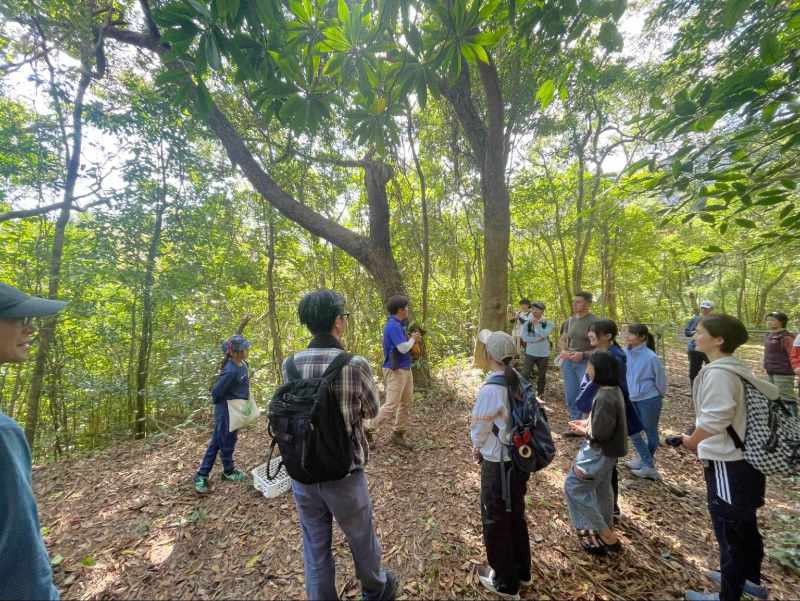
“I want to pass on nature’s gifts and wisdom to future generations,” Hayashi says. “I want them to know that this land holds the thoughts and lives of countless people who came before us.”
Her words lend weight to the hands of those digging into the soil. The seedlings we plant are not mere plants, but they are vessels of memory of those who once lived on this island, and are gifts that may shape someone’s life decades from now. Coming in contact with this long arc of time, travelers are no longer mere passersby. They become active participants, co-creating the island’s history.
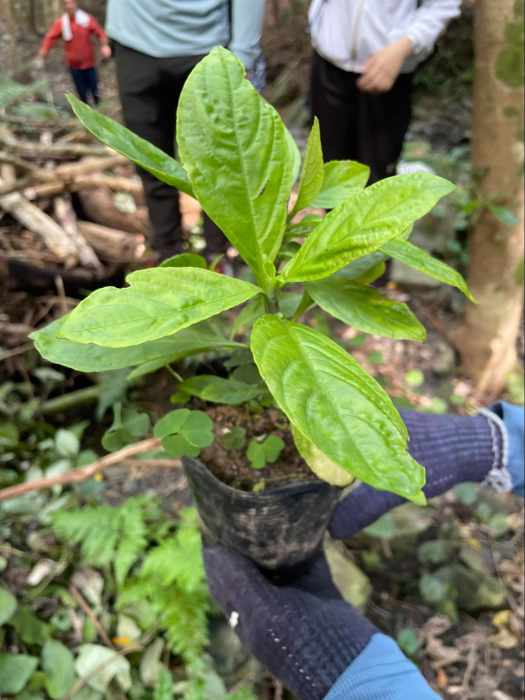
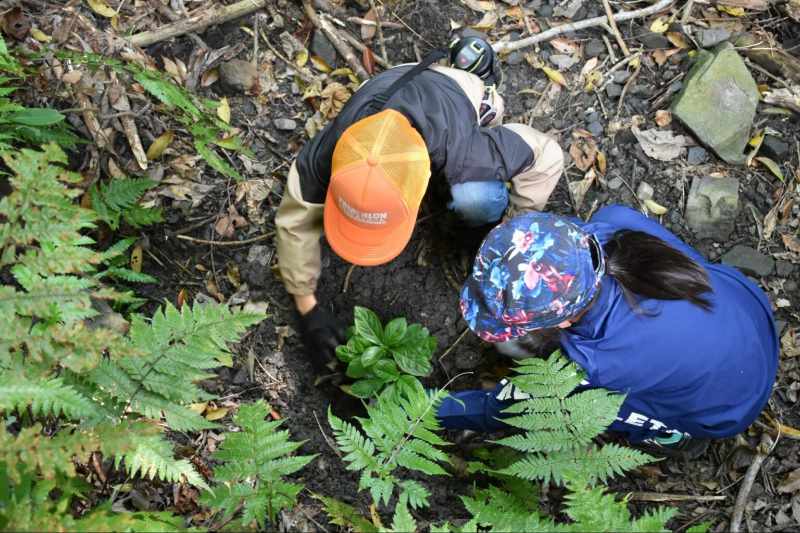
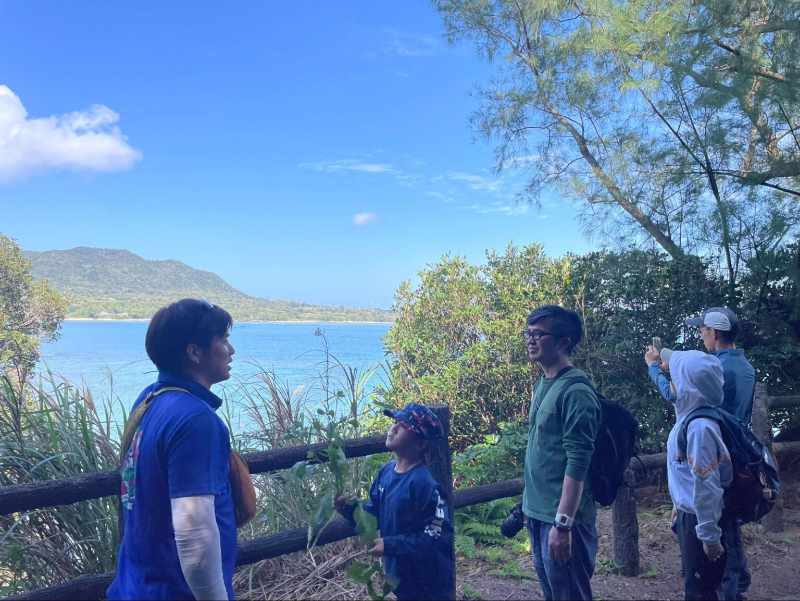
Between planting indigo, our group explored the mountains, searching for traces of life.
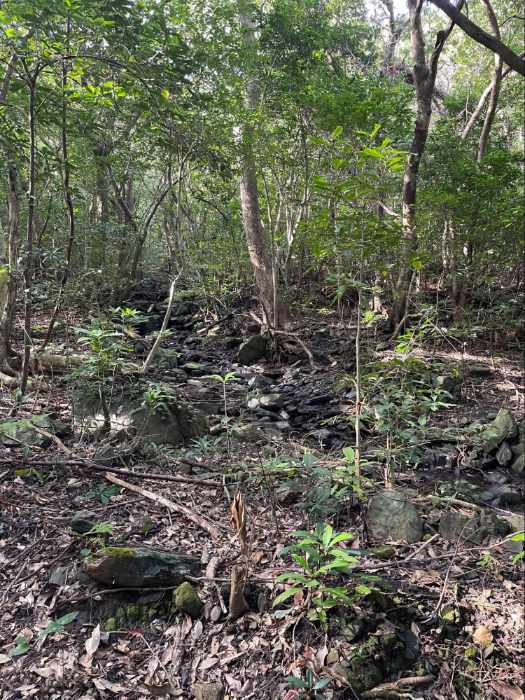
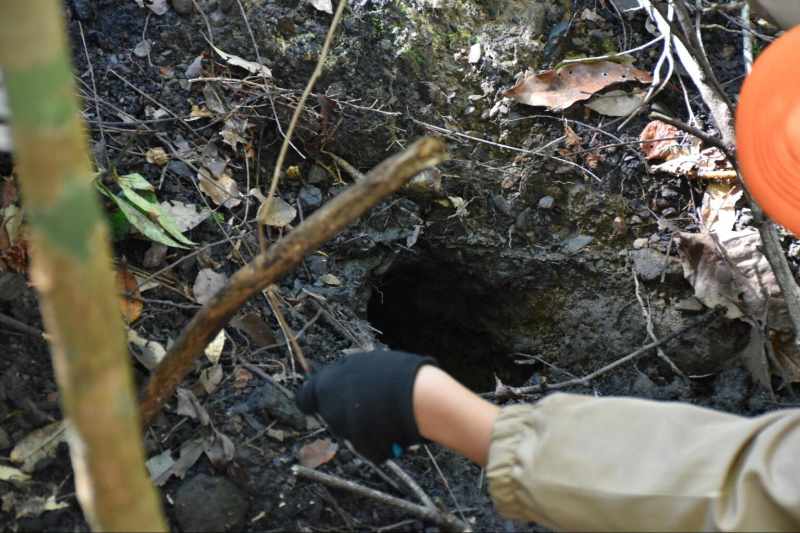
Crouched together, the group peers closely at a small hole in the ground, dug by the Amami rabbit. As we scan the area with guidance from Hayashi, they notice more holes: one for sleeping, another for raising young, and others for relaxation. The rabbits dig different burrows for different purposes.
From the angle of each hole, they wonder: Which way was the rabbit facing? What did it feel as it rested here? With Hayashi’s explanation as a guide, this moment of reflection becomes a rare, luxurious sensory experience that is impossible to capture on a smartphone screen.
Tokunoshima’s nature doesn’t reveal itself through signs or explanations. It only shows its “proof of life” when we pay it our attention.
The richness of discarding efficiency to reaffirm connections
“In the way of life on Tokunoshima, every aspect is infused with the act of reaffirming connections.”
Hayashi’s words encapsulate the philosophy of this tour.
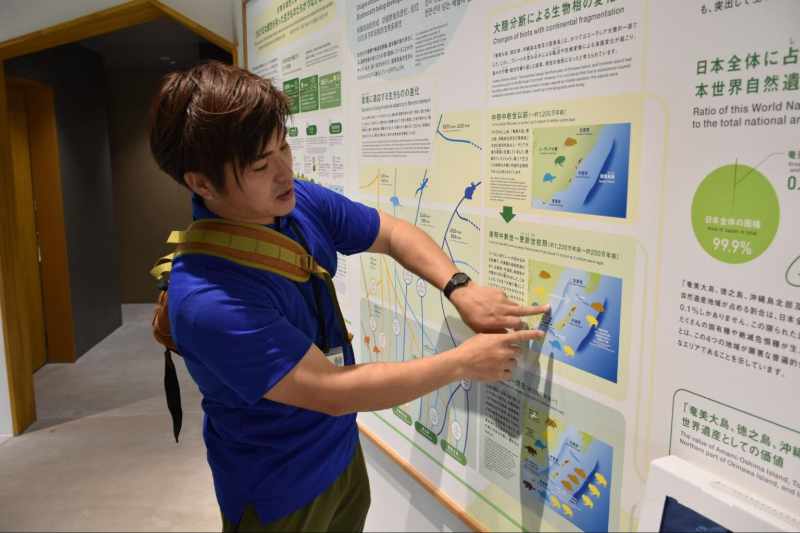
Tokunoshima has a culture of mutual aid called “yui”, where neighbors support one another in farming and daily life. Here, “reaffirming connections” is not an intellectual exercise. It emerges from the process itself of gathering in the same place, sharing the same tasks, and spending time face-to-face.
It is also reflected in the island’s festivals. For its people, festivals are more than entertainment, as they are also moments to re-examine where they come from, what sustains them, and to whom they are connected: ancestors, nature, the community, neighbors, and even future generations. Within this web of relationships, they confirm their present place and, in unspoken ways, ask where they are headed next.
There may be friction or conflict along the way. Yet, even the trouble of it all becomes part of how they acknowledge each other’s presence. This is the spirit of yui, deeply embedded in Tokunoshima’s way of life.
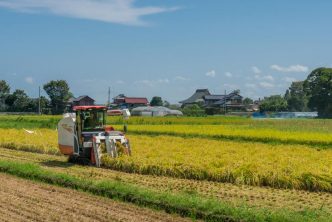
In the past, the island thrived on dense communities centered around rice cultivation. Planting and harvesting were collective efforts that could not be completed alone. However, mechanisation and policy changes have eroded these shared spaces. Even sugarcane harvesting is now handled solely by large harvesters and their operators, stripping away the resilience of the community.
In a society that prioritises efficiency and convenience, the process of reaffirming connections is easily discarded. That’s why Shimamori deliberately slows down, gathering people in the same place to share labor-intensive tasks. Within the very inconvenience of these moments lies a clue to restoring the organic bonds that are fading away.
Gravestones face the sea, mountain spirits lurk in the shadows
To understand Tokunoshima’s view of nature, one must engage with its people’s unique perspectives on life, death, and the spiritual world. Walking through the island’s cemeteries reveals that most gravestones face the sea rather than the village. According to local belief, humans come from Neriyakanaya, a paradise beyond the visible horizon that is an invisible realm of the gods, and then return there upon death. It is not the sea itself but the spiritual world it symbolises that is the source of life. In Okinawa, it is known as Nirai Kanai.
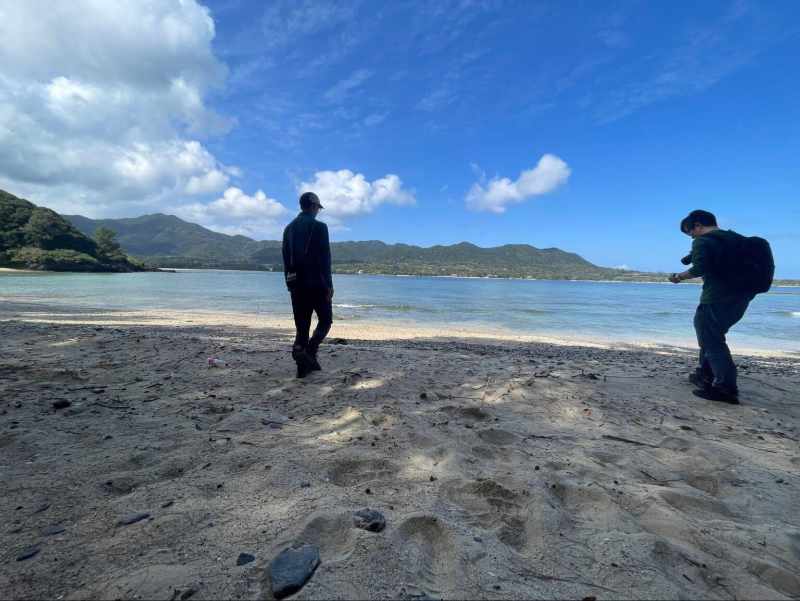
In contrast, towering above the villages is Obotsukagura, another sacred realm in the heavens. The highlands, known as tera, are considered sacred ground where deities descend from above. An unspoken rule forbids building houses there, as it is a place of divine descent. If Neriyakanaya represents a gentle, maternal source of life, Obotsukagura embodies a stern, paternal presence that watches over humanity from above.
The people of Tokunoshima have lived in the “village” between these two invisible divine realms, making full use of nature’s abundance while forging a resilient way of life. Sometimes, they felled trees until the mountains became bare. It was not about cowering in fear or seeking approval, but about deeply engaging with nature and sustaining life, while feeling the presence of unseen deities.
Supporting this worldview as a social order is the legend of kenmun, mischievous spirits said to resemble kappa (Japanese water imps), who could steal souls or names. These are not mere superstitions.
“To keep someone from swapping your octopus catch at night, people would avoid calling each other by name and simply say ‘oi’ “ [similar to calling out “hey”]
Hayashi shares with a smile, adding that this tradition carries the wisdom our ancestors wove over generations to coexist with nature. Even deities said to be violent, like Iwatushi, or malevolent spirits were believed to reside close to human life. It was thought that violating taboos could invite curses, illness, or even death, such as making noise in certain places or entering the mountains outside designated times.
Taboos like “do not make noise in sacred places” or “do not enter the mountains outside specific seasons” were not mere superstitions. They functioned as a safety net, preventing overharvesting and preserving ecosystems.
Humans did not unilaterally control nature. Instead, they maintained a symbiotic order by acknowledging the presence of invisible beings (kenmun). In an era before scientific data or laws, stories were the vital agreements that connected humans and nature.
Mountains: treasure or sanctuary?
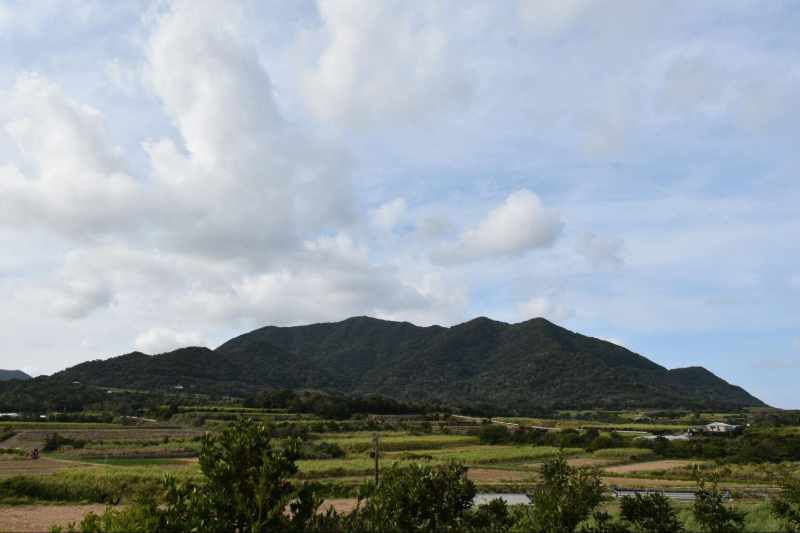
Today, Tokunoshima’s lush mountains tell a story of hardship and renewal. In an era when the island was home to over 50,000 people, the mountains were a “treasure trove,” providing food, fuel, and building materials. During and after World War II, vast amounts of pine were cut for railway sleepers, and later, for pulp. By the 1970s, the mountains were stripped bare.
Yet, remarkably, they began to recover on their own. With little human intervention like reforestation, the mountains regenerated in just half a century into the rich forests now inscribed as a World Heritage site. This resilience is a gift of the warm, humid climate shaped by the Kuroshio Current and seasonal winds. These are blessings of the seas and winds surrounding Tokunoshima.
However, the honor of World Heritage status has brought new dilemmas. Mountains that once provided livelihoods are now being redefined as “sanctuaries,” with strict access restrictions under conservation frameworks.
“People are losing their familiarity with the mountains. Protecting nature isn’t just about creating rules or keeping it at a distance.”
Hayashi’s observation carries the urgency of someone who knows the terrain. The culture of satoyama, where human activity sustains the land, and the reverence for nature can only be preserved if people remain connected to the mountains. Shimamori’s efforts aim to dissolve the boundaries between protection and engagement, redefining the relationship between humans and mountains in a modern context.
Travel as a thread to reknit lost bonds
Journeys to trace a place’s origins often prompt travelers to reflect on their own values and way of life. This introspection is not exclusive to those with roots in Tokunoshima.
In a daily routine driven by efficiency and convenience, it’s easy to lose sight of what sustains us. Travel, however, can become a time to physically retrace those invisible connections, to rediscover what we depend on for life.
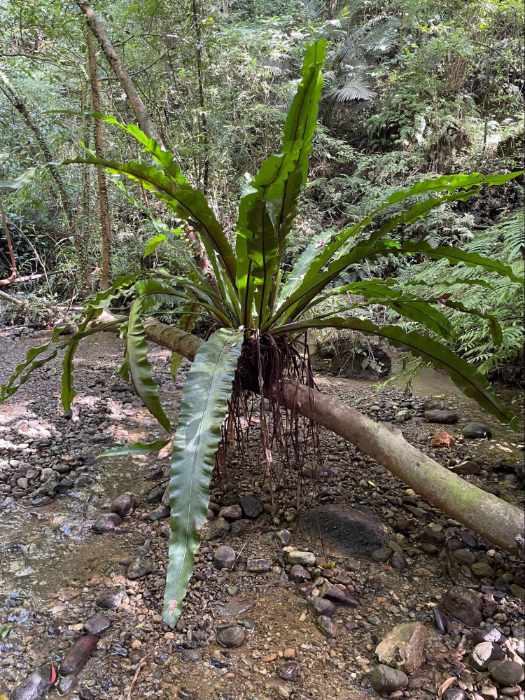
Experiencing Tokunoshima redefined the purpose of travel for me. It was not about consuming the scenery, but about planting indigo, observing traces of life, and listening to the islanders’ stories. When these small acts connect to the ongoing efforts to preserve nature and culture, travel evolves from a fleeting experience into a meaningful relationship that supports the community.
“I don’t just want to attract anyone,” says Uchiyama. “I want people who resonate with the island’s spirit and can weave its way of life into their own.” His words reflect a commitment to transform tourism from a one-off act of consumption into a relationship that brings change to both visitors and locals.
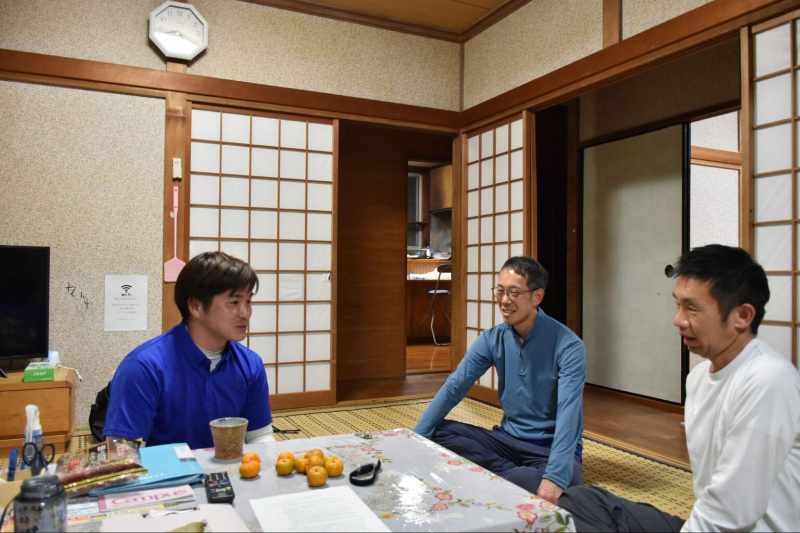
Hayashi’s multilayered knowledge, like the island’s geological layers, and Uchiyama’s vision for its future resonated deeply within me. When these insights settle into the body as lived experience, Tokunoshima transcends being a beautiful tourist destination and becomes a place to live together.
Travel, then, is not merely about going far. It is an opportunity to consider what we are connected to and how we might reconnect, which is an act of reimagining our relationships for the future.
We can always return to our own roots. These roots are not confined to the past; they can also be the starting point for choosing how we wish to live moving forward.
Afterword
Even with fulfilling work and the support of like-minded colleagues, there are moments when I pause and wonder: Where do my roots lie?
What lingered most from the three-day tour was the island’s culture of “confirming.” Through dialogue, people affirm their relationships and shared values, something often overlooked in modern life. Within the effort of this process lies the power to rebuild human connections and community bonds.
Shimamori is not about visiting a place to receive something, but about taking some responsibility for its future. It’s about caring for the place long after the visit, continuing to learn, and offering help when needed. The accumulation of such relationships embodies the vision of what it means to be those who protect the island.
I hope to be part of this shared vision with others who embrace the same values, nurturing my connection to this island—the birthplace of my mother. That intention has become a source of strength for me now.
If you, too, feel caught in the rush of daily life or the pressure of “how things should be,” and wonder where you belong, I hope this piece offers a gentle invitation to pause and reconsider. Travel is not just about going far. It can also be a practice of remembering what we are connected to, and why that matters.
Originally published on IDEAS FOR GOOD.
Written by Nagara Wakita.