 Zenbird Editorial Team
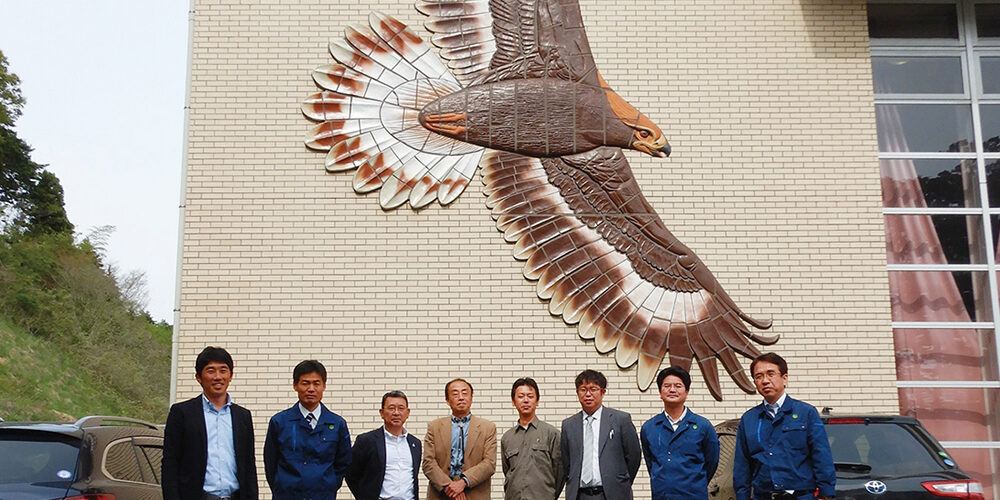
The Minamisanriku Golden Eagle Habitat Restoration Project Council is launching of Japan’s first effort to reintroduce zoo-bred golden eagles into the wild. The project aims to restore the apex predator to the skies of Miyagi Prefecture, where the species has not been resident since 2012. This conservation effort combines decade-long habitat restoration with advanced wildlife management techniques to prevent the national extinction of the species.
The Japanese golden eagle is designated as a National Endangered Species. According to the Society for Research of the Golden Eagle, Japan, approximately one-third of the 300 known pairs in the country have disappeared. Breeding success rates have plummeted from nearly 50% in the 1980s to 17.4% in 2022. The decline is primarily attributed to the loss of “open mountain” environments, where eagles can hunt prey like the Japanese hare. This is a result of the abandonment of traditional forestry and land management.
Since 2015, the council has worked with volunteers and corporate partners, including Patagonia Japan, to restore these hunting grounds. A key activity involves clearing “firebreaks” along mountain ridges. These treeless strips, traditionally maintained to prevent the spread of forest fires, serve as essential corridors for eagles to spot and hunt prey. By 2025, the group successfully cleared 50 kilometres of ridges, which now also serve as accessible trails.
The project integrates sustainable industry with conservation through a landmark forestry agreement. In 2020, the council, the Forestry Agency, local municipalities, and the forestry firm Sakyu Co., Ltd. signed a pact covering 4,024 hectares of land. The agreement prioritises the circular use of resources and habitat restoration. Minamisanriku was the first municipality in Miyagi Prefecture to obtain FSC (Forest Stewardship Council) certification, ensuring that timber production supports rather than destroys the local ecosystem.
Data indicates that these efforts are yielding results. Suitable hunting habitats in the region have recovered to over 50% of their 1970s levels, up from a low of 20%. Recent sensor camera surveys around Mount Okinakura confirmed a high density of prey species, with Japanese hare sightings occurring at twice the frequency of other regions where eagles currently reside.
Despite the improved environment, the council determined that natural recolonisation is unlikely due to the critically low national population. Consequently, the project will adopt reintroduction methods proven successful in South Scotland, where eagle populations grew from three pairs to approximately 20 through the release of young birds. The Minamisanriku plan has received official certification from the Ministry of the Environment, confirming its alignment with national protection and breeding goals.
The council launched a crowdfunding campaign to support the release and subsequent monitoring of the eagles. Released birds will be equipped with transmitters to track their dispersal and survival. The data gathered in Minamisanriku will be shared publicly to assist golden eagle conservation efforts across Japan. By establishing these reintroduction technologies, the project seeks to create a model for a sustainable region where human industry and biodiversity coexist.
[Reference] Golden Eagle Habitat Restoration Project Homepage (Japanese)