 Roger Ong
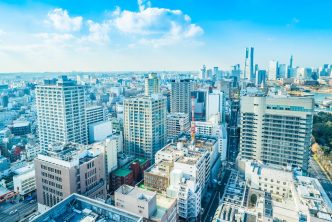
Yokohama has always been a city in conversation with water. It faces Tokyo Bay, where the port shaped its modern identity, and it is laced with rivers that run past schools, parks and shopping streets.
Yet this close relationship with water has also made the city vulnerable to human activity. About 60 years ago, the city experienced a surge in industrial activity, much like the rest of the country. This led to serious water pollution.
The city has implemented robust pollution control measures, such as developing sewage infrastructure, enforcing regulations according to national laws and municipal ordinances, and collaborating with businesses. These measures have worked well, as water quality in Yokohama’s rivers and coastal areas has improved.
However, public surveys revealed residents’ satisfaction with the water environment did not rise in step with those improvements. The water was getting cleaner, but people didn’t really notice that, and cleaner water alone wasn’t enough to make them feel satisfied with their local waterside.
That mismatch is one reason Yokohama City’s Water and Soil Environment Division, part of the Green Environment Bureau Environmental Conservation Department, began experimenting with a different kind of water policy.
The division’s work is usually practical and regulatory, enforcing national legislation, and guiding and regulating businesses whose activities could affect waterways. Staff also conduct monitoring, surveying rivers and other sites, and carrying out water quality testing to understand conditions beyond what is visible. They also coordinate with other local governments on Tokyo Bay initiatives, including joint surveys and sediment investigations.
In other words, the team’s core responsibilities have historically centred on enforcing compliance, measurement and water pollution incident response. What they began to face more directly in recent years was a little different: how do you help residents feel that their local watersides are places worth caring about, visiting and talking about? The Yokohama City’s Water and Soil Environment Division team, including Manager Tanaka Kohei and a team member Nishimura Akiko, shared their journey with us.
Matching national priorities with Yokohama’s Civic Power
To sustain progress towards healthier aquatic environment, the city needed more residents to notice what was already improving and to develop an emotional connection that could translate into care. National policy provided momentum for it.
Japan’s Sixth Basic Environment Plan was finalised in 2024, positioning wellbeing as a top-level goal and explicitly links rich waterside environments, together with local nature and culture, to residents’ wellbeing and regional vitality. The Ministry of the Environment also developed a tool known as the “Water Environment Soundness Index”, commonly called Mizushirube, published in 2009. Mizushirube encourages people to observe rivers through multiple lenses, including naturalness, wildlife, water clarity, comfort and everyday use, rather than focusing narrowly on chemical water quality.
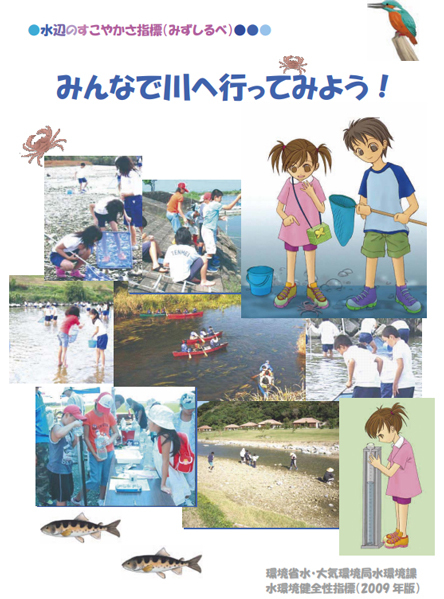
That is how the Yokohama Mizube Report took shape. It adapts Mizushirube into a Yokohama-specific citizen survey and publishes the results collected by people who take part. The city issued a press release in June 2025.
Yet, as staff worked through the rollout, they hit a fundamental challenge. If the public does the survey and the city publishes the results, what do residents gain in return? The team returned to their purpose: to help people understand the condition of local water environments in a relatable way, to spark interest in water conservation and to show that Yokohama’s watersides can be genuinely appealing places. From there, a new umbrella concept emerged, making waterside engagement less like a lesson and more like something people have personal investment in.
Yokohama Mizube Oshikatsu: Share your favourite water spot!
The result is a programme called Yokohama Mizube Oshikatsu, which roughly translates as “supporting your favourite watersides”. Mizube refers to a waterside, which can be a river, a body of water or similar. Oshikatsu is a familiar term in Japan, used for the enthusiastic act of supporting a favourite idol, artist, character or passion.
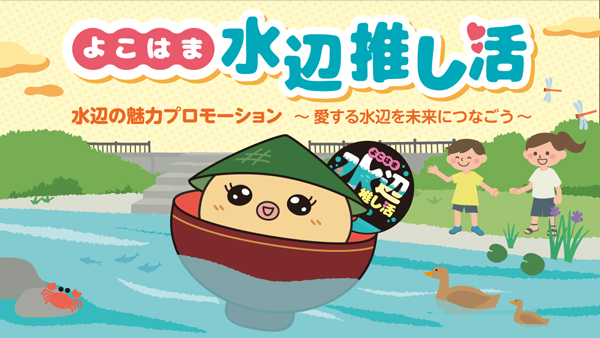
Nishimura: “If the purpose is improving citizen satisfaction with the water environment and fostering a desire to protect it over the long term, the feeling of ‘liking’ something is key. If people come to like their local waterside and develop attachment, they would want to care for it. So, to express that ‘liking,’ we felt that ‘oshikatsu’ is a catchy word that fits the current era very well.”
Just as importantly, Oshikatsu creates room for many types of participation, allowing participants in something more self-directed. Under the Oshikatsu banner, the Mizube Report is one activity among many. The programme also embraces lighter, playful forms of engagement that fit modern sharing culture, including character-led storytelling and “nui-dori” style posts, in which a mascot plush is photographed at different waterside locations.
Nishimura: “We also take photos with a plush toy of the character called Donburako. That kind of activity is part of oshikatsu as well. It feels familiar, and it can be done in a fun way. And there is also the aspect of wanting to share it through blogs, websites, and social media, matching the enjoyable image of oshikatsu.”
Donburako blogs on Yokohama Mizube Oshikatsu frequently.
Commitment and dedication in implementing Yokohama Mizube Oshikatsu
Building this kind of campaign, however, required the team to operate outside their comfort zone. The team is small, and had to work with a limited budget and limited experience in promotion. Their solution was to design the programme around collaboration, borrowing expertise rather than attempting to build everything alone.
They sought advice from communications specialists, helping to brand the programme rather than treating it as a conventional outreach. Externally, they learnt from community groups already active along local rivers. The team also drew on national support. Yokohama was selected for a Ministry of the Environment water environment soundness model project, which enabled expert assistance and support for outreach-style learning sessions. They also observed classes run by the Innovation Foundation for Water and Regional Revitalization, an organisation involved in spreading Mizushirube practice, to pick up facilitation know-how. Within the city, they worked with a research institute that already conducts aquatic life surveys, helping them show residents not only water clarity but also biodiversity.
The team also had to address the practicalities of safety. Citizen surveys on rivers can involve real risks, so they built precautions into their materials and made safety guidance part of how they communicate participation. And because Yokohama Mizube Oshikatsu is meant to feel distinctively local, they did not simply reuse the national Mizushirube manual. They created a Yokohama Mizube Report manual in their own format, aiming to build a Yokohama identity that supports recognition and continuity.
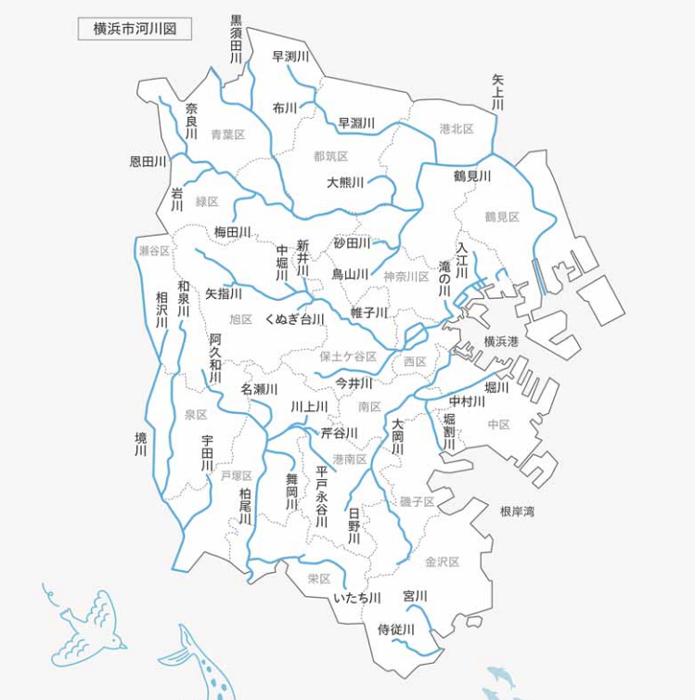
Even with careful planning, some challenges were unexpected. One involved the campaign character, which took some discussions and ultimately adopted Donburako. A second challenge is structural since water governance is fragmented across departments and jurisdictions. This web of relationships will be navigated to continue expanding the programme.
Active participation and positive feedback from citizens
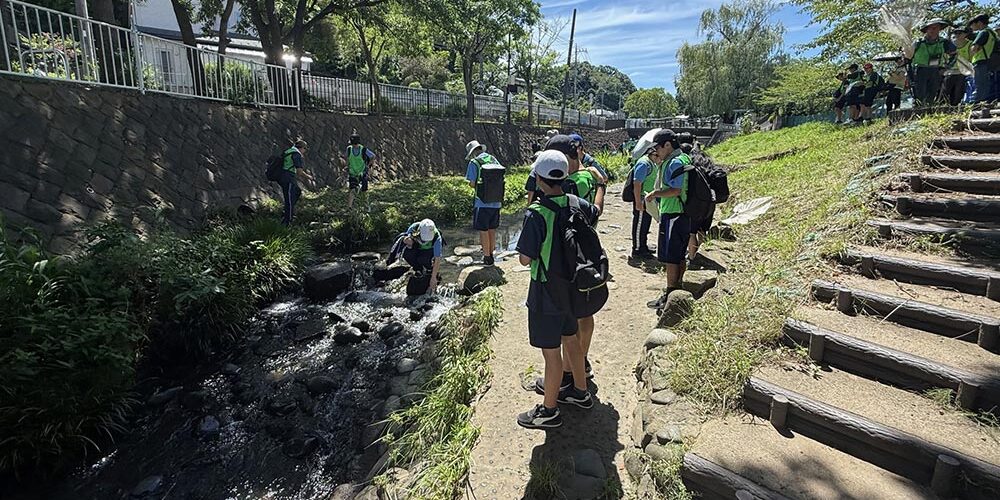
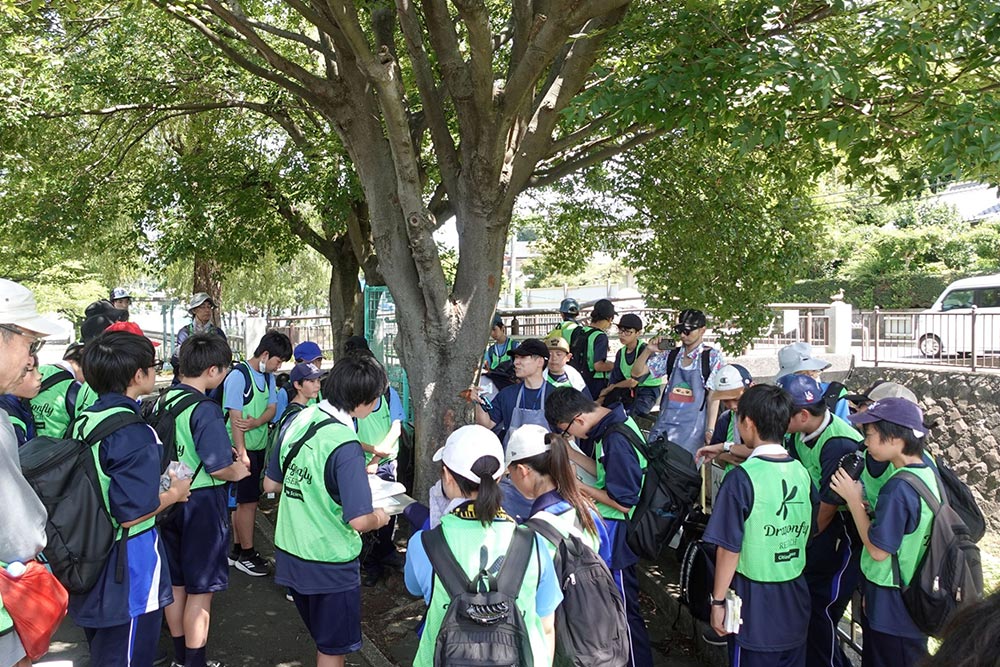
So far, the participants have tended to cluster in three groups. One consists of citizen organisations already active along rivers, including groups focused on cleanups, habitat improvement and environmental education. Another involves schools, with primary and secondary students joining through classes or club-like settings. A third group comes through waterside events where the city sets up booths and invites passers-by into the survey and the wider Oshikatsu concept.
Feedback from these early participants has also been generally consistent.
Nishimura: “Many are surprised at how clean Yokohama’s water is. Many hold an image that Yokohama’s rivers are dirty, but are surprised by the results showing how clean the waters are. When we conduct biological surveys together, many are also astonished by the abundance of organisms.
“We also receive feedback that people want to join local river groups, wanting to protect the waterway, wanting to tell others about it and heightened concern about invasive species. Established river groups have also responded positively.”
We asked the team to share two successful examples from Yokohama Mizube Oshikatsu to give us an idea how wonderful these activities were. One was the Sasage River Restoration Project.
Tanaka: “Residents formed a restoration group that runs river clean-ups and hosts ‘river school’ events to help people become familiar with the river. One of the goals of that community effort was to bring back fireflies that once lived there. The return of fireflies became a milestone moment in the same year the Yokohama Mizube Report launched, creating a sense of celebration and meaning.”
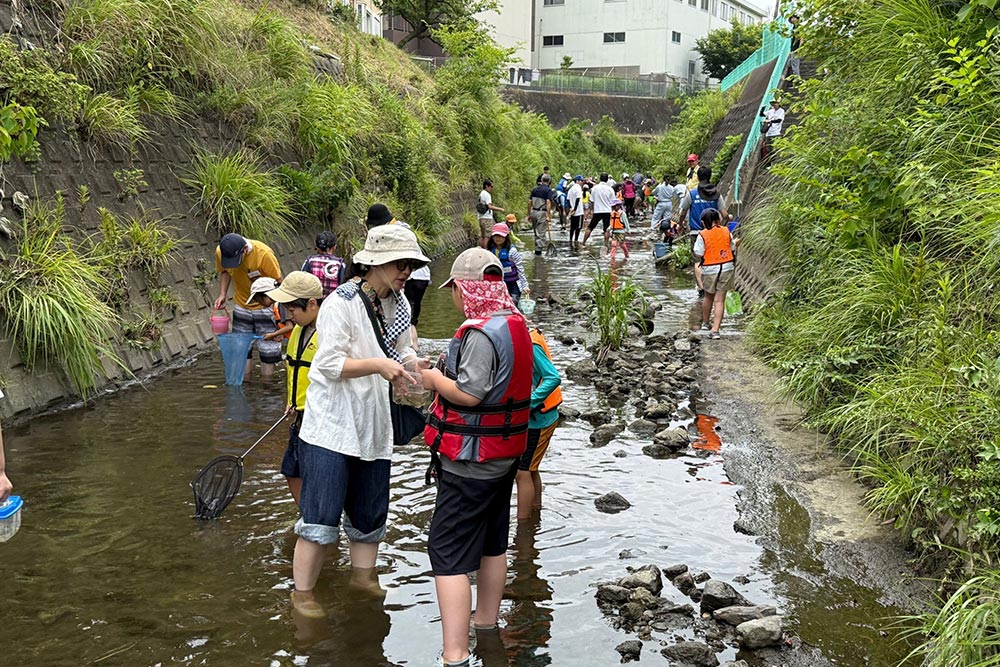
Tanaka: “Another example comes from the Maioka River, where an ex-junior high teacher has continued a hagurotonbo (or ebony jewelwing) survey after retirement. The activity began as part of a school science club and evolved into a multi-school effort, with collaboration needed to secure enough people and resources to keep the survey running. The team described a pattern of continuity in which students who participated later returned as university students to support the work. Yokohama’s staff joined this effort through the Mizube Report and filmed the activity, which was later selected for a Ministry of the Environment programme highlighting 100 ESD practices.” [The video can be viewed here. It is in Japanese, but intuitive enough to understand their process.]
Future plans for Yokohama Mizube Oshikatsu and the team
The team is exploring more ideas, including introducing initiatives by local businesses, and featuring Donburako in friendlier formats such as a manga comic and merchandise.
Nishimura: “We want to add more Yokohama Mizube Oshikatsu content in the near future. In Yokohama City, the co-creation spirit is also strong, and we want to push forward more and more collaborations where private companies and the city work together on something. We also want to communicate the initiative more widely, both in Japan and internationally.”
Tanaka: “Over the longer term, our aim is not immediate change in maintenance or physical works, but to increase the number of residents who pay attention to nearby watersides and grow their interest and affection for them. We would like to see people increasingly develop feelings such as ‘I like this waterside’ and ‘I want to cherish it’, leading to more self-driven participation in water environment conservation.”
[Website] Yokohama Mizube Oshikatsu Homepage (Japanese)More articles from Yokohama
- 2026-10-06: Meiji and TOPPAN begin paper yogurt cup recycling trial in Yokohama
- 2026-09-14: Circular culture hub Sta.R opens with 1-day festival on 19 September
- 2026-09-09: MUJI designs recycled uniforms for GREEN×EXPO 2027 with citizen clothing
- 2026-07-02: Yokohama hotel converts buffet fruit into zoo snacks to reduce food waste
- 2026-06-05: Yokohama to host circularity exhibition International Circular Expo in 2027