 Zenbird Editorial Team
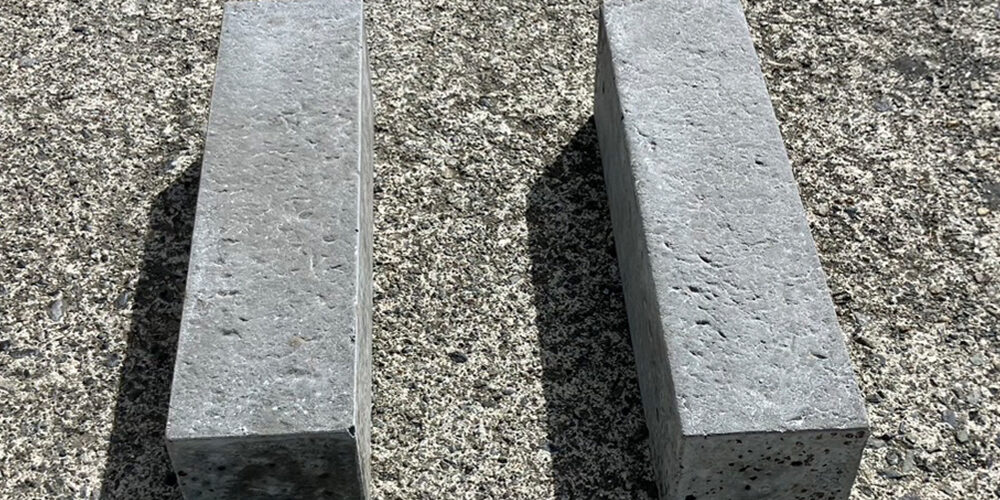
Hydrogen Technology Inc. has announced the first use of a low-emission “water glass” derived from its hydrogen production process in a cement-free geopolymer concrete. The new material was incorporated into Cemenon®, a geopolymer concrete, and used to manufacture non-reinforced concrete blocks for a construction project managed by the company. The new material reduces the carbon footprint of construction materials.
The production of cement, a primary component of conventional concrete, is a significant source of carbon emissions, accounting for approximately 8% of the global total. Geopolymer concrete, which does not use cement, has emerged as a promising alternative for decarbonising the construction sector. However, the production of water glass (sodium silicate), a common hardening agent in geopolymers, can carry its own environmental burden.
Hydrogen Technology Inc. addressed this challenge by utilising the water glass generated as a by-product of its hydrogen manufacturing. By replacing a portion of the conventional alkaline material in Cemenon® with this resource, the company has created a more sustainable building material. This substitution reduces the CO2 emissions associated with the concrete’s alkaline material by up to 15% compared to the existing formulation.
Cemenon® is a geopolymer concrete developed jointly by IKK Inc., Advan-Eng Inc., IHI Corporation, and Yokohama National University. It uses industrial by-products such as fly ash and blast-furnace slag instead of cement, which eliminates the high-temperature calcination process responsible for significant emissions.
[Reference] Hydrogen Technology Inc. Press Release (Japanese)