 IDEAS FOR GOOD
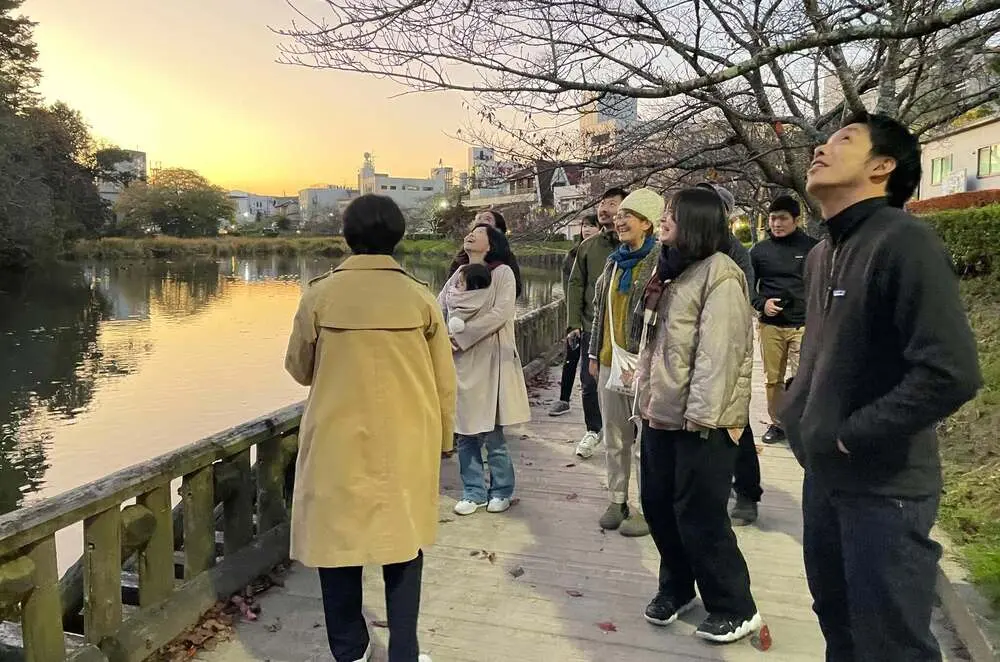
The landscape was completely white, making it hard to tell where you were. A thick blanket of fog had settled over the town, blocking out the morning sun and casting a wintry stillness across everything, despite it being only November. As midday approached, the mist slowly began to lift, and at last a gentle warmth shone over the town.

This is Kameoka City, nestled among deep mountains in Kyoto Prefecture. It is situated at the southern tip of the former Tamba Province, just a 20-minute train ride from the city centre of Kyoto. The town is known for its hot springs, scenic railway, and boat cruises along the Hozugawa River. With cherry blossoms in spring, azaleas in early summer, fiery autumn foliage, and snowy scenes reminiscent of an ink painting, Kameoka’s ever-changing natural beauty continues to attract visitors from across Japan and beyond.
Kameoka is also known as Kyoto’s leading grain-producing region and a key source of traditional Kyo-yasai vegetables. Rich in history, the city is home to cultural landmarks such as the ruins of Kameoka Castle, built by Akechi Mitsuhide, a retainer of Oda Nobunaga. In recent years, the city has embraced organic farming and regional revitalisation through art, such as the “Kameoka Fog Art Festival.” But now, the city is gaining a new identity, and it is one that is catching attention far beyond its mountainous borders.

Aiming for “zero waste”
With an eco-bag usage rate of 98%, Kameoka is aiming to become a world-leading sustainable city. The municipality has implemented a wide array of environmental initiatives, from being the first in Japan to ban plastic shopping bags, to installing more than 120 free water refill stations throughout the city. Events and festivals serve food in reusable dishes, local schoolchildren take part in river clean-ups as part of their lessons, and over 2,000 residents regularly volunteer in litter-picking activities. From local authorities to businesses and individuals, young and old alike, the entire community is involved in the push for zero waste.
To explore Kameoka’s bold initiatives, IDEAS FOR GOOD teamed up with “Gomi no Gakkō”, an organisation that promotes waste literacy, to host a two-day study tour. This is the first part of our report, sharing what we learnt from those directly involved in Kameoka’s zero-waste efforts, both in government and the private sector.
The way Kameoka engages with waste might just offer clues for how rubbish could one day cease to be “waste” at all, not only in Japan but across the world.
Hand-sorting waste and extending the lifespan of landfill sites
Our first stop was “Ecotopia Kameoka,” the city’s final waste disposal site, guided by three staff members from the municipal Resource Circulation Promotion Division: Tsuyoshi Yamauchi, Mitsuharu Onishi, and Shinya Tokura.
Nearly everyone generates waste daily, from food scraps to household items. But once we drop a bin bag off at the collection point, many of us stop thinking about where that waste ends up or what happens to it. How many people truly consider the journey of their rubbish?
At Ecotopia Kameoka, we saw staff painstakingly hand-sorting household waste. While there are guidelines for separating recyclables, in practice, some recyclable items still get mixed in with landfill waste. To address this, workers hand-sort combustible and landfill waste once again.
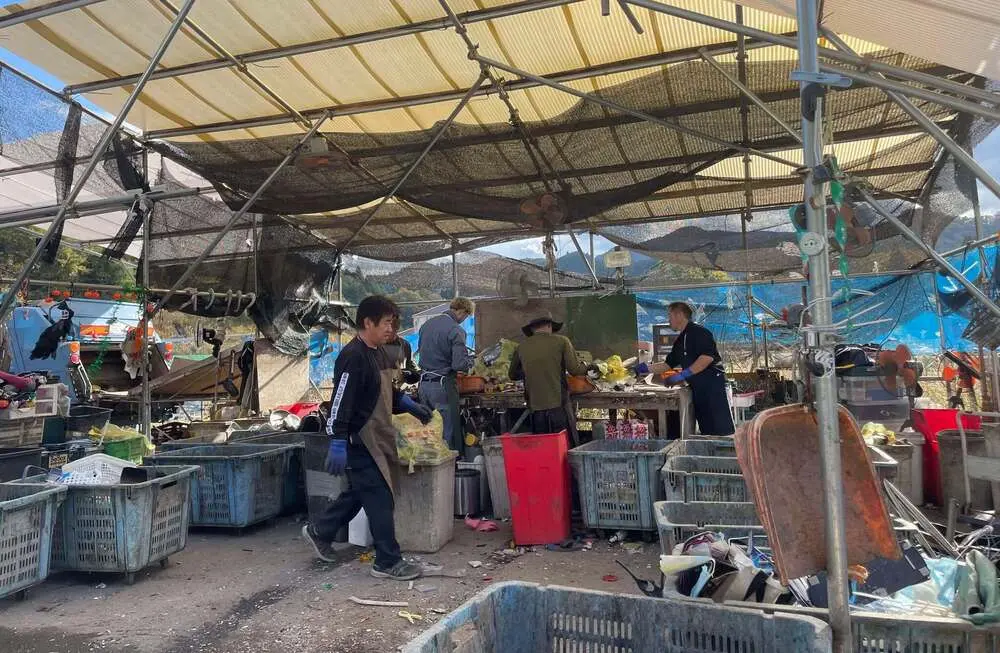
Onishi: “It’s labour-intensive, but this extra step reduces overall waste. We’ve cut combustible waste by 12% and landfill waste by 25%. The landfill site, once expected to reach capacity within 10 years, is now projected to last another 20.”
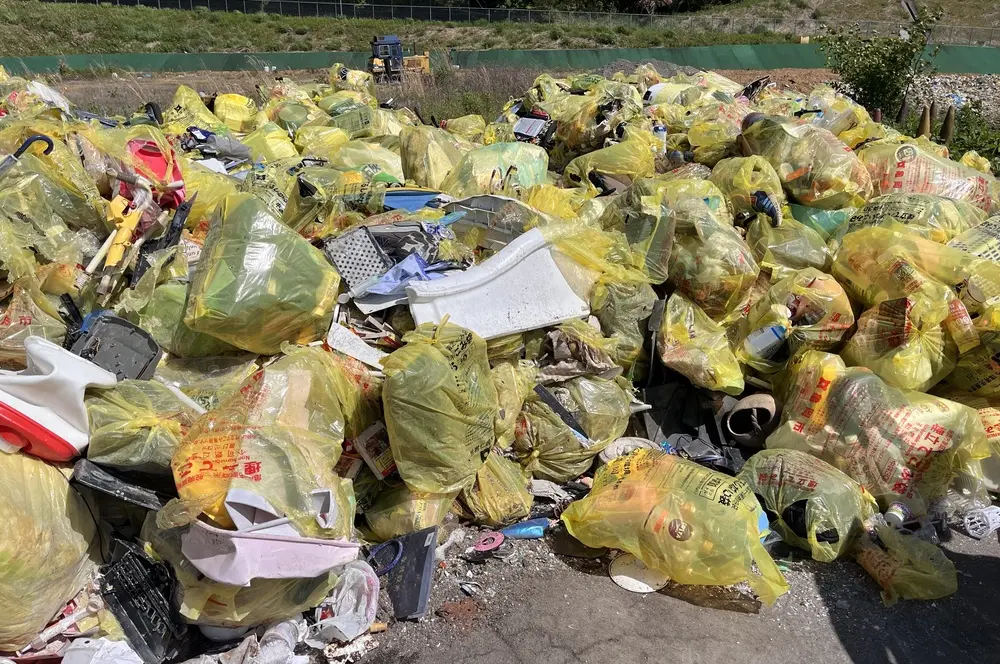
The physically demanding nature of hand-sorting, which is carried out in all weather conditions, prompted the city to adopt a new approach in 2023. It renamed its official rubbish bags with clear labels, “Combustible-only” and “Landfill-only” (signalling the kind of waste placed in each), in order to encourage residents to think more consciously about where their rubbish ends up.
Onishi: “Waste disposal costs the city around 1.1 billion yen a year. Building a new landfill would cost over 10 billion yen. Proper sorting helps us protect the environment and ensures residents’ tax money is used wisely. We’re also aiming to use recycled materials like PET bottles and hard plastics to produce the city’s official bin bags. That way, people can see the results of their sorting efforts come full circle.”
Recycling used nappies: an ambitious collaboration
As part of its broader recycling push, Kameoka launched a new initiative: recycling used nappies. In partnership with Nantanseisou Inc., a local waste and recycling company, and Osaka-based Hamada Co., Ltd., Kameoka began pilot testing in summer 2024.
We visited Nantanseisou to see the process. Surprisingly, soiled nappies retain relatively intact materials. Masayuki Terai, head of Gomi no Gakkō and leader of the nappy recycling project at Hamada, shared with us.
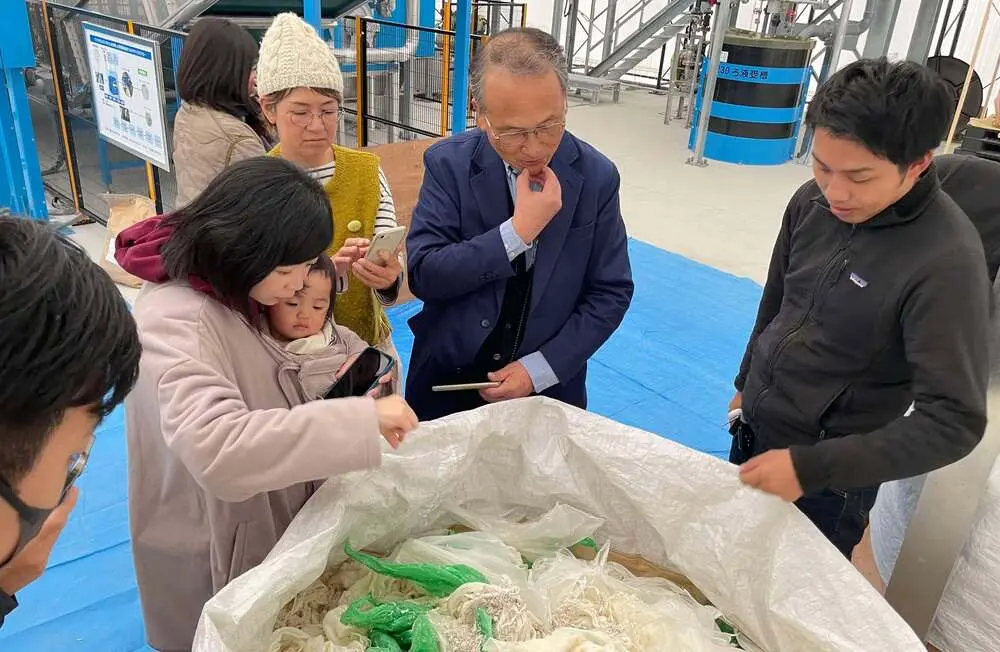
Terai: “If we can separate the plastic from the pulp and reuse both, that’s ideal. The process is similar to doing laundry. Used nappies go into a large drum, like a washing machine, where blades break open the packaging. A solvent dissolves the waste, and after about 90 minutes of rotating, plastics emerge first, followed by the pulp, which is drained, dehydrated, and shaped into new paper materials.”
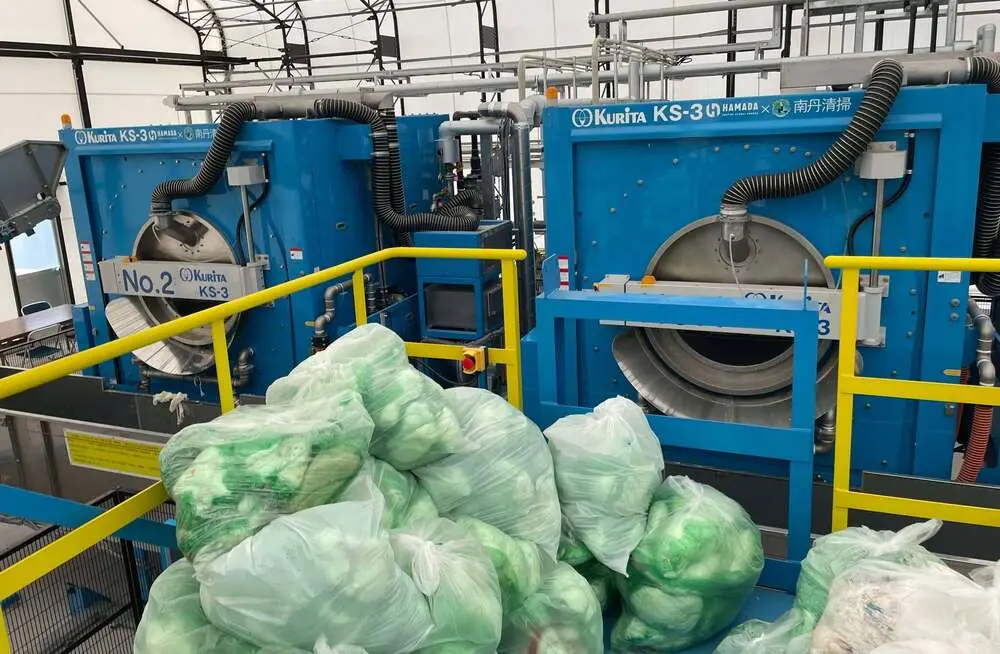
Currently, the trial collects nappies from nurseries, but the team hopes to expand to care homes and households, anticipating rising demand due to Japan’s ageing population.
Terai: “The challenge now is refining the extracted materials for broader reuse, and finding efficient, low-cost transport solutions.”
A river, a boatman, and the birth of a movement
Kameoka’s zero-waste movement can be traced back to its beloved Hozugawa River. Since ancient times, the river has been vital to the region’s timber trade, ferrying goods from Tamba to Kyoto and Osaka. But by the early 2000s, the river was choking with plastic waste, including styrofoam, bottles, and bags. Tourists on river cruises began asking: “Did you bring us here to see rubbish?”
Two local boatmen decided enough was enough.
“We didn’t want visitors to see our river like that.”
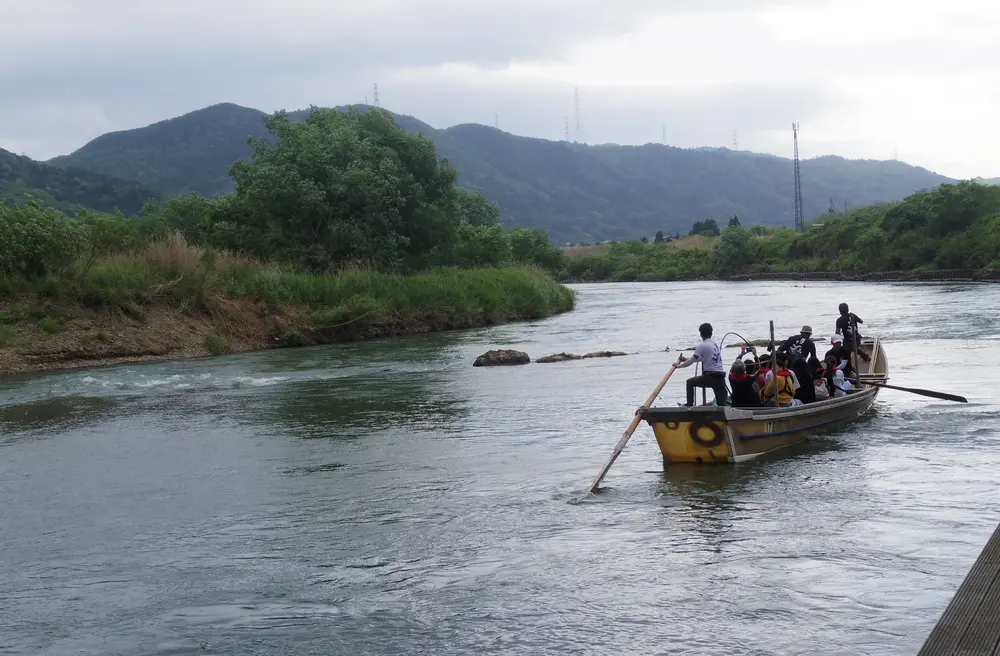
They began collecting litter from the river daily. Slowly, their numbers grew as more joined them. Today, some 2,000 citizens have signed up as “Eco-Walkers,” picking up rubbish during their walks around town once a month.
Yamauchi: “A single plastic bag can travel the 80km from Kyoto’s Arashiyama to Osaka Bay in just one day. Even one less bag makes a difference.”
Protecting the river has become inseparable from protecting the sea, our food chain, and our health.
From dialogue to legislation: banning plastic bags
The cleanup began in 2004. In 2012, local citizens launched “Project Hozugawa,” and in 2018, Kameoka hosted Japan’s first “Ocean Waste Summit,” despite having no coastline. The city followed with its Zero Emissions Plan in 2018 and “Plastic-Free Declaration” in 2019. Then in 2020, it passed Japan’s first ordinance banning plastic bags, which came into effect on 1 January 2021.
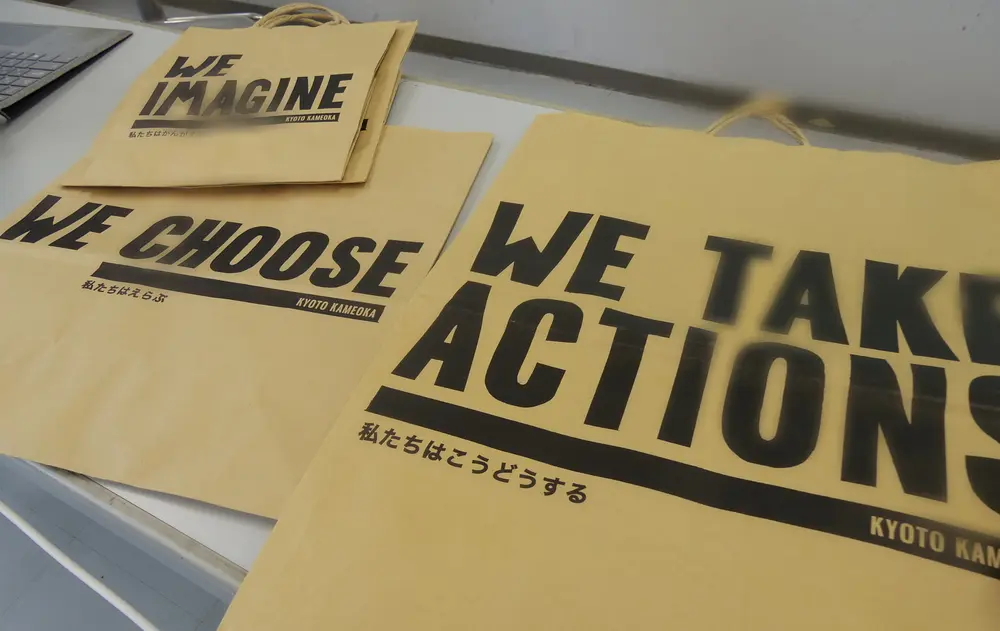
All plastic shopping bags are banned, regardless biodegradable or not. Only paper bags allowed, and even those are provided for a fee. Even global chains like McDonald’s and Starbucks must serve their customers this way. The path to implementing this first-of-its-kind policy in Japan, though, was far from easy.
Yamauchi: “There was pushback at first. Convenience stores and supermarkets worried about shoplifting or losing customers. So we held information sessions and explained our intentions carefully. Once people understood, the concerns disappeared.
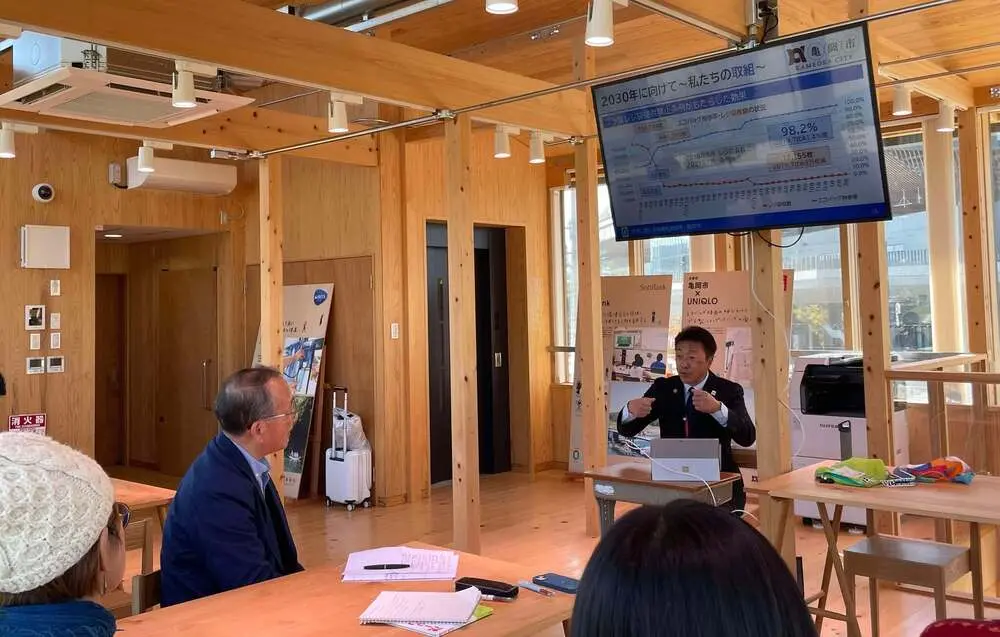
“Before the ban, the average person in Japan used around 300 plastic bags per year. We felt that changing individual behaviour in small ways was the key, what we call ‘micro-change.’ Ordinances like ours provide everyone with a framework to take that first step.”
Fashion meets sustainability: The HOZUBAG
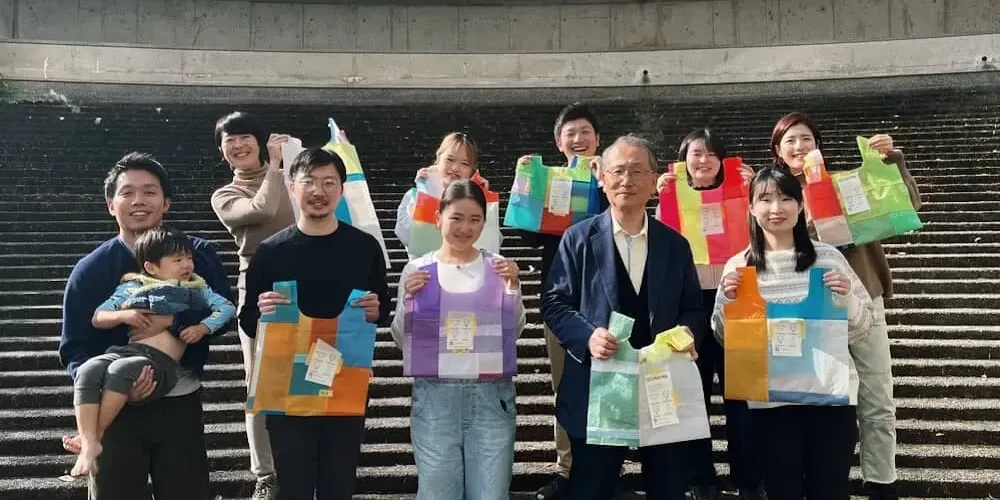
To make that first step of bringing a personal bag more enjoyable, Kameoka teamed up with local artists to create stylish and durable eco-bags made from upcycled paragliders. The result was the HOZUBAG.
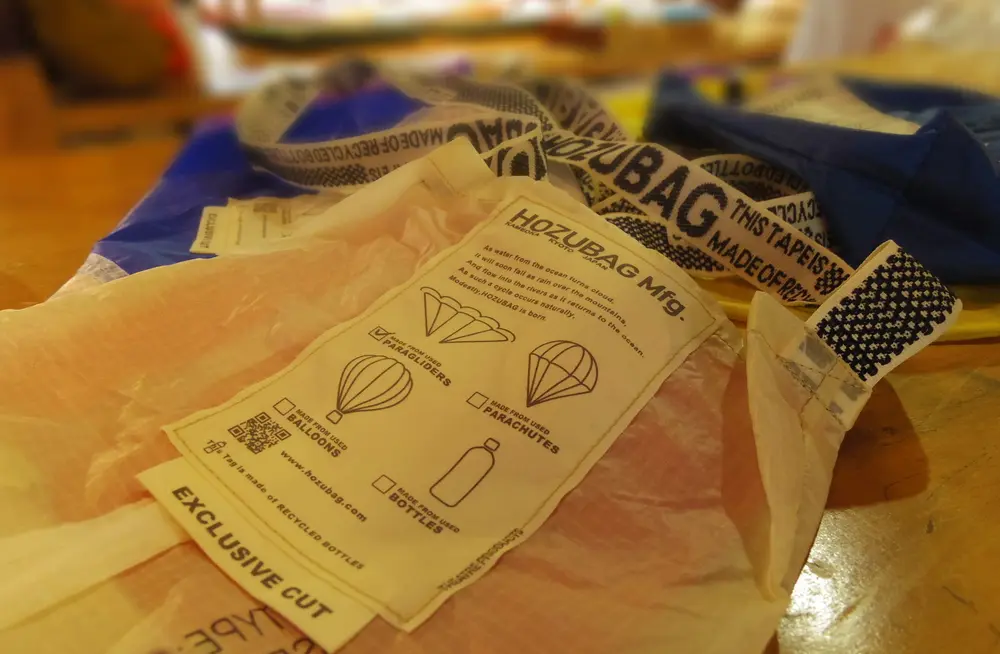
Originally launched as a workshop in 2019 during the Kameoka Fog Art Festival, participants cut their own bags from massive 7~8 metre sheets. What began as a one-off event evolved into a full-fledged project, complete with a local base providing jobs and driving circular economy efforts. Made from donated gliders collected from schools and individuals across Japan, HOZUBAGs have been showcased in Paris and sold in New York.
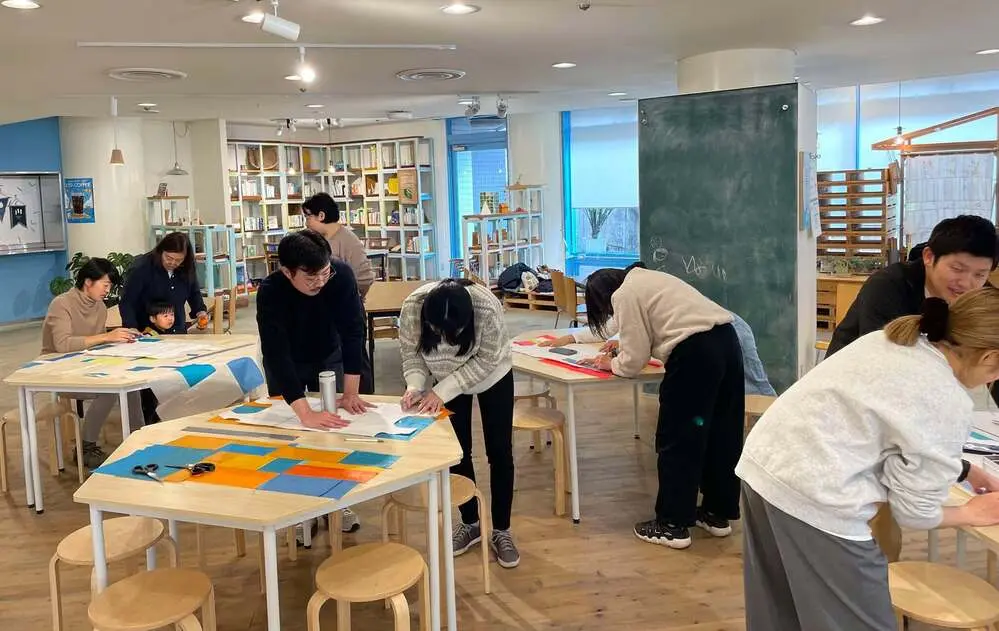
Yamauchi: “Even if someone carries a HOZUBAG just because it looks cool, they’re still part of the movement. Design matters. If we want sustainability to last, it has to be smart, stylish, and enjoyable.”
Building a community through waste
From refill stations to reusable dishes, from bottle collection schemes to bartering markets, Kameoka is full of initiatives that encourage people to reconnect with the environment and with each other. These projects don’t just reduce waste; they strengthen the fabric of the community.
Yamauchi: “Environmental action is vital. But what we’re really aiming for is to build a vibrant, connected town. We want to support families, not just green policy. Local government can’t do it alone. We need the support of residents, businesses, and everyone in between.”
In Kameoka, environmental action is not about rules or sacrifice. It’s about connection, creativity, and collective joy. And in that joy, the future feels a little bit brighter for the town, for its people, and for the planet.
Original article written by Tomoko Ito, published on IDEAS FOR GOOD.
Translated by Zenbird Editorial Team.
[Reference] Gomi no Gakkō (Japanese)
[Reference] KAMEOKA CITY (Japanese)
[Reference] HOZUBAG
[Reference] hozugawa – kudari (Japanese)