 Zenbird Editorial Team
The historic Nihonbashi district will host its annual “ECO EDO Nihonbashi” event from 11 July to 11 August 2025. This month-long event will bring Edo-Period-inspired cooling rituals to Tokyo’s Nihonbashi, Yaesu and Kyōbashi districts, inviting residents, office workers and visitors to experience wisdom-based responses to today’s extreme heat.
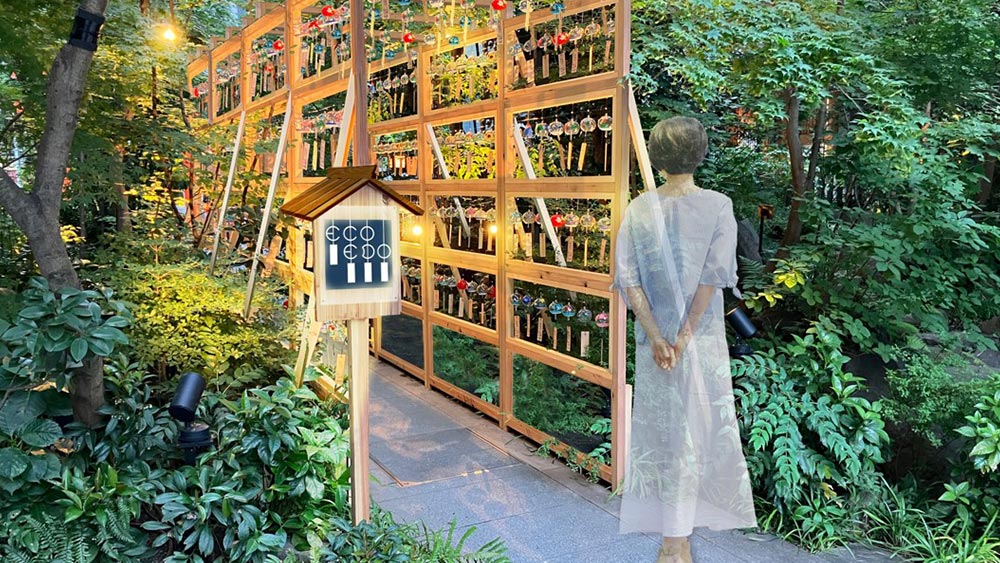
Some 250 hand-blown Edo glass wind chimes will hang in a tunnel along the tree-lined path beside Fukutoku Shrine. Their crystalline tones, amplified in evening light-ups, aim to lower perceived temperatures. Research on acoustic cooling suggests gentle high-frequency sounds can make ambient conditions feel up to two degrees cooler without extra energy use.
From 11–13 July, a shaved-ice festival will gather kakigori artisans from around the country, while about 160 shops and restaurants will serve limited “eco-Edo” menus and hand out paper fans with every order.
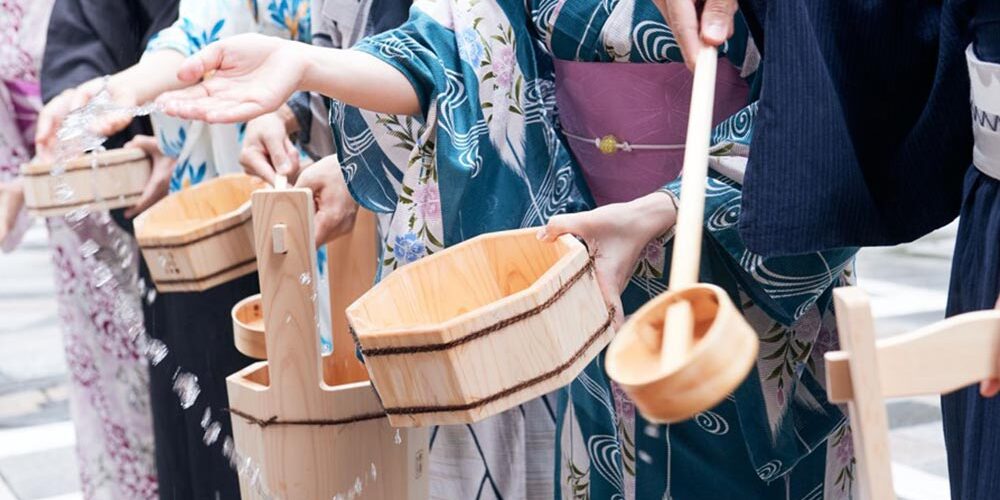
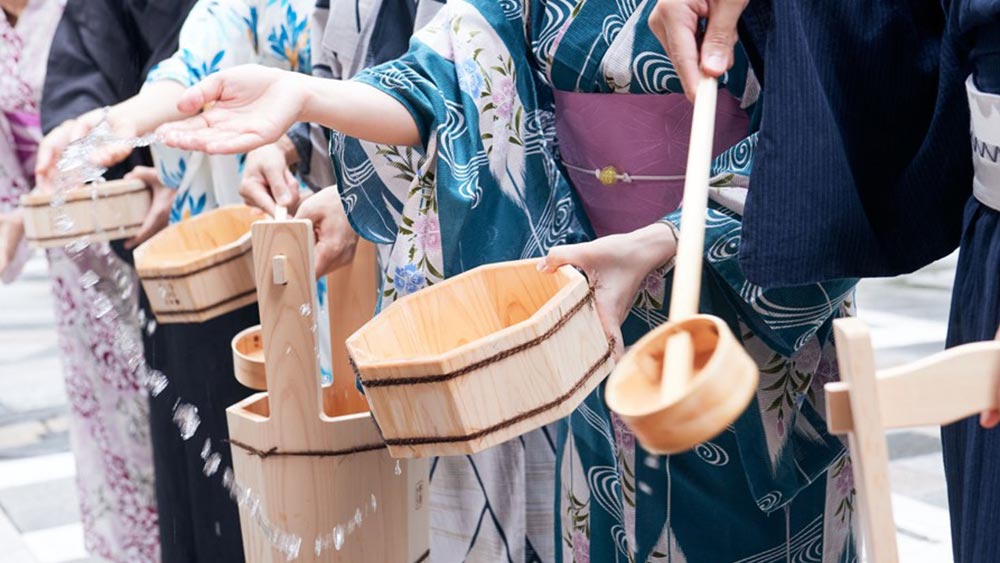
Two midday uchimizu sessions on 11 and 26 July will display the Edo-period practice of sprinkling water on pavements to cut street-level heat. Research show the technique can drop surface temperatures by up to six degrees Celsius and air temperatures at pedestrian height by around 1.5 C, offering a zero-carbon complement to air-conditioning.
Japan’s Meteorological Agency logged its hottest year on record in 2024, averaging 1.48 C above the 30-year norm, and a new top-tier heat-stroke alert was introduced this spring after scientists linked last summer’s 40 C highs to human-driven climate change. Tokyo officials now stress that neighbourhood measures such as shade and reflective surfaces must accompany large-scale infrastructure.
To encourage behavioural change, pop-up “Yukata Stations” will rent lightweight summer kimono and offer dressing services; a three-day “Yukata Workday” urges local employees to adopt cooler attire at the office, echoing the long-running Cool Biz campaign.
The organisers hope the festival will demonstrate how traditional wisdom can be used by the community to adapt to the rising heat.
[Website] ECO EDO Nihonbashi[Related article] How ancient Japanese stayed cool using 5 senses during summer | Zenbird