Roger Ong
The Agematsu Town Tourist Information Center is small in the best possible way. A welcoming abode beside the Agematsu Station, and the surrounding powder snow was still mostly unfettered by human traffic. It felt like the sort of place you would stumble into in a Ghibli film.
Agematsu is a cosy town tucked into the Kiso region of Nagano Prefecture, and it wears white winter’s coat well. Agematsu Town Tourist Association arranged for a tour around the town, and this was starting point where our group gathered. Some of the participants were meeting for the first time, but the mood was instantly friendly, as we checked our gear against the snow weather. Even in the morning cold, spirits were high.

Our guide kicked things off as we walked towards Mt. Atago, which watches over Agematsu. Before we even got into the history of the town, the guide shared a story about Japanese gods connected to the mountain. It was the perfect opening, building the atmosphere with several legends that originated from the town. Exploration of Agematsu felt a little more mysterious!
The first portion of the tour focused on the Nakasendo trail, one of the main Edo-period highways linking Kyoto and Edo. It was lined with post towns where travellers ate, rested and stayed overnight. The various groups of travellers gave the opportunity to shape the town, whether it be in terms of accommodation services, gift-giving culture or spiritual support.

Agematsu’s post town also grew as a timber and logging hub under the Owari Domain’s influence. In the Edo period, it was known for hosting forest administration in the valley and reportedly had a notably large number of inns for the Kiso region. As we walked (which was surprisingly pleasant!), we learnt how the Nakasendo shaped trade and travel, and the specific role Agematsu played as resources passed through the region. We also learnt how town planning evolved across eras, including going through fires that affected the town.

By the time lunch came around, we were ready for something warm. We stopped at Jumyo Soba Echizenya, founded in 1624, which makes it roughly 400 years old. Echizenya’s house speciality is its pale Jumyo Soba, often described as noodles using choice inner portions of buckwheat. Many of us went for sunki soba. Sunki is a traditional Kiso-region pickle made from the leaves and stems of red turnip, historically developed in the mountains as a practical winter preserved food. It paired excellently with the soba, becoming our comfort food in the cold weather.

After warming ourselves with soba, we visited the nearby Bentendo. We were graced by a magnificent view of the Nezame-no-toko Gorge. In winter, the gorge has a dramatic, storybook-like presence. Nezame-no-toko is strongly tied to a local Urashima Taro and the Dragon Palace legend. Urashima is said to have reached Nezame-no-toko and lived there for a time, enjoying the scenery and life by the river.

Next, we moved to Kinoshita Shoten Seihashijo to visit a chopsticks craftsman. The workshop uses local resources, including precious cypress, and we could feel immediately that wood holds a special presence in this region.

The Kiso region is famous for exceptionally high-quality hinoki cypress (often known as “Kiso hinoki”). In places like Akasawa Natural Recreational Forest, you can still find natural Kiso hinoki over centuries year-old. Historic restrictions by the Owari Domain helped protect these forests, contributing to the survival and reputation of Kiso timber. This timber has also been part of the supply for Ise Jingū’s periodic rebuilding, a cycle that depends on careful forest management and long-term thinking.

We were impressed by the craftsman’s innovative spirit, having built and refined the methods and machines needed to bring their 44 types of chopsticks to reality. Sometime “traditional craft” seem to be misnomer, remembering how craftsmanship constantly evolves and innovate to stay revelant in modern times.
To close out the day, we got a chance to make our own chopsticks using the same valuable cypress used by Kinoshita Shoten Seihashijo. However, instead of relying on the workshop’s machines, we used traditional carpentry moulds and tools to make our own chopsticks, slowly.

The method was simple in theory, but it took real effort and thought to create something that felt right in the hands. By the end, the pair we made feels levels-more valuable than any mass-produced set. Experiencing the time and skill behind the origin an object, inspires us to maintain it, to care for it.
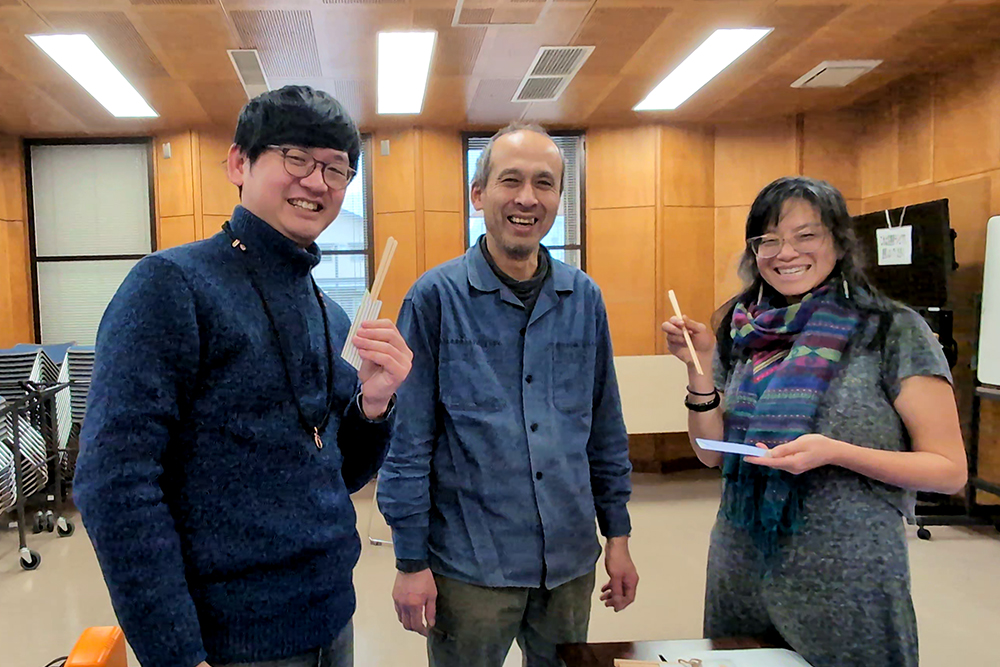
The Saturday we joined the tour was one of the coldest days of the season, and snowfall falling more than before. And yet, the warmth of the guides and the serene of Agematsu kept our minds occupied with wonder. We moved through history, food, stories and natural resources in a personal way.
There was a lingering sense of coexistence, as the tour hints how Agematsu evolved through society and environment. There is a strong relationship in the timber legacy, the food culture, the travel history, and the craft that turns a local tree into something of everyday use. Given more time, we might be even be awed by uncovering more in Agematsu and the region.
Here is a short video about the sights and attractions:
[Website] Agematsu Town Sightseeing Guide