 Zenbird Editorial Team
Taisei Rotec Corporation has successfully completed their demonstrated a circular model that addresses both regional waste and urban heat. The company tested CF Mix, an environmentally friendly pavement material made from unused resources such as scallop shells and lignin. During a heatwave in the summer of 2025, where temperatures reached 38.4 degrees Celsius, the material reduced road surface temperatures by up to 18.7 degrees compared to conventional asphalt.
The CF Mix technology has a focus on carbon fixation, using high-purity calcium carbonate derived from scallop shell by-products. The company minimises carbon dioxide emissions during production by skipping high-temperature firing processes usually required for construction materials. This allows the inorganic carbon absorbed by the scallops from the ocean to remain locked within the pavement structure over the long term. The natural whiteness of the shells also brightens the road surface, reflecting sunlight to prevent heat absorption.
In addition to shells, the mixture incorporates Lignova, a high-purity lignin extracted from forest residues and thinning wood. Traditionally, such wood waste is incinerated for energy, which releases stored carbon back into the atmosphere. By using lignin as a substitute for petroleum-based asphalt, the project ensures that biogenic carbon remains stored in the infrastructure. This approach also reduces the supply chain emissions associated with importing crude oil.
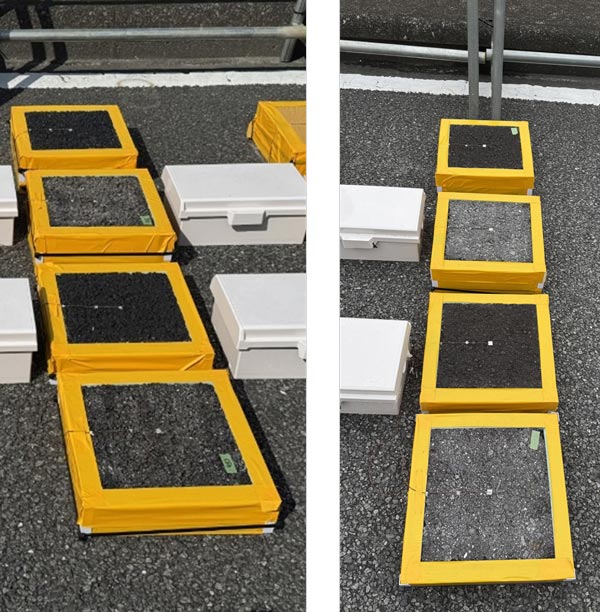
The demonstration took place on the Tokyo Expressway, also known as the KK Line, an environment with no shade from trees. Between August 2025 and February 2026, sensors monitored surface temperatures 24 hours a day. On the hottest day, standard asphalt reached 74.4 degrees, while the CF Mix interlocking blocks remained at 55.7 degrees. The cooling effect does not rely on water evaporation, making it effective even during prolonged dry spells.
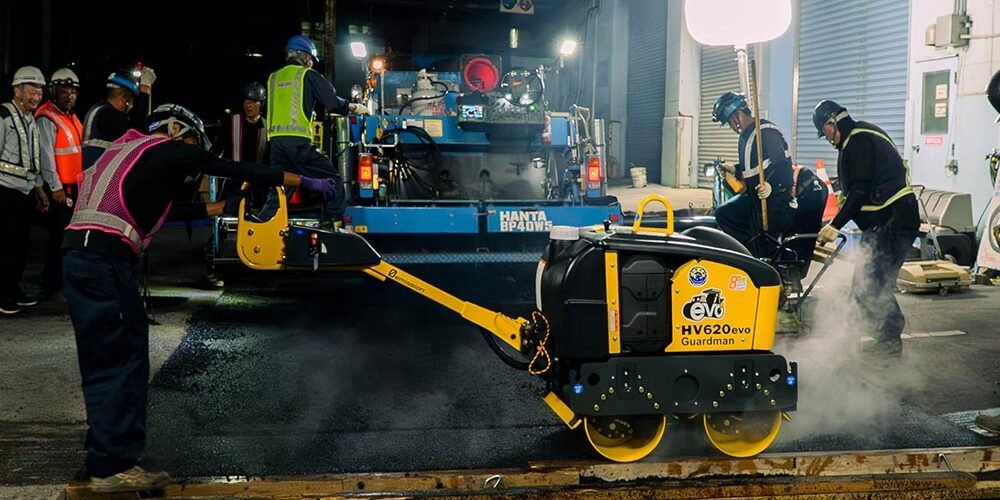
Taisei Rotec also took efforts around decarbonisation across their supply chain. During trial construction in Jonanjima, the company used construction machinery powered entirely by next-generation biofuels and electric vehicle rollers. To reduce transport emissions, the company shifted from truck-based logistics to rail transport for moving shell materials from Hokkaido to Tokyo. This modal shift addresses both carbon reduction and the national shortage of truck drivers.
Research conducted by Meiji University confirmed the engineering viability of the material. The study found that replacing 50 per cent of fine aggregates with calcium carbonate maintains high strength and dimensional stability. The university estimated that one cubic metre of the concrete mixture can store approximately 158 kilograms of carbon dioxide.
Taisei Rotec intends to promote this system as a standard model for sustainable infrastructure, combining regional waste management with urban climate adaptation.
[Reference] Taisei Rotec Notifications (Japanese)