 Zenbird Editorial Team
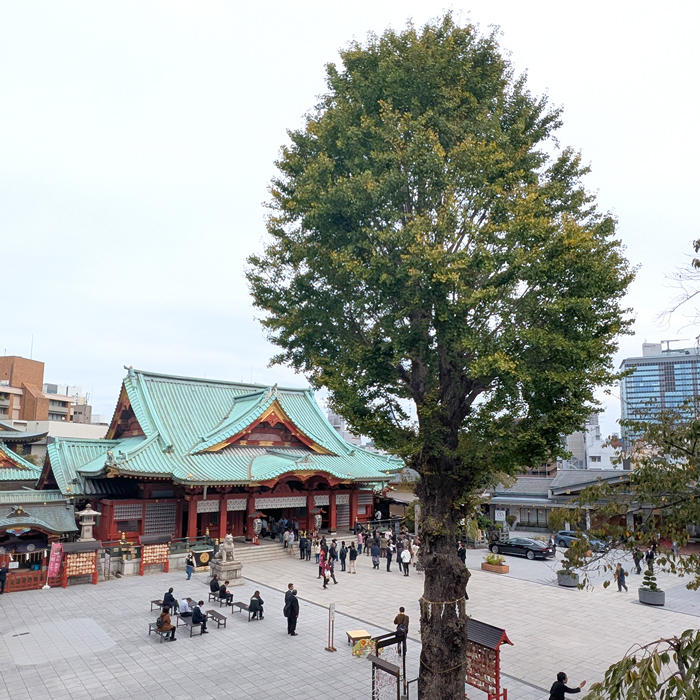
Fine weather presided over Kanda Shrine, a Shinto shrine with more than 1,000 years of history. Founded in 730 near what is now Ōtemachi and later moved to this hillside site in the early Edo period, it became Edo’s guardian shrine and now hosts the famed Kanda Matsuri.
On the grounds stands the famed ginkgo which watches over the precincts. It began as a sprout that survived the 1923 Great Kantō Earthquake, and today stands as a symbol of resilience and growth.
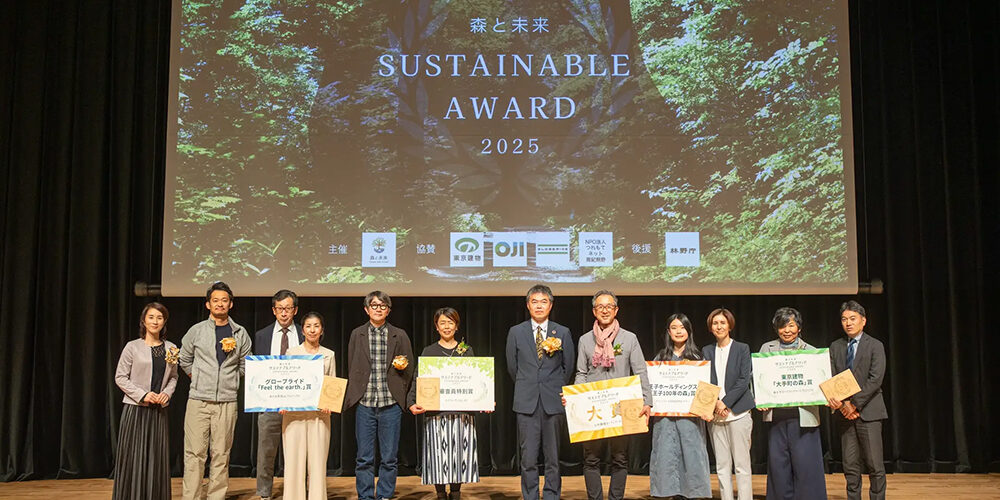
Kanda Shrine lent the day an added sense of ceremony. On 29 October, the Future with Forest Association hosted the Future with Forest Sustainable Award 2025. The award ceremony at the shrine’s Kanda Myojin Hall recognised individuals and organisations advancing ideas and ventures under the theme “Envisioning a future 100 years from now with forests at its heart.” It was also a celebration of Future with Forest’s 10th anniversary.
Led by Representative Director Nagisa Ono, the Future with Forest Association aims to build a sustainable society where people and nature thrive together by nurturing well-being and stewardship through forest-based experiences and related programmes. The Future with Forest Sustainable Award 2025 is the inaugural edition, and the winners, picked by outstanding judges, were truly inspirational.
Winners of the Future with Forest Sustainable Award 2025
Future with Forest Sustainable Award 2025 Grand Award: Code for Ground (Code for Japan)
The Grand Award of the Future with Forest Sustainable Award 2025 went to Code for Japan for Code for Ground. It is a voluntary organisation that focuses on the soil, watersheds, and water cycle connecting mountains, villages and the sea.
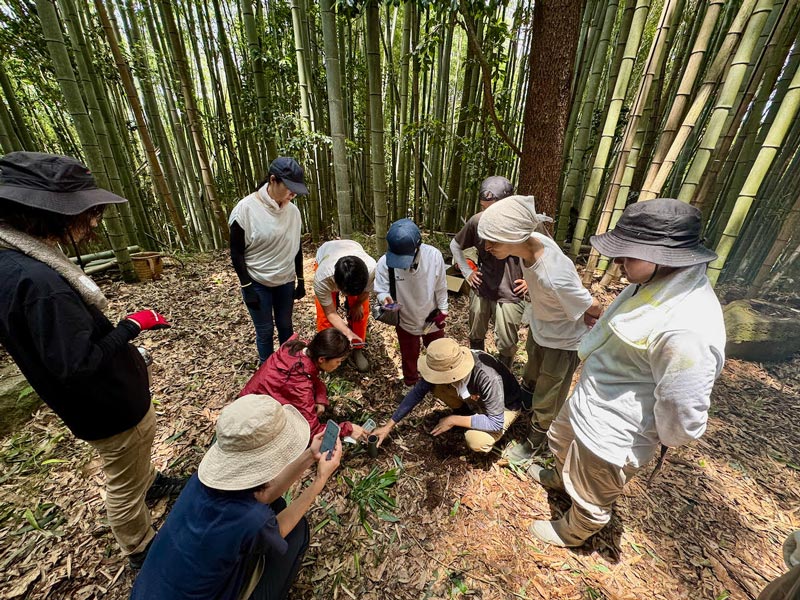
Code for Ground assesses the condition of soil by measuring the quality of percolating water (such as nitrate nitrogen and pH) and its quantity (how much the soil retains). It’s like using a thermometer or a blood-pressure cuff to diagnose the health of the land. Based on observation and measurement, they hold discussions and carry out small civil works, making environmental proposals and taking action.
They aim to build a system that lets individuals and organisations measure and share data. The project seeks to create an open-data infrastructure that visualises the water cycle, enables communities to review land use and, in time, informs government policy and corporate practice.
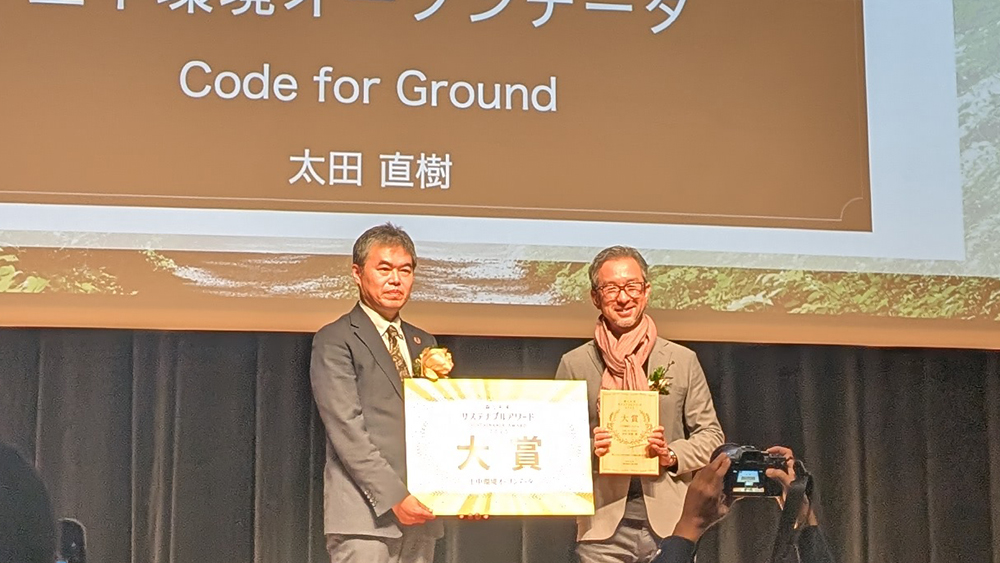
Naoki Ota, Code for Japan: “We provide substantial intermediary support for measurement, especially if you are undertaking activities like this and wondering about the health of the land, be it in forests, farmland or city neighbourhoods. We aim for a cycle in which we observe and measure nature to gauge its health, then discuss, share and act, and bring in people from many lines of work across each watershed. Even now, children, young people, working-age adults and elders from many occupations gather to take measurements together. In the short term, we want to embed this firmly in daily life.“
Judges’ comments: “Code for Ground offers an opportunity to understand and appreciate the relationship between forests and people, and the roles forests play. At the same time, the path rain takes from mountains to rivers, and the changes in its components along the way, are extremely complex and hard to grasp. It remains an area where many researchers are at work. With many people taking part in measurements, the project prompts reflection on the relationship between forests and people.”
Code for Japan HomepageGLOBERIDE “Feel the earth.” Award: Meguru Hikosan Project (Yama to Meguri Association)
The winner of the GLOBERIDE “Feel the earth.” Award is Yama to Meguri Association’s Meguru Hikosan Project, a project designed to help participants discover the circulation of life related to the forest.
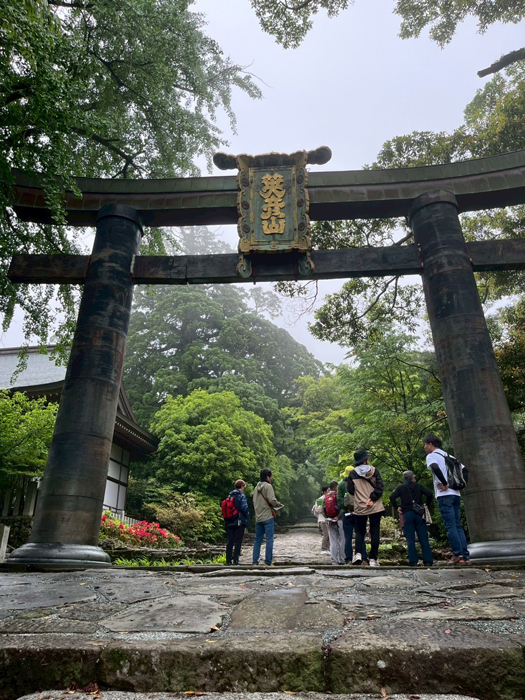
The Meguru Hikosan Project leads two intertwined efforts on Mount Hiko: a wellness tourism programme and hands-on environmental restoration. Its wellness tour, “Hikosan Wellness Journey,” invites visitors to enter the forest as participants (not just sightseers) in a reflective experience based on Shugendō, the mountain ascetic tradition that seeks unity with nature. Mount Hiko was once the largest sacred site of Shugendō in Japan, and practitioners of Shugendō understood that connecting with nature gives us the strength to live.
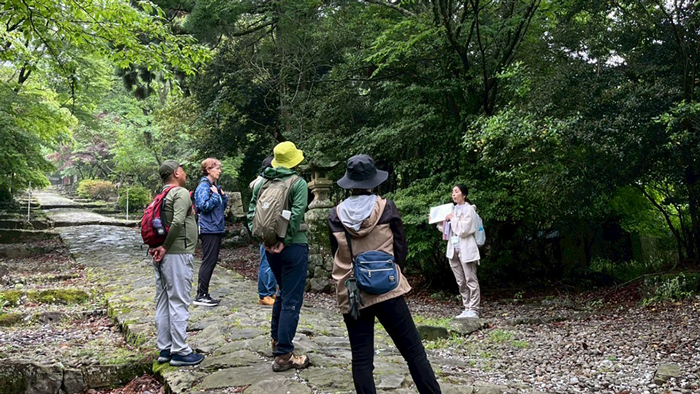
To keep that bond alive, the project restores the local environment by creating “Meguri no Mori” (Circulating Forest). This work responds to the decline in the communities and practices that once sustained Mount Hiko’s forests and temple lodgings. By caring for the mountain’s ecosystems, the project revitalises the local community and renews awareness of the mountain–sea relationship.
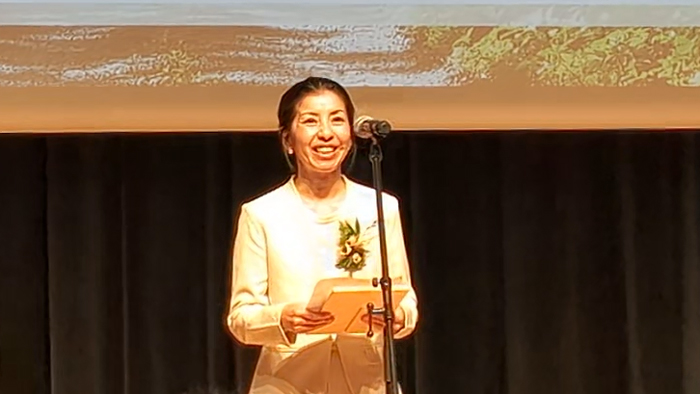
Yuko Morishita, Yama to Meguri Association: “Protecting mountains nurtures river basins and, in time, enriches the sea. From Mount Hiko, we hope to build a society where the relationship between people and nature circulates abundantly. The forest we aim for is a place where life circulates and people, as part of that life, breathe in good health. It is where daily life and cultural practice overlap, and their cycle shines as a single living whole. That is the kind of forest I wish to create, beginning at Mount Hiko.”
Judges’ comments: “Problems are emerging everywhere. One solution is to restore forests. [GLOBERIDE’s] core business is fishing, and we hear from many researchers that forests and the sea are closely connected. Nutrients from deciduous leaves wash to the sea, where the food chain begins. If this mechanism can be realised through Ms Morishita’s work, we believe it could spread to many other forests.”
Yama to Meguri Association HomepageOji Holdings Corporation “Oji 100-year Forest” Award: Chainsaw Logging Tour (Hyakumori Inc.)
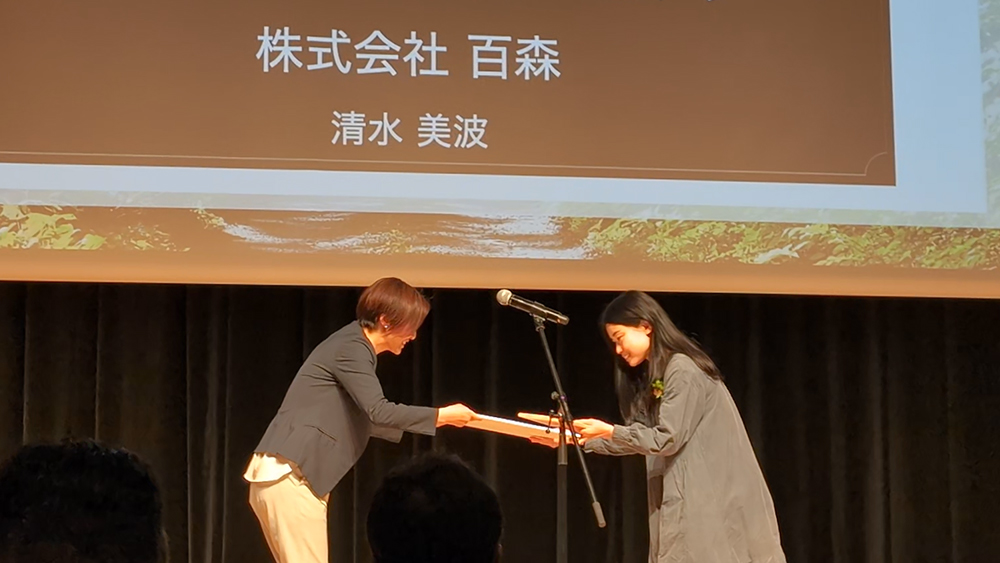
Hyakumori Inc.’s Chainsaw Logging Tour was awarded the Oji Holdings Corporation “Oji 100-year Forest” Award for their three-day hands-on logging tour designed for participants with no prior chainsaw experience.
Hyakumori consolidates and manages the forests of Nishiawakura Village in Okayama Prefecture. A major challenge for forestry is creating value beyond timber. With that in mind, they organise and run forest-based events, activities and training programmes while advancing biodiversity initiatives.
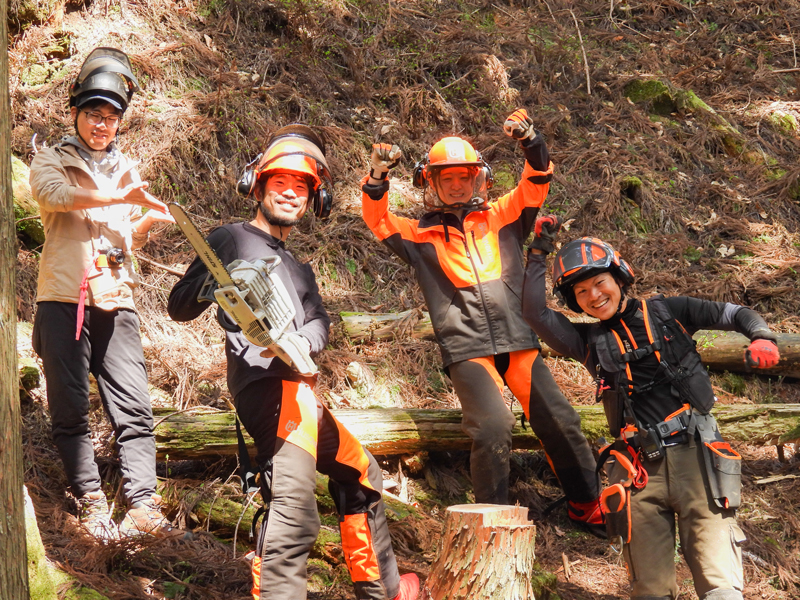
The Chainsaw Logging Tour is a project they have been developing for about three years as one strand of forest utilisation. They adapted the legally mandated “special training” course for chainsaw tree felling, turning it into a tour the public can enjoy, like skydiving or scuba diving. The idea is that delivering a high-quality, enjoyable activity is the first step towards prompting people to rethink their relationship with forests.
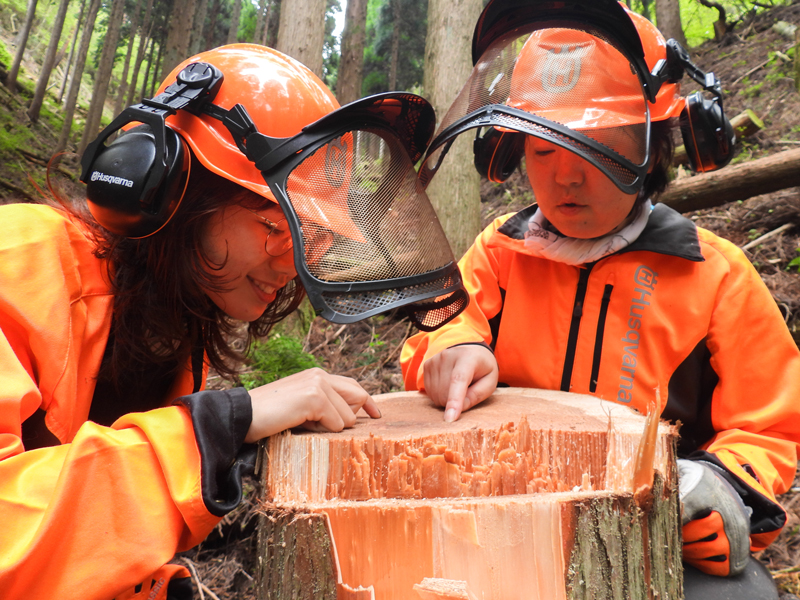
Minami Shimizu from Hyakumori Inc.: “On this tour, we do more than pass on knowledge. By getting participants moving, letting them handle tools and having them talk with instructors, we encourage them to consider what it means for the forest to relate to them and vice versa. We hope this helps people reflect on their own relationship with the forest. Even for those who rarely engage with forests, we want them to experience first-hand the journey of timber.”
Judges’ comments: “This year’s award theme is ‘Drawing a future 100 years from the forest.’ Hyakumori is managing Nishiawakura Village’s forests from a century-scale perspective. They have also built programmes that, through hands-on experiences rooted in their core forestry business, communicate the importance of forests to a wide audience. Looking ahead, we would like to collaborate from our shared core in forestry.”
Hyakumori Inc. HomepageTokyo Tatemono “Otemachi Forest” Award: Christmas Wreaths for Forest Conservation Project (Christmas Wreaths for Forest Conservation Association)
The Tokyo Tatemono “Otemachi Forest” Award was presented to Christmas Wreaths for Forest Conservation Association for their “Christmas Wreaths for Forest Conservation Project.”
In Japan’s forests, branches and leaves from felling and pruning often have nowhere to go and are discarded. The association sees them not as waste but as gifts from the forest, giving them a second life as Christmas wreaths.
They raise funds through crowdfunding and work with the floral industry to run hands-on workshops to make Christmas wreaths. Part of the support received is channelled back into forest conservation and into programmes that give children firsthand experiences in the woods. Making and displaying a wreath is, in itself, an act of nurturing the forest.
They currently partner with seven satellite forests across seven locations, and the project is funded through crowdfunding. Their aim is to work with forests in all 47 prefectures and expand the network of satellite forests. They seek to build a network that reconnects forests and cities as part of Japan’s culture.
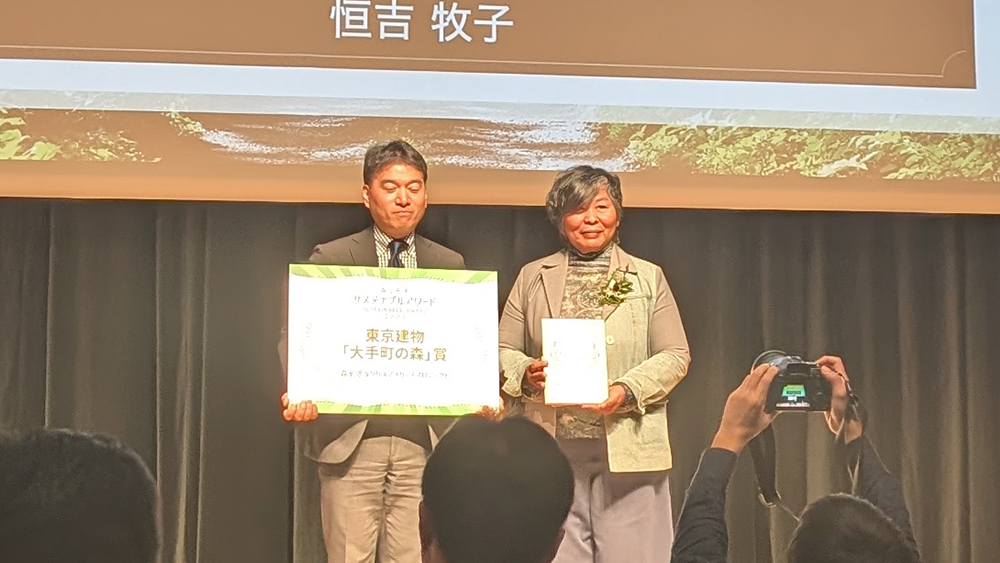
Makiko Tsuneyoshi from Christmas Wreaths for Forest Conservation Association: “This story of the forest that begins with a single wreath is, truly, a challenge to save forests through design. This award is not mine alone. It belongs to the foresters who provide materials from the woods, the flower designers who honour the beauty of blooms, and friends across the country who sustain this work. The commitment of each person led to this recognition. To leave beautiful forests for children 50 or 100 years from now, we hope today’s children will grow to care deeply about them. That hope drives our work.”
Judges’ comments: “Members of the Christmas Wreaths for Forest Conservation Project have developed a remarkably broad range of activities, including foothill forestry experiences, lumberjack tours and workshops. From our view, this breadth is a major hallmark of the project. They also provide children with opportunities to plant hinoki cypress saplings and join various nature experience tours. This enables diverse nature-based learning. We find this truly admirable and were deeply moved.”
Christmas Wreaths for Forest Conservation Association HomepageSpecial Jury Prize: Caring Forest (Heritage Keeper LLC)
The judges also awarded a Special Jury Prize, which went to Heritage Keeper LLC’s Caring Forest programme. Rooted in the concept of forest bathing (shinrin-yoku), the programme reexamines the meaning of “care” through inclusive experiences codesigned with healthcare professionals.
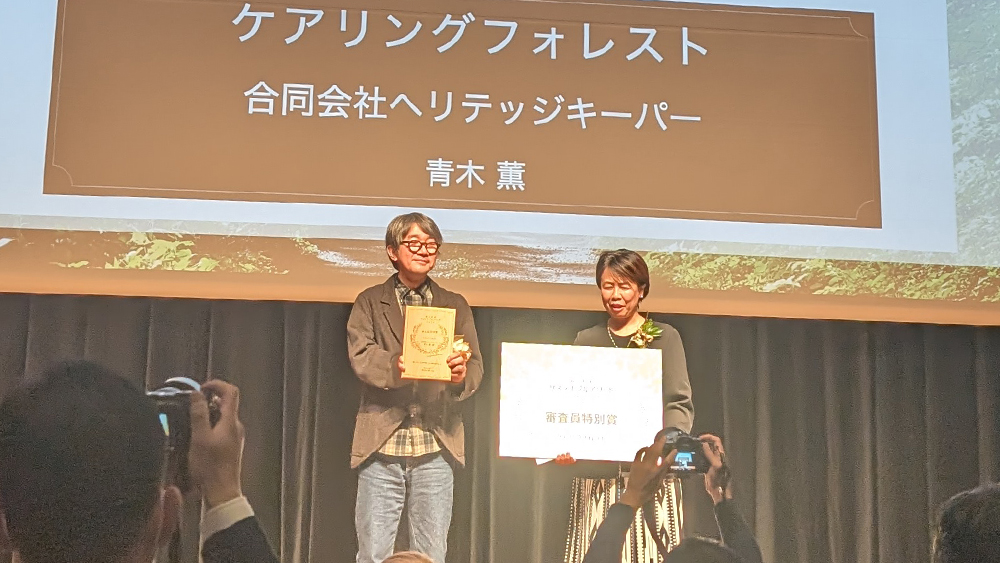
Heritage Keeper’s mission is to conserve Tsuchizawa Forest, a 13-hectare satoyama woodland in Sagamihara City, Kanagawa Prefecture, and to pass the forest to the next generation to enjoy through activities such as forest bathing and mountain biking. The Caring Forest Programme is inspired by the benefits experienced by those who spend time in forests.
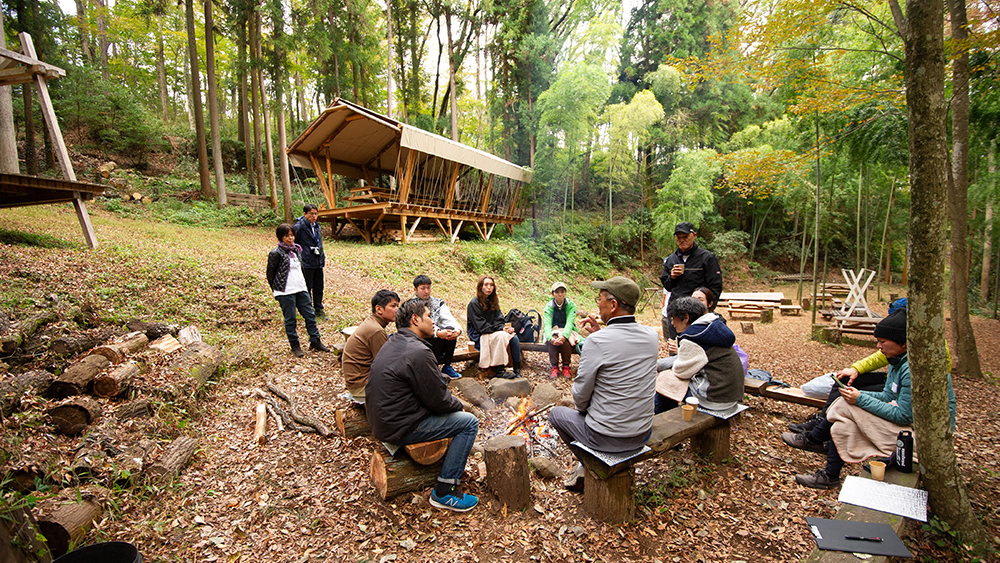
The programme has two stages. The first stage is a training programme for people who provide care in fields such as childcare, education, elder care and health care. Participants learn about the effects of forests on human growth and health, how to spend time in the forest, and safety management practices. Through a forest bathing programme, carers receive care themselves, deepening their understanding of care.
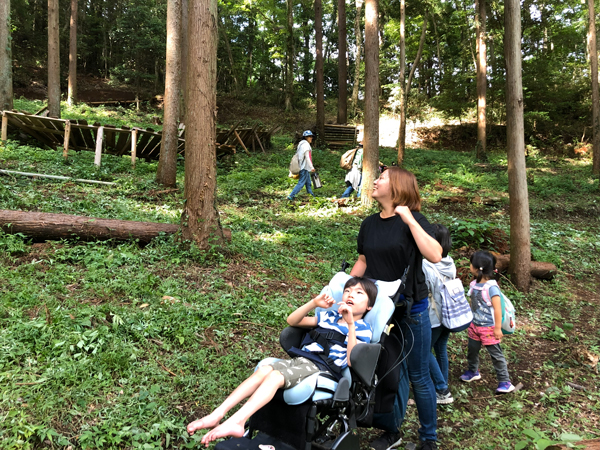
The second stage is a forest experience programme for care recipients, especially for those who may find it difficult to visit the forests on their own. The team is piloting the two stages with a nursery school. Nursery teachers have reported that the training enabled them to organise excursions with confidence, and even found opportunities to reflect on their daily childcare practice.
Kaoru Aoki from Heritage Keeper: “The forest welcomes people without dividing ‘able-bodied’ and ‘people with disabilities,’ and everyone can simply be together in a very natural way. “Caring” means care is not one-way but an interaction. The most unique aspect of this programme is its inclusive perspective: it embraces forest and people, adults and children, people with disabilities and able-bodied, carers and care recipients, without drawing lines between them. It fosters positive interactions and supports growth for everyone. Together with the companies represented here today, we hope to continue caring for our satoyama.”
Judges’ comments: “This programme serves carers and care recipients, aiming for mutual growth through forest experiences. Forests have multiple functions, and by drawing on these and engaging the five senses, both carers and care recipients can enhance their well-being… The wonderful forest space created by Heritage Keeper is, in the truest sense, a place where many different people can feel at ease, comfortable alone and comfortable together.”
Heritage Keeper HomepagePotential in value-driven ideas working with forests
Ono: “This contest invited ideas for turning the value of forest spaces into viable businesses beyond timber. We asked some bold questions: how the ideas would contribute to the environment, whether the business plans were well thought out, and the strength of intention and passion. We received more than 30 entries, and reading them was truly moving.”
As Ono noted, the awardees represent only a fraction of forests’ untapped potential, suggesting vast possibilities in contemporary and global contexts. Although mention of “business” often narrows focus to financial sustainability, the judges were unanimous in awarding Code for Ground’s project the Grand Prize for its strength in measurement and evaluation, both in high demand today.
Moving forward, Future with Forest aims to help registrants develop robust proposals from their ideas. The team also plans to improve how they communicate approaches to building value-driven businesses.
Ono: “[Today’s award] was our first. Seeing today’s awardees, I believe more people will be inspired to enter next time. We plan to run second and third editions and widen the initiative, so we receive even more applications next year and the year after.”
Future with Forest’s 10-year journey and vision for the road ahead
After the award ceremony, Future with Forest held a closed-door event to celebrate its 10th anniversary. More than 100 guests gathered, greeting one another as friends. Everyone shared a passion for forests and for Future with Forest’s vision for the forests. Representative Director Nagisa Ono opened the session, introducing the long journey Future with Forest has taken to arrive at this point.
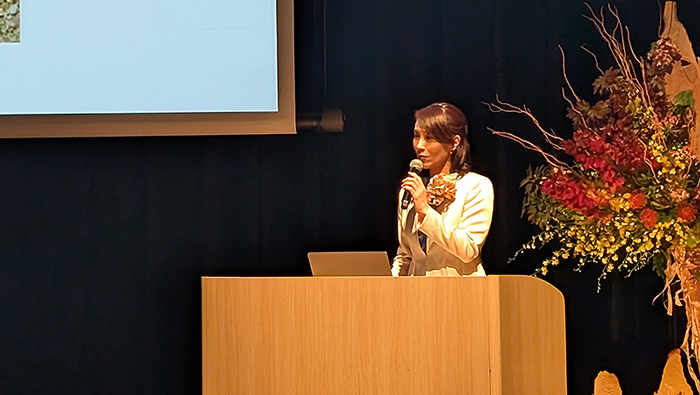
Future with Forest has been involved in multiple community-based projects across Japan. Many of these have become opportunities for education and corporate development, such as offering the Time Forest programme to bring shinrin-yoku (forest bathing) experiences into training programmes in many places.
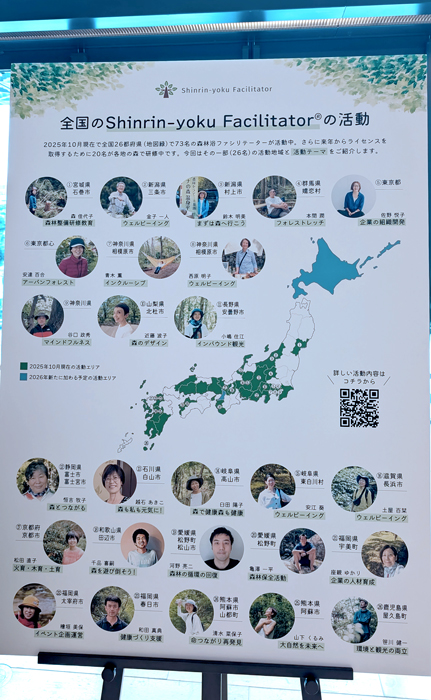
They also began training shinrin-yoku facilitators, who are now located across the country. This work has expanded public awareness of shinrin-yoku, supported inbound tours and led to the release of the book “The New Shinrin-yoku”. It even inspired the annual GOTO FOREST activities on Greenery Day to encourage people to go into the forests.
Speaking of overseas interactions, Future with Forest has also delivered forest-therapy personnel training in Beijing. They also have a partnership with the Association of Nature and Forest Therapy and have recently given a keynote speech at the International Conference on Forest Therapy in Canada.
More than their potential, forests can also teach us values
The guests were then treated to two talks: one from Florence Williams, author of The Nature Fix, an essential read for understanding the benefits forests bring to human well-being, and another from Kazuto Ataka, senior strategist at LINE Yahoo, known for his data-based insights into how to approach social and environmental issues.
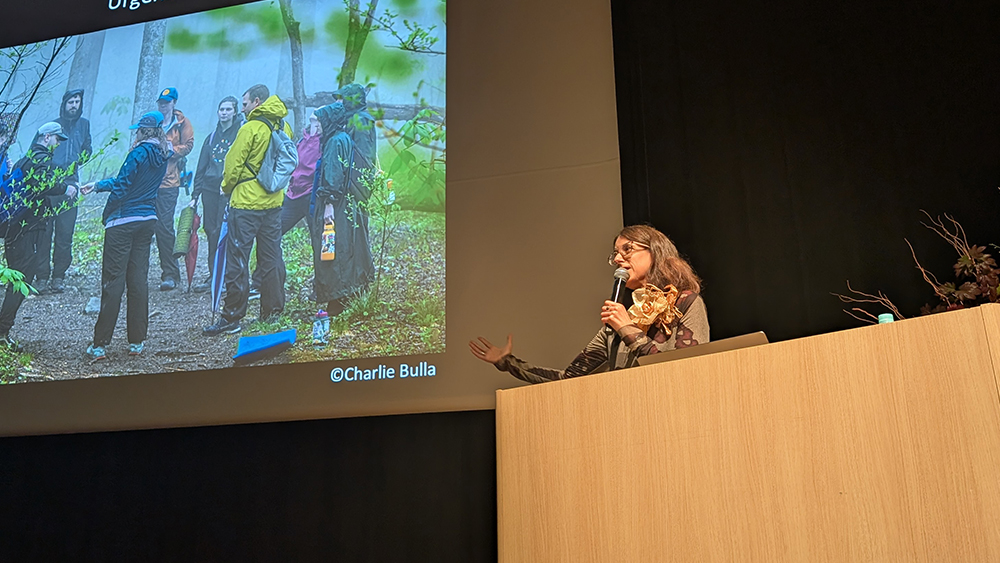
Both speakers shared their work and experience with nature and forests with us, and through them we learnt that forests are crucial for the ecosystem and have a direct impact on society’s well-being and survival.
Even more than that, there is much to learn from the relationship between Japanese people and forests. Williams suggests, “Japan has fundamentally reverential connections to the forest. Even for people who live in the cities, reverence for nature is a way of respecting and understanding that nature is part of everything. That is very special and is worth sharing [with the world].”
With forest bathing gaining popularity globally, the world is only just beginning to understand the health benefits we gain from forests. But there is still a gap between humans and forests. That gap is knowledge of how to coexist with forests and of the values they can teach us and nurture in us. Towards the end, Ono revealed what Future with Forest has in store for the future.
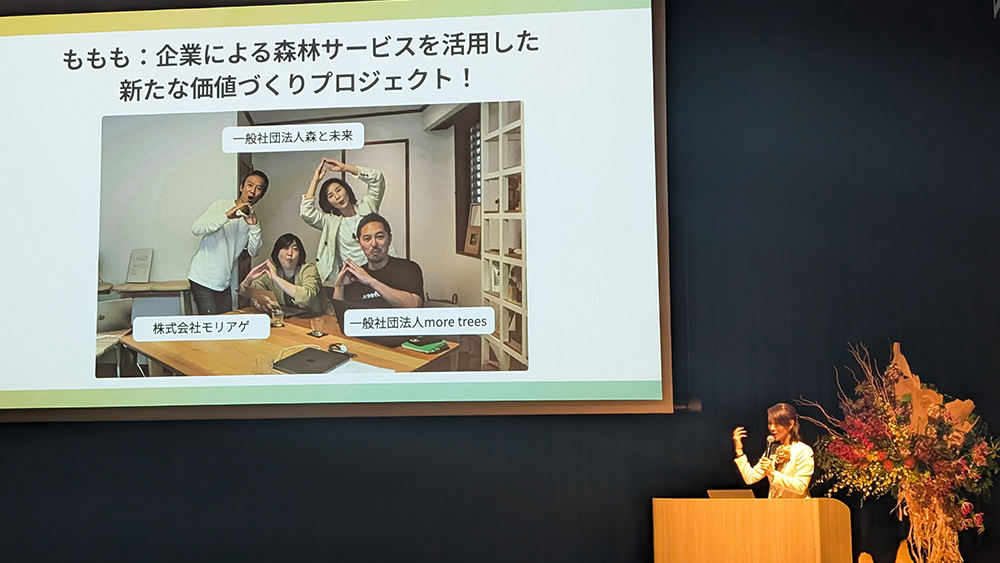
Future plans for Future with Forest
Reflecting on the past ten years, Ono believes that our economy and society are shaped by three interrelated elements: cultural value, well-being, and the environment.
Ono: “For Japan, culture is our very identity. When we communicate these Japanese values to the world, both the “Made in Japan” spirit and products created from the wisdom of living with forests carry value beyond the object alone; that spirit is our pride. I believe Japan’s unique values can be the very strength of Japanese companies.
“Today’s world pursues speed, low cost, and convenience, demanding short-term results. As a result, we are pressed for time, anxiety and impatience rise, and mental strain follows. Forests take a long time to grow. By spending time in that longer temporal scale and learning about the larger cycles of ecosystems, we begin to think long-term, to consider the happiness of those around us as well as our own. The ‘time and space’ of the forest brings us closer to a state of well-being.
“As mentioned repeatedly, forests are indispensable to our lives, not only as a resource of timber, but also for water, air, and comfortable places. We receive countless blessings from forests. I think it is necessary that we properly evaluate the many values of forests and link them to economic value. Relying on forestry and timber alone has reached its limits. We need to generate new forms of value from forests and foster a new kind of forestry. It is important that we ourselves properly recognise and evaluate that value.”
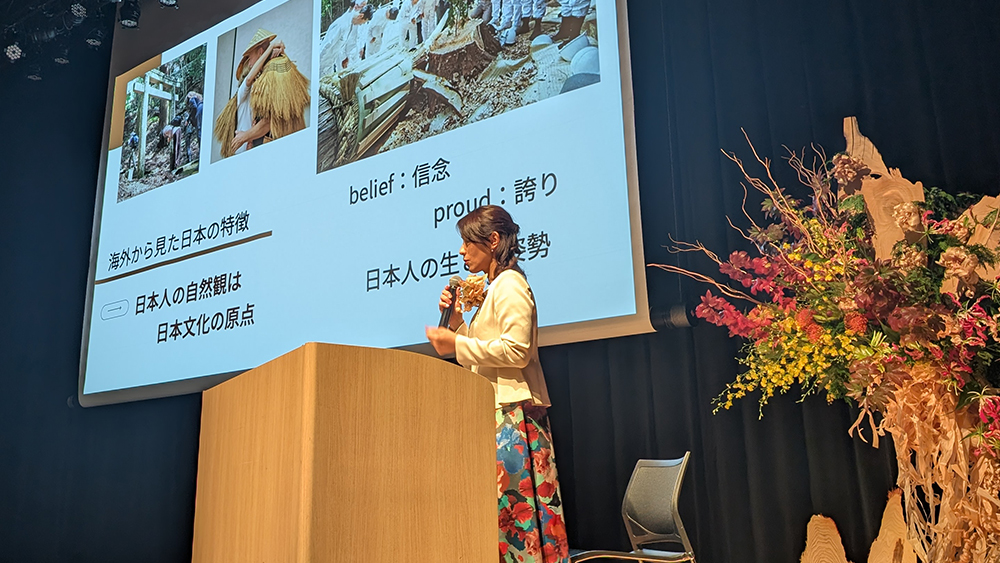
Future with Forest aims to communicate the wisdom of culture that exists within forests to enrich society and economy. Forests expect nothing in return, yet they bless us with gifts, give us wonder, and teach coexistence. Future with Forest believes that the wisdom we gain from forests will serve as a guidepost for the future.
Ono: “There are three major areas we will continue to pursue. The first is to create spaces where citizens, companies, and local communities can reconsider the use of Japan’s forests, reflecting on the current situation and our emerging values. And together, we can think about how these can become enterprises that contribute to the economy. Furthermore, the number of overseas visitors who want to learn about Japanese forest bathing and our view of nature is rising rapidly.
“Second, creating forest-based local industries. Together with local people, we want to support the creation of new industries that generate fresh value from local forests through forest bathing.
“Third, by reconsidering Japan’s culture and identity through the value of our forests, we aim to support companies in revitalising their organisations and creating new businesses through forest utilisation. We plan to expand these services for companies.
“To achieve this, we need to work with a wide range of stakeholders. It cannot be only us, nor only the forest. We value the idea of ‘three-way, four-way, five-way good’ for all involved, and we hope to build a future that exists together with forests and with everyone.”
Editor’s Note
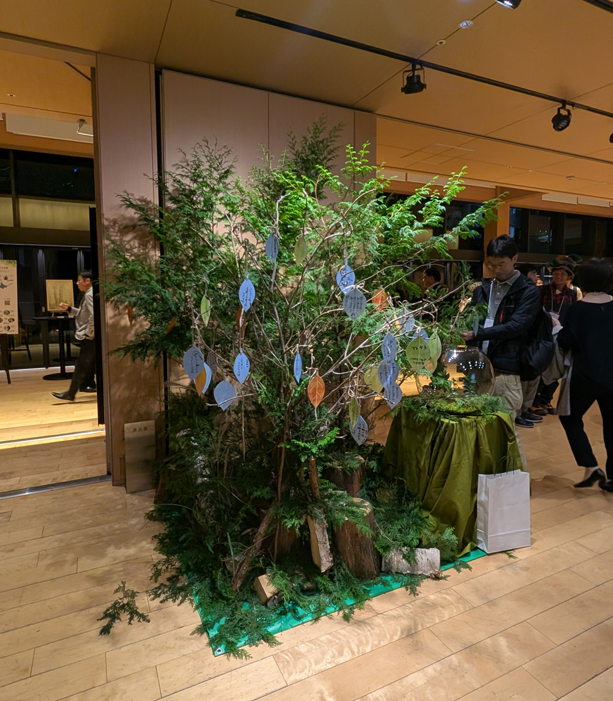
Night had fallen by the end of the day, and the dignified sight of the illuminated shrine saw each guest off. Despite being situated in the middle of the bustle of the city, the atmosphere retains the peacefulness and identity of “chinju no mori.”
Chinju no mori refers to the sacred grove that traditionally shelters a shrine and its kami (god), creating a green buffer between sacred space and everyday life. Kanda Shrine continues to be this special place, playing spiritual, social and ecological roles. It is a gathering place for rituals and festivals, serving as a beloved place to build identity. Even on ordinary days like this, families, friends and couples gather here to pray, mark special birthdays, and create new memories.
Beyond its social role, Kanda Shrine symbolises coexistence with nature. Chinju no mori is traditionally left uncut, and clearings are kept to a minimum. It continues to provide inspiration in the fields of architecture, landscape design, and disaster-resilient urban planning as a model of nature woven into daily life.
Future with Forest carries that same spirit to connect forests and human beings. And through Future with Forest, we can rediscover values that allow us to find well-being, to coexist with forests and to forge a regenerative future.
Photos by Roger Ong, unless stated otherwise.
[Website] Future with Forest Association[Website] Future with Forest Sustainable Award 2025