 Roger Ong
Denpaku The Beachfront MIJORA has its own special concept: to engage in dialogue with the Amami Oshima’s nature. Surrounding this sustainable accommodation are Amami’s lush forests and pristine seas remain largely untouched, preserving their primeval beauty. The island is truly worth its designation as a World Natural Heritage site. Furthermore, this hotel has been certified by the Green Key certification, which ensures the accommodation’s responsibility in sustainability.
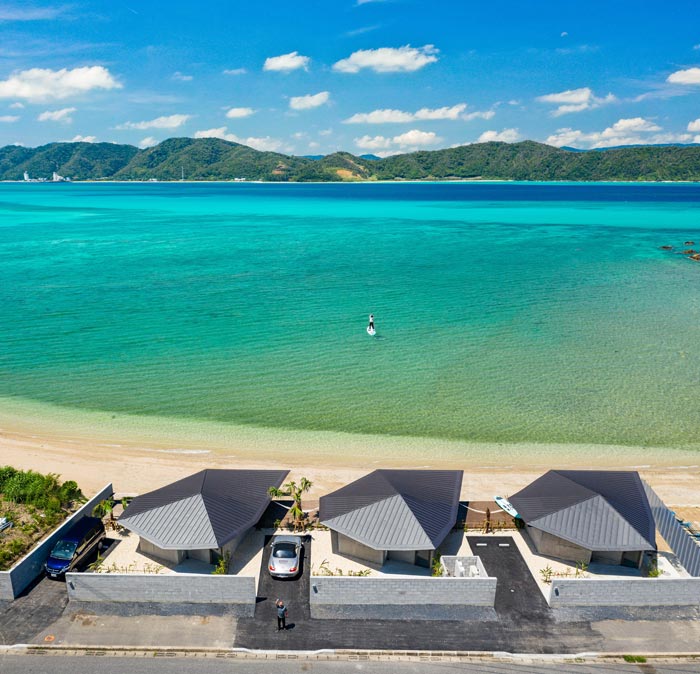
Denpaku The Beachfront MIJORA came along at a time when more visitors were visiting Amami, but there was a shortage of accommodation. A new villa targeting culturally-minded tourists was then conceived. Developments began with a balance between town development and economic sustainability, under the theme “Weaving the Future, Earning, and Town-Building.” The creation is Denpaku The Beachfront MIJORA, a place where guests can spend time in harmony with the carefully preserved natural environment, offering a tranquil retreat that allows for introspection and peace.
Denpaku, the operator of Denpaku The Beachfront MIJORA is keenly aware how they benefit from nature. That is why they are committed to protecting the natural environment, be it Amami Oshima or the Earth. With that, they have multiple initiatives to promote sustainability.
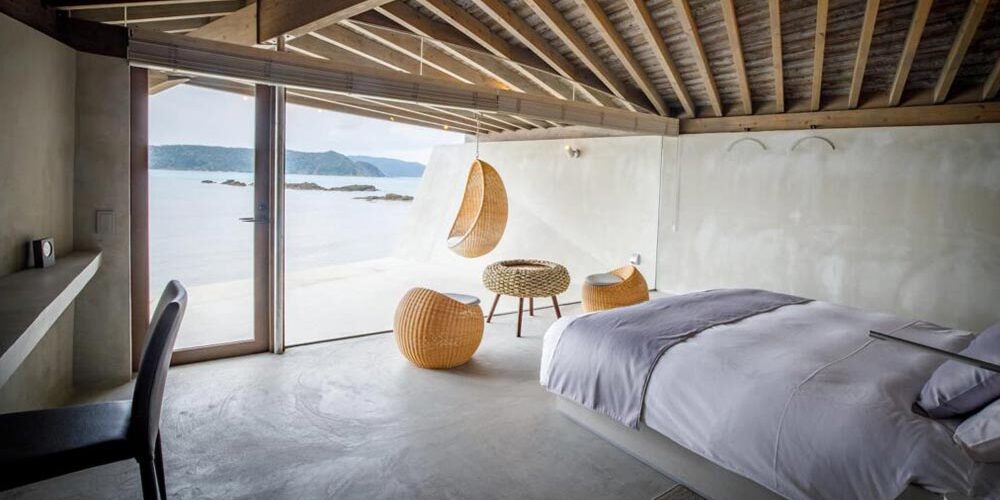
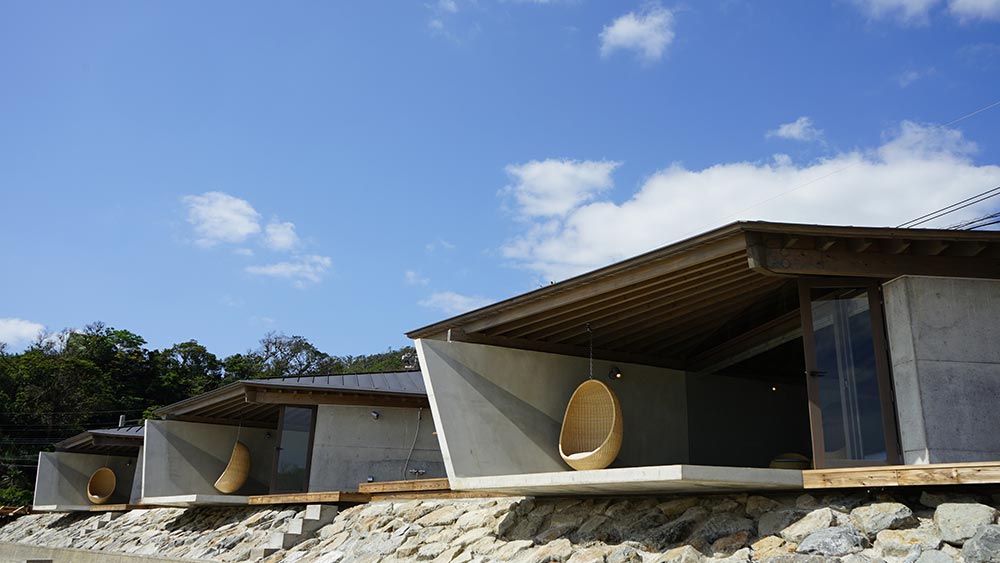
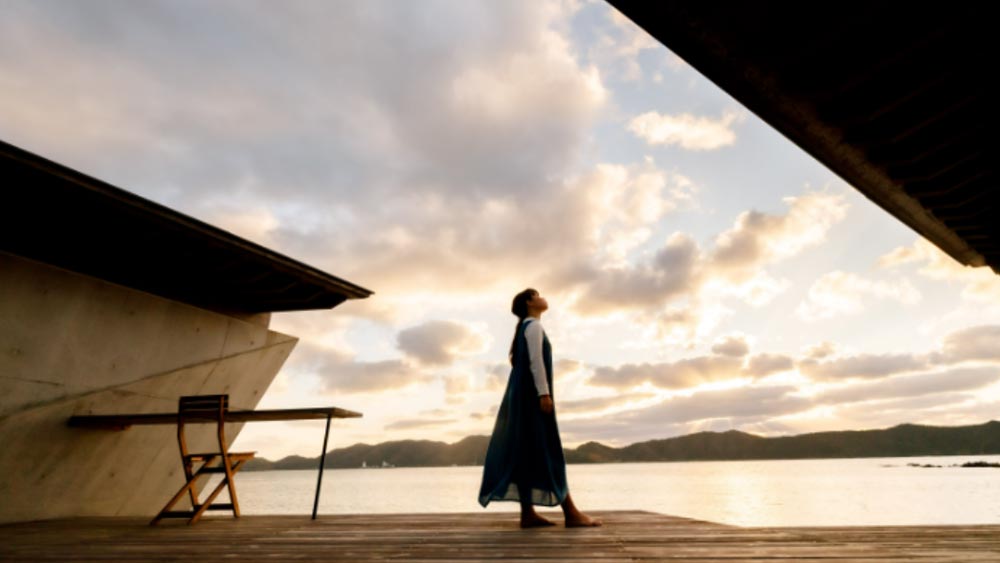
The villas are designed to encourage a direct connection with the environment. Expansive glass windows and the use of charred cedar create open, airy spaces with minimal internal barriers. This design promotes both a visual and emotional sense of unity with the surrounding sea, sky, and greenery, fostering calm and reflection.
The villas are designed to foster a direct connection with their surrounding environment. Large glass windows are used to minimise internal barriers, creating open, airy spaces with excellent ventilation. Additionally, the indoor ceiling finishes, between rafters, and eaves feature yakisugi (charred cedar) sourced from Kyushu. Yakisugi is a traditional Japanese exterior finishing technique that enhances durability and weather resistance, and has long been used in homes across Japan. Yakisugi was chosen for its protective qualities, since its location faces the sea and is prone to frequent typhoons. The overall design promotes a visual and emotional harmony with the surrounding sea, sky, and greenery, encouraging a sense of tranquillity and introspection.
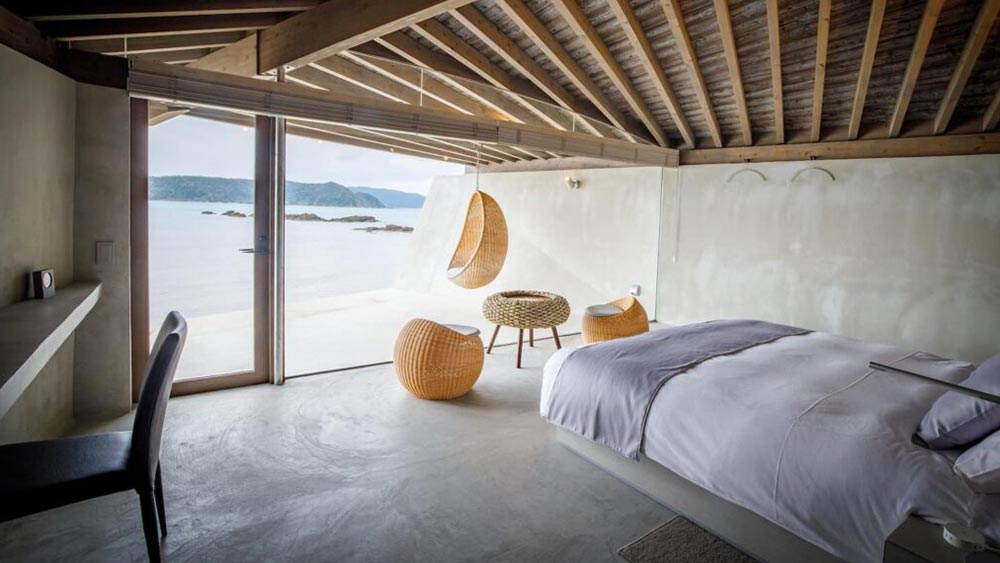
Built on reclaimed coastal land previously vulnerable to natural disasters, the facility is composed entirely of single-storey buildings. This architectural choice not only helps mitigate disaster risk but also allows the structures to blend seamlessly into the surrounding environment. They are also currently conducting pilot experiments using small-scale wind and solar power systems, exploring the potential for future zero-energy operations.
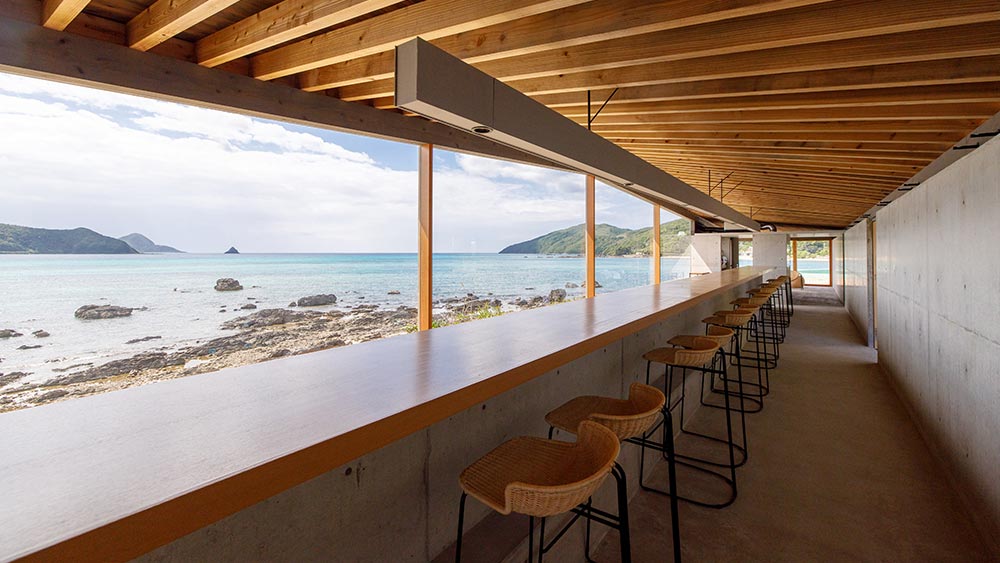
All guest rooms are equipped with compost bags for food waste, which is processed at our own farm. The resulting organic compost enriches the soil and is used to grow herbs. These herbs are then served at the restaurant and bar “2 waters” restaurant at Denpaku The Beachfront MIJORA. 2 waters also features an outdoor infinity pool. Over 85% of the ingredients used are locally sourced.
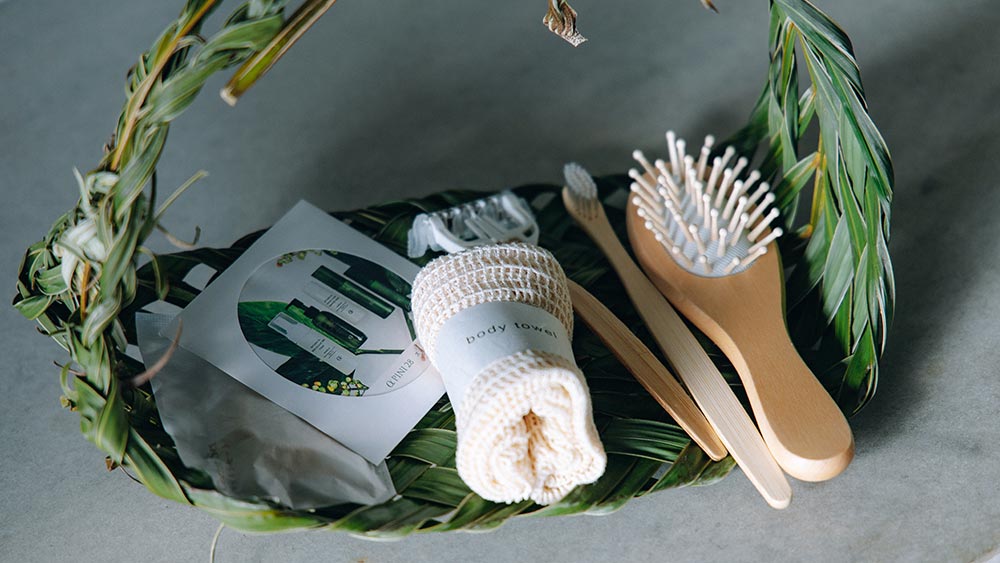
Bamboo amenities were also introduced to replace disposable plastic items. Cleaning protocols prioritise natural detergents over chemical alternatives. For guests with chemical sensitivities, a chemical-free cleaning service is available upon request.
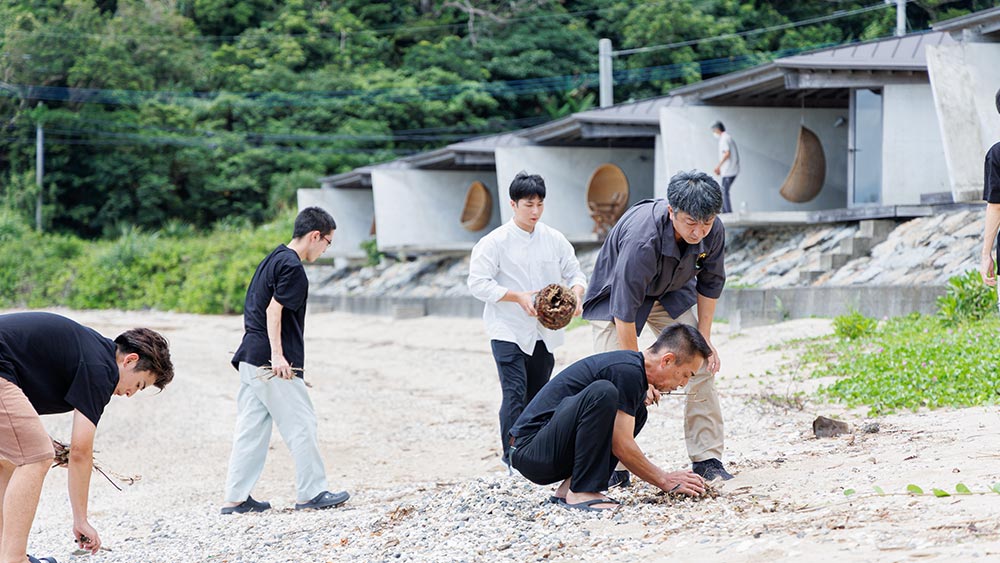
The facility actively collaborates with local beach clean-up teams to maintain the surrounding coastal areas. This is especially important during winter, when currents bring in more marine debris. Beach clean-up initiatives are also carried out independently at different times under the leadership of each local village, with Denpaku staff actively participating in these efforts.
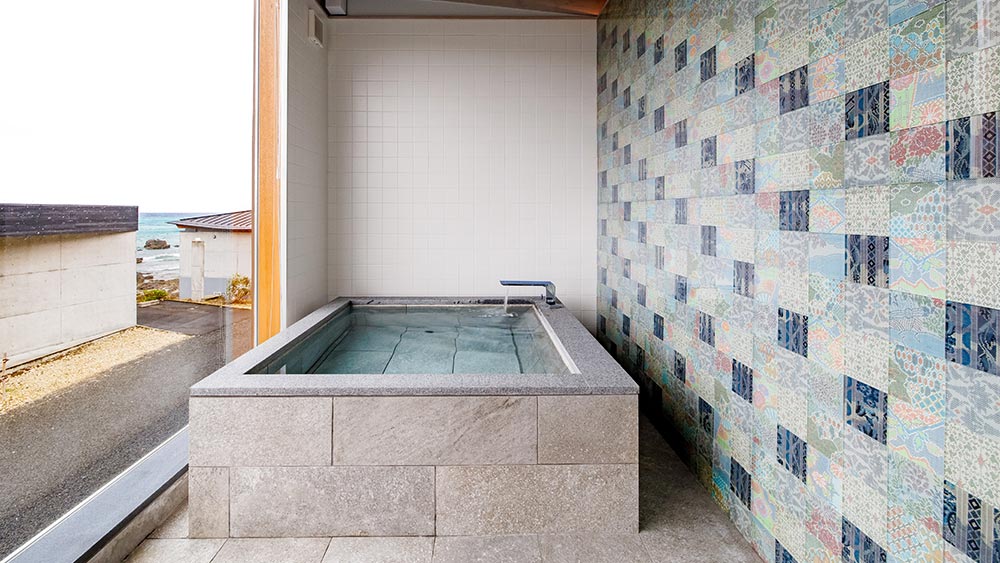
Craftsmanship is also at the heart of this facility. Opened in 2023, its Tsumugi Suite Villa integrates the traditional textile craftsmanship of authentic Amami Oshima Tsumugi into modern interiors. Elements such as tiles, wallpapers, and door handles feature these local materials, bridging traditional culture with contemporary living.
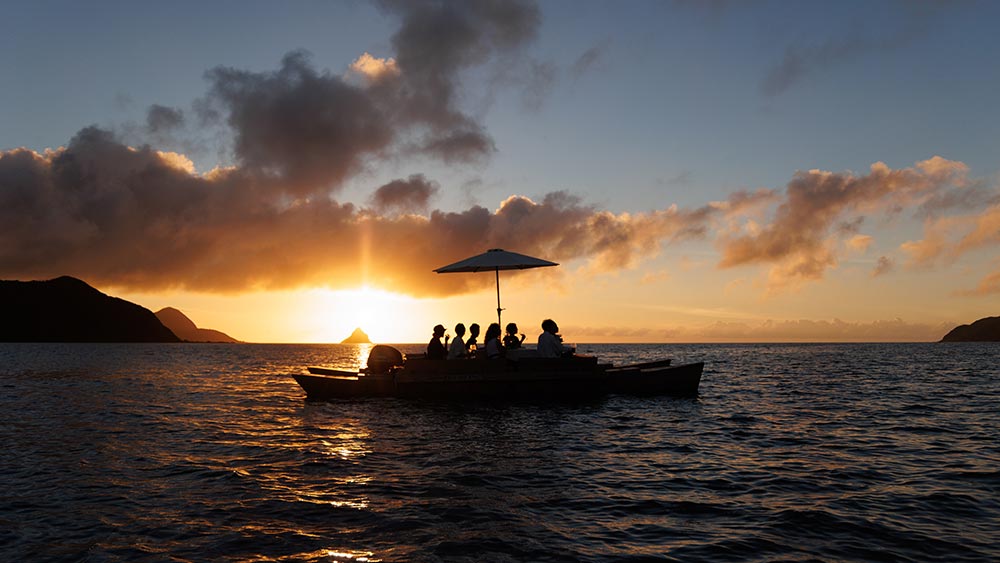
You do not want to miss the sunset cruise on the “Denpaku Catamaran“! This boat was built to preserve and pass down the fading traditional wooden boatbuilding techniques of Amami. At the time, only one boatbuilder on the island still possessed this knowledge. Thanks to this initiative, a new apprentice has emerged, contributing to the ongoing preservation of this cultural heritage.
DenPaku The Beachfront MIJORA offers a sustainable accommodation experience that allows guests to feel like a part of nature and the local culture. It not only minimises its ecological footprint on the environment but also contributes to the preservation and continuation of regional traditions.
If you are interested, please visit their website. If booking becomes difficult, do consider other accommodations in the surrounding area. Depending on availability, nearby Denpaku facilities are also highly recommended.
Details of Denpaku The Beachfront MIJORA
Hotel name: Denpaku The Beachfront MIJORA
Address: 986-1 Kamesaki, Sotoganeku, Kasari-chō, Amami City, Kagoshima (Google Map)
Website: https://den-paku.com/portfolio-item/the-beachfront-mijora
Check-in/Check-out: 3 pm ~ 7 pm / ~11 am
Access: 15 minutes by car from Amami Airport
[Website] Denpaku Homepage
More on sustainable accommodation in Japan
- 2026-05-15: Sakura Quality certification for sustainable accommodation in Japan
- 2026-05-10: New satoyama tourism facility Tsukui Shiro no Sato launches in Kanagawa
- 2026-04-13: Historical buildings in Tottori transformed into sustainable luxury retreat
- 2026-03-18: allbeans Iseshima opens sustainable tiny house retreat in Mie Prefecture
- 2026-02-27: Tokyu Hotels becomes first Japanese chain to join GSTC