 Zenbird Editorial Team
Patagonia Japan will host the Regenerative Organic Conference 2026 online on 15 November to examine the public and ecological value of Japanese paddy fields. This is the fourth edition of the annual event, and will bring together agriculturalists, researchers and policy officials to explore how society can support paddy ecosystems beyond food production.
Paddy fields across monsoon Asia serve critical roles beyond rice cultivation, providing water cycle management, flood mitigation, landscape preservation and biodiversity support. However, these multi-faceted benefits are frequently overlooked from economic lenses. This ends up placing the burden of environmental stewardship entirely on local farming communities. Declining rural populations and worker shortages now threaten the preservation of these agricultural landscapes.
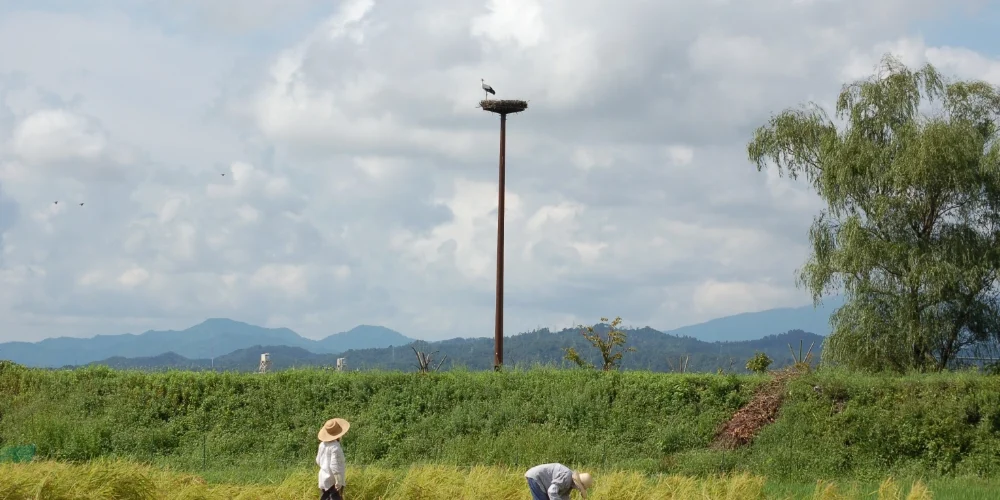
The upcoming gathering focuses on practical insights from Toyooka City, where the reintroduction of the Oriental White Stork prompted the development of the Stork-Friendly Farming Method. Speakers from Tajima Agricultural Co-operative, Tsuboguchi Agricultural Future Institute and Toyooka City Council will present their experiences in integrating nature conservation with regional economic viability. Subsequent sessions will feature academic researchers evaluating aquatic habitats and soil health, alongside representatives from the Ministry of Agriculture, Forestry and Fisheries discussing public-policy frameworks.
Patagonia Japan launched its Regenerative Organic Conference series in 2023 to promote regenerative agriculture nationwide. The effort complements global milestones under the Regenerative Organic Certified framework, which encompasses over nine million hectares globally. In 2025, Niida Honke in Fukushima Prefecture secured Japan’s first certification under the standard, producing the nation’s first certified organic sake.
[Reference] Patagonia Japan Event Page (Japanese)