Zenbird Editorial Team
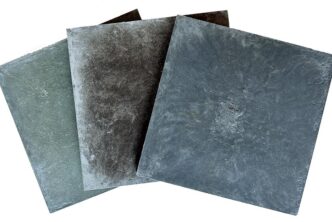
Behomal Co., Ltd. has begun the commercialisation of DAC Strand Board, a new building material, absorbs and fixes atmospheric carbon dioxide even after installation in a structure. The product was developed through a regional open innovation project between four companies based in Shiga, Gifu, and Kyoto prefectures.
The board combines regional thinned wood with Binowa, a biomass-derived CO2 absorbent developed by Behomal. While traditional wood products store carbon captured during the tree’s growth, DAC Strand Board extends this timeline by actively removing CO2 from the air at room temperature and pressure. This functionality addresses the dual challenges of carbon sequestration and Japan’s underutilised domestic forest resources.

Binowa features nano-scale pores that trap CO2 molecules. The material is non-toxic and can be mixed into resins or wood fibres without altering standard manufacturing processes. A single standard board measuring 1800 by 900 millimetres fixes approximately 16 kilograms of CO2 from its wood content and absorbs an additional 7 grams from the atmosphere.
The environmental impact is significant when scaled to interior spaces. A typical 30-square-metre meeting room involves installing 20 boards fixes, roughly 320 kilograms of CO2. This volume is equivalent to the annual carbon absorption of 20 growing cedar trees.

The development team includes S-Wood Co., Ltd. for manufacturing, with Kuwahara-gumi Co., Ltd. and Naito Architects & Engineers providing construction and design expertise. The group is currently seeking partners for demonstration projects in public and private facilities, including schools, offices, and commercial showrooms. Future plans include the development of regional versions of the board tailored to the specific characteristics of local timber across Japan.
[Reference] Behomal Press Release (Japanese)