 Zenbird Editorial Team
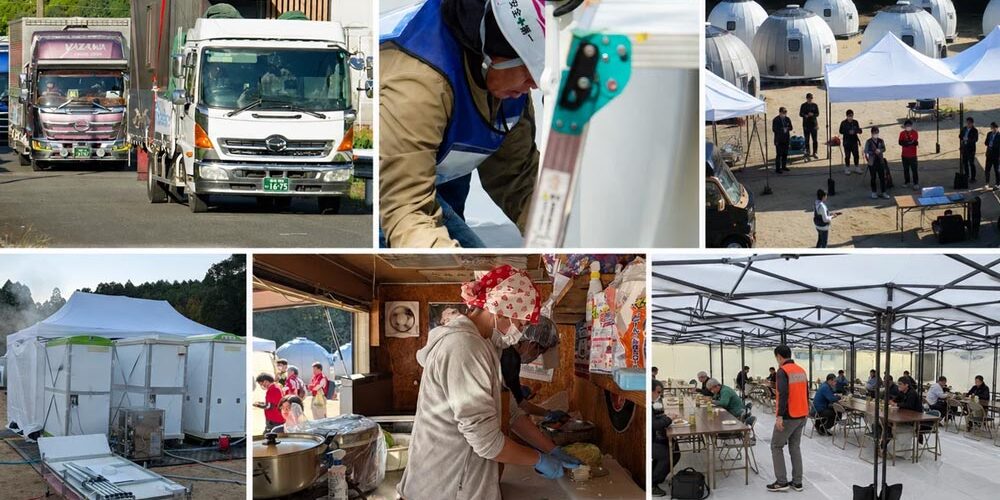
Kumamoto City and Tokyo-based startup Shelter One has completed a large-scale disaster response exercise held over four days from 15 to 18 May. The TKB48 Evacuation Shelter Training marks the 10th anniversary of the Kumamoto earthquake, and its goal is to establish a model for preventing disaster-related deaths. The drill focuses on the TKB48 concept: ensuring that toilets, kitchens, and beds are fully operational within 48 hours of a disaster.
The exercise took place at Aqua Dome Kumamoto and Kumamoto Port, involving 37 organisations including municipalities, private firms, and relief groups. This fifth iteration followed four successful tests conducted across Japan since March 2025, cementing a full-scale social implementation of a wide-area support system.
The TKB48 model addresses a recurring issue in Japanese disaster management where victims often endure unhygienic conditions and lack proper bedding or hot meals. Shelter One identifies the root cause as a lack of coordinated training across municipal borders rather than a shortage of supplies. The project draws inspiration from Italy’s Colonna Mobile system, which utilises standardised equipment and joint training to deploy aid rapidly across regions.
The Kumamoto drill also aims to be a proof of concept for the Shelter Operation Management (S.O.M.) system. This IT platform integrates progress tracking, logistics, and resource monitoring into a single dashboard. By sharing real-time data between headquarters and the field, the system aims to replace intuition-based management with a data-driven approach.
The four-day exercise includes a stay-over drill for approximately 70 citizens, including primary school children and their parents. Participants will experience assembling cardboard beds and using mobile shower and kitchen facilities. On 17 May, medical and welfare training was conducted alongside a talk session featuring the mayors of Kumamoto and Fukuoka.
Shelter One views evacuation shelters as social common capital rather than temporary facilities managed by single municipalities. The company hopes to standardise shelter operations, and ensure that both disaster victims and aid workers can maintain their health and dignity during prolonged displacement.
[Reference] PR Times (Japanese)