 Zenbird Editorial Team
JEPLAN and Nippon Kayaku announced a joint establishment of selection criteria for “CR Decolourisation Compatible Dyes.” The two companies intend to promote “Design for Recycling” (DfR) from the initial manufacturing stages.
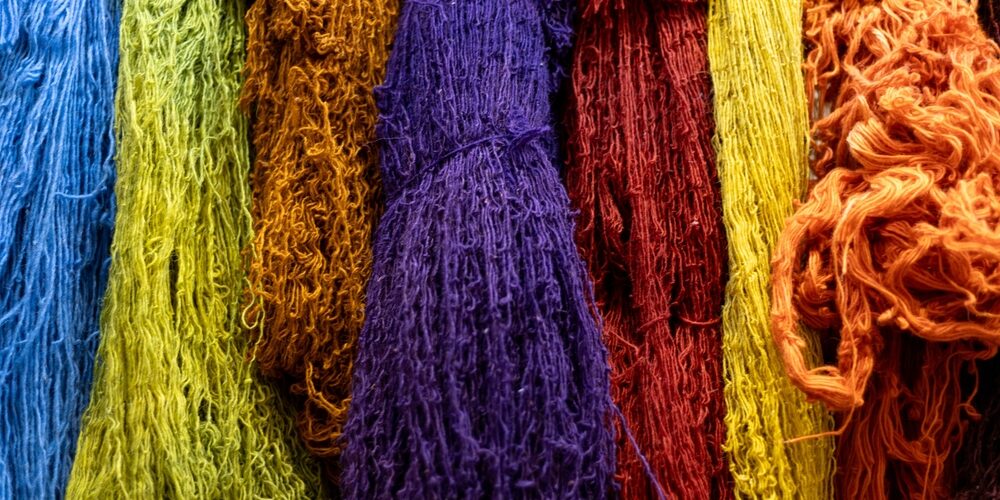
A barrier to circularity in the fashion industry is the high costs of decolourisation in the chemical recycling (CR) of textiles. The two companies will approach this by identifying dyes that are easily removed during the recycling process. This ensures that used garments can be processed more efficiently and cost-effectively into new fibres.
Fibre-to-fibre recycling is gaining traction globally. In Japan, the Ministry of Economy, Trade and Industry (METI) is currently discussing a roadmap that sets a target of 50,000 tonnes of fibre-to-fibre recycling by 2030. Chemical recycling is a primary method for achieving this goal, but removing dyes from used textiles is often expensive. This high cost limits market viability of recycled fibres. The lack of consideration for end-of-life recycling during the product design phase has been identified as a major obstacle to establishing a closed-loop model for the textile industry.
The new selection criteria resulted from the combined expertise of Nippon Kayaku, a specialist in colourants and functional materials, and JEPLAN, a leader in chemical recycling technology for polyethylene terephthalate (PET). Nippon Kayaku provided the dyes and analytical techniques required for testing, while JEPLAN identified the specific chemical characteristics of dyes that are most effectively removed during its recycling process. The companies have created a framework that allows manufacturers to select “easy-to-decolourise” dyes at the design stage.
The companies stated that this systematic selection is expected to significantly reduce decolourisation costs during the chemical recycling phase compared to conventional methods, and expect that the adoption of these criteria by the apparel and textile industries will expand the availability of environmentally conscious products.
[Reference] JEPLAN News (Japanese)