 Zenbird Editorial Team
The Ministry of the Environment published the 2026 Annual Report on the Environment, the Sound Material-Cycle Society, and Biodiversity on earlier this month, adopting the theme “Strengthening and Enriching the Japanese Archipelago through a Circular Economy.” Circular economy is now a core national strategy, detailing measures to reinforce recycled resource supply chains and develop international resource circulation networks.
While the 2025 White Paper focused on green economic systems through Green Transformation (GX) and ESG investment, the 2026 edition emphasises the relationship between resource circulation, economic security, and industrial competitiveness. With intensifying global competition for resources, the report asserts that reducing dependence on natural resources and securing a stable supply of recycled materials in terms of quality, quantity, and cost is essential for both environmental protection and national economic stability.
The Japanese government formulated the Circular Economy Action Plan in April 2026. The plan promotes the advancement of resource circulation technologies and the establishment of international networks. The White Paper notes that the world has entered an era of competition for not only primary natural resources but also secondary recycled resources. It cites China’s tightened export controls on critical minerals and the European Union’s circular economy policies as primary drivers of this trend.
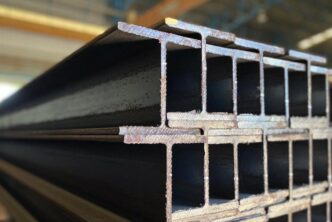
The report highlights specific challenges for Japan, noting that approximately 7.7 million tonnes of iron scrap are exported annually. Furthermore, the volume of plastic flowing out of the country for overseas recycling is roughly three times the amount utilised domestically. Strengthening the domestic resource circulation is a priority for the government, committing one trillion yen in public and private investment to establish recycling hubs for metals and plastics. The White Paper positions the circular economy as a driver for new growth, linking it directly to the enhancement of industrial competitiveness.
The Ministry of the Environment also identifies the circular economy as a foundation for decarbonisation and nature restoration. The report concludes that a sustainable society requires the integrated pursuit of a circular economy, carbon neutrality, and nature positivity. Through this transition, the ministry intends to ensure the stable procurement of resources and improve regional sustainability across Japan.
[Reference] Ministry of the Environment Press Release (Japanese)