 Zenbird Editorial Team
Seldom do we get to experience the culture behind the experience. On 28 November 2025, participants in our “Learning from Japanese Indigo Dyeing and Kendo: Japanese Approach to Enriching Life” tour programme in Saitama Prefecture spent an afternoon tracing the making of a kendo uniform and the values coloured into it.
The programme followed the path of a kendo uniform in two parts: indigo dyeing and kendo practice. It was guided by two specialists who live those traditions daily: Yuki Nogawa, fifth-generation head of Nogawa Senshoku Kougyou, and Mizuki Amagai, principal of Ibaraki Chuo Kodomoen and an instructor of the Ibaraki Junior Kendo Team.
Inside the dye house where indigo “sleeps”
Our afternoon began at Nogawa Senshoku Kougyou, a 110-year-old manufacturer known for Bushu Sho-Aizome and its Bushuichi kendo uniforms.
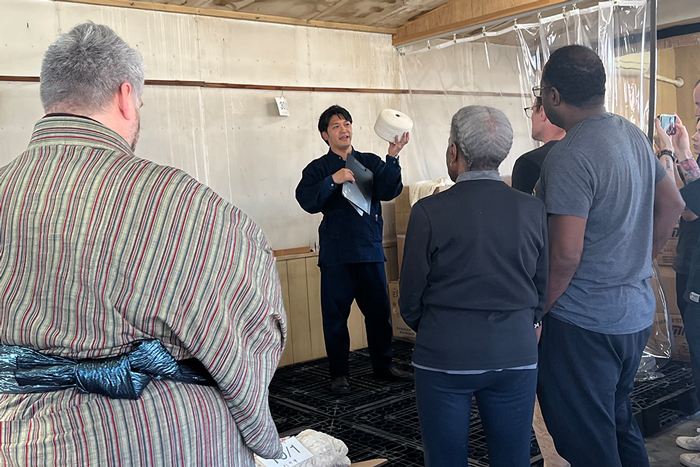
Rather than jumping straight into finished goods, the visit started with origins of the business, the indigo plant and how the craft took root in the region. From there, participants moved deeper into the workshop, following the materials from thread to cloth to colour.
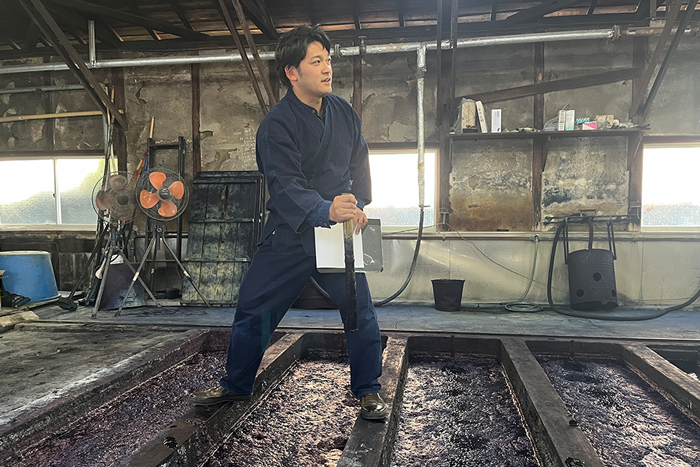
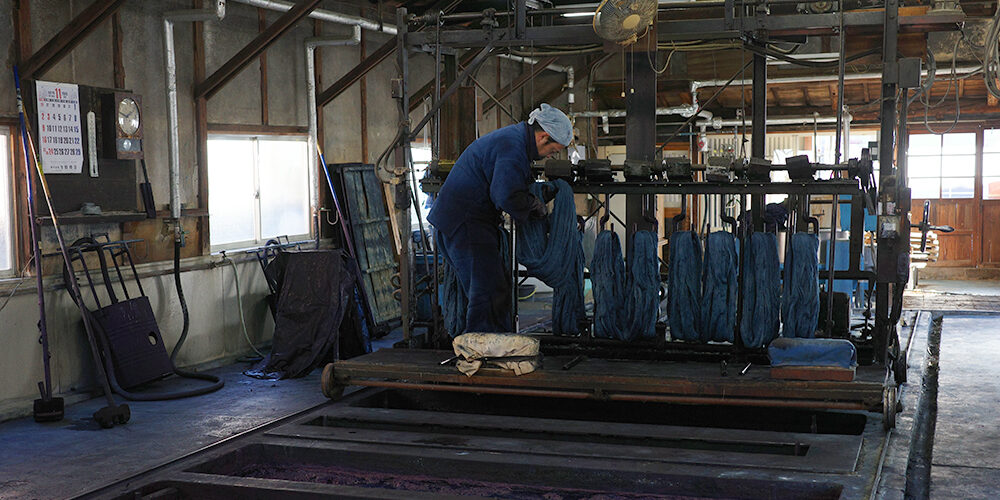
In the dyeing area, the heart of the process was not a machine, but a living rhythm. Participants saw the indigo vats up close and heard how artisans monitor subtle changes that affect the final shade. As Nogawa explained it, the vats are environments supported by microorganisms, where indigo “rests” and develops.
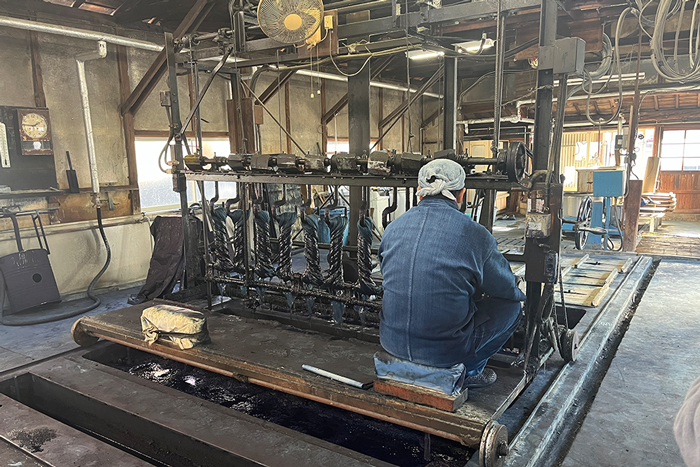
From the dye house, the group visited “Kame-nozoki,” a site used to share the area’s indigo history and culture, then opened up into a Q&A session, inviting participants to ponder more about the trade, from maintaining tools, to keeping processes steady, to working with nature instead of trying to overpower it.
Stepping into the dojo
The second half shifted from craft to practice. The group moved to Heiseikan Dojo for an introduction to kendo, led by Amagai.
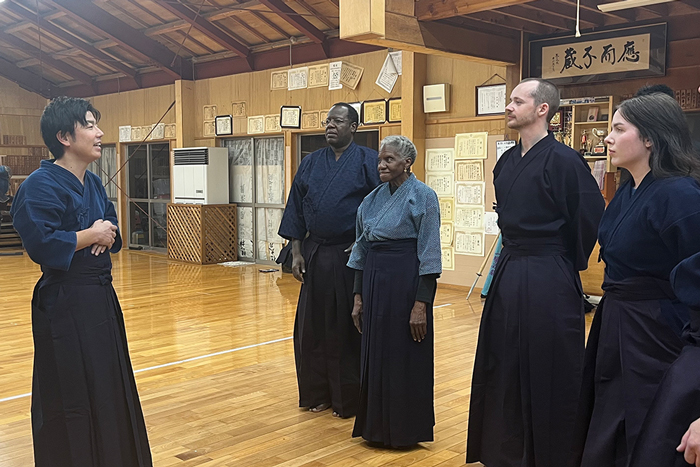
Despite the chilly season, participants quickly changed into fresh indigo-dyed uniforms. It is one thing to admire the colour on a rac, and another to wear it. With the uniform on, participants were invited to notice how clothing can influence posture, attention and mood.
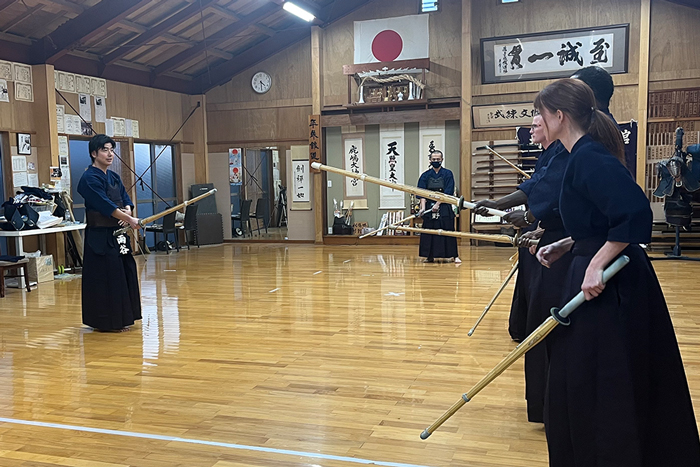
Then came the fundamentals: dojo behaviour, etiquette, posture, grip and footwork, ending with the closing bow. Amagai broke down kendo as more than technique. The details of how one enters the space, how to hold the shinai, how to acknowledge your partner were treated as training in discipline and respect, not just preparation for sparring. For many, it was the most engaging part of the day: serious enough to feel real, accessible enough to enjoy.
The day ended in high spirits, with thanks offered both ways, from participants to instructors, and from instructors to the people willing to step in, ask questions and try something unfamiliar.
For a deeper look at the kendo uniform and the ideas behind it, see Zenbird’s in-depth feature, “Indigo is alive: the ‘Strength to Live’ in Kendo attire culture,” which inspired this hands-on programme. Here are some video highlights from the programme:
[Related article] Indigo is alive: the “Strength to Live” in Kendo attire culture
View this post on Instagram