 Zenbird Editorial Team
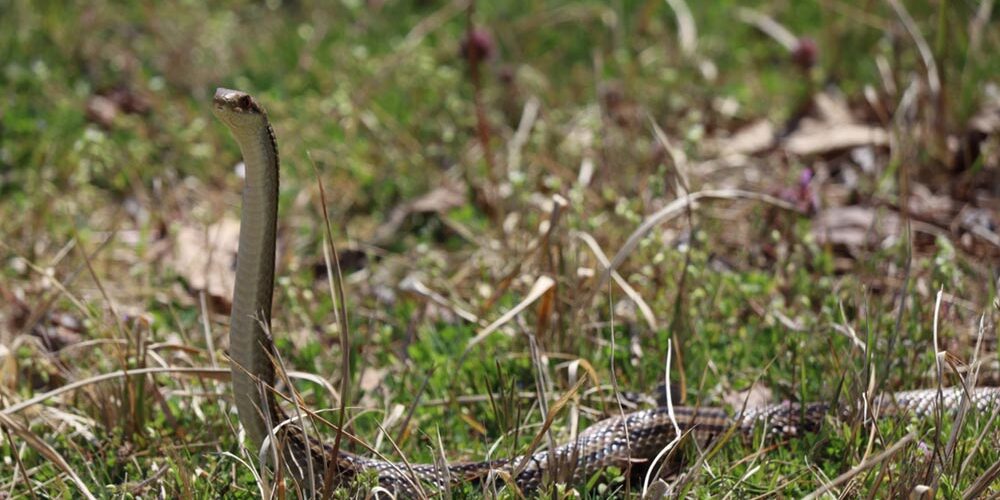
A collaborative effort uniting four dedicated researchers and 160 members of the public has culminated in a landmark nationwide survey of the Yamakagashi snake (Rhabdophis tigrinus), a species native to Japan. This extensive citizen science project, stretching from the Shimokita Peninsula in Aomori Prefecture to Yakushima Island in Kagoshima Prefecture, has documented the remarkable diversity in colour and patterning of this familiar serpent, revealing a spectrum far richer than previously understood.
The study was led by Masaya Fukuda, a doctoral student at Kyoto University’s Graduate School of Science (now a Research Administrator at the university’s Organisation for the Promotion of Integrated Research), Takuya Hosoki, a JSPS Research Fellow at Hokkaido University, Kota Kubo, a Project Researcher at the University of Tokyo, and Fumiue Fukuda, an independent researcher. It tapped into the immense potential of citizen science, particularly in uncovering the complexities of the natural world. Documenting biodiversity and understanding its origins, maintenance, and potential loss is a formidable challenge for researchers alone. This study became a testbed for collaboration between scientists and the public to effectively map geographical variation in colour polymorphism on an archipelago-wide scale.
By combining publicly submitted photographs with targeted fieldwork and web-based research by the academic team, a comprehensive dataset of Yamakagashi images was compiled from across Japan. The findings, published online in the Zoological Journal of the Linnean Society, were striking. What had once been broadly categorised into approximately six colour morphs is now known to include at least 123 distinct combinations of body colour and pattern.
Furthermore, the research suggested that variations in the size of the snake’s patterns may be linked to anti-predator strategies. This indicates a need for future studies on the visual capabilities of predators to fully understand the evolutionary mechanisms behind these diverse appearances.
These discoveries highlight an extraordinary level of diversity made visible through public engagement, and demonstrate the powerful potential of citizen science as a tool for advancing biodiversity research at the national level.
[Reference] Kyoto University (Japanese)More on biodiversity in Japan
- 2026-02-18: Japan's first butterfly forest project launches in Tochigi Prefecture
- 2026-02-10: Miyagi Prefecture is bringing back the golden eagle from extinction
- 2026-02-02: Saga fire festival turns invasive bamboo into charcoal for circular farming
- 2026-01-22: Bio-logging data to cut offshore wind risks in Japan
- 2025-11-28: JSA report maps global standards in biodiversity and offshore wind