Zenbird Editorial Team
Japan is facing a quiet but persistent education crisis. In the 2024 school year, a record 353,970 elementary and junior high school students were categorised as futoko, children who missed 30 days or more of school for reasons other than illness or economic hardship. That is the 12th consecutive annual increase, and more than double the figure a decade ago.
At the same time, the same 2024–25 survey recorded 769,000 recognised bullying cases and 413 student suicides in elementary, junior high and high schools. Both numbers are also at record levels.
It’s easy to think that this is a “distant problem” because it is “out of sight” for many of us. But these numbers show that it is not a marginal phenomenon, and that we should be concerned about our children’s childhood and their pathways into adulthood.
What is futoko?
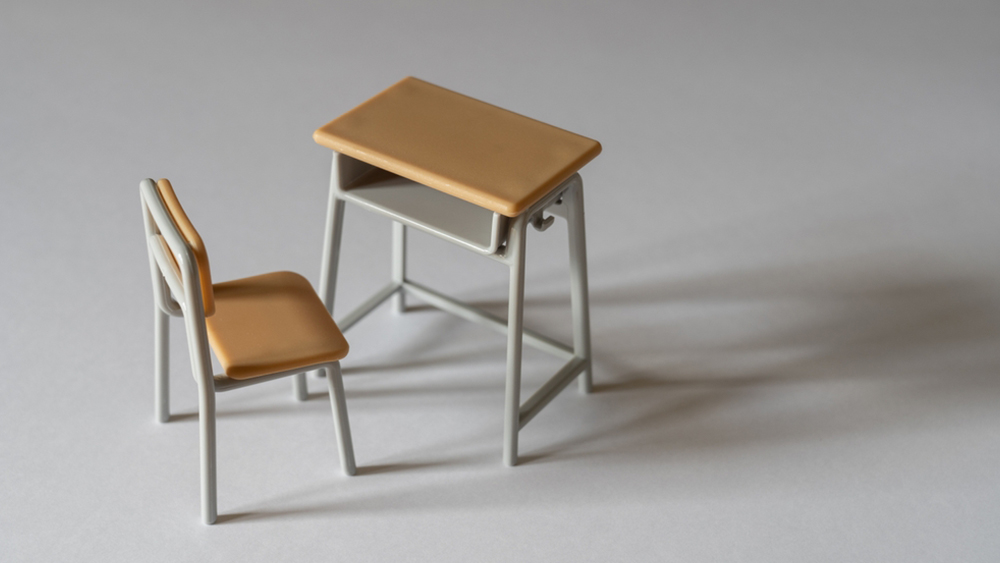
We first need to understand what futoko is and its potential consequences. The Ministry of Education, Culture, Sports, Science and Technology (MEXT) defines futoko as children who miss 30 days or more in a school year for reasons other than illness or economic reasons, and who are judged to be psychologically, emotionally or socially refusing or unable to attend school.
In MEXT’s statistics, these cases are grouped under “school attendance problems” within the wider category of long-term absence. Children who are recovering from illness or who miss school because they must work to support their family are counted separately.
It is also interesting to note that Japan’s compulsory education system has a distinctive feature: students automatically progress through grades and receive their junior high diploma even if their attendance is extremely low or zero. On paper, this prevents children from being “held back.” However, in practice, it means there is a growing cohort of young graduates who have missed much of the academic, social and emotional learning that school is supposed to provide.
Futoko is a problem, but not with the children
A 2024 macro-level study on school attendance problems in Japan summarises decades of research: when students are isolated from school, they struggle to acquire academic skills, social skills, stress tolerance and problem-solving abilities that schools are meant to foster.
Prolonged non-attendance doesn’t just lead to academic underachievement, but also gives rise to problems in human relationships, like family conflict, social alienation and social withdrawal (some of you will be familiar with the term “hikikomori”.) Educational credentials still heavily shape access to stable employment in Japan. Futoko can therefore deepen inequality over a lifetime.
The study also found that futoko is associated with a higher risk of psychiatric illness and suicide. 2024’s record number of student suicides (413 cases, 413 too many) is a reflection of that. Often, the cause is a combination of bullying and academic competition. MEXT’s data also found that “apathy or anxiety” makes up 51.8% of futoko cases. This is paired with rising bullying cases, with over 760,000 recognised incidents in 2024 alone. For children in distress, schools are no longer safe environments, but places associated with humiliation and fear.
However, it is wrong to support narratives that frame these children as the problem when it is their environment that has failed them. Japanese compulsory education is built around the assumption that almost all children attend the same local public schools in stable homeroom groups. The system is tested when schools struggle to deliver individualised support with limited staff, leaving parents to navigate a complex landscape of clinics, free schools and online programmes with little coordination. A multi-pronged solution will be needed to provide the necessary support.
Traditional and emerging solutions from all fronts
That is not to say that there haven’t been efforts to address the problem. An essential step is to reframe the misconception of “fix the child” towards an understanding of changing the environment. In 2023, MEXT announced the COCOLO Plan that aims to “ensure that no one is left behind in learning.” It includes ensuring learning opportunities in various places (regular schools, online learning etc.), providing support to parents, and improving the school environment.

Free schools have received much attention as an alternative. They are community based and managed by nonprofit groups, parents and volunteers. Free schools are not as big as conventional schools, but they offer a more relaxed environment for children.
Traditional responses focused on school counselling, education support centres and free schools remain important, but the record numbers have also driven a more diverse ecosystem of solutions.
Using the metaverse as a “third place”
For some futoko children, even attending a free school or a support centre feels impossible. This is where online and metaverse-based “third places” can shine. Third places are spaces outside the home and school or work, with an emphasis on being able to be and socialise as oneself. In Japan, these third places are often called “ibasho,” with the added nuance of being a place where one belongs. And these do not need to be physical spaces, like the metaverse.
NPO Katariba is one of the leading advocates for education equality in Japan and has worked with futoko children through home visits, learning support and physical ibasho spaces. Since 2021, it has operated room-K, a metaverse-based online programme in partnership with municipalities. Children join a virtual space using avatars, participate in learning and club activities, and gradually rebuild trust and routines.

In a trial in Kasugai CIty, Aichi Prefecture, over half of participants had been out of school for more than a year, yet about 83% engaged in the metaverse space at least once a week, showing that carefully designed online ibasho can reopen learning for long-term absentees.
Reconnecting through e-sports as a medium
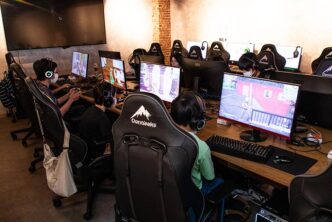
E-sports is slowly gaining traction in Japan, not only as a tool for senior well-being, but as a bridge for children.
NTTe-Sports Hybrid Free School opens a hybrid free school for futoko junior high students in Chiba Prefecture this month. The school will mix three days of online sessions per week with two in-person days per month, aiming to lower psychological barriers to participation while still offering face-to-face experiences. The idea is to use team-based e-sports to generate conversation, cooperation and a shared sense of achievement, while providing basic academic support and helping families navigate the journey. The school will also help students develop digital skills such as programming and video editing, based on students’ interest in games.

Offering ibasho for parents and families
Supporting parents’ mental health and understanding is the bedrock that allows children to use these services.
For example, Cocoverse is a government-funded metaverse ibasho run by a parent-focused organisation, and is a part of the Children and Families Agency’s “Model project to support the creation of ibasho for children”. Parents of futoko children attend an orientation and can consult clinical psychologists, psychiatric social workers and child psychiatrists. The organisation also offers regular lunchtime online sessions where staff first give a short talk, then host peer discussions.
Closing: How do we get children back into school?
The core question NGOs, educators and parents ask is “How do we get children back into school?” But simple questions are often the most complex to answer.
So perhaps reframing the question as “How do we build a society where every child, including those who cannot attend school, has access to safety, learning and future possibilities?” helps us better identify the gaps. The problems lie not with futoko children, but with the system that pushes them out.
The data from 2024–25 remains a sobering backdrop in the back of our minds. Futoko has reached historic highs, and many children are still struggling to find themselves and a place to belong. If we allow ourselves to be cautiously optimistic, the MEXT study also hints that the rate of increase has begun to slow, and the number of new futoko cases may start to fall. The emerging ecosystem of metaverse classrooms, e-sports free schools, community houses and national support projects may lead Japan towards a more flexible and sustainable way of growing up.