 Zenbird Editorial Team
Kita-Sanriku Factory Co., Ltd. and AMA Holdings Co., Ltd. signed a comprehensive partnership agreement last month to launch the “Regenerative Earth Sensing Project.” It aims to restore marine environments and establish a sustainable blue economy in Ama Town, Shimane Prefecture, through the application of scientific data.
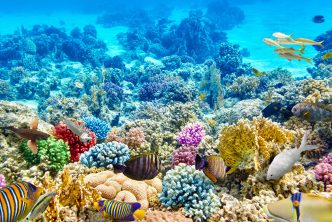
The project aligns with Ama Town’s “Shin Blue Ocean Strategy,” a framework designed to protect regional resources and transform marine conservation into an engine for economic growth. By monitoring the natural cycles between forests, villages, and the sea, the partners intend to demonstrate a “regenerative blue economy” model where environmental protection and industrial development coexist.
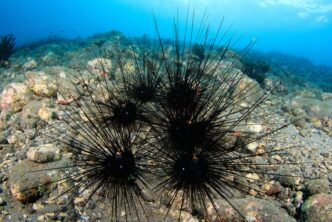
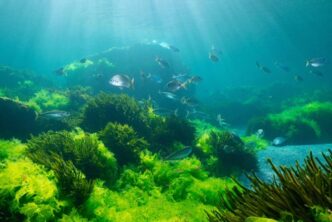
Under the agreement, Kita-Sanriku Factory will deploy its proprietary technology to restore seaweed beds and implement high-value sea urchin aquaculture. These efforts address “isoyake,” the phenomenon of “sea desertification” caused by the disappearance of seaweed. The project also involves the collection of marine data, including water quality and environmental DNA (eDNA), which will be integrated into a “Forest-Village-Sea Data Dashboard” for regional use.
The partnership extends to the commercialisation of marine products harvested from restored areas and the exploration of Blue Carbon and biodiversity credits. By measuring the carbon sequestration capacity of restored seaweed beds, the project seeks to create new financial mechanisms for conservation. Furthermore, the entities will develop marine literacy programmes and educational workshops to train the next generation of maritime professionals.
Keisuke Ohno, CEO of AMA Holdings, stated that the partnership is essential for realising a future for the sea based on data rather than intuition. Hirokazu Suzuki, CFO of Kita-Sanriku Factory, noted that the project aims to build a model that balances environmental regeneration with economic growth, describing it as a new “marine civilisation” originating from Japan.
The partners intend to present the results of this project to government ministries and international academic societies as a Japanese model for marine restoration.
[Reference] Kita-Sanriku Factory New Topics (Japanese)